
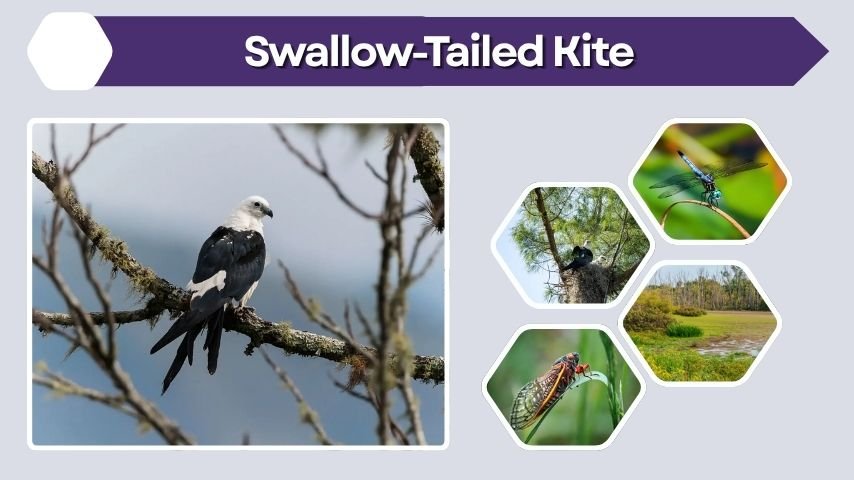
The swallow-tailed kite is one of the most graceful birds of prey in North America. With its long pointed wings, black-and-white body, and deeply forked tail, this bird is easy to recognize in flight. It is especially famous in Florida and the southeastern United States, where people often spot it soaring over forests, wetlands, rivers, and open country during the warmer months.
What Is a Swallow-Tailed Kite?
A swallow-tailed kite is a medium-sized raptor known for its elegant flight and dramatic tail shape. Its scientific name is Elanoides forficatus. The bird belongs to the same broad family as hawks, eagles, and other kites, but it has a more delicate, aerial hunting style than many heavier raptors.
Swallow-Tailed Kite Identification
The swallow-tailed kite is almost unmistakable when seen well. Adults have bright white underparts, a white head, dark wings, and a long black forked tail. In flight, the bird often looks like a floating black-and-white cross with a split tail.
Key identification features include:
- Deeply forked tail
- Long, narrow wings
- White head and body
- Black wings and tail
- Smooth, floating flight
- Sharp turns with very few wingbeats
Cornell’s All About Birds describes the species as unmistakable in southeastern summer skies because of its forked tail and bold black-and-white plumage.
Is a Swallow-Tailed Kite a Hawk?
A swallow-tailed kite is a bird of prey, but it is not usually called a hawk. It is a kite, which is a type of raptor in the family Accipitridae. This means it is related to hawks and eagles, but it has its own shape, behavior, and hunting style.
Swallow-Tailed Kite vs. Hawk
Hawks often hunt by perching, diving, or chasing prey with strong wingbeats. Swallow-tailed kites usually hunt while gliding, twisting, and catching prey from the air or from treetops. Their tail works almost like a rudder, helping them turn with impressive control.
Swallow-Tailed Kite Size and Wingspan
Swallow-tailed kites look large in the air because of their long wings and tail. They are lightweight compared with many hawks, but their wingspan makes them look dramatic.
How Big Is a Swallow-Tailed Kite?
A swallow-tailed kite is roughly the size of a large hawk, with a long wingspan and slim body. Its long forked tail adds to its overall length and makes it appear even larger while soaring.
| Feature | Description |
|---|---|
| Bird type | Kite, bird of prey |
| Scientific name | Elanoides forficatus |
| Main colors | Black and white |
| Tail shape | Long and deeply forked |
| Flight style | Graceful, floating, acrobatic |
| Common U.S. region | Southeast, especially Florida |
| Diet | Insects, lizards, frogs, snakes, small birds |
The American Bird Conservancy notes that swallow-tailed kites have long pointed wings, a deeply forked tail, and contrasting black-and-white plumage.
Swallow-Tailed Kite Range
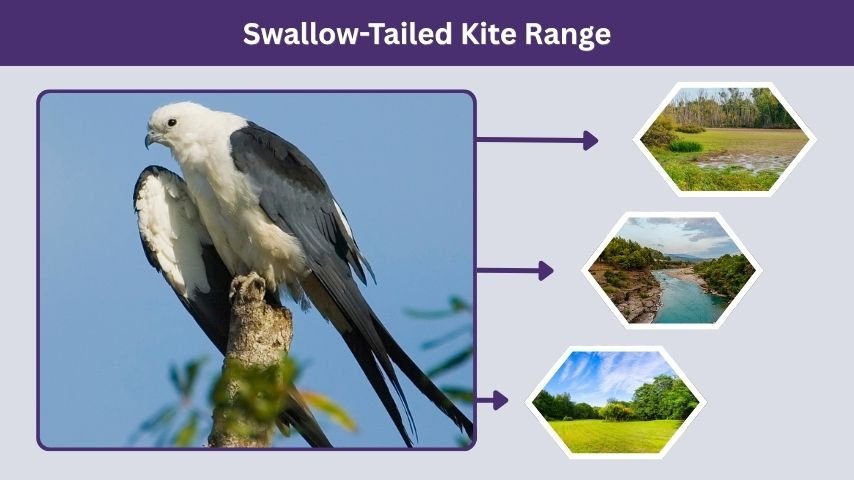
The swallow-tailed kite range includes parts of the southeastern United States during breeding season and Central and South America during other parts of the year. In the U.S., it is most strongly associated with Florida, South Carolina, Georgia, Alabama, Mississippi, Louisiana, and Texas.
Swallow-Tailed Kite in Florida
Florida is one of the best places to see swallow-tailed kites in the United States. Many arrive in spring, nest during the warm season, and leave later in summer or early fall.
Florida swallow-tailed kites are often seen over:
- Swamps
- Rivers
- Wetlands
- Pine forests
- Pastures
- Open fields
- Suburban areas near trees
They may soar high above roads, neighborhoods, and forest edges while searching for food.
Swallow-Tailed Kite in Other States
People also search for swallow-tailed kites in South Carolina, Georgia, Alabama, Mississippi, Louisiana, Texas, and North Carolina. These sightings are often tied to nesting areas, migration routes, or seasonal movements.
In places outside the main range, such as California, Cape Cod, or farther north, a swallow-tailed kite sighting is usually unusual and may attract birdwatchers.
Swallow-Tailed Kite Habitat
Swallow-tailed kites prefer areas with tall trees for nesting and open spaces for hunting. They are often linked with wetlands and forested landscapes.
Where They Live
Good habitat may include:
- Bottomland forests
- River corridors
- Swamps
- Cypress stands
- Pine forests
- Forest edges
- Wetlands near open fields
Audubon describes the swallow-tailed kite as a bird of graceful flight that is often associated with southeastern landscapes, especially where it can glide, swoop, and hunt with little wing movement.
Swallow-Tailed Kite Diet
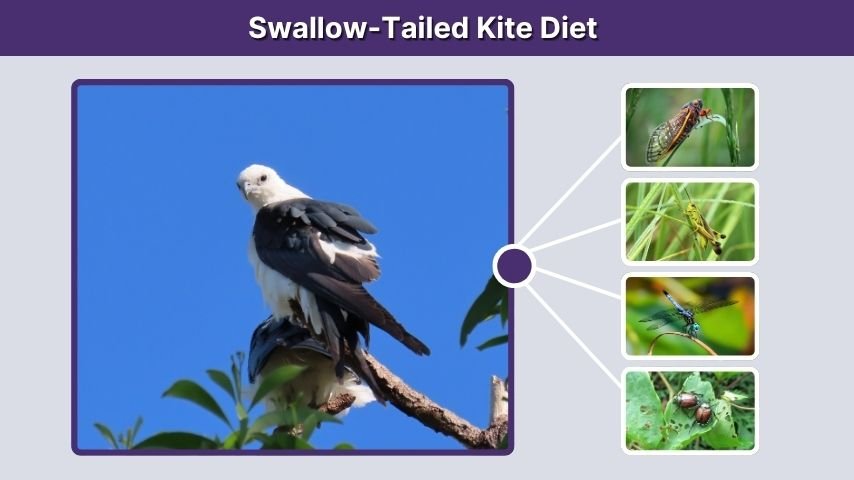
The swallow-tailed kite diet includes insects and small animals. It often catches food while flying, but it can also take prey from branches and treetops.
What Do Swallow-Tailed Kites Eat?
Swallow-tailed kites commonly eat:
- Dragonflies
- Grasshoppers
- Beetles
- Wasps
- Cicadas
- Lizards
- Frogs
- Small snakes
- Nestling birds
Cornell notes that swallow-tailed kites chase dragonflies and also pluck frogs, lizards, snakes, and nestling birds from branches.
Do Swallow-Tailed Kites Eat Chickens?
Swallow-tailed kites are not typical chicken predators. They are much more likely to eat insects, reptiles, amphibians, and small birds. A full-grown chicken is too large for them to treat as normal prey. If you keep chickens, larger hawks, owls, raccoons, foxes, snakes, and dogs are usually bigger concerns.
Swallow-Tailed Kite Nest
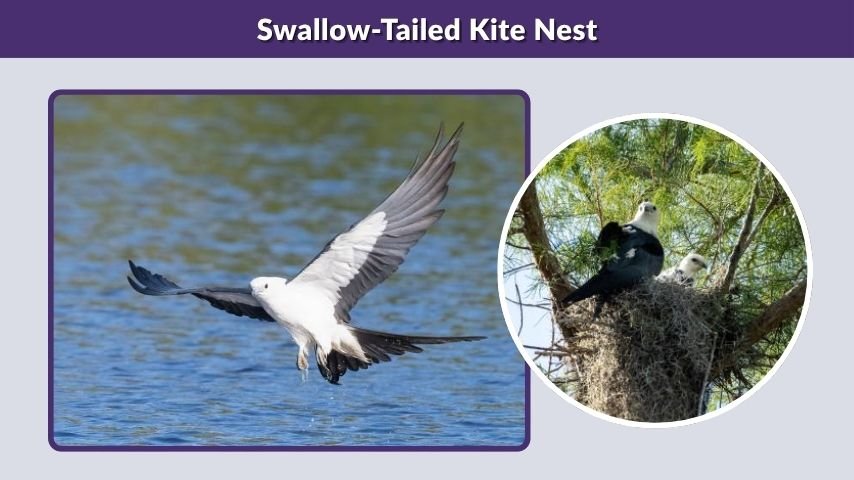
A swallow-tailed kite nest is usually built high in a tall tree. Nesting sites are often near water or in mature forest areas where the birds have both shelter and nearby hunting grounds.
Nesting Behavior
Swallow-tailed kites may use sticks and soft materials to build a platform nest. They often place it high in pines, cypress, or other tall trees. Nesting pairs may return to the same general area year after year if conditions remain suitable.
During nesting season, adults may become alert and vocal near the nest. However, they are generally admired more for their flight than feared for aggressive behavior.
Swallow-Tailed Kite Migration
Swallow-tailed kites are migratory birds. Many that breed in the United States travel south after nesting season. Their migration can be long and impressive, with some birds moving between North America and South America.
When Do Swallow-Tailed Kites Migrate?
In the southeastern U.S., they usually arrive in spring and leave by late summer or early fall. Timing can vary by region and year. Audubon’s Bird Migration Explorer tracks swallow-tailed kite movements across the hemisphere, showing how connected their breeding and wintering areas are.
Swallow-Tailed Kite Sound and Call
The swallow-tailed kite sound is not as famous as its appearance, but the bird does call. Its call is often described as a high, thin, whistled sound.
When You Might Hear It
You may hear swallow-tailed kite calls:
- Near nesting areas
- During flight
- When birds interact
- When adults communicate
- If a predator approaches
Because these birds often soar high overhead, many people notice the shape and movement before they hear the call.
Swallow-Tailed Kite Predators
Adult swallow-tailed kites are skilled fliers, but eggs and young birds can still be vulnerable. Nest predators may include snakes, raccoons, crows, owls, and larger raptors.
Main Threats
The biggest threats are often habitat-related. Loss of mature forest, wetland changes, and disturbance around nesting areas can reduce suitable breeding sites. A conservation PDF from Orleans Audubon notes that the species is not federally listed as threatened or endangered, but it is protected by the Migratory Bird Treaty Act and state laws.
Are Swallow-Tailed Kites Rare or Endangered?
Swallow-tailed kites are not currently considered federally endangered in the United States, but they are still a conservation concern in some areas. Their historic U.S. range was larger than it is today, and habitat protection remains important.
Can You Report a Swallow-Tailed Kite Sighting?
Yes, many bird groups and conservation organizations encourage people to report swallow-tailed kite sightings. Sightings help researchers understand migration, nesting areas, and population patterns. Apps and platforms like eBird are commonly used by birdwatchers to record observations.
Swallow-Tailed Kite Meaning and Symbolism
Many people search for swallow-tailed kite spiritual meaning, biblical meaning, tattoo meaning, or symbolism. These meanings are usually personal or cultural rather than scientific.
Common Symbolic Meanings
Because of its graceful flight and forked tail, the swallow-tailed kite may symbolize:
- Freedom
- Balance
- Focus
- Elegance
- Transformation
- Clear direction
- Spiritual movement
A swallow-tailed kite tattoo may represent independence, beauty, travel, or a connection to the sky and nature. However, there is no single official biblical meaning for this bird.
Mississippi Kite vs. Swallow-Tailed Kite
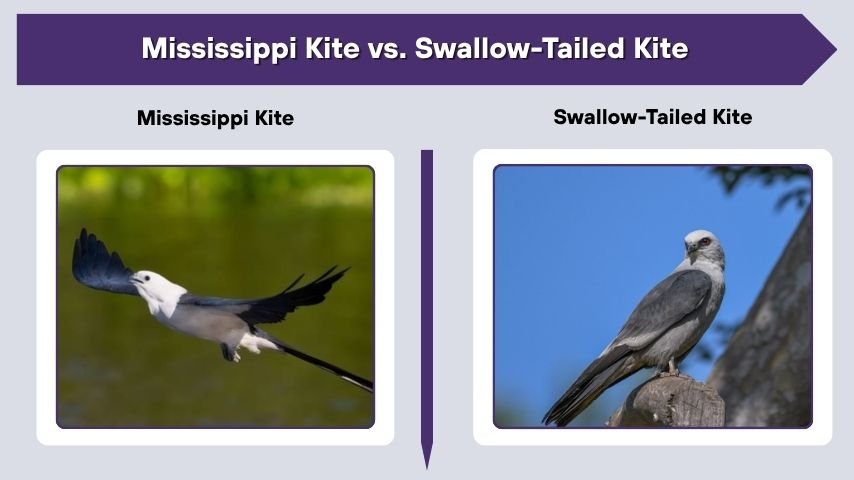
The Mississippi kite and swallow-tailed kite are both graceful raptors, but they look very different.
Main Differences
Mississippi kites are mostly gray, smaller-looking, and have a more modest tail. Swallow-tailed kites are black and white with a much longer, deeply forked tail. If you see a dramatic black-and-white raptor with a split tail, it is almost certainly a swallow-tailed kite.
FAQs
What is a swallow-tailed kite?
A swallow-tailed kite is a black-and-white bird of prey known for its long pointed wings and deeply forked tail. It is one of the easiest raptors to identify in flight because of its graceful shape and bold pattern.
Where do swallow-tailed kites live?
In the United States, swallow-tailed kites mostly breed in the Southeast, especially Florida and nearby Gulf Coast and Atlantic Coast states. They also occur in parts of Central and South America, especially outside the U.S. breeding season.
What do swallow-tailed kites eat?
Swallow-tailed kites eat flying insects, lizards, frogs, small snakes, and small birds. They often catch prey while flying and may also pluck animals from tree branches.
Are swallow-tailed kites endangered?
Swallow-tailed kites are not federally endangered in the United States, but they are protected by migratory bird laws. Habitat loss and nesting-site protection are important conservation concerns.
What does a swallow-tailed kite symbolize?
A swallow-tailed kite often symbolizes freedom, grace, movement, balance, and independence. Tattoo or spiritual meanings are personal, so the bird may represent different things to different people.
