
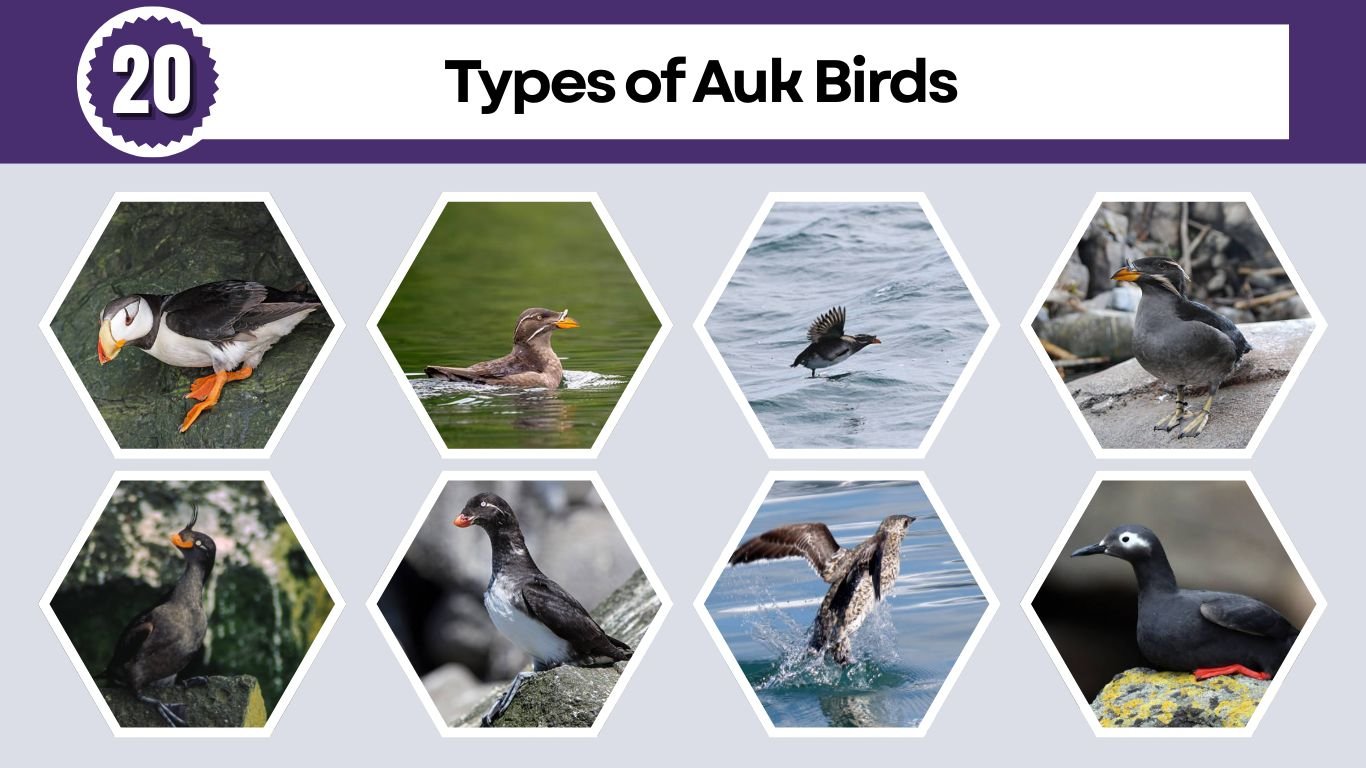
Auks are a group of seabirds known for their black-and-white coloring, upright posture, and excellent diving abilities. Found mainly in the colder regions of the Northern Hemisphere, these birds are closely related to puffins and murres. They spend most of their lives at sea and come to land only for breeding, often forming large colonies on cliffs and rocky islands.
This guide covers 20 types of auk birds, helping you identify each species through key features such as size, habitat, behavior, and diet. From the common murres to the unique auklets and puffins, this collection offers a clear and simple way to understand the diversity within the auk family.
1. Common Murre
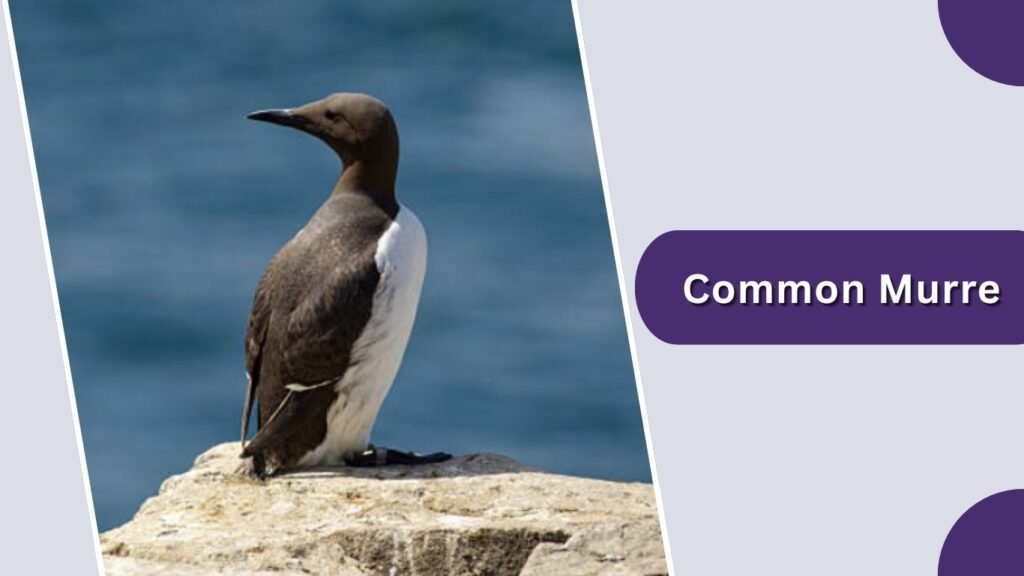
The Common Murre is a large, sleek seabird found across the North Atlantic and North Pacific oceans. It is one of the most abundant members of the auk family and is well known for its upright posture on land and its strong diving ability in water. Often seen in dense colonies along cliffs, this species plays an important role in marine ecosystems.
Identification
- Medium to large seabird with a wingspan of about 60–75 cm
- Dark brown to black upperparts with white underparts
- Slender, pointed bill
- White face with dark crown (varies slightly by season)
- Short legs set far back on the body
- Upright, penguin-like stance when on land
Habitat
Common Murres are primarily found in cold and temperate marine environments. They breed on steep coastal cliffs, rocky islands, and ledges where predators have limited access. Outside the breeding season, they spend most of their time at sea, often far from land in open ocean waters.
Behavior
These birds are highly social and form massive breeding colonies, sometimes numbering in the thousands. They are excellent divers, using their wings to propel themselves underwater in pursuit of prey. On land, they appear awkward due to their body structure, but in water, they are agile and fast. They lay a single egg directly on bare rock, relying on cliff edges for protection.
Diet
Common Murres mainly feed on small fish such as herring, capelin, and sand lance. They dive deep underwater to catch prey and may also consume squid and crustaceans. Their strong swimming ability allows them to hunt efficiently in cold ocean environments.
2. Thick-billed Murre
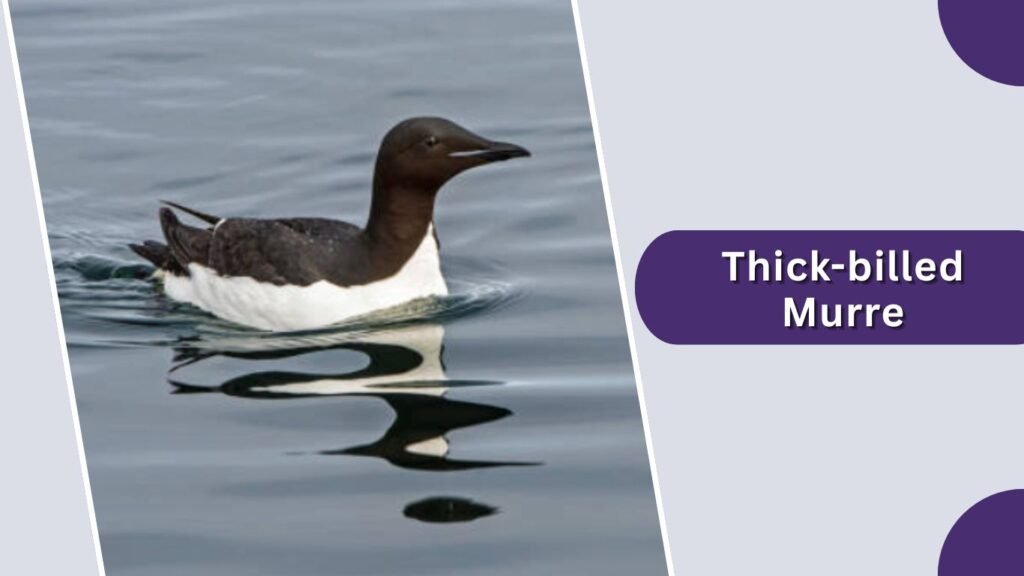
The Thick-billed Murre is a close relative of the Common Murre and is well adapted to colder Arctic environments. It is a robust seabird, often found in large colonies on steep cliffs overlooking icy waters. Its strong build and thick bill help it survive in harsh conditions.
Identification
- Medium to large seabird with a wingspan of about 60–75 cm
- Dark brown to black upperparts with white underparts
- Thick, short bill with a pale line along the edge
- White face and throat in breeding season
- Compact body with short tail
- Upright posture similar to a penguin
Habitat
Thick-billed Murres are mainly found in Arctic and sub-Arctic regions. They breed on high cliffs and rocky ledges near cold ocean waters. Outside the breeding season, they remain at sea, often near pack ice or cold offshore areas.
Behavior
These birds are highly social and form dense nesting colonies. They are powerful divers, capable of reaching significant depths to catch prey. Thick-billed Murres are well adapted to cold climates and can remain active even in icy waters. They lay a single egg on bare rock ledges.
Diet
Their diet mainly includes fish such as Arctic cod and capelin. They also eat crustaceans and squid. They hunt by diving underwater and using their wings to swim after prey.
3. Razorbill
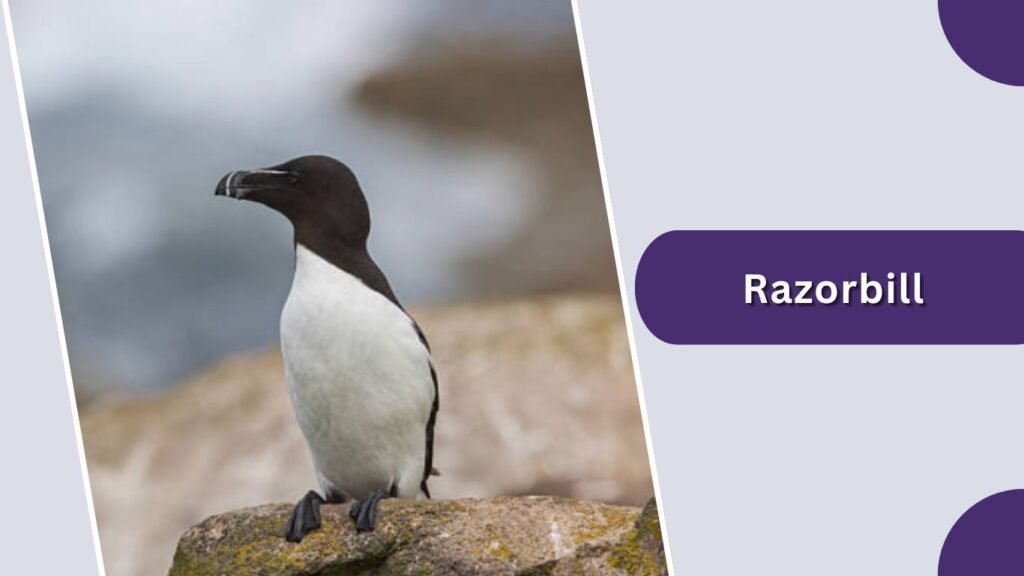
The Razorbill is a striking auk species known for its thick, blunt bill and bold black-and-white coloration. It is found in the North Atlantic and is often seen along rocky coasts and offshore waters. This species is a strong swimmer and an efficient hunter.
Identification
- Medium-sized seabird with a wingspan of about 60–70 cm
- Black upperparts and white underparts
- Thick black bill with a distinctive white line
- White line extending from the bill to the eye
- Short wings and tail
- Sturdy, compact body
Habitat
Razorbills are found along rocky coastlines, cliffs, and offshore islands in the North Atlantic. They breed on narrow ledges and crevices, often in areas that provide protection from predators. Outside the breeding season, they spend most of their time at sea.
Behavior
These birds are social during breeding and form colonies on cliffs. They are strong swimmers and divers, using their wings to move underwater. Razorbills are less agile in flight compared to other seabirds but are very efficient in water. They usually lay a single egg in sheltered nesting sites.
Diet
Razorbills primarily feed on small fish such as sand eels and herring. They catch prey by diving underwater and chasing it. They may also consume crustaceans and other small marine organisms depending on availability.
4. Little Auk
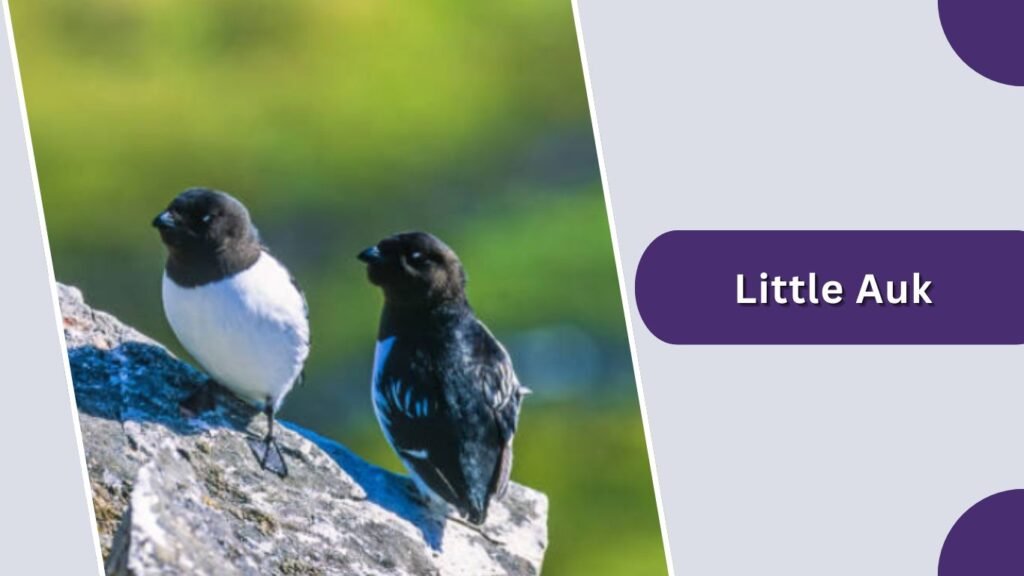
The Little Auk, also known as the Dovekie, is one of the smallest members of the auk family. It is a compact and energetic seabird that thrives in the cold waters of the Arctic. Despite its small size, it is highly abundant and plays an important role in Arctic marine ecosystems.
Identification
- Very small seabird with a wingspan of about 40–50 cm
- Black upperparts with white underparts
- Short, stubby black bill
- White face with dark crown
- Rounded body with short wings
- Fast, buzzing flight pattern
Habitat
Little Auks are primarily found in Arctic regions, especially around Greenland, Iceland, and northern Canada. They breed in large colonies on rocky slopes and cliffs. Outside the breeding season, they remain at sea in cold, northern waters.
Behavior
These birds are highly social and often form massive colonies during breeding. They are excellent swimmers and divers, using their wings to propel underwater. Their flight is rapid and direct, often low over the water. They are very active and constantly moving between feeding and nesting areas.
Diet
Little Auks mainly feed on tiny marine crustaceans such as copepods. They dive underwater to catch prey and may also consume small fish when available. Their diet is closely linked to cold ocean currents rich in plankton.
5. Great Auk
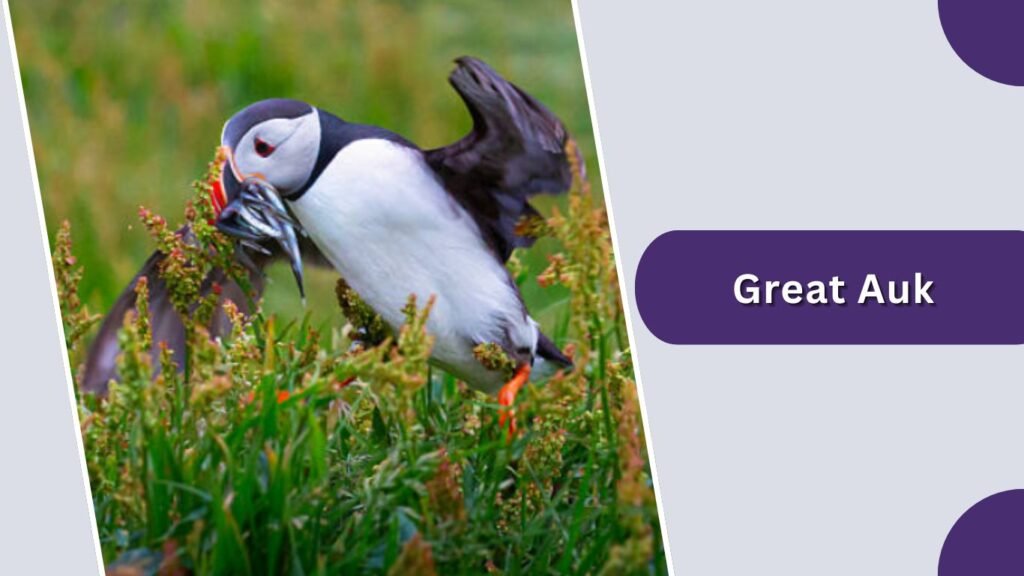
The Great Auk was a large, flightless seabird that once lived across the North Atlantic. Sadly, it is now extinct, with the last confirmed individuals seen in the mid-19th century. It resembled a penguin in appearance and behavior, making it one of the most well-known extinct seabirds.
Identification
- Large, flightless seabird with a wingspan (non-functional for flight) of about 75–85 cm
- Black upperparts and white underparts
- Large, heavy black bill with white grooves
- Distinct white patch in front of the eye
- Short wings adapted for swimming
- Upright, penguin-like posture
Habitat
Great Auks lived along rocky coasts and islands in the North Atlantic, including parts of Canada, Greenland, and Europe. They bred in colonies on isolated islands where they were safe from predators.
Behavior
These birds were strong swimmers and divers, using their wings to move underwater. On land, they stood upright and moved awkwardly. They nested in dense colonies and laid a single egg on bare ground. Their inability to fly made them vulnerable to human hunting.
Diet
Great Auks primarily fed on fish, which they caught by diving underwater. They may have also eaten crustaceans and other marine organisms. Their strong swimming ability made them effective hunters in cold ocean waters.
6. Black Guillemot
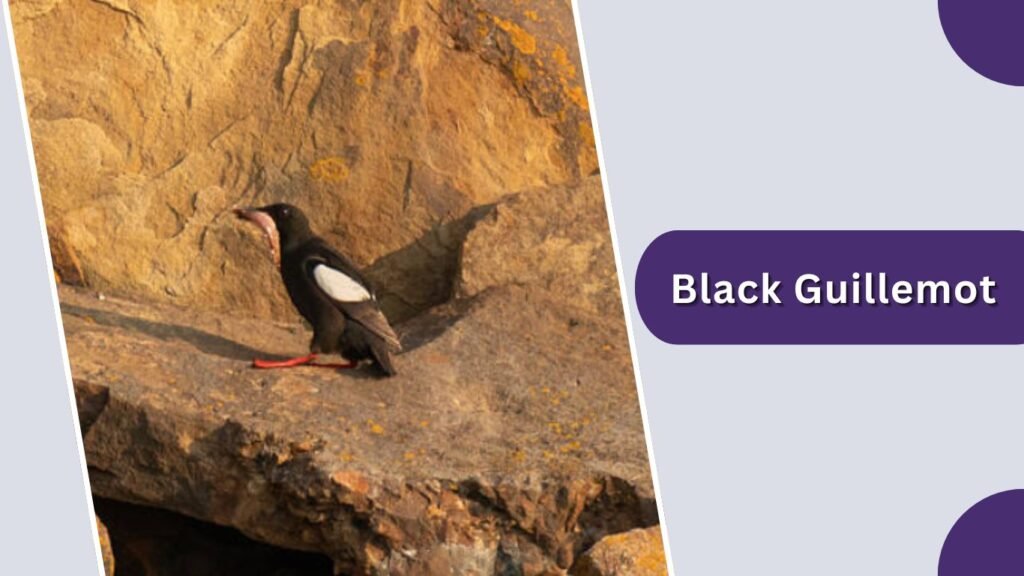
The Black Guillemot is a medium-sized auk known for its striking dark plumage and bright red feet. It is commonly found along northern coastlines and is often seen close to shore rather than far out at sea. This species is easily recognizable in flight due to its bold wing pattern.
Identification
- Medium-sized seabird with a wingspan of about 55–65 cm
- Mostly black body during breeding season
- Distinct white wing patches visible in flight
- Short, slender black bill
- Bright red legs and feet
- White underwings contrasting with dark body
Habitat
Black Guillemots are typically found along rocky coastlines, cliffs, and islands in the North Atlantic and Arctic regions. Unlike some auks, they prefer shallow coastal waters and are often seen near shore. They nest in crevices, rocks, or man-made structures close to the sea.
Behavior
These birds are usually seen alone or in small groups rather than large colonies. They are strong swimmers and divers, using their wings to chase prey underwater. Their flight is direct and low over the water. During breeding, they remain close to nesting areas.
Diet
Black Guillemots mainly feed on small fish such as sculpins and blennies. They also consume crustaceans and other bottom-dwelling marine animals. They dive in shallow waters and often forage near the seabed.
7. Pigeon Guillemot
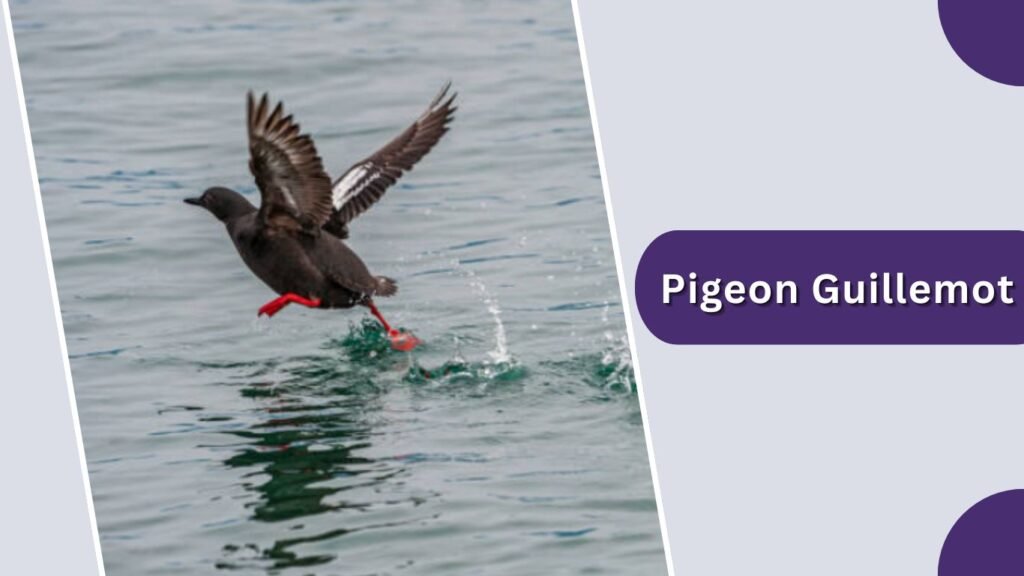
The Pigeon Guillemot is a coastal seabird known for its dark plumage and bright red feet. It is commonly found along the Pacific coast of North America and parts of Asia. This species is often seen close to shore, making it more visible than many other auks.
Identification
- Medium-sized seabird with a wingspan of about 60–70 cm
- Dark brown to black body
- Large white wing patches visible in flight
- Slender dark bill
- Bright red legs and feet
- Rounded wings and tail
Habitat
Pigeon Guillemots inhabit rocky shorelines, cliffs, and coastal waters. They prefer shallow marine environments and are rarely found far from land. They nest in crevices, burrows, or rocky gaps along the coast.
Behavior
These birds are often seen alone or in pairs, swimming near shore. They are strong divers and use their wings to move underwater while hunting. Their flight is low and fast over the water. They are less colonial than many other auks.
Diet
Pigeon Guillemots feed on small fish and marine invertebrates. They often dive to the seabed to catch prey such as sculpins, crabs, and shrimp. Their feeding habits are closely tied to shallow coastal ecosystems.
8. Spectacled Guillemot
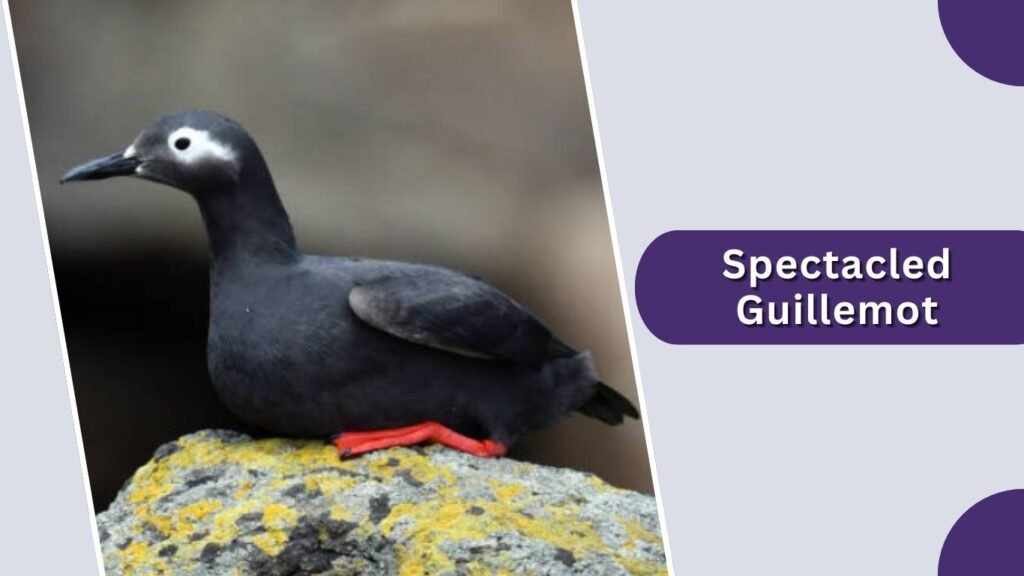
The Spectacled Guillemot is a lesser-known auk species found in the North Pacific, particularly around Japan and nearby regions. It is named for the distinctive pale ring around its eye, giving it a “spectacled” appearance. This coastal bird is closely associated with rocky shorelines.
Identification
- Medium-sized seabird with a wingspan of about 60–70 cm
- Dark brown to black body
- White eye ring (spectacle-like marking)
- White wing patches visible in flight
- Slender dark bill
- Dark legs and feet
Habitat
Spectacled Guillemots are typically found along rocky coasts, cliffs, and offshore islands. They prefer shallow coastal waters where they can easily find food. They nest in crevices and rocky gaps close to the sea.
Behavior
These birds are usually seen alone or in small groups. They are strong swimmers and divers, often foraging near the seabed. Their flight is low and direct over water. They are relatively quiet compared to other seabirds.
Diet
Their diet mainly consists of small fish and marine invertebrates. They dive underwater to catch prey and often forage close to rocky bottoms where food is abundant.
9. Long-billed Murrelet
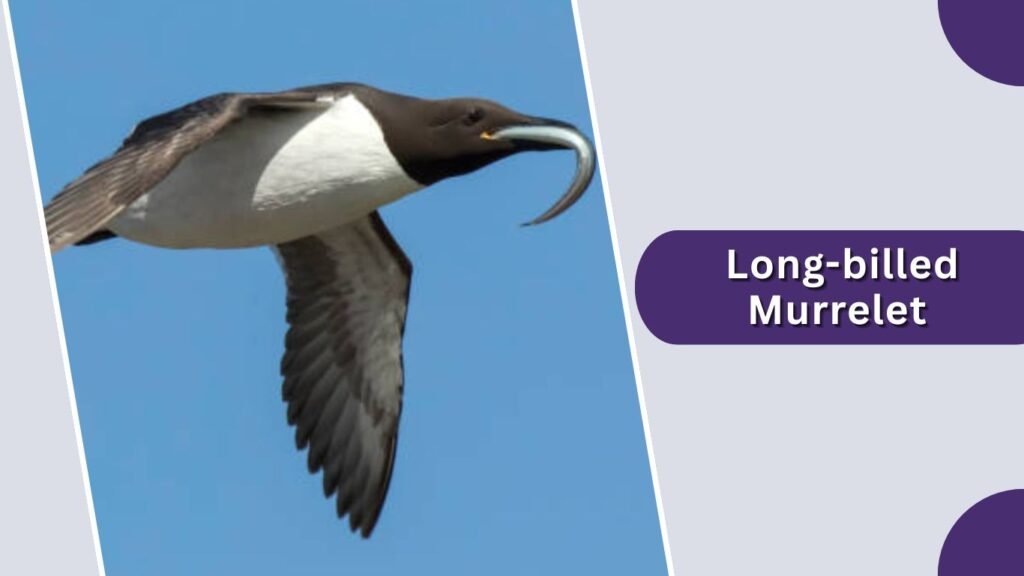
The Long-billed Murrelet is a small and secretive auk species found in the North Pacific. It is unique among auks because it often nests inland in forested areas rather than on coastal cliffs.
Identification
- Small seabird with a wingspan of about 40–55 cm
- Dark brown upperparts with lighter underparts
- Long, slender bill (key feature)
- White throat and belly
- Short wings and compact body
- Subtle mottled pattern in non-breeding plumage
Habitat
Long-billed Murrelets spend most of their time at sea along coastal waters. However, during breeding season, they move inland to forested areas, sometimes far from the coast. They nest on tree branches or forest floors.
Behavior
This species is shy and rarely seen compared to other auks. It is a strong swimmer and diver, using its wings to pursue prey underwater. During breeding, it becomes even more secretive to avoid predators.
Diet
Long-billed Murrelets mainly feed on small fish and marine invertebrates. They dive underwater to catch prey and may also consume plankton and crustaceans depending on availability.
10. Kittlitz’s Murrelet
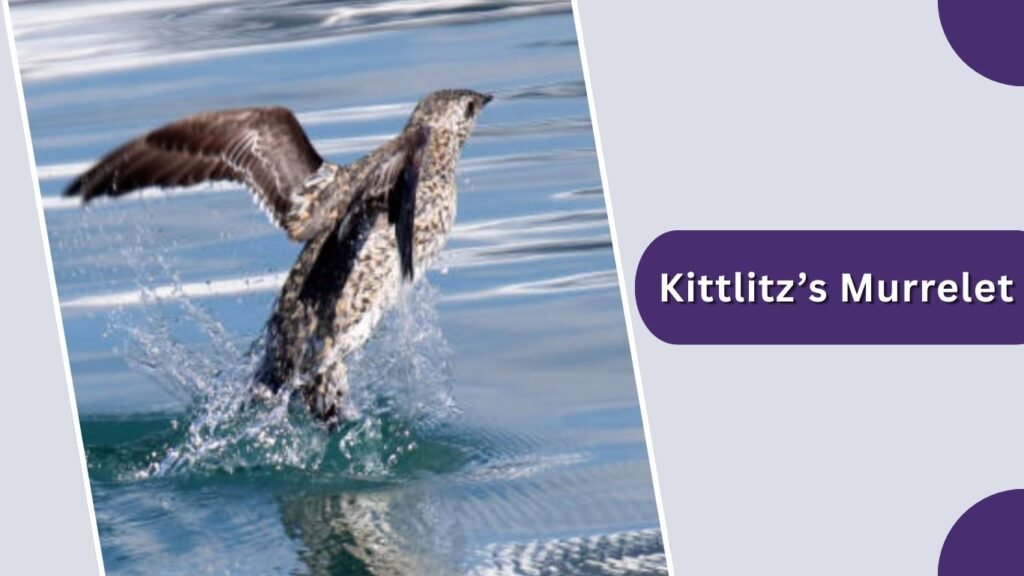
Kittlitz’s Murrelet is a small and rare auk species found in the North Pacific, especially around Alaska. It is known for its pale, mottled plumage and preference for remote, glacial habitats. This species is often difficult to observe due to its scattered distribution and quiet behavior.
Identification
- Small seabird with a wingspan of about 40–50 cm
- Pale gray and white mottled plumage
- Short, slender bill
- Light underparts with darker upperparts
- Compact body with short wings
- Subtle, camouflaged appearance
Habitat
Kittlitz’s Murrelets are typically found near glacial fjords, icy coastlines, and cold marine waters. During breeding, they nest on barren, rocky slopes near glaciers, often far from traditional seabird colonies.
Behavior
These birds are generally solitary or seen in small groups. They are strong swimmers and divers, often foraging in cold, nutrient-rich waters. Their secretive nature and remote habitat make them less commonly observed than other auks.
Diet
Their diet mainly includes small fish, crustaceans, and plankton. They dive underwater to catch prey and often feed in areas with high marine productivity.
11. Marbled Murrelet
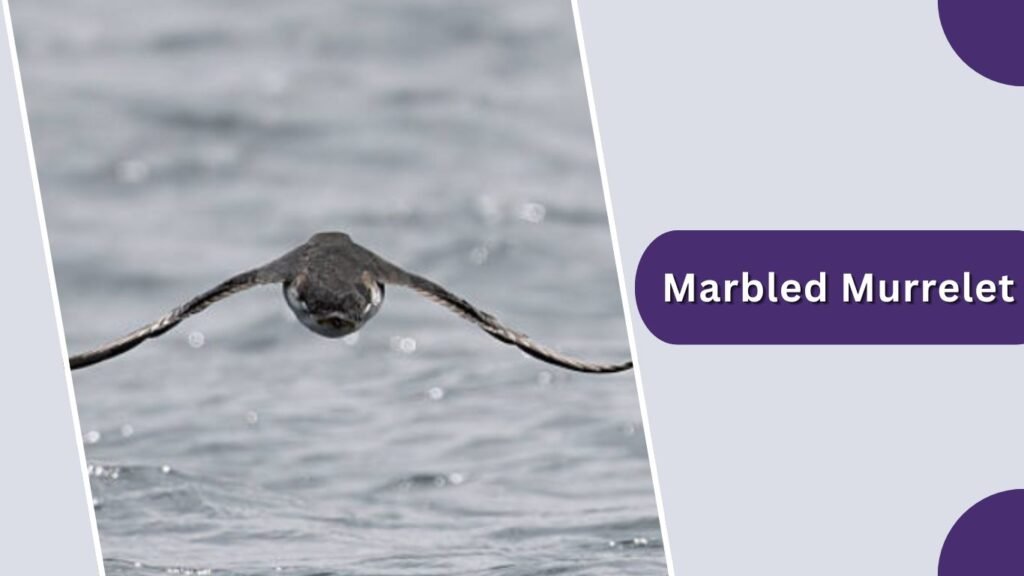
The Marbled Murrelet is a small and unique auk known for its unusual nesting behavior in old-growth forests. Found along the Pacific coast of North America, it spends most of its life at sea but depends on inland forests for breeding.
Identification
- Small seabird with a wingspan of about 45–55 cm
- Mottled brown plumage during breeding season
- White underparts with darker upperparts in non-breeding season
- Short, thin bill
- Compact body with rounded wings
- Camouflaged appearance in breeding plumage
Habitat
Marbled Murrelets live along coastal marine waters but nest in dense, old-growth forests, sometimes far inland. They rely on large tree branches covered in moss for nesting, making them dependent on intact forest ecosystems.
Behavior
These birds are secretive and usually seen alone or in pairs at sea. They are strong divers and use their wings to swim underwater while hunting. During breeding, they travel between ocean feeding areas and inland nesting sites.
Diet
Their diet consists mainly of small fish and marine invertebrates. They catch prey by diving underwater and may also feed on plankton and crustaceans depending on availability.
12. Ancient Murrelet
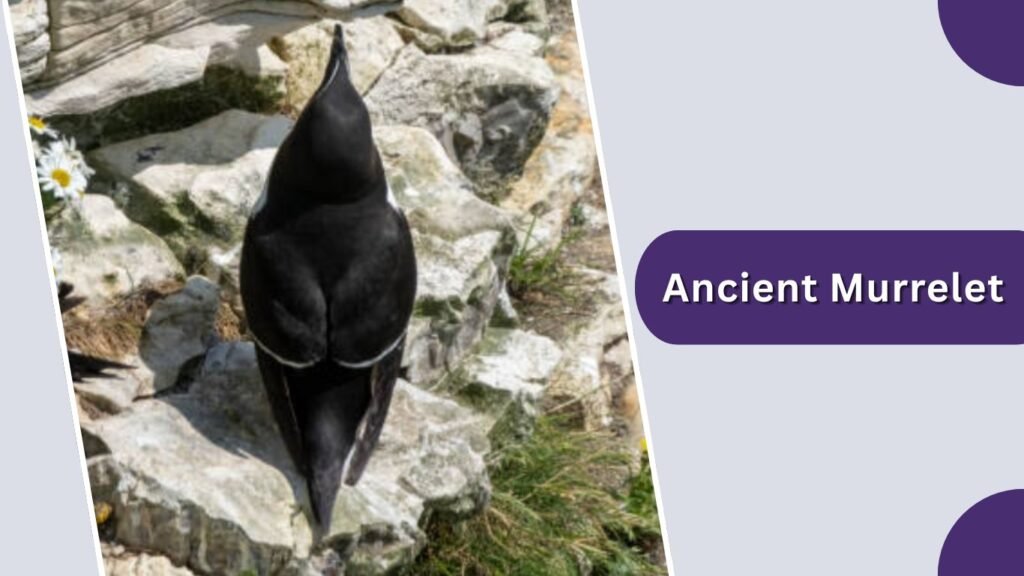
The Ancient Murrelet is a small auk species found in the North Pacific, particularly along the coasts of Canada, Alaska, and eastern Asia. It is named “ancient” because of its distinctive facial pattern, which resembles traditional markings. This species is known for its unique breeding behavior and strong connection to coastal forests.
Identification
- Small seabird with a wingspan of about 40–50 cm
- Black head and upperparts with white underparts
- White stripe extending from the eye toward the back of the head
- Short, dark bill
- Dark legs and feet
- Compact body with rounded wings
Habitat
Ancient Murrelets are found in coastal marine environments, especially around islands and sheltered waters. During breeding, they nest in burrows on forested islands, often under tree roots or dense vegetation. Outside the breeding season, they remain at sea.
Behavior
These birds are mostly nocturnal at breeding sites, helping them avoid predators. After hatching, chicks leave the nest quickly and head to the ocean with their parents. Ancient Murrelets are strong swimmers and spend most of their lives on the water.
Diet
Their diet mainly includes small fish, plankton, and crustaceans. They dive underwater to catch prey and often feed in productive coastal waters where food is abundant.
13. Cassin’s Auklet
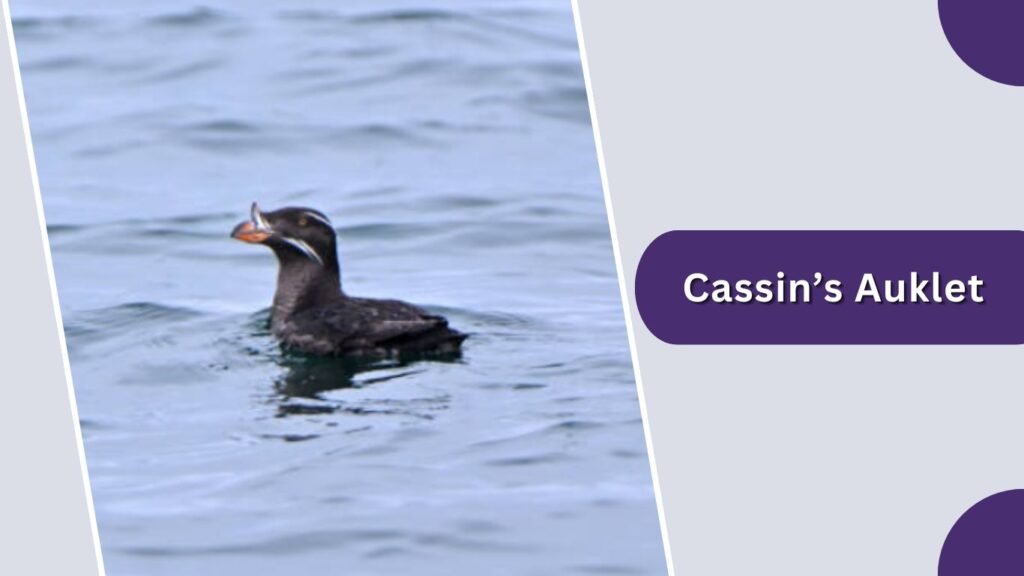
Cassin’s Auklet is a small, chunky seabird found along the Pacific coast of North America. It is one of the most abundant auk species in its range and is known for its burrow-nesting habits and soft, subtle appearance.
Identification
- Small seabird with a wingspan of about 35–45 cm
- Uniform gray to brownish plumage
- White underparts
- Short, thick pale bill
- Dark eyes
- Compact, rounded body
Habitat
Cassin’s Auklets are found in coastal and offshore waters, especially along the Pacific coast from Alaska to California. They breed on islands, nesting in burrows dug into soil or under vegetation. Outside the breeding season, they remain at sea.
Behavior
These birds are highly social during breeding and form large colonies. They are mostly nocturnal at nesting sites to avoid predators. Cassin’s Auklets are strong divers and spend much of their time foraging in open water.
Diet
Their diet mainly consists of zooplankton, especially krill. They also consume small fish and other marine organisms. They dive underwater to gather food, often feeding in nutrient-rich ocean areas.
14. Parakeet Auklet
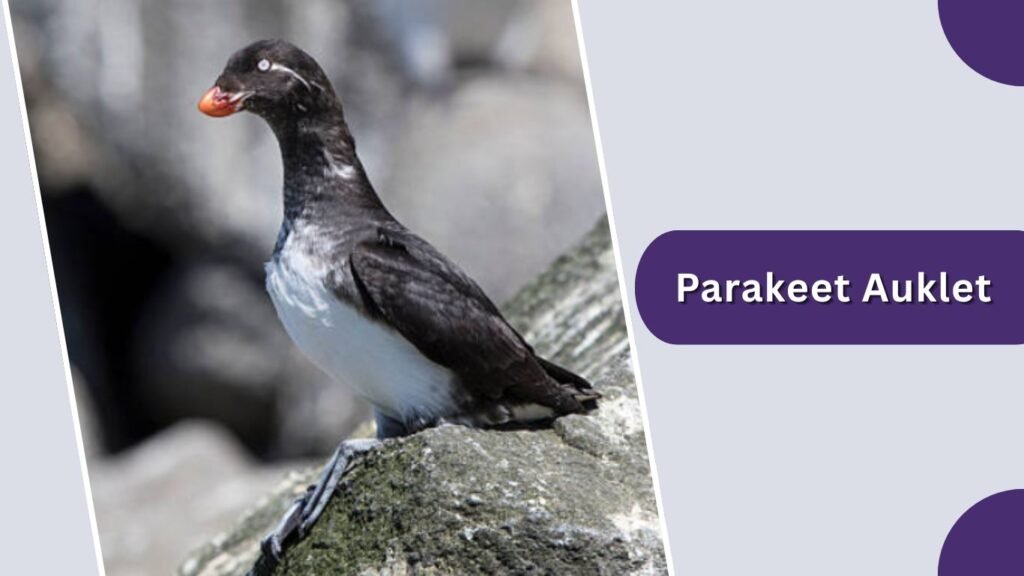
The Parakeet Auklet is a small seabird found in the North Pacific, known for its colorful bill and distinctive facial features. It is often seen in cold coastal waters and is recognized by its bright appearance compared to many other auks.
Identification
- Small seabird with a wingspan of about 40–55 cm
- Dark gray to black body
- Thick, bright orange bill
- White facial plumes extending from behind the eyes
- Dark legs and feet
- Compact body with short wings
Habitat
Parakeet Auklets are commonly found along rocky coastlines, islands, and cold ocean waters in the North Pacific. They breed in crevices and rocky slopes on coastal cliffs and islands. Outside the breeding season, they remain at sea.
Behavior
These birds are social and often seen in small groups or loose colonies. They are strong swimmers and divers, using their wings to move underwater. Their flight is fast and direct, usually low over the water surface.
Diet
Their diet mainly consists of small crustaceans, plankton, and marine invertebrates. They dive underwater to catch prey and often feed in cold, nutrient-rich waters.
15. Crested Auklet
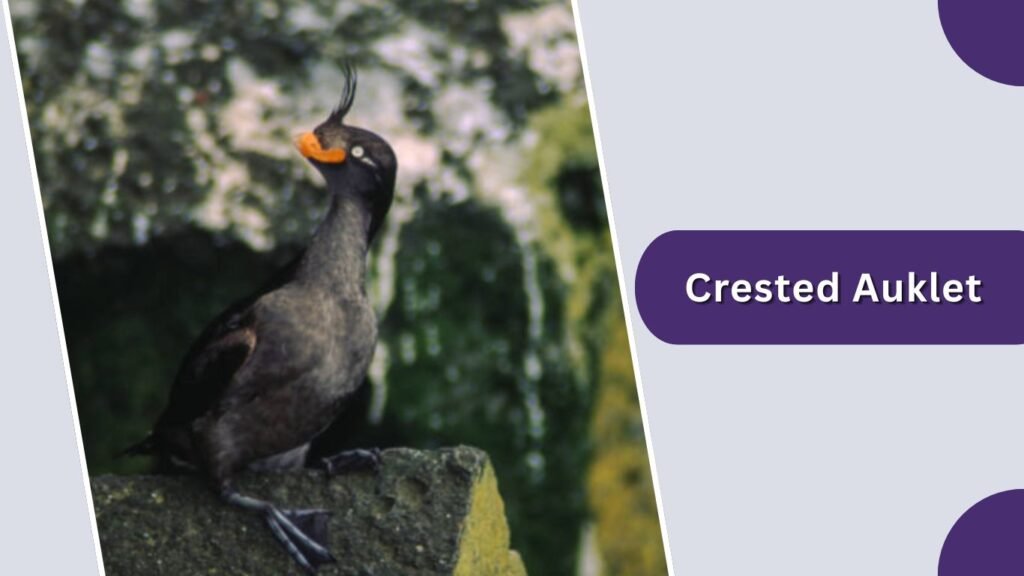
The Crested Auklet is a small and distinctive auk species known for its unique forward-curving crest and strong citrus-like scent during the breeding season. It is found in the North Pacific and is one of the most social members of the auk family.
Identification
- Small seabird with a wingspan of about 40–50 cm
- Dark gray to black body
- Short, thick orange bill
- Curved crest of feathers on the forehead
- White plume behind the eye
- Dark legs and feet
Habitat
Crested Auklets inhabit cold marine waters and breed on rocky islands and cliffs in the North Pacific. They prefer remote islands where they can nest in crevices and rocky slopes. Outside the breeding season, they remain at sea.
Behavior
These birds are highly social and form large, dense colonies during breeding. They are known for their unique social displays and scent, which may play a role in communication. Crested Auklets are strong swimmers and spend much of their time foraging in ocean waters.
Diet
Their diet mainly consists of zooplankton, especially krill. They also consume small marine invertebrates. They dive underwater to gather food, often feeding in areas with high plankton concentration.
16. Whiskered Auklet
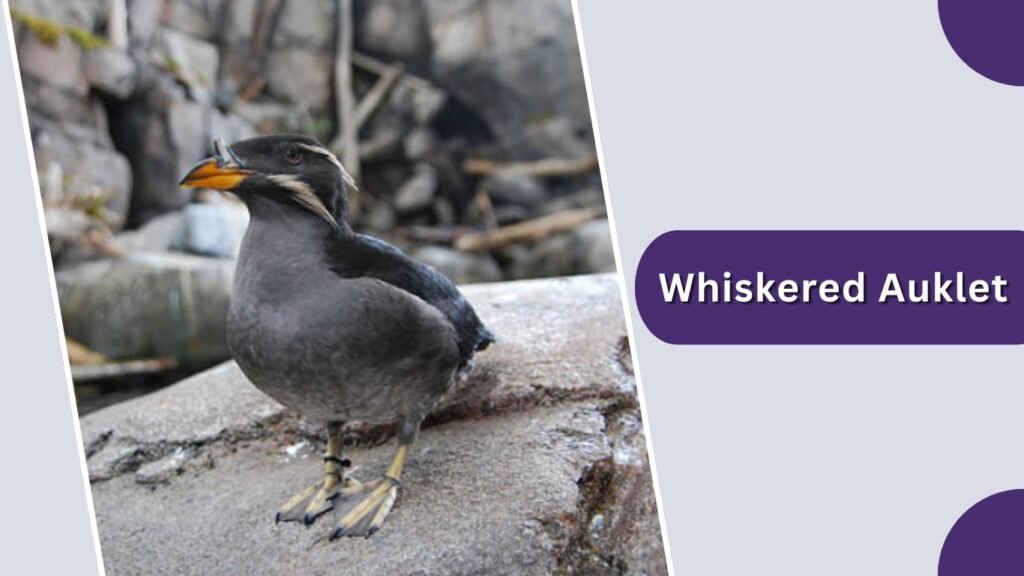
The Whiskered Auklet is a small and rare seabird found in the North Pacific, particularly around the Aleutian Islands. It is easily recognized by its unique facial plumes, which give it a distinctive and somewhat “whiskered” appearance. This species is highly specialized for life in rugged coastal environments.
Identification
- Small seabird with a wingspan of about 35–45 cm
- Dark gray body with lighter underparts
- Short, thick orange bill
- Long white facial plumes extending from the face
- Dark legs and feet
- Compact body with short wings
Habitat
Whiskered Auklets are typically found along rocky coastlines, cliffs, and offshore islands in cold North Pacific waters. They prefer steep, rugged terrain with crevices for nesting. Outside the breeding season, they remain at sea, often in remote areas.
Behavior
These birds are mostly nocturnal at breeding sites, which helps them avoid predators. They are strong swimmers and divers, spending much of their time foraging underwater. Whiskered Auklets are generally seen alone or in small groups rather than large colonies.
Diet
Their diet mainly consists of small crustaceans and zooplankton. They dive underwater to catch prey and often feed in cold, nutrient-rich waters where plankton is abundant.
17. Least Auklet
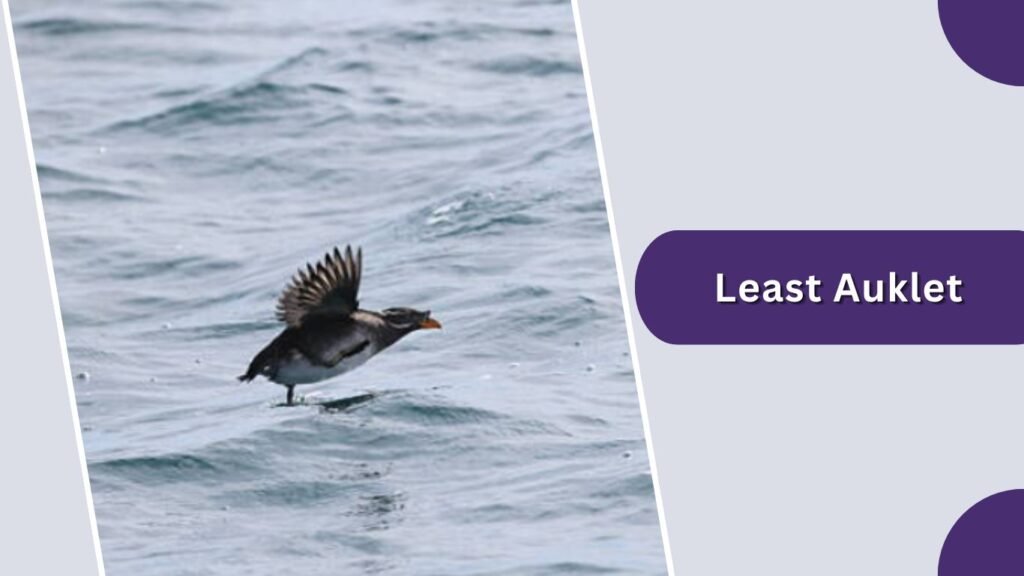
The Least Auklet is one of the smallest members of the auk family and is extremely abundant in the North Pacific. Despite its tiny size, it forms massive colonies and plays a significant role in marine ecosystems.
Identification
- Very small seabird with a wingspan of about 30–40 cm
- Dark gray to black body
- Short, thick bill
- White facial plumes above and below the eye
- Dark legs and feet
- Rounded body with short wings
Habitat
Least Auklets are found in cold marine environments of the North Pacific. They breed on rocky islands and cliffs, often in large colonies with thousands of individuals. Outside the breeding season, they remain at sea.
Behavior
These birds are highly social and form some of the largest seabird colonies in the world. They are agile fliers and strong swimmers, spending much of their time foraging in ocean waters. At nesting sites, they use crevices and rocky gaps for shelter.
Diet
Their diet mainly consists of zooplankton, especially copepods. They dive underwater to collect prey and often feed in areas with high plankton concentration.
18. Rhinoceros Auklet
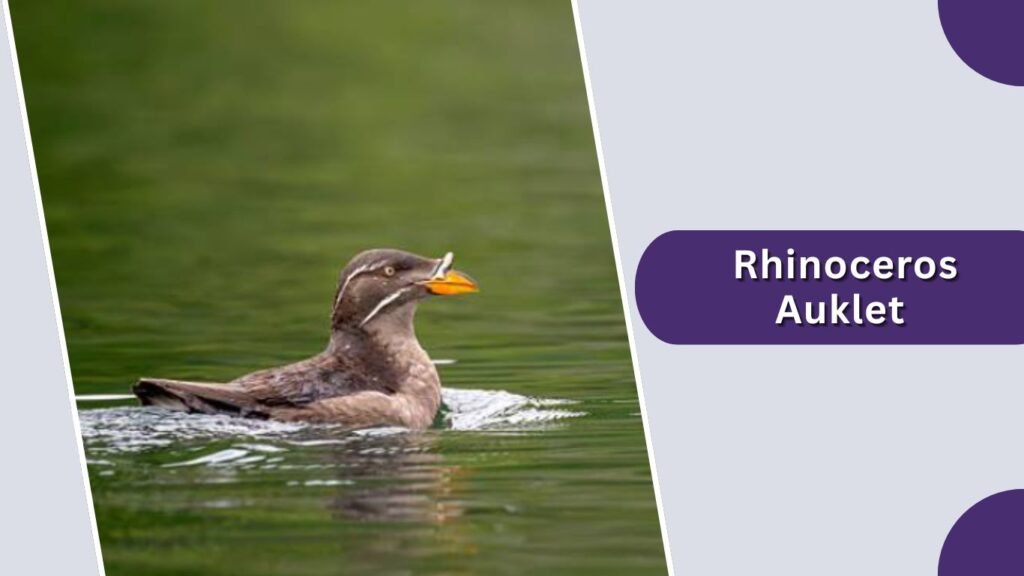
The Rhinoceros Auklet is a medium-sized seabird found in the North Pacific, closely related to puffins. It is named after the horn-like projection on its bill during the breeding season. This species is well adapted to both marine life and coastal nesting environments.
Identification
- Medium-sized seabird with a wingspan of about 55–65 cm
- Dark gray to black upperparts with lighter underparts
- Thick, pointed pale bill
- Horn-like plate on the bill during breeding season
- White facial plume extending from the eye
- Dark legs and webbed feet
Habitat
Rhinoceros Auklets are found along coastal regions and offshore waters of the North Pacific, including Alaska, Japan, and western North America. They nest on islands with grassy slopes or soft soil, digging burrows for breeding. Outside the breeding season, they remain at sea.
Behavior
These birds are mostly nocturnal at nesting sites, visiting burrows at night to avoid predators. They are strong swimmers and divers, using their wings to chase prey underwater. At sea, they are usually seen alone or in small groups.
Diet
Their diet mainly consists of small fish such as sand lance and anchovies. They dive underwater to catch prey and can carry multiple fish in their bill to feed their chicks.
19. Horned Puffin
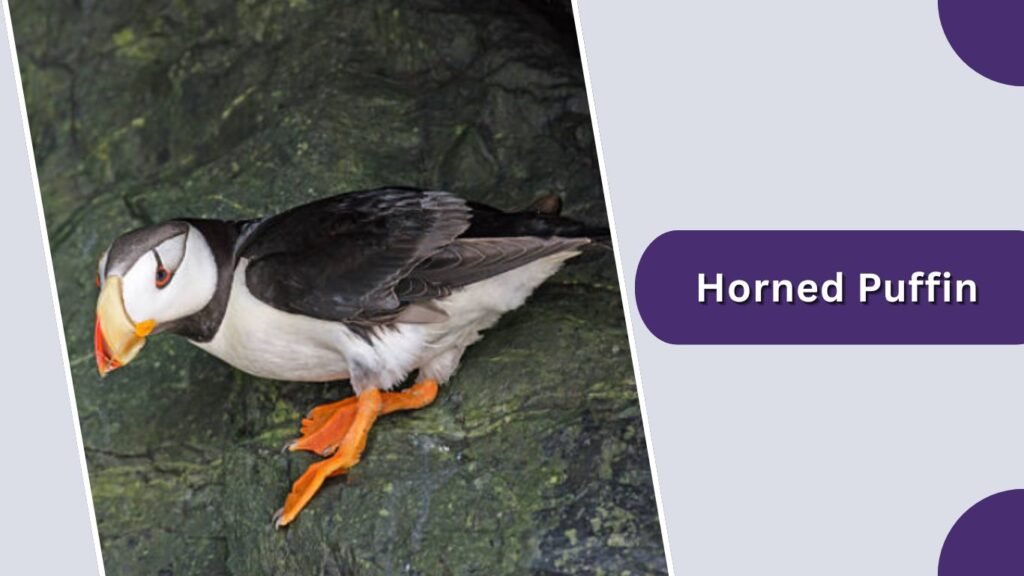
The Horned Puffin is a colorful seabird found in the North Pacific, known for the small horn-like projection above its eye during the breeding season. Although technically a puffin, it belongs to the auk family and shares many similar traits.
Identification
- Medium-sized seabird with a wingspan of about 50–60 cm
- Black upperparts and white underparts
- Bright orange and yellow bill
- Small horn-like projection above the eye
- White face with dark markings
- Orange legs and webbed feet
Habitat
Horned Puffins are found along coastal cliffs and offshore islands in the North Pacific, including Alaska and eastern Siberia. They spend most of their lives at sea and come to land during breeding season to nest in rocky crevices.
Behavior
These birds are strong swimmers and divers, using their wings to move underwater. They are usually seen alone or in small groups at sea but form colonies during breeding. Their flight is fast with rapid wingbeats.
Diet
Horned Puffins mainly feed on small fish such as sand lance and capelin. They dive underwater to catch prey and can carry several fish at once in their bill.
20. Tufted Puffin
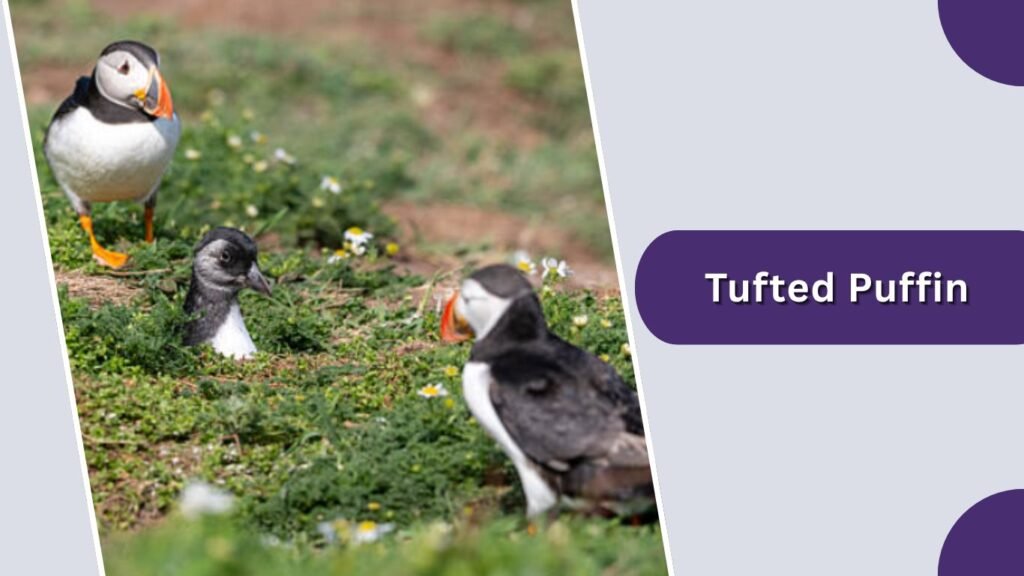
The Tufted Puffin is a striking member of the auk family, easily recognized by its bold black body and long golden head plumes during the breeding season. Found in the North Pacific, this seabird is well adapted to life in cold marine environments and spends most of its time at sea.
Identification
- Medium to large seabird with a wingspan of about 60–70 cm
- Mostly black body with a white face patch in breeding season
- Thick orange-red bill
- Long golden tufts extending from behind the eyes
- Bright red legs and webbed feet
- Strong, compact body with short wings
Habitat
Tufted Puffins are found along coastal cliffs, rocky islands, and offshore waters in the North Pacific, including Alaska, Russia, and parts of North America. They nest in burrows dug into soil or in rocky crevices. Outside the breeding season, they remain at sea.
Behavior
These birds are strong swimmers and divers, using their wings to “fly” underwater while hunting. They are usually seen alone or in small groups at sea but gather in colonies during breeding. Their flight is fast and direct, with rapid wingbeats.
Diet
Tufted Puffins mainly feed on small fish such as herring and sand lance. They also eat squid and crustaceans. They dive underwater to catch prey and can carry multiple fish in their bill to feed their young.
