
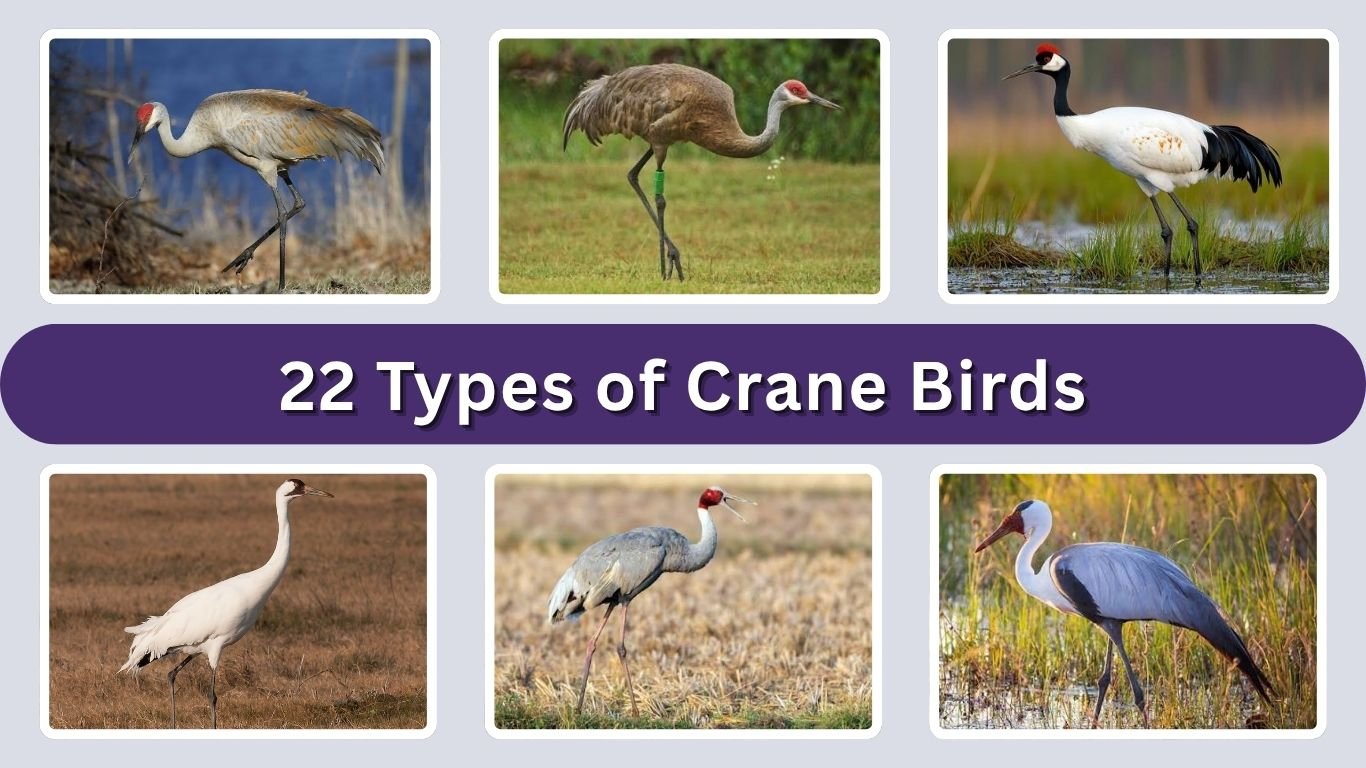
Crane birds are among the world’s tallest and most graceful flying birds. They are recognized by their long necks, extended legs, broad wings, and impressive courtship dances. Cranes inhabit wetlands, grasslands, tundra, agricultural fields, and river valleys across Africa, Asia, Europe, Australia, and North America. Some species migrate thousands of miles, while others remain within the same region throughout the year. This guide explores 22 types of crane birds, including major species and notable subspecies, with information about their appearance, size, habitat, diet, distribution, breeding behavior, and other identifying characteristics.
1. Grey Crowned Crane
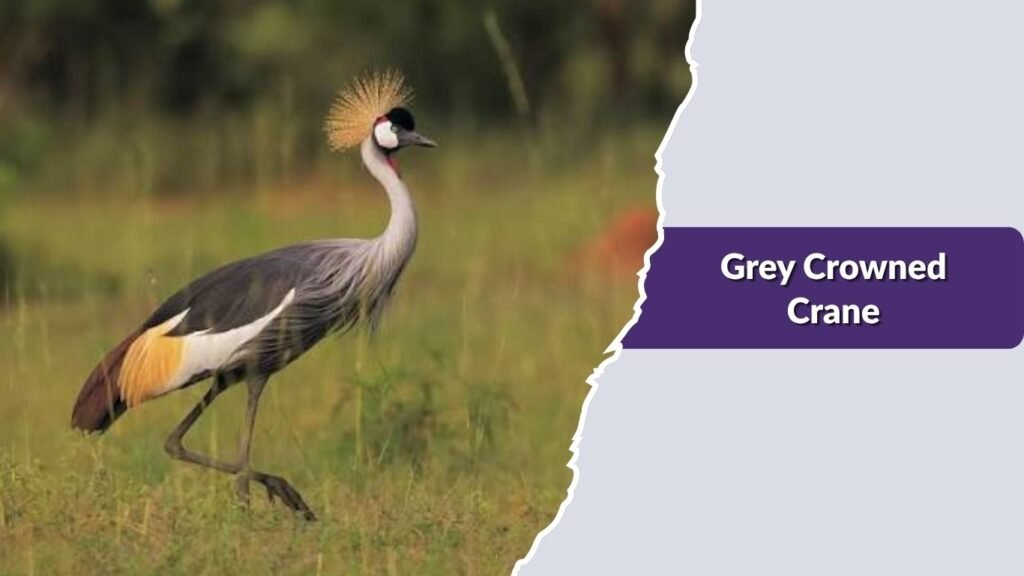
The grey crowned crane (Balearica regulorum) is an elegant African bird known for its golden crown of stiff feathers. It lives mainly in wetlands, grasslands, marshes, and agricultural areas across eastern and southern Africa. Uganda recognizes this beautiful crane as its national bird.
Identification
- Height: About 3.3 feet
- Wingspan: Up to 6.5 feet
- Weight: Around 6.5–8.5 pounds
- Body: Mainly grey feathers
- Head: Golden crown with white cheek patches
- Neck: Pale grey
- Throat: Bright red inflatable pouch
- Legs: Long and dark
Habitat and Distribution
Grey crowned cranes occur from Uganda and Kenya southward to South Africa. They prefer shallow wetlands surrounded by open grasslands, where they can feed and build nests. They may also visit cultivated fields, riverbanks, and seasonal floodplains.
Diet and Feeding
These cranes eat grass seeds, grains, insects, frogs, small reptiles, worms, and aquatic animals. They walk slowly through grasslands and wetlands, using their feet to disturb insects and other small prey. They sometimes follow grazing livestock to capture insects flushed from the vegetation.
Behavior and Breeding
Grey crowned cranes perform impressive courtship dances involving bowing, jumping, wing spreading, and tossing grass. Their nests are built from wetland vegetation. Females generally lay two to four eggs, and both parents protect and care for the chicks.
2. Black Crowned Crane
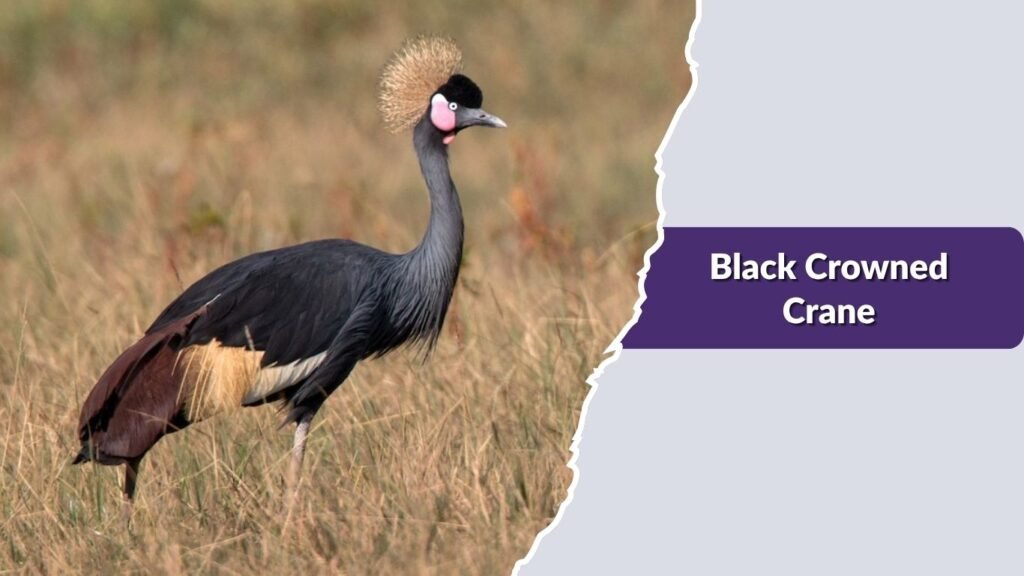
The black crowned crane (Balearica pavonina) is a striking crane native to Africa’s Sahel and savanna regions. It resembles the grey crowned crane but has darker body feathers. This social bird often gathers in pairs, family groups, or larger flocks near wetlands and feeding areas.
Identification
- Height: Approximately 3.3 feet
- Wingspan: Around 5.9–6.5 feet
- Weight: About 6.5–8.5 pounds
- Body: Dark slate-grey to black
- Head: Golden crown of stiff feathers
- Cheeks: White and red patches
- Throat: Small red pouch
- Legs: Long and black
Habitat and Distribution
Black crowned cranes inhabit wetlands, shallow marshes, flooded grasslands, and open savannas across western and central Africa. Their range includes countries such as Senegal, Chad, Sudan, Ethiopia, and Kenya. Access to freshwater is particularly important during the breeding season.
Diet and Feeding
Their varied diet includes grass seeds, grains, insects, worms, mollusks, frogs, small fish, and reptiles. Black crowned cranes forage by walking through shallow water or open grasslands. They may stamp their feet to disturb hidden prey before quickly catching it.
Behavior and Breeding
Pairs strengthen their bonds through energetic dances, calls, and wing displays. The female usually lays two to five eggs in a nest made from grasses and other wetland plants. Unlike most cranes, black crowned cranes can perch in trees because they possess a long hind toe.
3. Demoiselle Crane
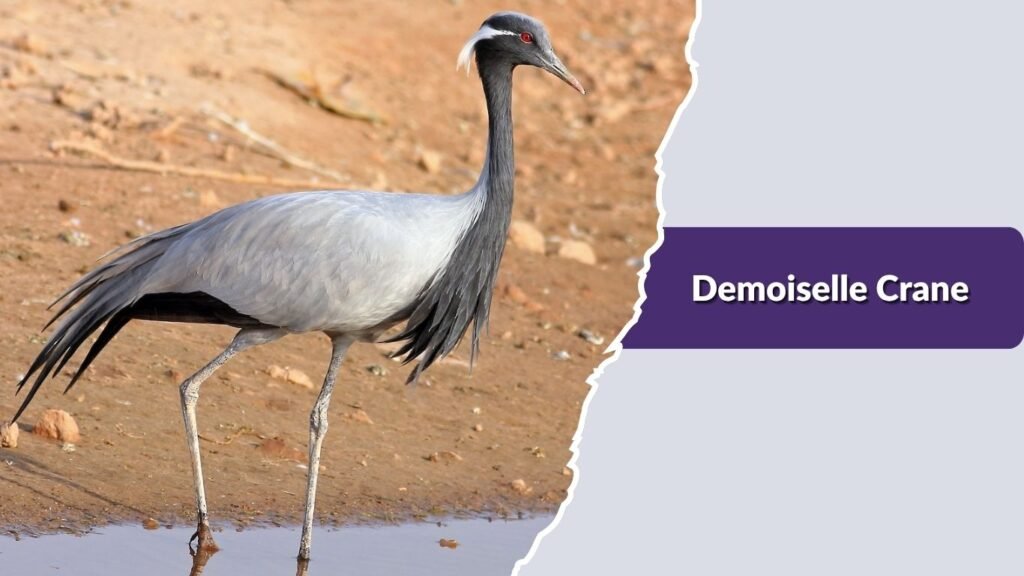
The Demoiselle crane (Anthropoides virgo) is the smallest crane species in the world. Its graceful body, long white neck feathers, and elegant movements inspired its name, which means “young lady” in French. It inhabits open landscapes across Europe and Asia and undertakes demanding seasonal migrations.
Identification
- Height: About 2.5–3 feet
- Wingspan: Approximately 5–5.5 feet
- Weight: Around 4.5–6.5 pounds
- Body: Bluish-grey
- Head and neck: Mostly black
- Face: White feather patches behind the eyes
- Eyes: Reddish-orange
- Bill: Short and greyish-green
Habitat and Distribution
Demoiselle cranes breed in dry grasslands, steppes, semi-deserts, and open plains from southeastern Europe through Central Asia. Many populations migrate to India and parts of Africa during winter. They often rest near rivers, lakes, and shallow wetlands while migrating.
Diet and Feeding
Their diet consists mainly of seeds, grasses, grains, and other plant material. They also consume insects, worms, small reptiles, and occasionally frogs. Demoiselle cranes regularly forage in agricultural fields, especially where wheat, millet, and other grains are available.
Behavior and Breeding
These cranes are famous for crossing the Himalayas during migration. Courtship involves dancing, bowing, running, and jumping. The female usually lays two eggs in a simple ground nest, and both parents aggressively defend their chicks from predators.
4. Blue Crane
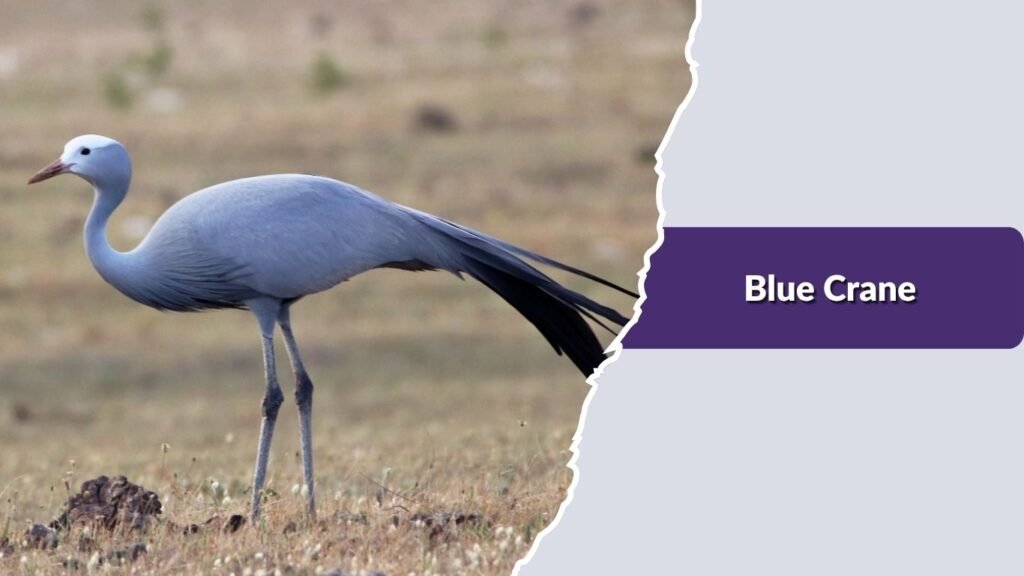
The blue crane (Anthropoides paradiseus) is the national bird of South Africa. It has a delicate appearance, long wing feathers, and a distinctive bluish-grey body. Despite being relatively small, it is territorial and may behave aggressively when protecting its nest or young.
Identification
- Height: About 3.3–4 feet
- Wingspan: Approximately 5.5–6.5 feet
- Weight: Around 8–13 pounds
- Body: Pale bluish-grey
- Head: Rounded with white upper feathers
- Bill: Pinkish-grey
- Wings: Long, dark trailing feathers
- Legs: Long and dark grey
Habitat and Distribution
Blue cranes occur mainly in South Africa, with a small population in Namibia. They favor dry grasslands, open agricultural areas, shallow wetlands, and highland plateaus. Unlike many cranes, they frequently breed in comparatively dry environments.
Diet and Feeding
Blue cranes eat grass seeds, roots, bulbs, grains, insects, snails, frogs, and small reptiles. They forage while walking slowly across open ground. Agricultural fields can provide food, although exposure to pesticides and intentional poisoning presents serious risks.
Behavior and Breeding
Pairs perform elaborate courtship dances involving jumps, bows, running, and wing spreading. The female normally lays two eggs directly on the ground or in sparse vegetation. Both parents incubate the eggs and remain highly protective of their chicks.
5. Wattled Crane
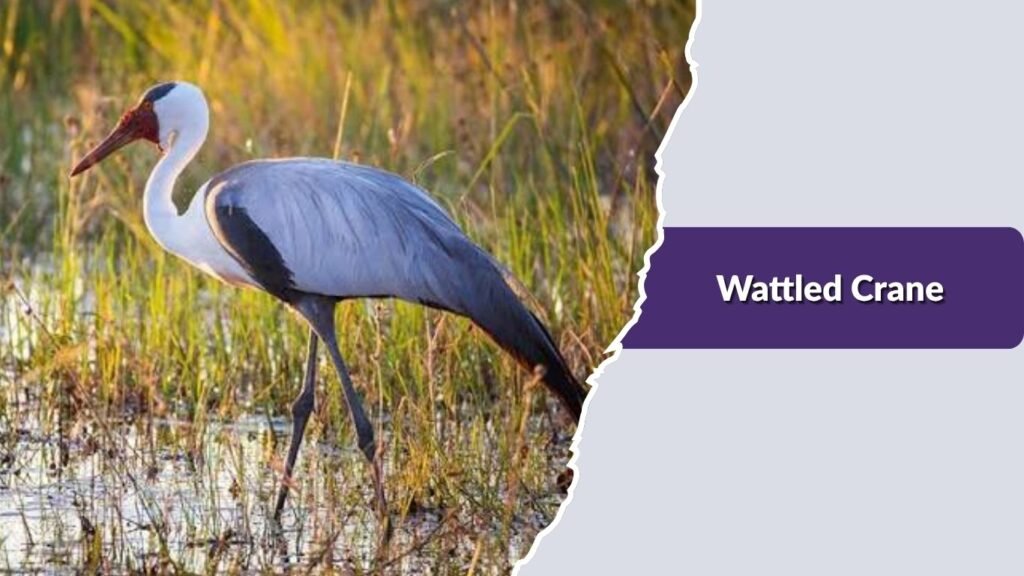
The wattled crane (Grus carunculata) is the largest crane species found in Africa. It receives its name from the two white feathered wattles hanging below its throat. This crane depends strongly on shallow wetlands containing suitable aquatic plants for feeding and nesting.
Identification
- Height: Up to 5.7 feet
- Wingspan: Around 7.5–8.5 feet
- Weight: Approximately 14–20 pounds
- Body: Grey back with a white neck
- Face: White with a red bare patch
- Throat: Two white wattles
- Wings: Dark flight feathers
- Bill: Long and pale
Habitat and Distribution
Wattled cranes inhabit large floodplains, marshes, and shallow wetlands in sub-Saharan Africa. Important populations occur in Zambia, Botswana, Ethiopia, and the Democratic Republic of the Congo. They require stable wetland conditions and are vulnerable to drainage and altered flooding cycles.
Diet and Feeding
Their diet is dominated by aquatic plants, particularly the underground roots and tubers of sedges. They use their long bills to dig through soft wetland soil. Wattled cranes also consume seeds, insects, snails, frogs, small fish, and reptiles.
Behavior and Breeding
Wattled cranes form long-term pair bonds and perform coordinated dances and calls. The female usually lays one egg in a large nest surrounded by shallow water. Because they typically raise only one chick, their population recovers slowly after declines.
6. Siberian Crane
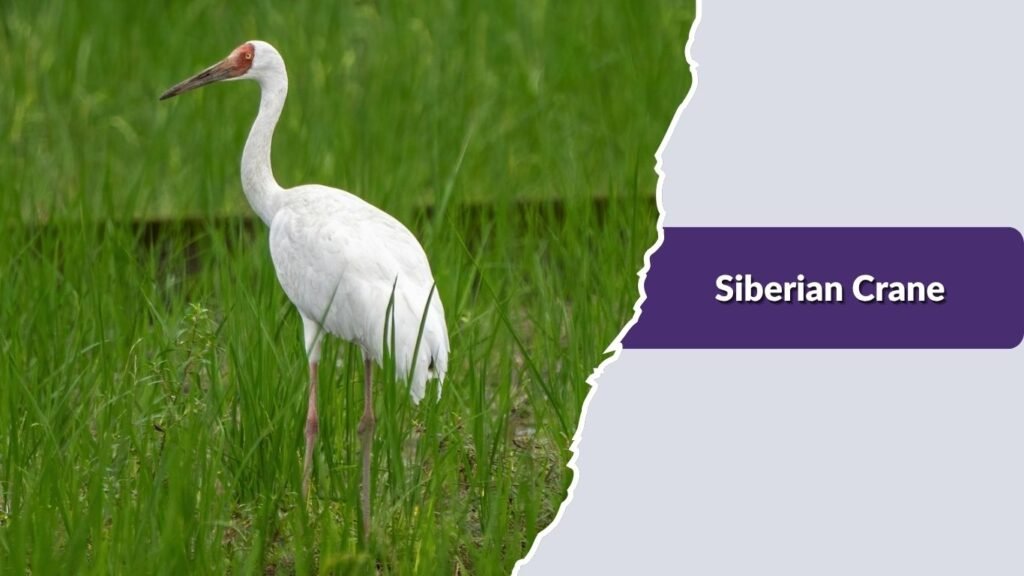
The Siberian crane (Leucogeranus leucogeranus) is a large, mostly white crane that breeds in the Russian Arctic. It is among the world’s most threatened cranes because of wetland loss, hunting, and disturbances along its migration routes and wintering areas.
Identification
- Height: About 4.5–4.7 feet
- Wingspan: Approximately 6.9–7.5 feet
- Weight: Around 11–19 pounds
- Plumage: Mostly pure white
- Wings: Black primary feathers visible in flight
- Face: Bare and reddish
- Bill: Long, pointed, and reddish-brown
- Legs: Pinkish-red
Habitat and Distribution
Siberian cranes breed in remote Arctic wetlands of northern Russia. The main surviving population migrates thousands of miles to winter around Poyang Lake in China. They rely heavily on shallow freshwater wetlands throughout their lives.
Diet and Feeding
These cranes mainly eat aquatic plants, roots, tubers, and sedge shoots. Their long bills help them probe into soft mud. During the breeding season, they may also consume insects, fish, frogs, small rodents, eggs, and other animal matter.
Behavior and Breeding
Siberian cranes are powerful long-distance migrants. Pairs build nests from grasses and sedges in shallow water. Females usually lay two eggs, but competition between the chicks commonly results in only one surviving to leave the nest.
7. Sandhill Crane
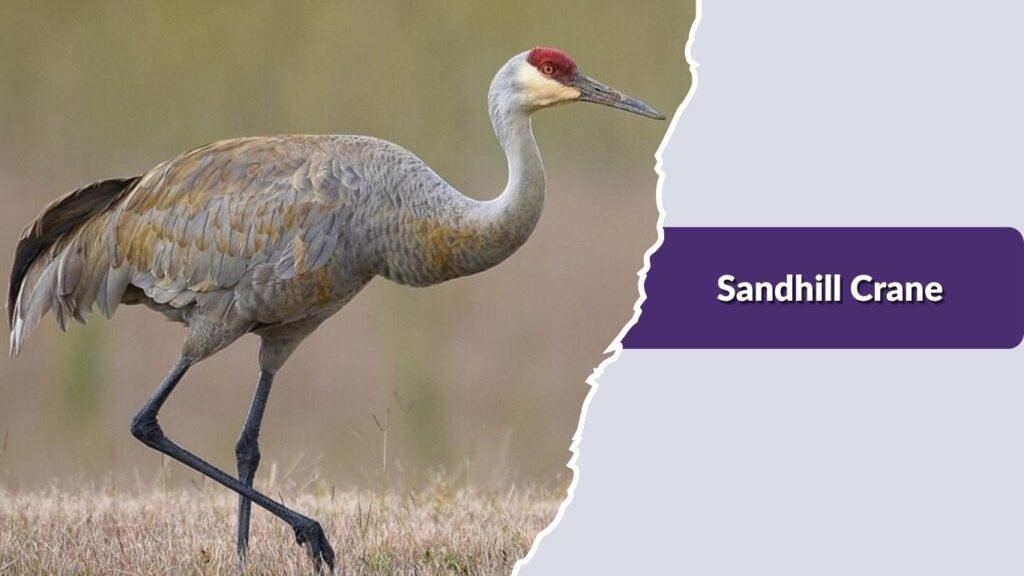
The sandhill crane (Antigone canadensis) is a tall, widespread North American crane recognized by its red forehead and loud, rattling call. Large migrating flocks create spectacular gatherings at traditional stopover sites, particularly along rivers, wetlands, and agricultural landscapes.
Identification
- Height: About 3–4 feet
- Wingspan: Approximately 5.5–7.5 feet
- Weight: Around 6–14 pounds
- Body: Slate-grey
- Forehead: Bare red crown patch
- Cheeks: White
- Bill: Long and pointed
- Legs: Long and dark
Habitat and Distribution
Sandhill cranes occur throughout much of North America and parts of northeastern Siberia. They inhabit marshes, wet meadows, grasslands, river valleys, and agricultural fields. Some populations migrate long distances, while cranes in Florida, Mississippi, and Cuba are mostly nonmigratory.
Diet and Feeding
These adaptable omnivores eat seeds, grains, berries, roots, insects, worms, snails, frogs, snakes, rodents, and occasionally bird eggs. During migration, they frequently forage in harvested cornfields to build energy reserves.
Behavior and Breeding
Sandhill cranes are known for elaborate dances involving jumping, bowing, running, and tossing vegetation. Their unison calls help pairs maintain strong bonds. Females generally lay two eggs in a wetland nest, and both parents raise the young.
8. Sarus Crane
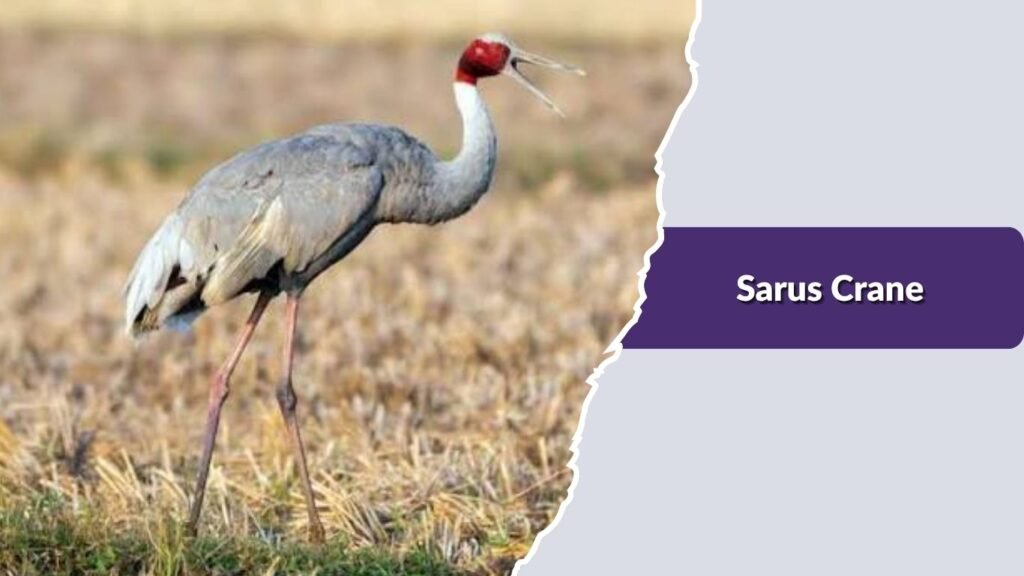
The Sarus crane (Antigone antigone) is the tallest flying bird in the world. Known for its red head, long legs, and powerful calls, it is strongly associated with wetlands and agricultural landscapes. Sarus cranes are also admired for forming long-lasting pair bonds.
Identification
- Height: Up to 6 feet
- Wingspan: Approximately 7.2–8.5 feet
- Weight: Around 11–26 pounds
- Body: Pale grey
- Head and upper neck: Bare and red
- Crown: Greyish-green
- Bill: Long and pointed
- Legs: Pinkish-red
Habitat and Distribution
Sarus cranes occur in parts of India, Nepal, Southeast Asia, and northern Australia. They inhabit marshes, flooded grasslands, shallow lakes, rice fields, and agricultural wetlands. Indian populations often live close to people in cultivated landscapes.
Diet and Feeding
These cranes eat aquatic plants, seeds, grains, roots, insects, frogs, fish, snakes, crustaceans, and small vertebrates. They forage by walking through shallow water or fields and probing mud and vegetation with their long bills.
Behavior and Breeding
Sarus cranes perform spectacular dances and produce loud calls that can travel long distances. Their large nests are built from wetland vegetation in shallow water. Females usually lay one or two eggs, which both parents incubate and protect.
9. Brolga
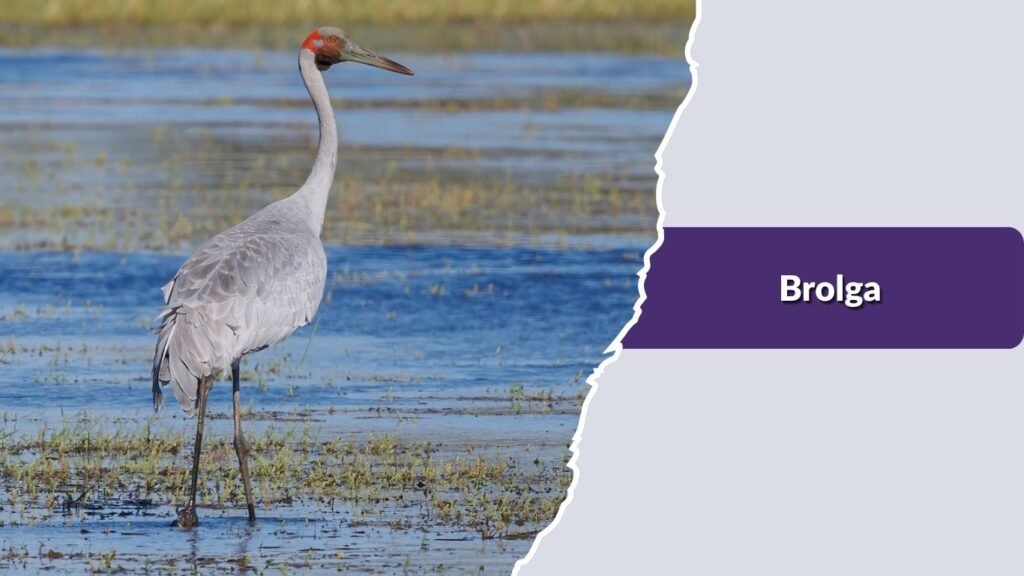
The brolga (Antigone rubicunda) is a large Australian crane famous for its graceful courtship dances. It is one of Australia’s most recognizable wetland birds and is featured on the state emblem of Queensland. Brolgas often gather in large flocks outside the breeding season.
Identification
- Height: About 3.3–4.6 feet
- Wingspan: Approximately 5.5–7.9 feet
- Weight: Around 11–19 pounds
- Body: Silver-grey
- Head: Bare red skin
- Throat: Black dewlap
- Eyes: Orange or yellowish
- Legs: Long and dark grey
Habitat and Distribution
Brolgas occur across northern and eastern Australia, with limited numbers in southern New Guinea. They occupy freshwater marshes, floodplains, grasslands, coastal mudflats, and agricultural areas. Seasonal rainfall strongly influences their movements and breeding activity.
Diet and Feeding
Their diet includes wetland plants, grass seeds, grains, tubers, insects, mollusks, crustaceans, frogs, and small reptiles. Brolgas dig into soft soil for roots and underground tubers. They may also feed in cultivated grain fields.
Behavior and Breeding
Brolgas perform energetic dances involving leaps, bows, running, and vegetation tossing. Breeding pairs build large mound-shaped nests in shallow wetlands. Females generally lay two eggs, and both parents care for the chicks until they become independent.
10. White-Naped Crane
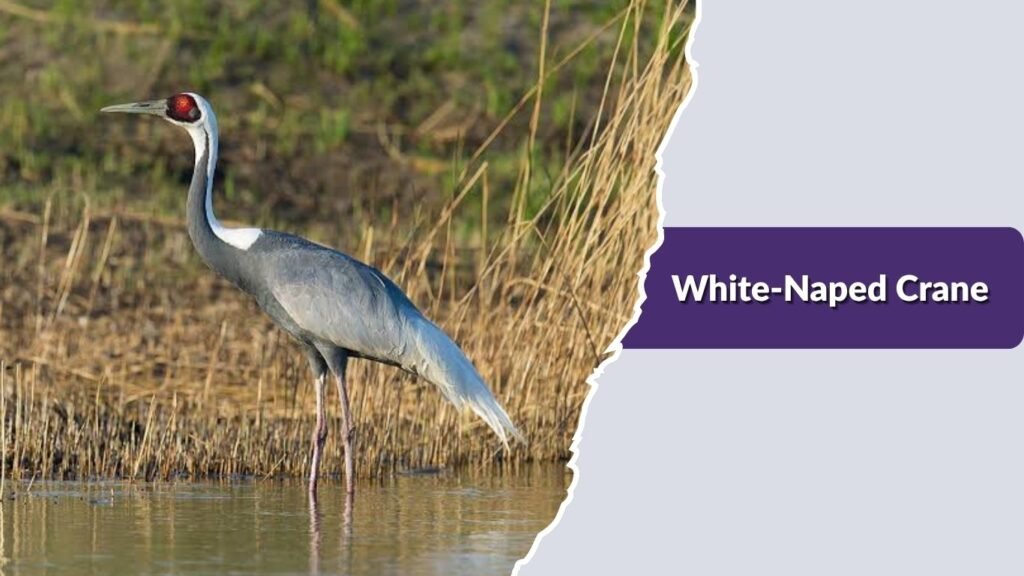
The white-naped crane (Antigone vipio) is an elegant crane of East Asia. Its name comes from the broad white stripe extending from the back of its head down its neck. It is a migratory species that depends on wetlands, grasslands, and traditional stopover sites.
Identification
- Height: About 3.7–4.1 feet
- Wingspan: Approximately 6.5–7 feet
- Weight: Around 10–13 pounds
- Body: Slate-grey
- Neck: White-striped
- Face: Bare red skin around the eyes
- Bill: Long and yellowish
- Legs: Pinkish-red
Habitat and Distribution
White-naped cranes breed in northeastern Mongolia, northern China, and southeastern Russia. They migrate to wintering grounds in China, Japan, and the Korean Peninsula. Their habitats include shallow marshes, wet meadows, river valleys, and cultivated fields.
Diet and Feeding
These cranes eat roots, tubers, seeds, grains, aquatic plants, insects, frogs, fish, and small reptiles. They use their long bills to probe wet soil and shallow water. During winter, they regularly forage in rice paddies and harvested fields.
Behavior and Breeding
Pairs maintain their bonds through synchronized calling and dancing. They build nests from grasses, reeds, and sedges in shallow wetlands. The female typically lays two eggs, and both adults incubate them and defend the chicks.
11. Hooded Crane
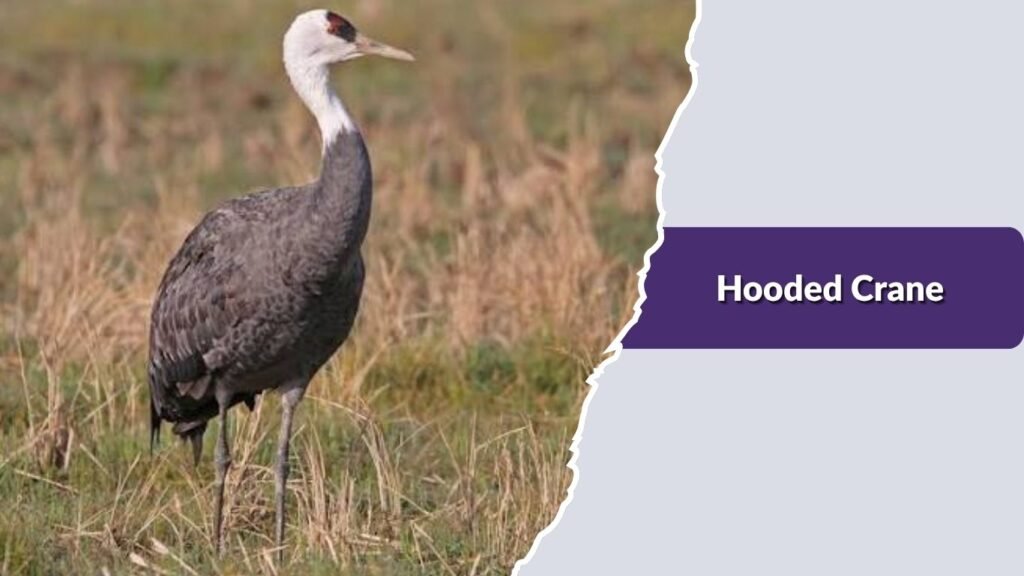
The hooded crane (Grus monacha) is a relatively small crane named for the dark hood-like feathers covering its head and neck. This migratory Asian species is shy in its natural habitat but may gather in large winter flocks at protected feeding grounds.
Identification
- Height: About 3.3 feet
- Wingspan: Approximately 5.2–5.9 feet
- Weight: Around 7.5–10.5 pounds
- Body: Dark grey
- Head and neck: Mostly white
- Forehead: Bare red crown patch
- Bill: Yellowish or grey-green
- Legs: Dark grey to black
Habitat and Distribution
Hooded cranes breed in remote wetlands and forested marshes of southeastern Russia and northern China. They migrate to Japan, South Korea, and parts of eastern China for winter. Japan’s Izumi region supports a particularly large wintering population.
Diet and Feeding
Their diet includes rice, grains, grass seeds, roots, aquatic plants, insects, worms, frogs, and small fish. Hooded cranes forage in marshes, rice paddies, mudflats, and agricultural fields. They may feed alongside white-naped and red-crowned cranes.
Behavior and Breeding
Hooded cranes form long-term pairs and communicate through loud, coordinated calls. Their breeding behavior is difficult to observe because nesting grounds are remote. Females generally lay two eggs in nests constructed from wetland plants.
12. Common Crane
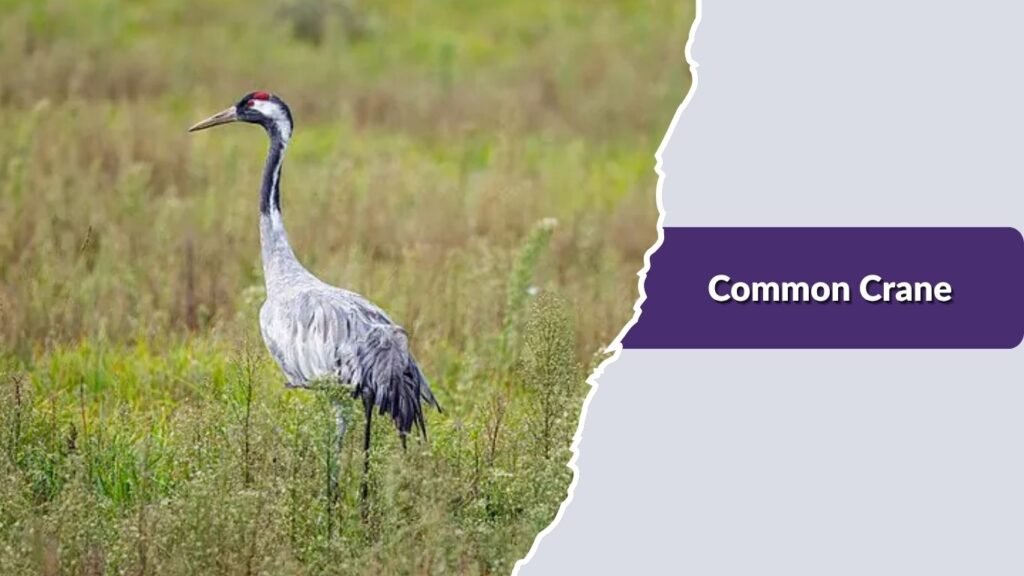
The common crane (Grus grus), also called the Eurasian crane, is a large migratory bird found across Europe and Asia. Its loud trumpeting calls and V-shaped migrating flocks are familiar sights along major migration routes during spring and autumn.
Identification
- Height: About 3.3–4.3 feet
- Wingspan: Approximately 6.5–8 feet
- Weight: Around 6.5–15 pounds
- Body: Slate-grey
- Head and upper neck: Black and white
- Crown: Bare red patch
- Wings: Long, dark secondary feathers
- Legs: Long and black
Habitat and Distribution
Common cranes breed from northern and central Europe across Russia and northern Asia. They favor marshes, bogs, wet meadows, and quiet forest wetlands. Wintering populations travel to southern Europe, North Africa, the Middle East, India, and China.
Diet and Feeding
These omnivorous cranes eat seeds, grains, berries, roots, potatoes, insects, worms, snails, frogs, reptiles, and small mammals. They frequently forage in farmland and harvested fields during migration and winter.
Behavior and Breeding
Common cranes perform elaborate dances consisting of bows, jumps, wing displays, and object tossing. Pairs build large ground nests in wetlands. Females usually lay two eggs, and both parents participate in incubation and chick care.
13. Whooping Crane
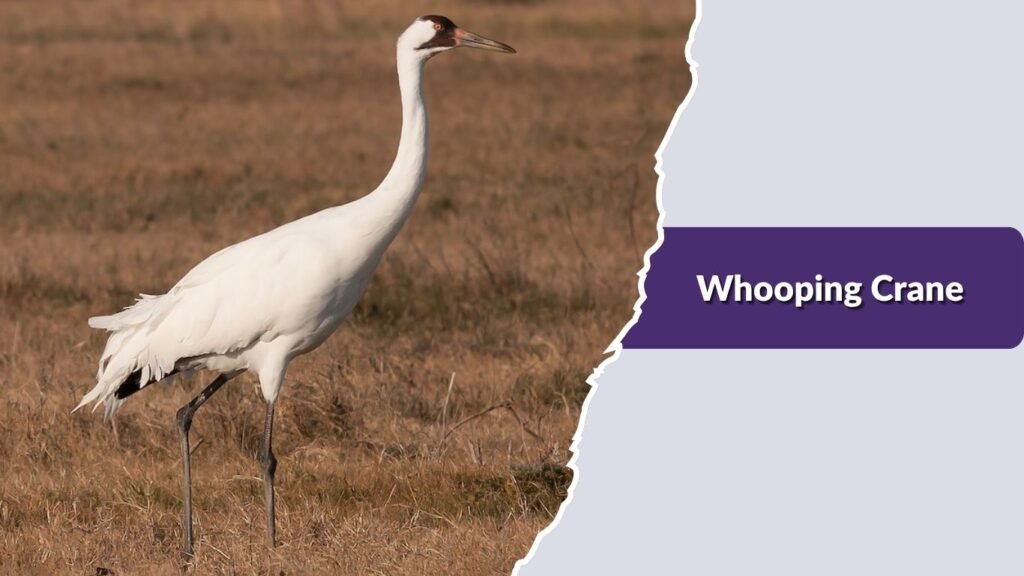
The whooping crane (Grus americana) is the tallest bird native to North America. Its name comes from its powerful, trumpet-like call. Once close to extinction, the species has recovered gradually through habitat protection, captive breeding, and carefully managed reintroduction programs.
Identification
- Height: About 5 feet
- Wingspan: Approximately 7–7.5 feet
- Weight: Around 14–17 pounds
- Plumage: Almost entirely white
- Wings: Black tips visible during flight
- Crown and face: Bare red skin
- Bill: Long, straight, and dark
- Legs: Long and black
Habitat and Distribution
The main wild population breeds in Wood Buffalo National Park in Canada and winters along the Texas Gulf Coast. Whooping cranes use shallow wetlands, marshes, coastal estuaries, mudflats, and nearby grasslands.
Diet and Feeding
Whooping cranes eat blue crabs, crayfish, clams, frogs, fish, insects, berries, roots, grains, snakes, and small rodents. Their diet changes depending on the season and available food. Coastal blue crabs are especially important during winter.
Behavior and Breeding
Pairs perform courtship dances involving leaps, bows, calls, and wing spreading. Females usually lay two eggs in a wetland nest, although only one chick commonly survives. Both parents care for and protect the young.
14. Black-Necked Crane
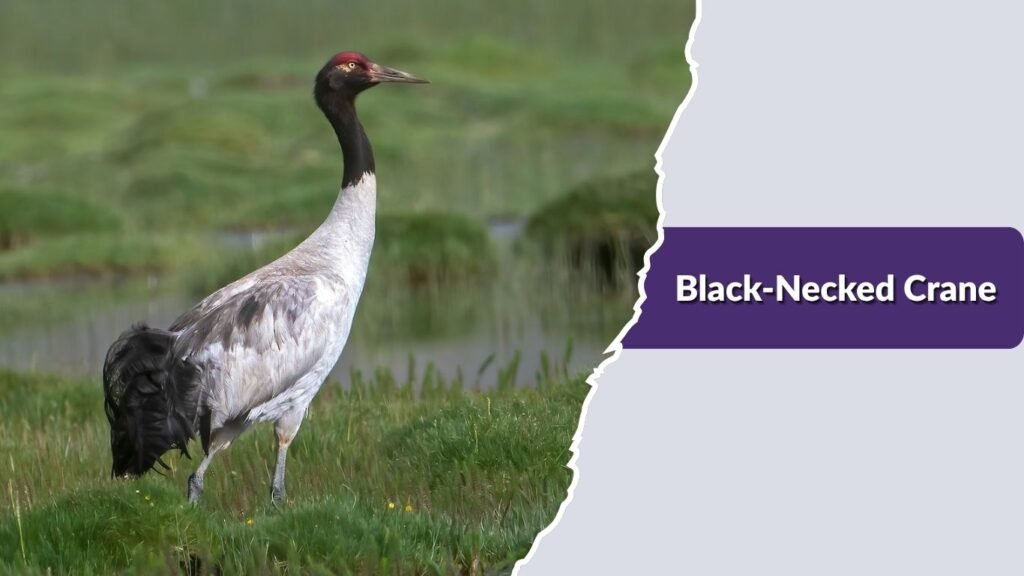
The black-necked crane (Grus nigricollis) is a high-altitude crane native to the Tibetan Plateau and surrounding regions. It is adapted to cold mountain wetlands and is culturally significant in several Himalayan communities, where it is viewed as a symbol of peace and good fortune.
Identification
- Height: About 4–4.5 feet
- Wingspan: Approximately 7–7.7 feet
- Weight: Around 12–15 pounds
- Body: Pale greyish-white
- Head and neck: Black
- Crown: Bare red patch
- Eyes: Yellow
- Legs: Long and dark
Habitat and Distribution
Black-necked cranes breed in high-altitude wetlands across Tibet, western China, and northern India. During winter, they move to lower valleys in Bhutan, southern Tibet, and parts of China and India. They favor marshes, river valleys, wet meadows, and agricultural fields.
Diet and Feeding
Their diet includes plant roots, tubers, grains, seeds, insects, worms, frogs, fish, snails, and small rodents. During winter, they frequently forage in barley, wheat, and potato fields near traditional roosting wetlands.
Behavior and Breeding
Pairs perform synchronized calls and energetic courtship dances. They construct mound-like nests from grasses and sedges in shallow water. Females commonly lay two eggs, with both parents sharing incubation and chick-rearing duties.
15. Red-Crowned Crane
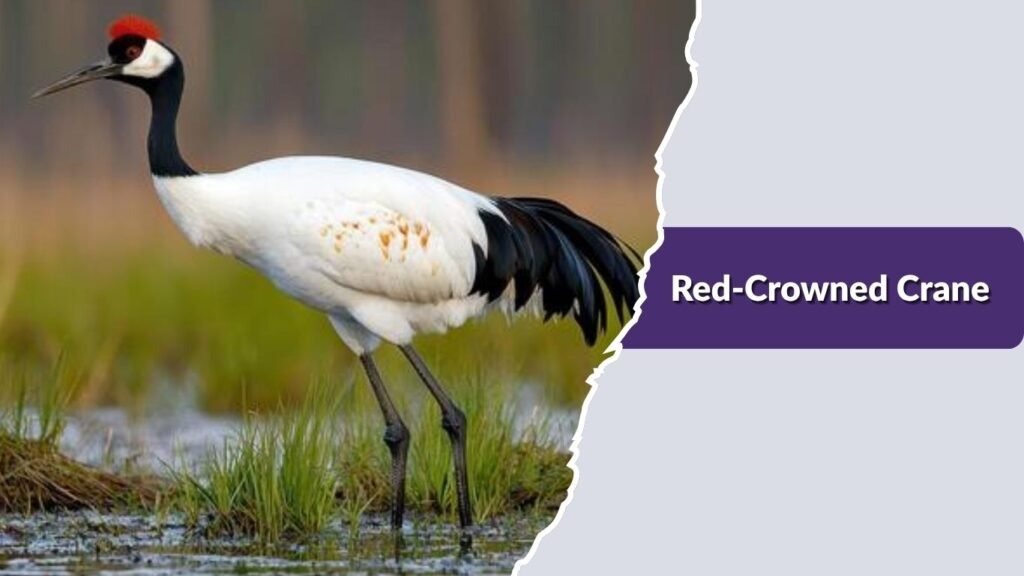
The red-crowned crane (Grus japonensis) is a large East Asian crane admired for its white plumage and bright red crown. Also called the Japanese crane, it symbolizes longevity, loyalty, and good fortune in Japanese and other East Asian traditions.
Identification
- Height: About 5 feet
- Wingspan: Approximately 7.2–8.2 feet
- Weight: Around 15–23 pounds
- Body: Mostly white
- Neck and secondary wing feathers: Black
- Crown: Bare red patch
- Bill: Long and pointed
- Legs: Long and black
Habitat and Distribution
Red-crowned cranes occur in northeastern China, southeastern Russia, Mongolia, Korea, and Japan. Migratory populations breed in mainland wetlands and travel south for winter. The population on Hokkaido, Japan, is largely nonmigratory.
Diet and Feeding
These cranes consume aquatic plants, rice, grains, insects, fish, frogs, crabs, snails, small mammals, and occasionally other birds. They search for food in marshes, shallow rivers, mudflats, grasslands, and agricultural fields.
Behavior and Breeding
Red-crowned cranes are famous for graceful dances involving bows, jumps, and loud unison calls. Pairs often remain together for many years. Females usually lay two eggs in large wetland nests built from reeds and grasses.
16. Greater Sandhill Crane
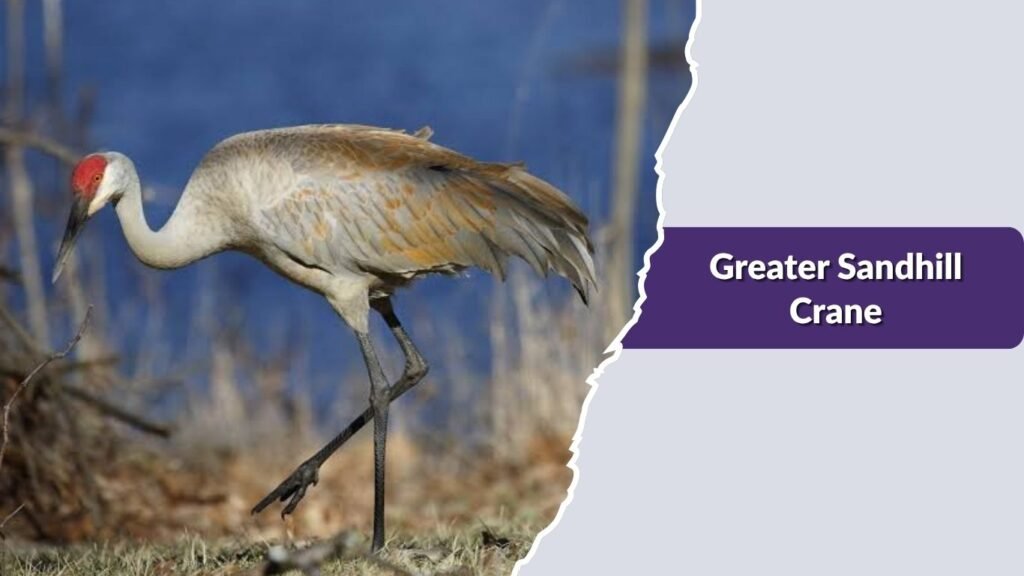
The greater sandhill crane (Antigone canadensis tabida) is the largest sandhill crane subspecies. It is known for its long migrations, loud rattling calls, and impressive gatherings at traditional stopover areas. Its grey plumage may appear rusty brown after being stained with mud.
Identification
- Height: About 4–4.5 feet
- Wingspan: Approximately 6.5–7.5 feet
- Weight: Around 10–14 pounds
- Body: Grey, sometimes stained rusty brown
- Forehead: Bare red crown patch
- Cheeks: White
- Bill: Long and pointed
- Legs: Long and dark
Habitat and Distribution
Greater sandhill cranes breed across parts of Canada, Alaska, the northern United States, and the Great Lakes region. They winter in the southern United States and northern Mexico. Their preferred habitats include marshes, wet meadows, grasslands, and farmland.
Diet and Feeding
They eat grains, seeds, berries, roots, insects, worms, frogs, snakes, rodents, and other small animals. Large flocks often forage in harvested cornfields during migration, while wetlands provide safe nighttime roosting areas.
Behavior and Breeding
Pairs perform courtship dances and produce coordinated calls. Their nests are normally constructed from reeds and grasses in shallow wetlands. Females usually lay two eggs, and both parents protect and feed the chicks.
17. Lesser Sandhill Crane
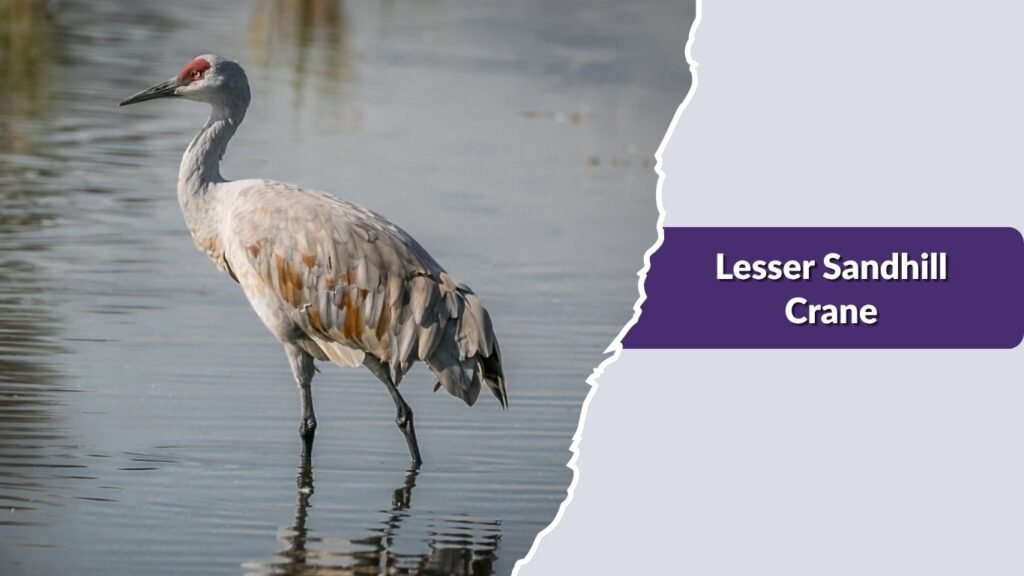
The lesser sandhill crane (Antigone canadensis canadensis) is the smallest and most numerous sandhill crane subspecies. It is a remarkable long-distance traveler, migrating between Arctic breeding grounds and warmer wintering areas in the southern United States and Mexico.
Identification
- Height: About 3–3.5 feet
- Wingspan: Approximately 5.5–6.5 feet
- Weight: Around 6–8 pounds
- Body: Slate-grey
- Forehead: Red crown patch
- Cheeks: White
- Neck: Long and slender
- Legs: Long and dark
Habitat and Distribution
Lesser sandhill cranes breed in Alaska, northern Canada, and northeastern Siberia. During winter, they travel to Texas, New Mexico, Arizona, California, and Mexico. They use tundra wetlands, shallow marshes, river valleys, grasslands, and agricultural fields.
Diet and Feeding
Their varied diet includes grains, seeds, berries, roots, insects, worms, snails, frogs, reptiles, and small mammals. During migration, they often gather in harvested fields to feed before returning to shallow water to roost.
Behavior and Breeding
Lesser sandhill cranes migrate in large flocks, using rising warm air to conserve energy. Breeding pairs build ground nests from nearby vegetation. Females generally lay two eggs, and both parents defend the chicks.
18. Canadian Sandhill Crane
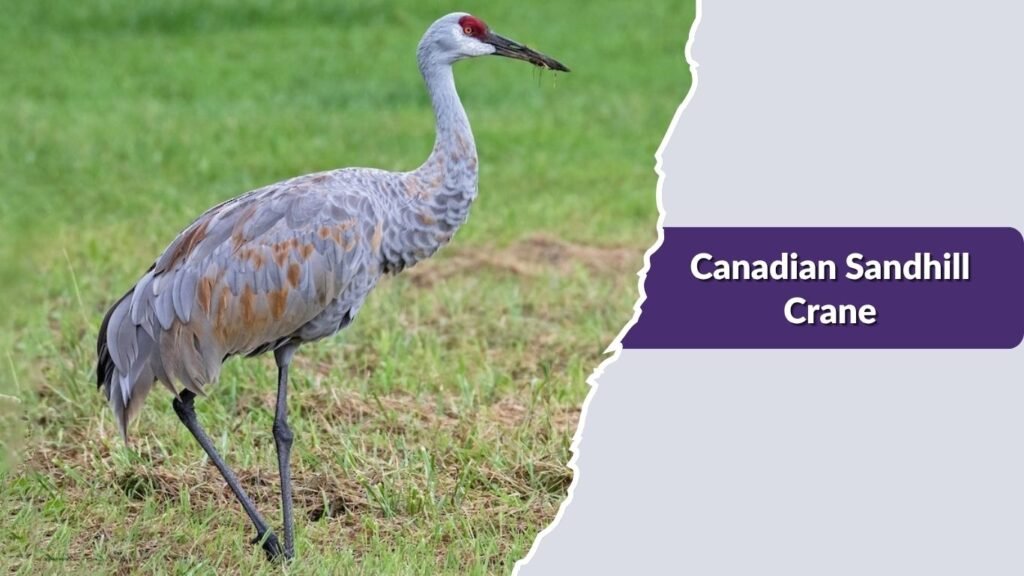
The Canadian sandhill crane (Antigone canadensis rowani) is a medium-sized form of the sandhill crane. Its size falls between the greater and lesser sandhill cranes. It is a migratory bird recognized by its grey plumage, red forehead, long legs, and rolling trumpet-like calls.
Identification
- Height: About 3.5–4 feet
- Wingspan: Approximately 6–7 feet
- Weight: Around 7–11 pounds
- Body: Slate-grey
- Forehead: Bare red patch
- Cheeks: White
- Bill: Long and pointed
- Legs: Long and dark
Habitat and Distribution
Canadian sandhill cranes breed across central and northern Canada. They migrate south through the central United States and spend winter in parts of Texas, New Mexico, and Mexico. They inhabit marshes, wet meadows, river valleys, grasslands, and agricultural fields.
Diet and Feeding
These omnivorous cranes eat seeds, grains, berries, roots, insects, worms, frogs, reptiles, and small mammals. During migration, they frequently feed in harvested corn and grain fields before gathering in wetlands to roost at night.
Behavior and Breeding
Pairs maintain strong bonds through dancing and coordinated calls. Females generally lay two eggs in a nest made from wetland vegetation. Both parents incubate the eggs, protect the nest, and care for the young cranes.
19. Florida Sandhill Crane
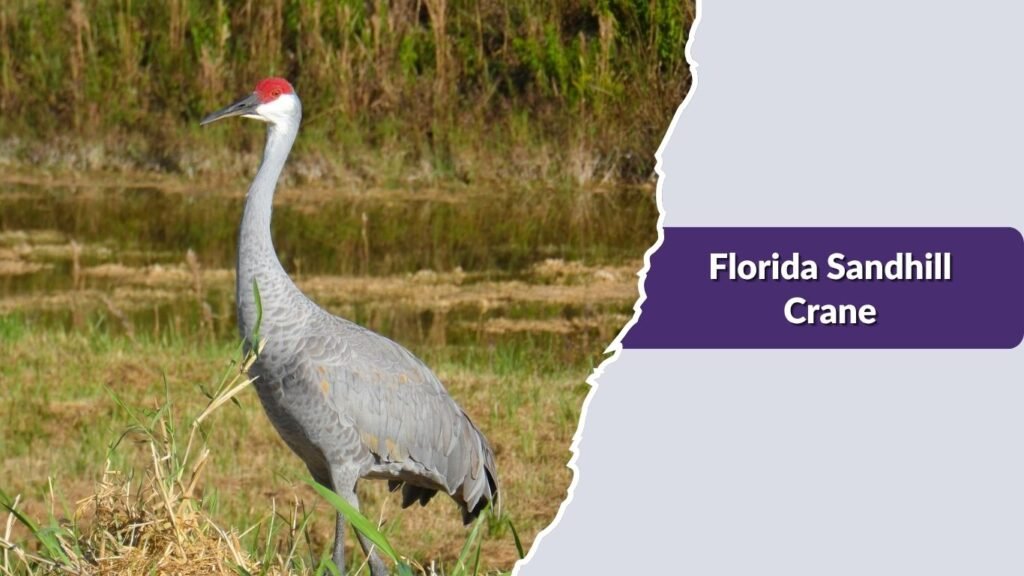
The Florida sandhill crane (Antigone canadensis pratensis) is a nonmigratory sandhill crane found primarily in Florida and southern Georgia. It is recognized by its loud calls and slow, deliberate walk. Unlike migratory sandhill cranes, it remains within its home region throughout the year.
Identification
- Height: About 4 feet
- Wingspan: Approximately 6–7 feet
- Weight: Around 7–11 pounds
- Body: Grey, often with rusty-brown staining
- Forehead: Bright red patch
- Cheeks: White
- Bill: Long and greyish
- Legs: Long and black
Habitat and Distribution
Florida sandhill cranes inhabit freshwater marshes, wet prairies, pastures, open grasslands, and agricultural areas. They sometimes visit lawns, golf courses, and suburban neighborhoods. However, they depend on shallow wetlands for nesting and nighttime protection.
Diet and Feeding
Their diet includes seeds, grains, berries, insects, worms, snails, frogs, lizards, snakes, small rodents, and occasionally bird eggs. They usually search for food by probing the soil or picking items from vegetation.
Behavior and Breeding
Breeding pairs perform energetic dances and produce loud unison calls. Their nests are built from grasses and aquatic plants in shallow water. Females normally lay two eggs, and both parents care for the chicks.
20. Mississippi Sandhill Crane
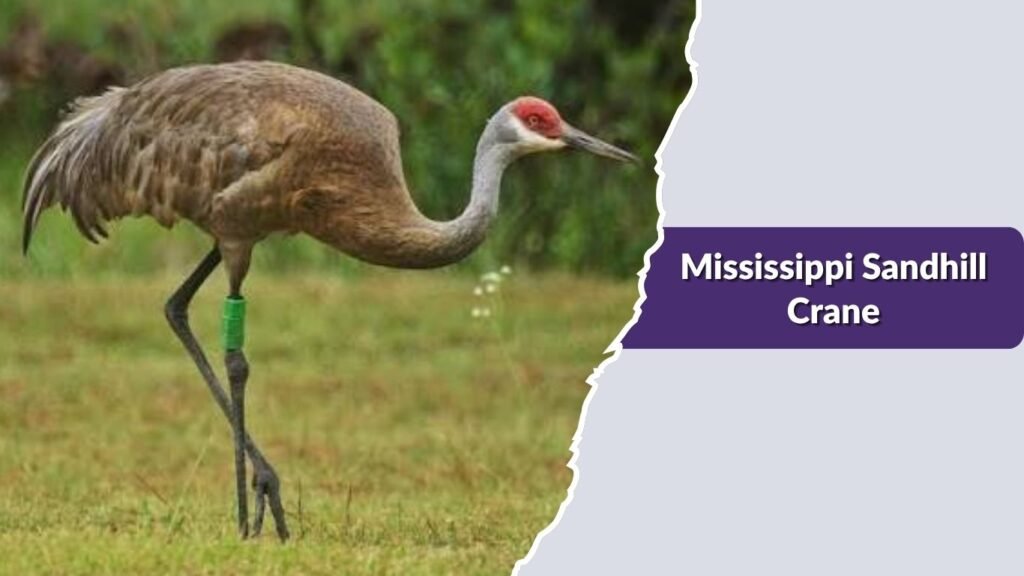
The Mississippi sandhill crane (Antigone canadensis pulla) is a rare, nonmigratory sandhill crane restricted to a small area of southern Mississippi. It is one of North America’s most endangered crane populations and depends heavily on protected wet pine savannas for survival.
Identification
- Height: About 3.5–4 feet
- Wingspan: Approximately 6–7 feet
- Weight: Around 7–11 pounds
- Body: Dark grey
- Back: Often stained rusty brown
- Forehead: Bare red crown patch
- Cheeks: White
- Legs: Long and dark
Habitat and Distribution
This crane occurs mainly within and around the Mississippi Sandhill Crane National Wildlife Refuge. Its preferred habitat is wet pine savanna containing shallow ponds, open grasslands, and scattered trees. Development and habitat conversion greatly reduced its original range.
Diet and Feeding
Mississippi sandhill cranes eat seeds, roots, berries, insects, worms, frogs, snakes, small mammals, and other available animals. They forage across open savannas and wetlands, using their long bills to probe the soil.
Behavior and Breeding
Pairs remain in the same general territory throughout the year. They build nests from grasses and wetland plants in shallow water. Females usually lay two eggs, but chick survival can be low because of predators, flooding, and unsuitable habitat conditions.
21. Indian Sarus Crane
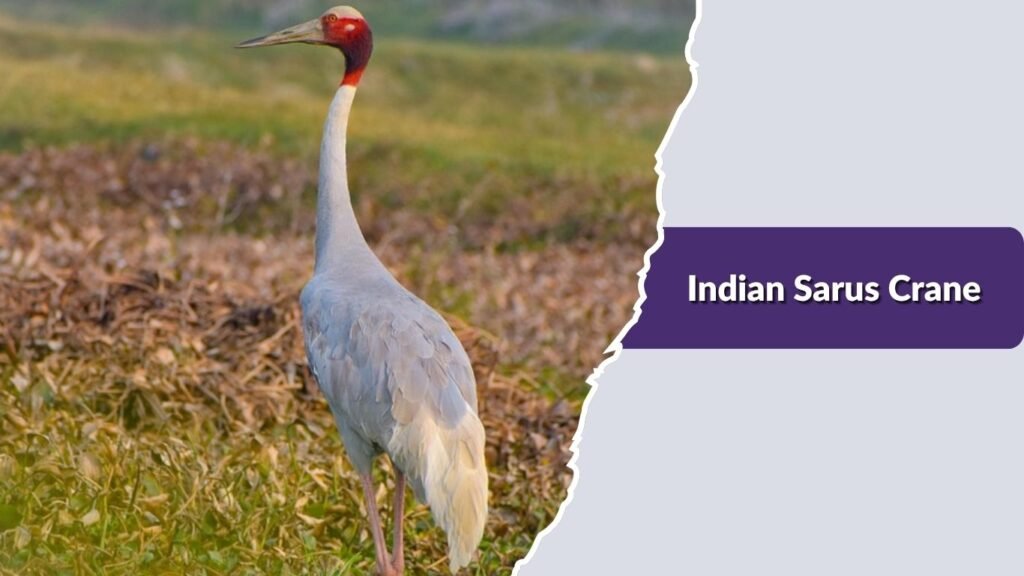
The Indian Sarus crane (Antigone antigone antigone) is the largest Sarus crane subspecies and the tallest flying bird. It is known for its pale-grey body, bare red head, and powerful calls. The bird is culturally respected in India as a symbol of devotion and lasting partnership.
Identification
- Height: Up to 6 feet
- Wingspan: Approximately 7.5–8.5 feet
- Weight: Around 15–26 pounds
- Body: Pale grey
- Head and upper neck: Bare and red
- Crown: Greyish-green
- Bill: Long and pointed
- Legs: Pinkish-red
Habitat and Distribution
Indian Sarus cranes occur mainly in northern and central India, with smaller populations in Nepal and Pakistan. They inhabit natural marshes, flooded grasslands, shallow lakes, rice paddies, and other agricultural wetlands.
Diet and Feeding
Their diet includes aquatic plants, roots, tubers, grains, seeds, insects, frogs, fish, snails, snakes, and small vertebrates. They forage by walking slowly through shallow water or cultivated fields and probing the mud.
Behavior and Breeding
Indian Sarus cranes form strong pair bonds and perform coordinated dances and calls. They construct large platform nests from wetland plants. Females usually lay one or two eggs, and both parents aggressively defend their nest and chicks.
22. Australian Sarus Crane
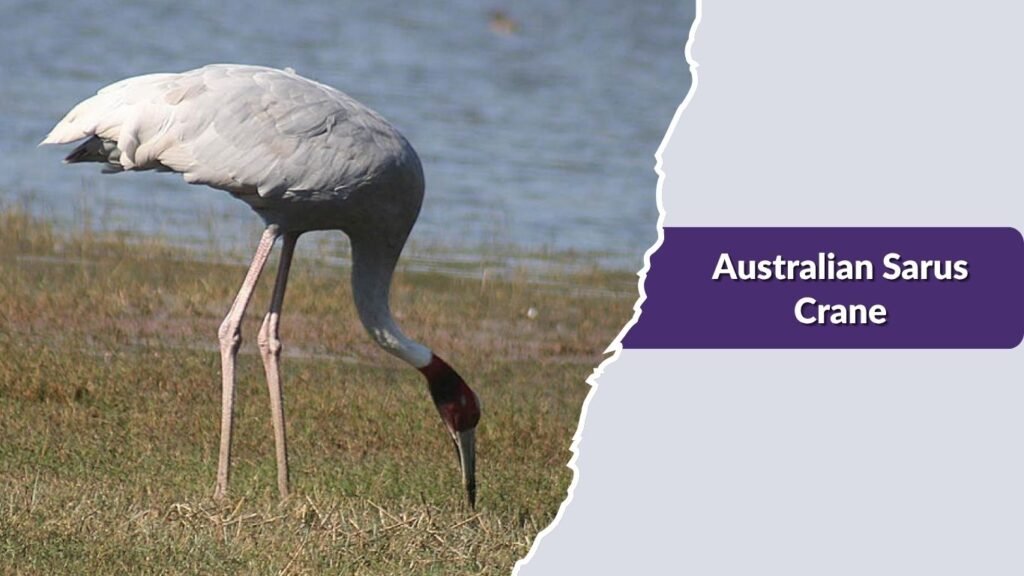
The Australian Sarus crane (Antigone antigone gillae) is a tall wetland bird found in northern Australia. It is closely related to the brolga, and the two cranes often feed and gather together. Careful observation of their head, legs, and body shape helps distinguish them.
Identification
- Height: About 5–5.9 feet
- Wingspan: Approximately 7.2–8.2 feet
- Weight: Around 12–19 pounds
- Body: Pale grey
- Head and upper neck: Bare and red
- Upper legs: Reddish or pink
- Bill: Long and pale
- Body shape: Slimmer than a brolga
Habitat and Distribution
Australian Sarus cranes occur mainly in northern Queensland, particularly around the Gulf of Carpentaria and the Atherton Tablelands. They inhabit shallow wetlands, floodplains, grasslands, agricultural fields, and seasonal freshwater marshes.
Diet and Feeding
These cranes eat wetland plants, seeds, grains, roots, tubers, insects, frogs, fish, crustaceans, and small reptiles. During the dry season, they may gather in agricultural areas to feed on leftover corn and other crops.
Behavior and Breeding
Australian Sarus cranes perform elaborate dances involving bowing, jumping, calling, and wing spreading. Breeding usually follows seasonal rainfall. Females lay one or two eggs in a large nest built from grasses and aquatic vegetation.
FAQs
1. How many species of crane birds are there?
There are 15 living crane species worldwide. However, several species have distinct regional subspecies, including the sandhill crane and Sarus crane. When these subspecies are included, crane birds can be divided into more than 15 different types.
2. What is the tallest crane bird?
The Sarus crane is the tallest living flying bird in the world. An adult may stand up to 6 feet tall and have a wingspan exceeding 8 feet. It is found primarily in India, Nepal, Southeast Asia, and northern Australia.
3. What is the rarest type of crane?
The whooping crane and Mississippi sandhill crane are among the rarest cranes. Both experienced severe declines because of habitat loss and other threats. Protected habitats, captive breeding, and reintroduction programs have helped their populations recover gradually.
4. What do crane birds eat?
Crane birds are generally omnivorous. Their diets may include seeds, grains, roots, tubers, berries, insects, worms, frogs, fish, reptiles, crustaceans, and small mammals. The exact diet varies according to the species, habitat, season, and available food.
5. Do crane birds migrate?
Many crane species migrate between breeding and wintering areas. Siberian, common, Demoiselle, and sandhill cranes may travel thousands of miles annually. Other cranes, including Florida sandhill cranes and some red-crowned cranes in Japan, remain in the same region throughout the year.
