
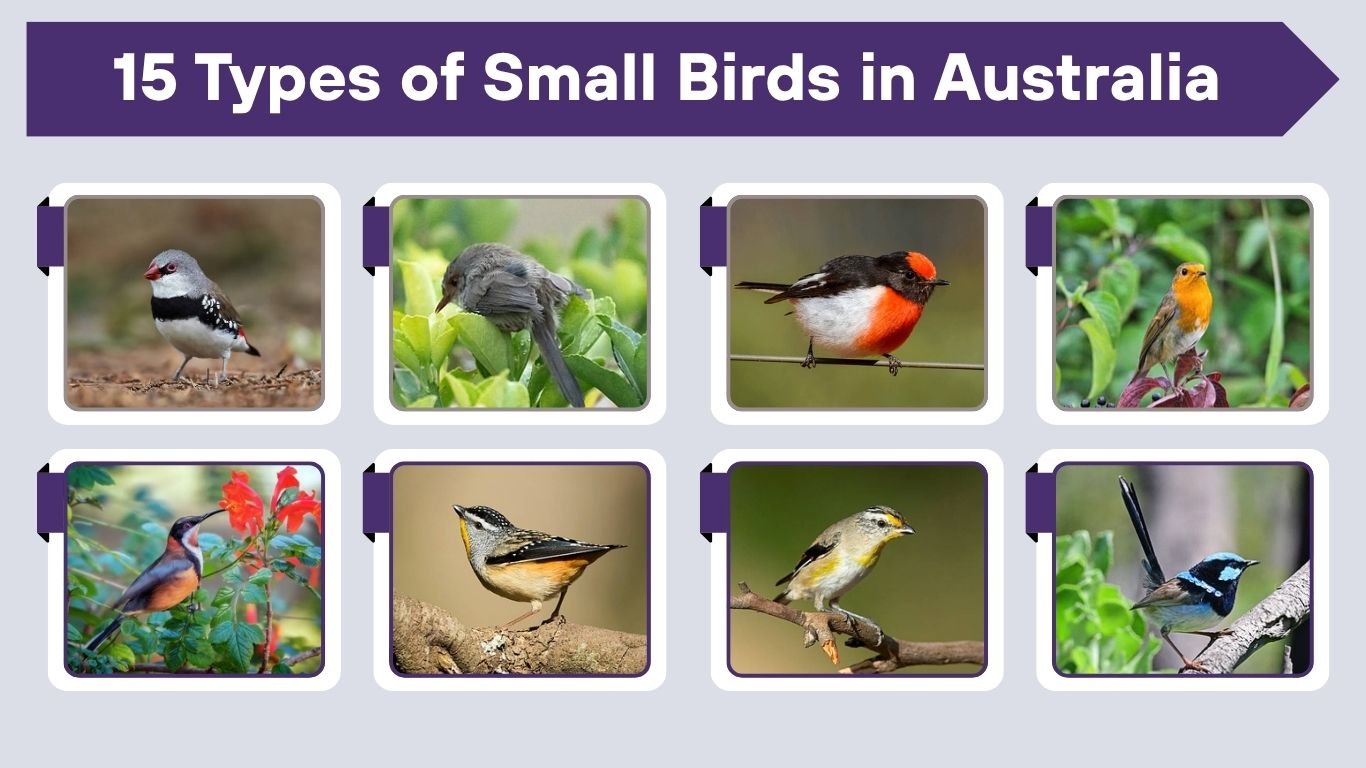
Australia is home to many small birds with bright colors, unique calls, and interesting feeding habits. These birds live in gardens, forests, grasslands, wetlands, and dry woodlands across the country. Some are easy to identify by their colorful feathers, while others are recognized by size, habitat, or behavior. Learning their size, diet, and key identification features can help birdwatchers spot them more easily.
1. Superb Fairy-Wren
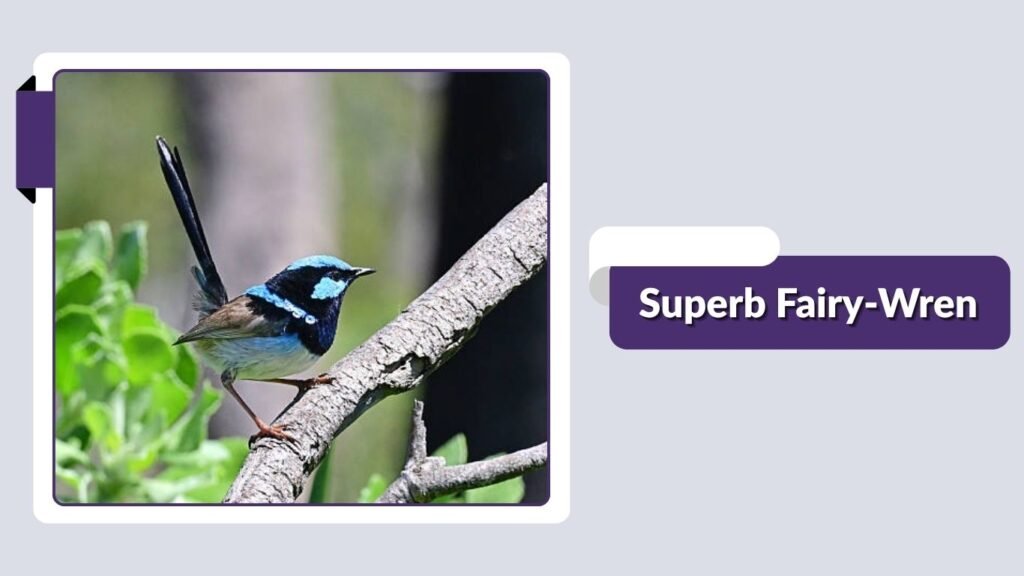
The superb fairy-wren is one of Australia’s most beautiful and well-known small birds. It is famous for the bright blue breeding plumage of the male, while females and young birds are usually brown with a reddish-orange area around the eye. This tiny bird is active, social, and often seen hopping through gardens, shrubs, grasslands, and woodland edges.
Size of Superb Fairy-Wren
The superb fairy-wren is a very small bird, usually measuring around 14 centimeters in length, including its long tail. It has a light body, thin legs, and a narrow beak. Males look especially striking during the breeding season because of their blue head, throat, and tail markings.
Habitat of Superb Fairy-Wren
This bird is commonly found across southeastern Australia, including parks, gardens, woodlands, scrublands, and open areas with thick low vegetation. It prefers places with shrubs and grasses where it can hide from predators and search for food safely.
Diet of Superb Fairy-Wren
The superb fairy-wren mainly eats small insects, spiders, ants, beetles, and other tiny invertebrates. It may also eat small seeds occasionally. It usually searches for food close to the ground, moving quickly through grass, leaf litter, and low plants.
Identification of Superb Fairy-Wren
Male superb fairy-wrens are easy to identify during breeding season because of their bright blue and black plumage. Females are brown with a pale underside and orange-brown eye area. Their long upright tail, small size, and quick hopping movement also help with identification.
2. Red-Browed Finch
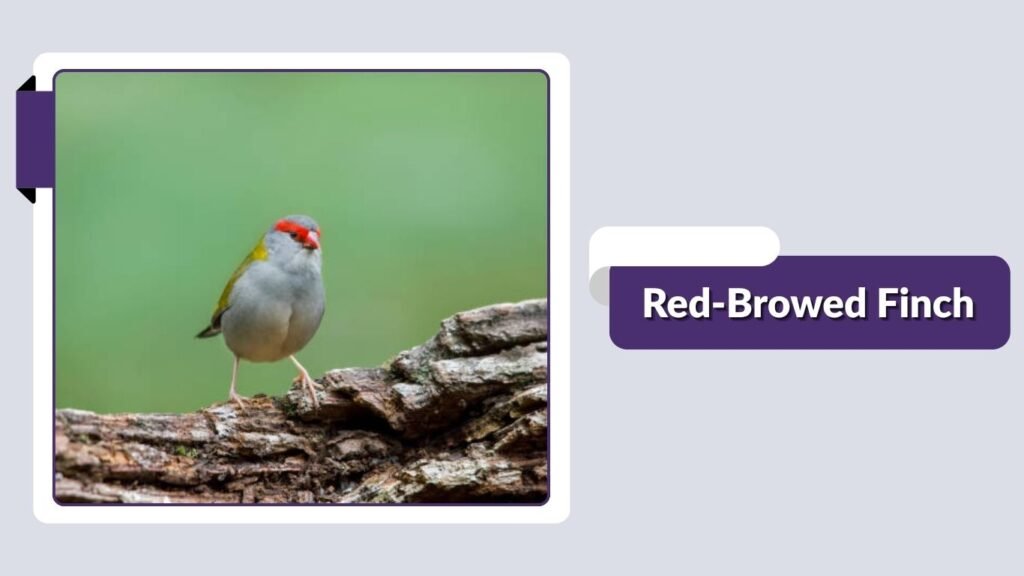
The red-browed finch is a small, colorful bird found in eastern Australia. It is known for its bright red eyebrow, red rump, and soft greenish-gray body. This bird is often seen in small flocks, moving through grasses, shrubs, gardens, and forest edges while searching for seeds and insects.
Size of Red-Browed Finch
The red-browed finch is a tiny bird, usually around 11 to 12 centimeters long. It has a slim body, short rounded wings, and a small cone-shaped beak. Its light build helps it move quickly through low vegetation and grassy areas.
Habitat of Red-Browed Finch
This bird is commonly found in eastern Australia, especially near forests, wetlands, gardens, farmlands, and grassy areas with shrubs. It prefers places with dense cover where it can hide from predators and feed safely in groups.
Diet of Red-Browed Finch
The red-browed finch mainly eats grass seeds and small seeds from weeds and native plants. It may also eat tiny insects, especially during breeding season. It usually feeds close to the ground, hopping through grass and low plants.
Identification of Red-Browed Finch
This bird is easy to identify by its red eyebrow stripe, red rump, and small gray-green body. Its short red beak and flocking behavior also help with identification. It often gives soft, high-pitched calls while moving through vegetation.
3. Zebra Finch
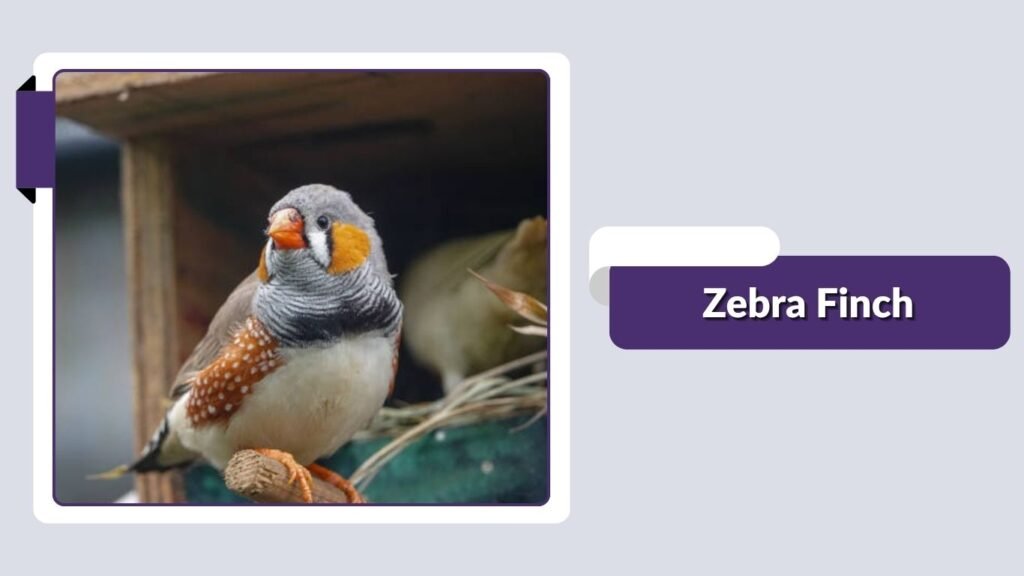
The zebra finch is one of Australia’s most familiar small birds. It is known for its cheerful calls, striped markings, and active flocking behavior. This hardy bird is common in dry and open areas, where it searches for seeds on the ground and gathers near water sources.
Size of Zebra Finch
The zebra finch is a small bird, usually about 10 to 11 centimeters long. It has a compact body, short wings, and a small orange-red beak. Males are more colorful than females, with orange cheek patches and striped throat markings.
Habitat of Zebra Finch
Zebra finches are common across much of inland Australia. They prefer dry grasslands, open woodlands, scrublands, farmlands, and areas near water. They are well adapted to hot, dry environments and often move in flocks to find food and water.
Diet of Zebra Finch
The zebra finch mainly eats grass seeds and small plant seeds. It may also eat tiny insects at times, especially when feeding young birds. It usually feeds on the ground, picking seeds from soil, grasses, and low plants.
Identification of Zebra Finch
Male zebra finches are identified by orange cheek patches, black-and-white striped throat markings, and spotted chestnut sides. Females are plainer gray with an orange beak. Their small size, flocking habit, and quick calls also make them easy to recognize.
4. Silvereye
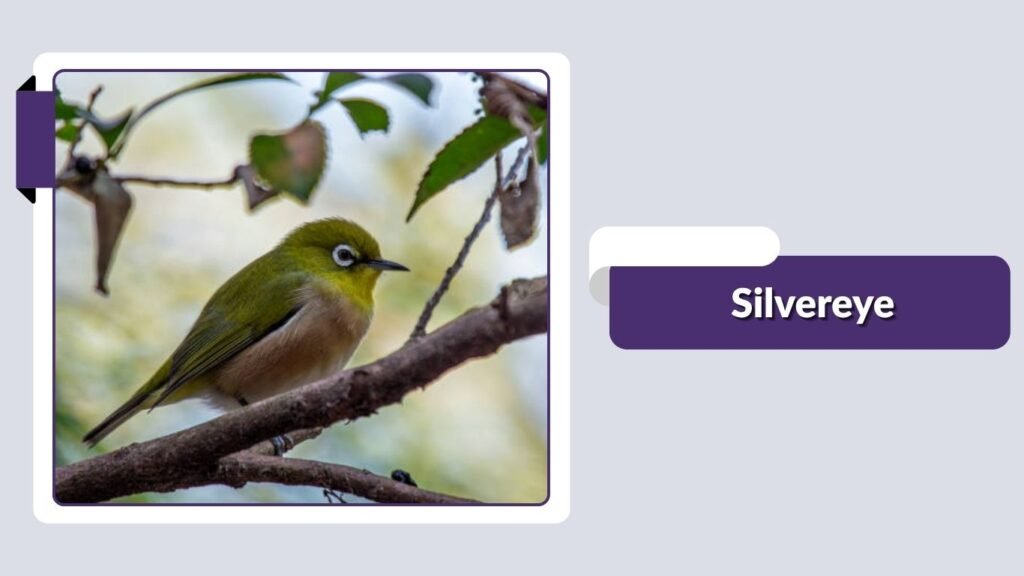
The silvereye is a tiny Australian bird named for the clear white ring around its eye. It has an olive-green back, pale underside, and active movement. This bird is often seen in gardens, orchards, forests, and coastal scrub, where it feeds on insects, fruit, and nectar.
Size of Silvereye
The silvereye is a very small bird, usually around 11 to 13 centimeters long. It has a compact body, fine pointed beak, and short wings. Despite its small size, it is active and often moves quickly through leaves and branches.
Habitat of Silvereye
Silvereyes live in many habitats across Australia, including gardens, forests, woodlands, orchards, heathlands, and coastal scrub. They prefer areas with trees and shrubs that provide food, shelter, and nesting places.
Diet of Silvereye
The silvereye has a varied diet. It eats small insects, caterpillars, fruit, berries, nectar, and soft plant material. In gardens and orchards, it may feed on ripe fruit, but it also helps control small insects.
Identification of Silvereye
The silvereye is best identified by its bright white eye ring. It usually has an olive-green back, grayish head, and pale throat or belly. Its tiny size, quick movements, and habit of feeding in small groups help with identification.
5. Spotted Pardalote
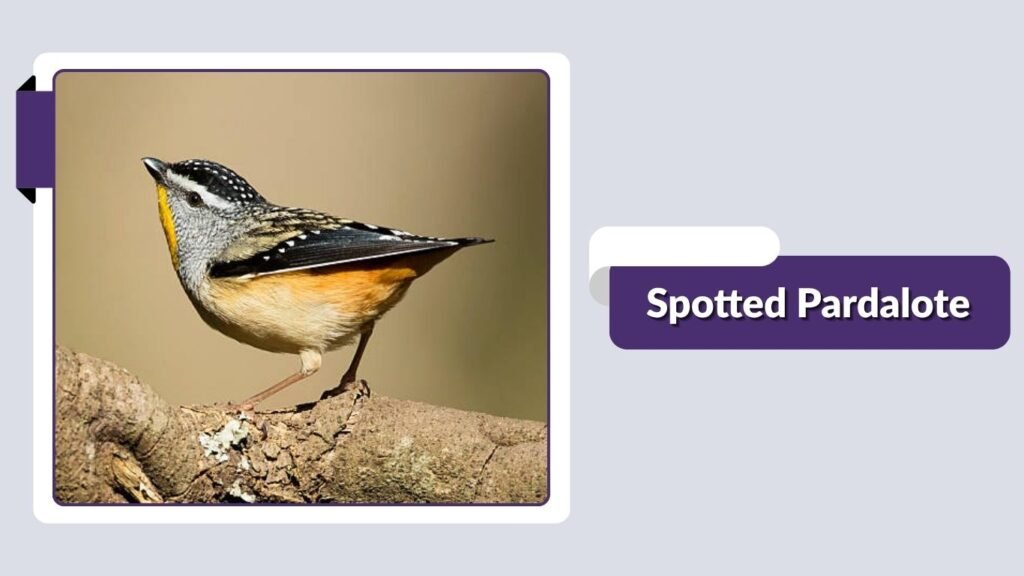
The spotted pardalote is one of Australia’s smallest and most colorful birds. It has a tiny body, spotted head, bright markings, and a short tail. Although it is often heard before it is seen, this bird can be found in eucalyptus forests, woodlands, and gardens.
Size of Spotted Pardalote
The spotted pardalote is very small, usually around 8 to 10 centimeters long. It has a compact body, short tail, and tiny beak. Its small size allows it to move easily among leaves, bark, and branches while searching for food.
Habitat of Spotted Pardalote
This bird is commonly found in eucalyptus forests, woodlands, parks, and gardens. It often stays high in tree canopies but may come lower during nesting season. It usually nests in small tunnels dug into soil banks or soft ground.
Diet of Spotted Pardalote
The spotted pardalote mainly eats tiny insects and lerps, which are sugary coverings made by sap-sucking insects on eucalyptus leaves. It searches leaves carefully and plays an important role in controlling small plant-feeding insects.
Identification of Spotted Pardalote
This bird is identified by its black head with white spots, colorful wing markings, and small rounded body. Males often show brighter yellow and red markings. Its sharp call and habit of feeding in eucalyptus trees also help identify it.
6. Striated Pardalote
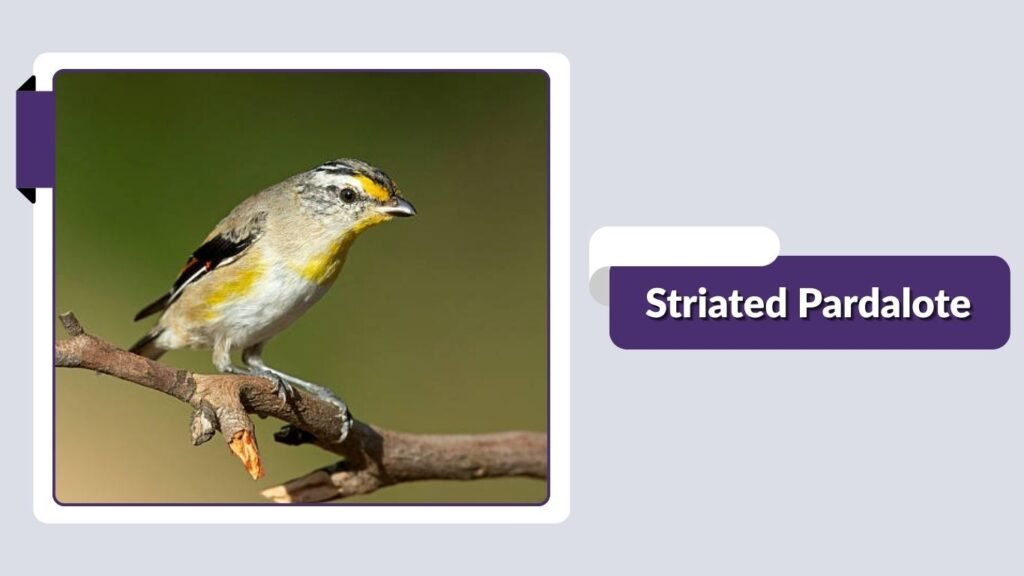
The striated pardalote is a tiny bird with a short tail, striped head, and neat markings. It is common in many parts of Australia and is often found in eucalyptus trees. Though small, it has a loud voice and is often noticed by its repeated calls.
Size of Striated Pardalote
The striated pardalote is very small, usually around 9 to 11 centimeters long. It has a compact body, short tail, and small pointed beak. Its lightweight body helps it move quickly through leaves and branches.
Habitat of Striated Pardalote
This bird lives in eucalyptus forests, woodlands, parks, gardens, and river habitats. It is often seen high in trees, where it searches leaves for food. During nesting season, it may use tree hollows, banks, or small crevices.
Diet of Striated Pardalote
The striated pardalote mainly eats small insects and lerps from eucalyptus leaves. It picks food carefully from foliage and bark. By feeding on leaf insects, it helps keep trees healthier and supports the woodland ecosystem.
Identification of Striated Pardalote
This bird can be identified by its striped head, pale eyebrow, small body, and short tail. It usually has yellow or white markings on the wing. Its repeated call, often heard from treetops, is another useful identification clue.
7. Eastern Spinebill
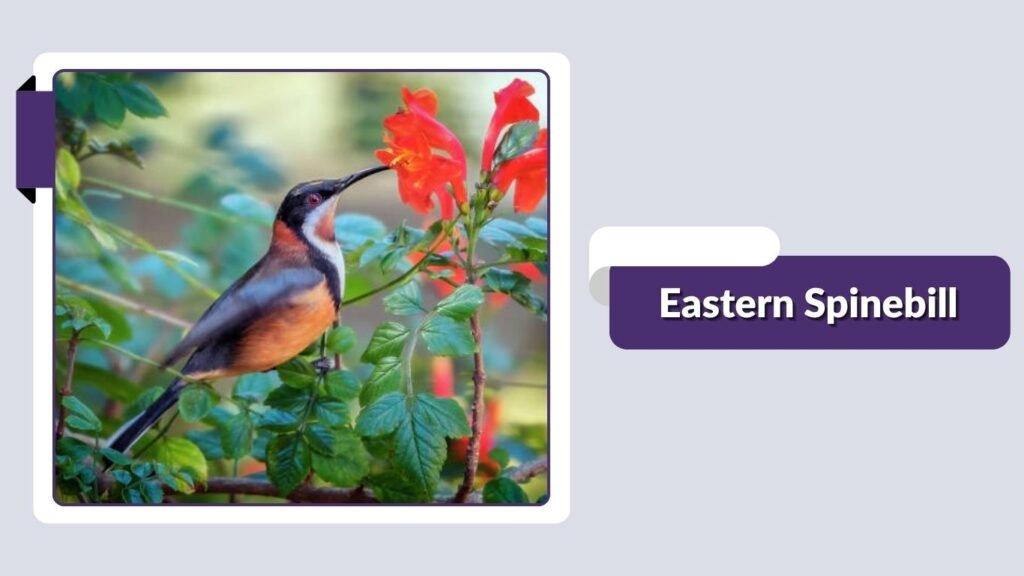
The eastern spinebill is a small Australian honeyeater known for its long curved beak and active feeding style. It is often seen hovering near flowers while drinking nectar. With its dark head, white chest, and rich reddish-brown markings, this bird is easy to notice in gardens, forests, and heathlands.
Size of Eastern Spinebill
The eastern spinebill is a small bird, usually around 13 to 16 centimeters long. It has a slim body, pointed wings, and a long curved bill. Its lightweight shape helps it move quickly between flowers and branches while feeding.
Habitat of Eastern Spinebill
This bird is found in eastern and southeastern Australia. It lives in forests, woodlands, heathlands, gardens, and areas with flowering shrubs. It prefers habitats with plenty of nectar-producing plants and safe cover for nesting and shelter.
Diet of Eastern Spinebill
The eastern spinebill mainly feeds on nectar from flowers. It also eats small insects and spiders, especially when feeding young birds. Its curved bill helps it reach deep into tube-shaped flowers, making it well adapted for nectar feeding.
Identification of Eastern Spinebill
The eastern spinebill can be identified by its long curved beak, dark head, white chest, and reddish-brown throat patch. It often hovers while feeding, similar to a hummingbird. Its quick movement and sharp call also help with identification.
8. Scarlet Robin
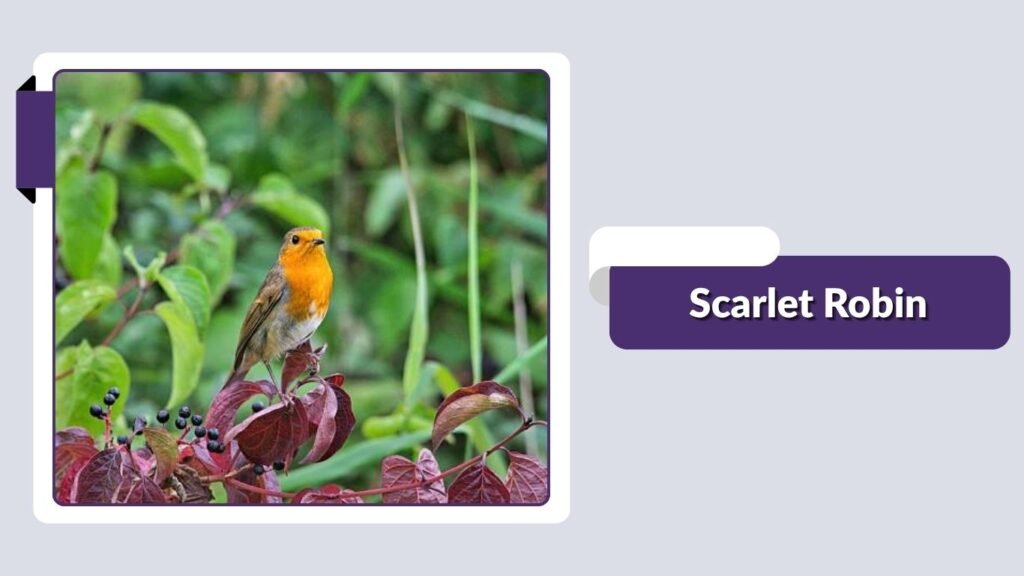
The scarlet robin is a beautiful small bird known for the bright red chest of the male. It is often seen sitting on low branches, fences, or tree stumps while watching for insects. This bird lives in woodlands, forests, and open country with scattered trees.
Size of Scarlet Robin
The scarlet robin is a small bird, usually around 12 to 13 centimeters long. It has a compact body, rounded head, and thin beak. Males have a bright scarlet-red breast, while females are duller brownish-gray with softer reddish coloring.
Habitat of Scarlet Robin
Scarlet robins are found in southeastern and southwestern Australia. They prefer open forests, woodlands, farmland edges, parks, and areas with scattered trees. They often use low perches to watch for prey on the ground.
Diet of Scarlet Robin
The scarlet robin mainly eats insects, spiders, beetles, ants, and other small invertebrates. It often hunts by perching quietly, then flying down to catch prey from the ground or low vegetation.
Identification of Scarlet Robin
Male scarlet robins are identified by their bright red breast, black head, and white forehead patch. Females are paler but still show a reddish wash on the chest. Their upright posture and habit of perching low are useful identification signs.
9. Flame Robin
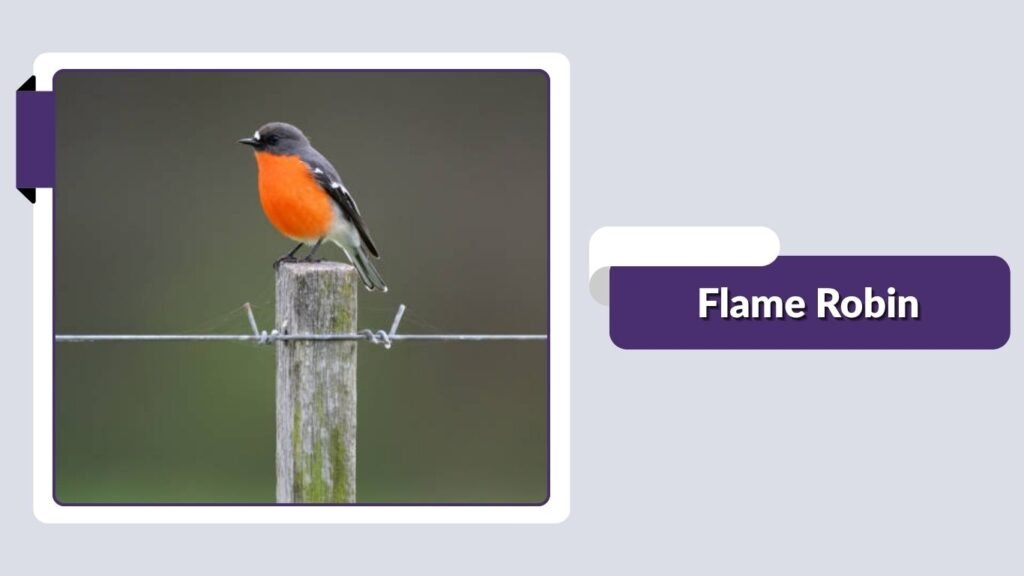
The flame robin is a striking small bird with bright orange-red coloring on the male’s chest and throat. It is often found in cooler forests, open woodlands, and highland areas. During colder months, it may move to lower open country in search of food.
Size of Flame Robin
The flame robin is a small bird, usually about 12 to 14 centimeters long. It has a neat rounded body, slim beak, and fairly long legs. Males are brighter than females, especially during the breeding season.
Habitat of Flame Robin
This bird is found in southeastern Australia and Tasmania. It prefers forests, woodland edges, grasslands, farmlands, and alpine or highland areas. In winter, it may move into more open habitats, including paddocks and cleared land.
Diet of Flame Robin
The flame robin feeds mainly on insects and other small invertebrates. It catches beetles, ants, flies, caterpillars, and spiders. Like many robins, it often watches from a perch before dropping to the ground to catch prey.
Identification of Flame Robin
Male flame robins are easy to identify by their bright flame-orange breast, dark upper body, and white wing patch. Females are gray-brown with softer coloring. Their upright stance and open-country feeding behavior also help identify them.
10. Red-Capped Robin
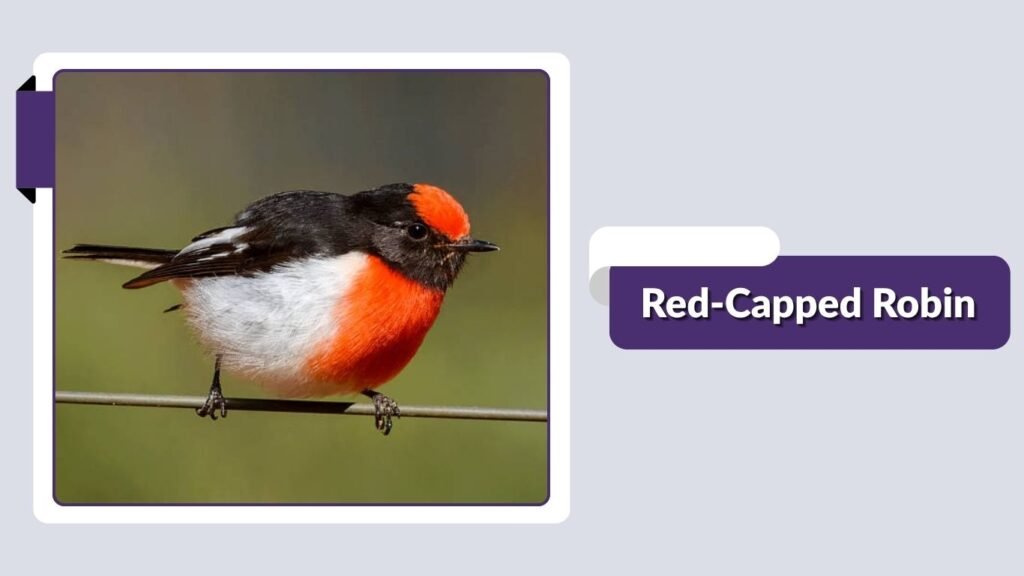
The red-capped robin is a small Australian robin with bold colors and a charming appearance. Males have a bright red cap and red chest, while females are more softly colored. This bird is often seen in dry woodlands, scrublands, and open country.
Size of Red-Capped Robin
The red-capped robin is a small bird, usually around 10 to 12 centimeters long. It has a compact body, thin beak, and short rounded wings. Its small size allows it to move quickly between low branches and the ground.
Habitat of Red-Capped Robin
This bird is found across much of mainland Australia, especially in dry woodlands, mallee, shrublands, and open areas with scattered trees. It prefers habitats with low perches and open ground for hunting insects.
Diet of Red-Capped Robin
The red-capped robin mainly eats insects, spiders, ants, beetles, and other small invertebrates. It often hunts from a low perch, dropping to the ground to catch prey before returning to a branch or shrub.
Identification of Red-Capped Robin
Male red-capped robins are identified by their bright red crown, red chest, black upperparts, and white shoulder markings. Females are brownish with paler reddish hints. Their small size and low-perching behavior are also useful clues.
11. Weebill
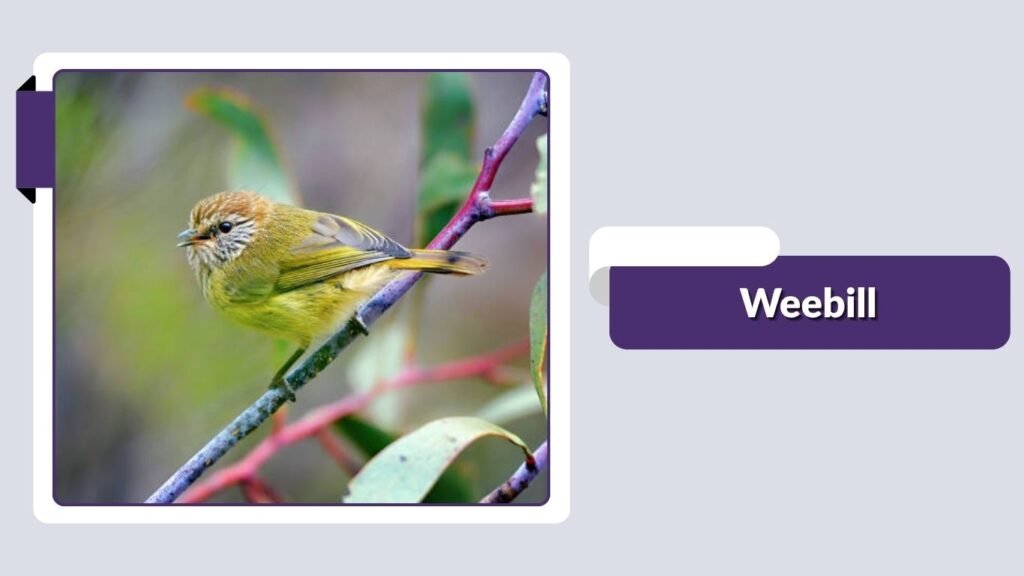
The weebill is Australia’s smallest bird and is known for its tiny size and short pale beak. Despite being very small, it is active and noisy, often moving through eucalyptus trees in search of insects. Its simple coloring helps it blend into leaves and branches.
Size of Weebill
The weebill is extremely small, usually around 8 to 9 centimeters long. It has a tiny body, short tail, and small rounded bill. Its lightweight body makes it quick and agile as it searches among leaves.
Habitat of Weebill
The weebill is found across much of mainland Australia. It commonly lives in eucalyptus woodlands, dry forests, scrublands, and inland tree habitats. It is often seen high in the canopy, moving quickly through foliage.
Diet of Weebill
The weebill mainly eats tiny insects, larvae, and other small invertebrates. It picks food from leaves, bark, and twigs. Because of its size, it focuses on very small prey found among eucalyptus foliage.
Identification of Weebill
The weebill can be identified by its very small size, pale short bill, olive-gray body, and light underside. It often moves in small groups and gives high-pitched calls from trees. Its tiny size is one of the strongest identification features.
12. Yellow-Rumped Thornbill
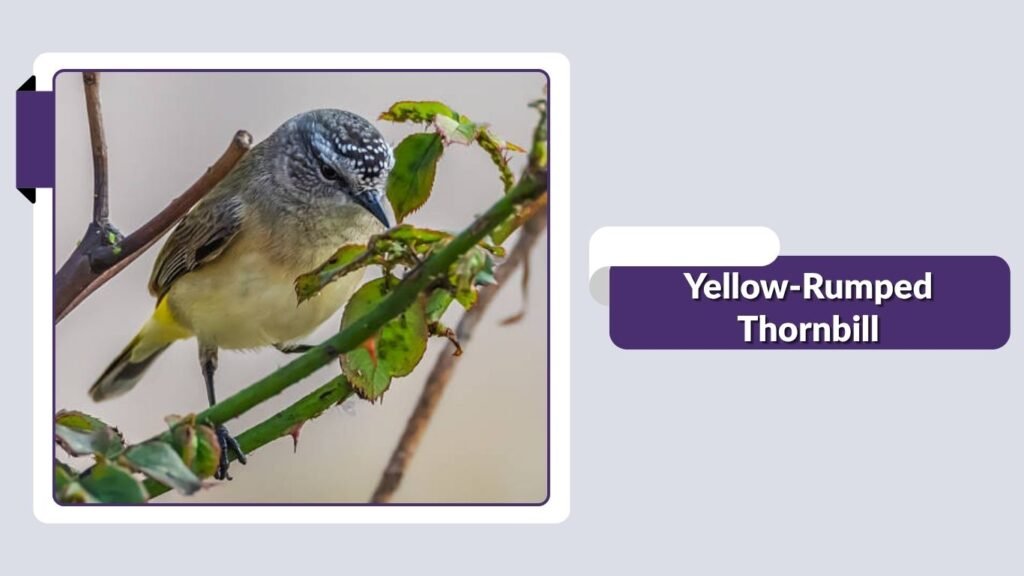
The yellow-rumped thornbill is a tiny Australian bird known for the bright yellow patch on its rump. It is often seen feeding on the ground in small groups, especially in open grasslands, woodlands, parks, and farmland. Its active movement and cheerful calls make it a common small bird to notice.
Size of Yellow-Rumped Thornbill
The yellow-rumped thornbill is a small bird, usually around 9 to 11 centimeters long. It has a slim body, short wings, and a fine pointed beak. The bright yellow rump is one of its most noticeable features, especially when it flies.
Habitat of Yellow-Rumped Thornbill
This bird is common across southern and eastern Australia. It lives in open woodlands, grasslands, gardens, parks, paddocks, and farmland edges. It prefers areas with low vegetation and open ground where it can move around easily while feeding.
Diet of Yellow-Rumped Thornbill
The yellow-rumped thornbill mainly eats small insects, spiders, ants, beetles, and other tiny invertebrates. It may also eat some seeds. It usually searches for food on the ground, among grasses, leaves, and low plants.
Identification of Yellow-Rumped Thornbill
This bird is identified by its yellow rump, small size, streaked body, and active ground-feeding behavior. It often moves in small flocks and gives soft, high-pitched calls. When it flies, the yellow rump patch becomes easier to see.
13. Brown Thornbill
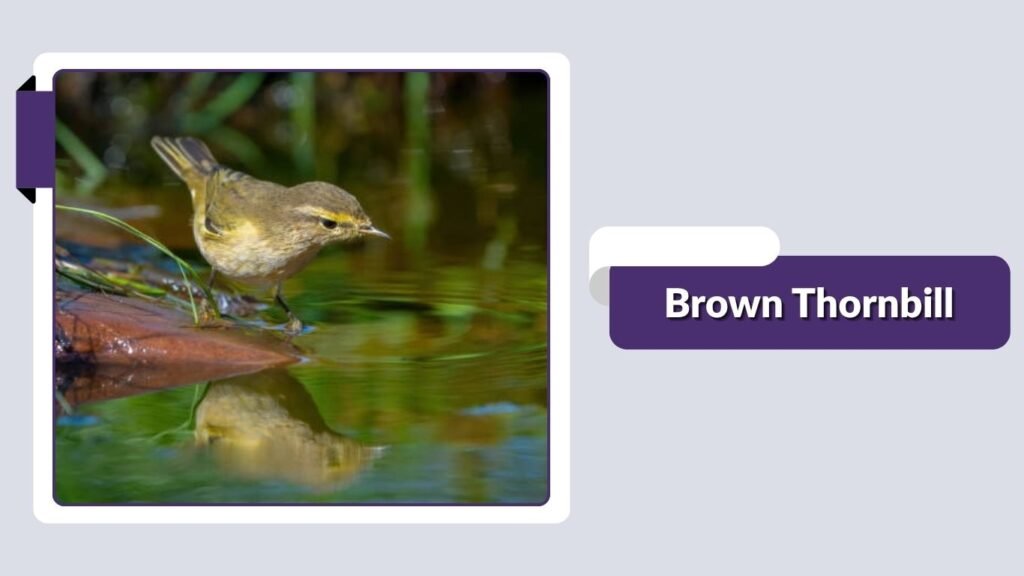
The brown thornbill is a small, active bird with soft brown plumage and a fine pointed beak. It is often seen moving quickly through shrubs, gardens, forests, and dense vegetation while searching for insects. Although plain-looking at first, its warm brown tones and streaked chest help with identification.
Size of Brown Thornbill
The brown thornbill is a tiny bird, usually around 9 to 10 centimeters long. It has a compact body, short rounded wings, and a narrow pointed bill. Its small size helps it move easily through thick shrubs and leafy branches.
Habitat of Brown Thornbill
This bird is found in eastern and southeastern Australia, including Tasmania. It prefers forests, woodlands, heathlands, gardens, parks, and areas with dense shrubs. Thick vegetation gives it protection and good feeding places.
Diet of Brown Thornbill
The brown thornbill mainly eats insects, larvae, spiders, beetles, ants, and other small invertebrates. It searches leaves, bark, twigs, and shrubs for food. Its fine bill helps it pick tiny prey from narrow spaces.
Identification of Brown Thornbill
The brown thornbill can be identified by its small size, warm brown upperparts, pale underside, and streaked chest. It often keeps its tail slightly raised while moving through shrubs. Its quick movements and sharp calls are also useful identification clues.
14. Variegated Fairy-Wren
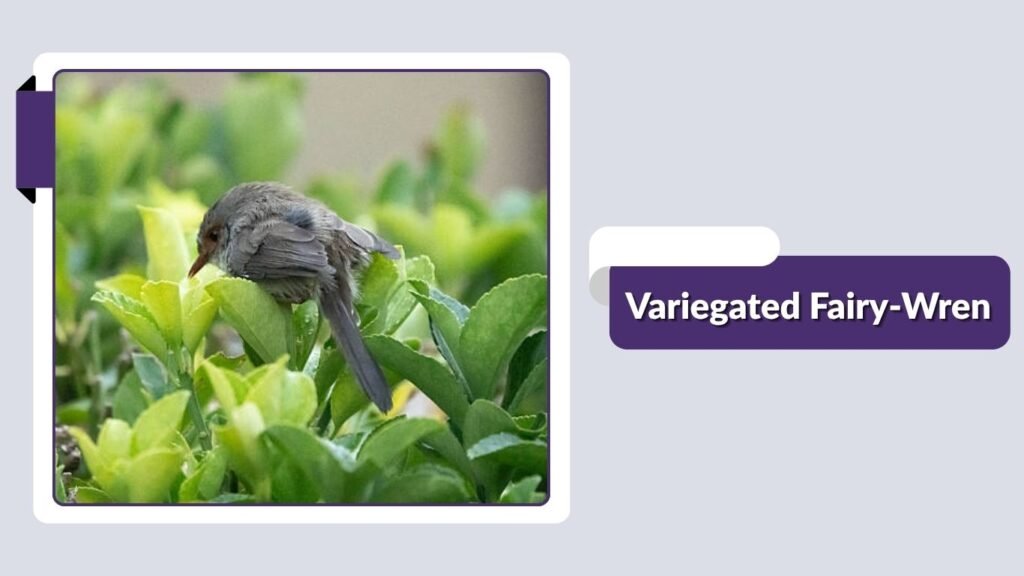
The variegated fairy-wren is a small, colorful Australian bird known for the bright breeding colors of the male. Males may show blue, purple, chestnut, and black markings, while females are plainer brown. This species is active, social, and often seen in shrubs, scrublands, and dry woodlands.
Size of Variegated Fairy-Wren
The variegated fairy-wren is a small bird, usually around 13 to 14 centimeters long, including its tail. It has a slim body, long tail, and fine beak. Males are brighter during breeding season, while females and young birds are mostly brownish.
Habitat of Variegated Fairy-Wren
This bird is found across much of Australia in dry woodlands, shrublands, scrub, heathlands, and gardens with dense vegetation. It prefers low cover where it can hide, nest, and search for insects safely.
Diet of Variegated Fairy-Wren
The variegated fairy-wren mainly eats insects, spiders, ants, beetles, and other small invertebrates. It may also eat tiny seeds at times. It usually feeds close to the ground or in low shrubs, moving quickly through cover.
Identification of Variegated Fairy-Wren
Male variegated fairy-wrens are identified by their bright blue and purple face, chestnut shoulder patches, and long tail. Females are brown with a reddish eye area. Their small size, social groups, and quick hopping movement also help identify them.
15. Diamond Firetail
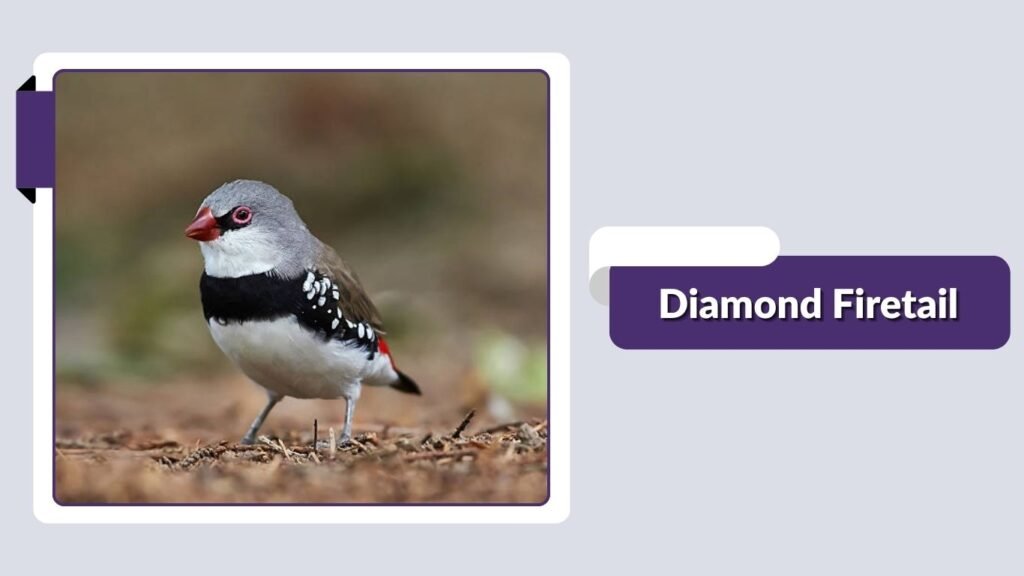
The diamond firetail is a striking small finch with a red beak, black chest band, and white-spotted black sides. It is native to southeastern Australia and is often found in grassy woodlands and open forests. Its bold pattern and bright red rump make it one of the most attractive small birds.
Size of Diamond Firetail
The diamond firetail is a small finch, usually around 10 to 12 centimeters long. It has a compact body, short wings, and a strong red beak. Its bright markings make it stand out compared with many other small seed-eating birds.
Habitat of Diamond Firetail
This bird lives in southeastern Australia, especially in grassy woodlands, open forests, farmland edges, and areas with scattered trees. It prefers places with native grasses, shrubs, and safe nesting cover.
Diet of Diamond Firetail
The diamond firetail mainly eats grass seeds and small plant seeds. It may also eat tiny insects, especially during breeding season. It usually feeds on the ground, often in pairs or small groups.
Identification of Diamond Firetail
This bird is identified by its red beak, red rump, black chest band, white belly, and black sides with white spots. Its bold markings, small finch shape, and ground-feeding behavior make it easier to recognize.
FAQs
What is the smallest bird in Australia?
The weebill is considered Australia’s smallest bird, measuring around 8 to 9 centimeters long. It has a tiny body, short tail, and pale bill. This bird is usually found in eucalyptus woodlands, where it moves quickly through leaves while searching for tiny insects.
What do small birds in Australia eat?
Small Australian birds eat different foods depending on the species. Finches usually eat grass seeds, while robins, thornbills, and wrens mainly eat insects and spiders. Some birds, such as silvereyes and eastern spinebills, also feed on nectar, fruit, and small insects.
Where can I find small birds in Australia?
Small birds in Australia live in many habitats, including gardens, forests, grasslands, wetlands, scrublands, and woodlands. Some species prefer dense shrubs, while others live in open country or eucalyptus trees. Watching near flowering plants, grasses, and tree canopies can help you find them.
How can I identify small Australian birds?
You can identify small Australian birds by looking at their size, color, beak shape, tail position, habitat, and behavior. Bright markings, eye rings, wing patches, or rump colors are useful clues. Their calls and feeding style can also help with identification.
Are small birds in Australia good for gardens?
Yes, many small Australian birds are helpful in gardens. They eat insects, spiders, and other small pests, while some also help pollinate flowers by feeding on nectar. Planting native shrubs, grasses, and flowering plants can attract them and provide shelter, food, and nesting places.
