
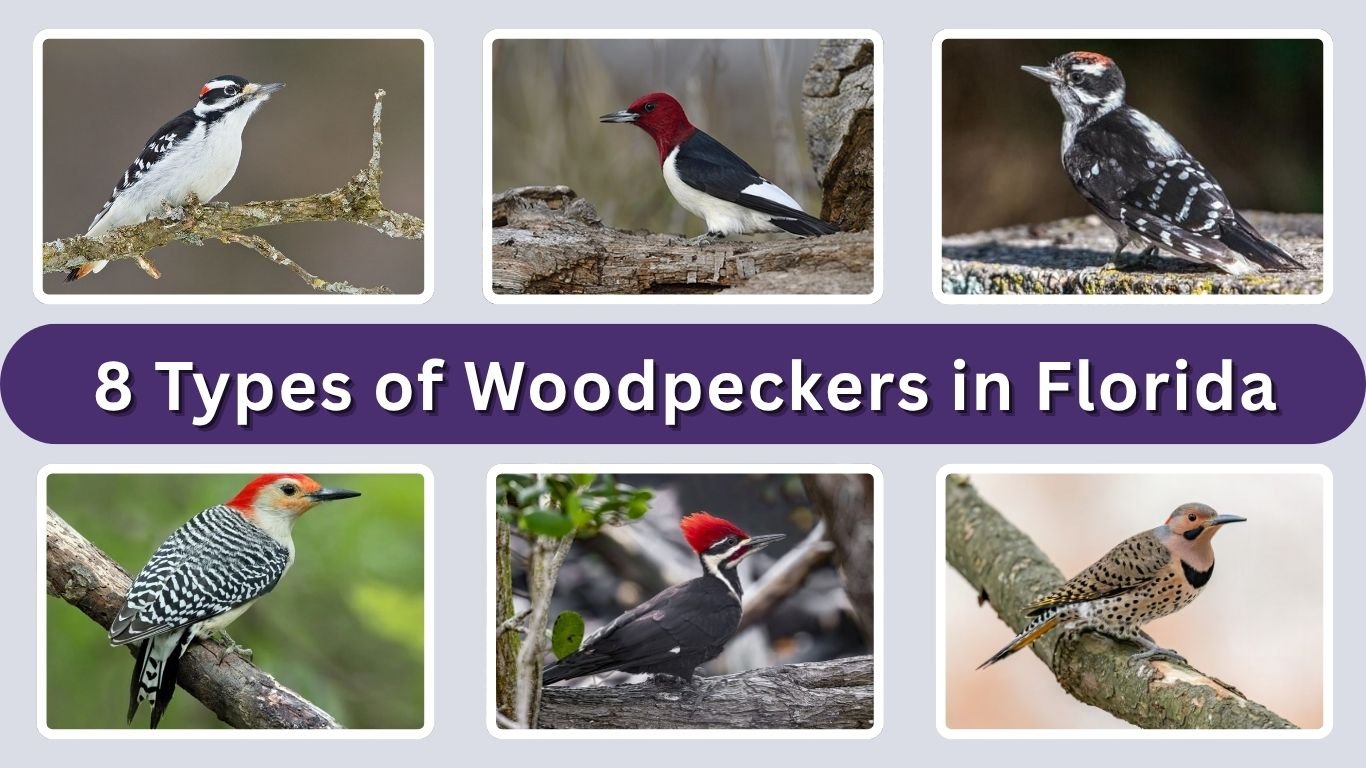
Florida supports eight regularly occurring woodpecker species, ranging from the tiny downy woodpecker to the crow-sized pileated woodpecker. Most remain in the state throughout the year, while the yellow-bellied sapsucker arrives mainly during winter. These birds inhabit pine flatwoods, hardwood forests, swamps, parks, and suburban neighborhoods. Their calls, colors, feeding marks, and preferred habitats make identification easier. This guide covers every regular Florida species, including their appearance, diet, distribution, conservation status, and the differences between similar-looking birds. It also explains which species are rare.
Common Woodpeckers in Florida
Several Florida woodpeckers are permanent residents that can be found in almost every part of the state. Red-bellied, downy, and pileated woodpeckers readily occupy wooded neighborhoods, while other species require mature forests, open pinewoods, or recently burned areas. The eight regular species listed here are recognized members of Florida’s bird community.
1. Red-Bellied Woodpecker
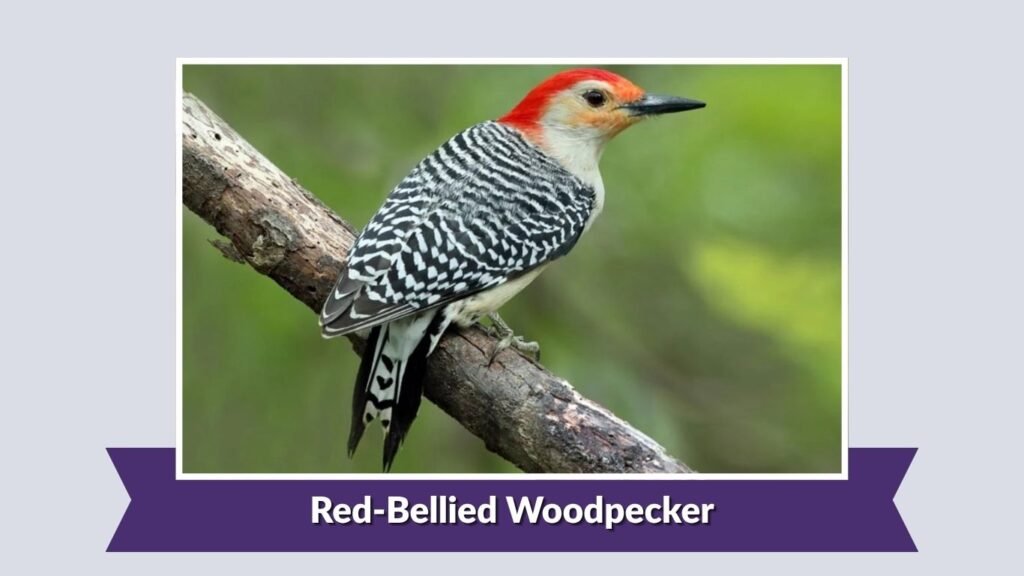
The red-bellied woodpecker is probably the most commonly observed Florida woodpecker. It lives in forests, parks, orchards, swamps, and suburban neighborhoods containing mature trees. Despite its name, the pale reddish patch on its belly is often difficult to see.
Identification
- Scientific name: Melanerpes carolinus
- Length: Approximately 9 to 10 inches
- Back: Strong black-and-white zebra pattern
- Underparts: Pale gray or buff
- Male: Red from forehead to nape
- Female: Red mainly on the nape
- Call: Loud, rolling “querr” or “churr”
Red-bellied woodpeckers eat beetles, ants, caterpillars, spiders, acorns, nuts, seeds, oranges, grapes, and berries. They regularly visit feeders containing suet, peanuts, and sunflower seeds.
2. Pileated Woodpecker
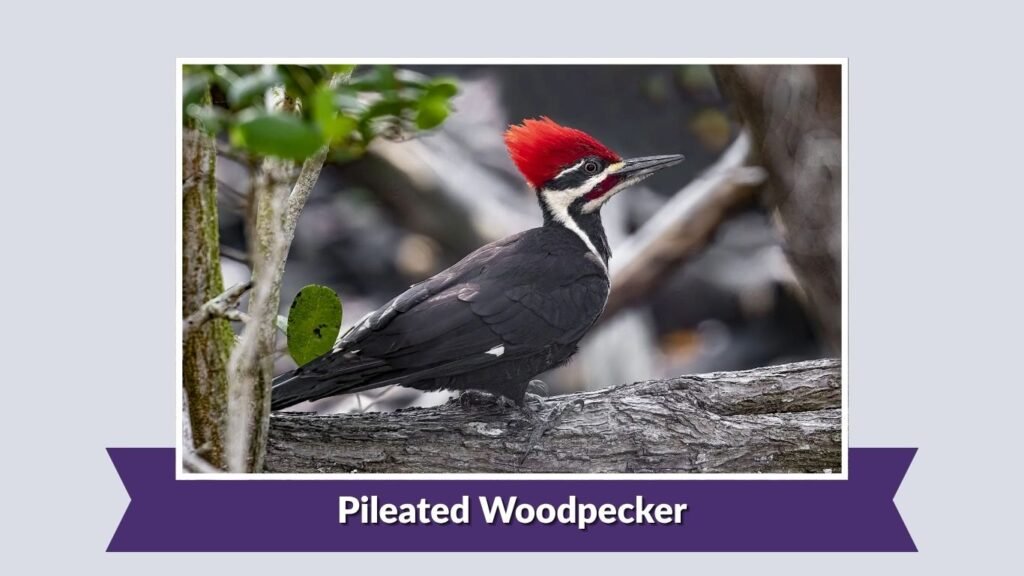
The pileated woodpecker is the largest living woodpecker regularly found in Florida. Its crow-like size, flaming red crest, and loud calls make it difficult to mistake for another species. It inhabits mature forests, wooded swamps, parks, and neighborhoods containing large trees.
Identification
- Scientific name: Dryocopus pileatus
- Length: Approximately 16 to 19 inches
- Body: Predominantly black
- Crest: Bright red
- Face and neck: Bold black-and-white stripes
- In flight: Large white underwing patches
- Call: Loud series of laughing “cuk-cuk-cuk” notes
Males have a red forehead and red mustache stripe, while females have a dark forehead and black mustache. Pileated woodpeckers excavate large rectangular holes in decaying wood while searching for carpenter ants and beetle larvae. They also eat termites, nuts, and wild fruit.
A “giant Florida woodpecker” is almost always a pileated woodpecker. It is the largest extant woodpecker in North America.
3. Downy Woodpecker
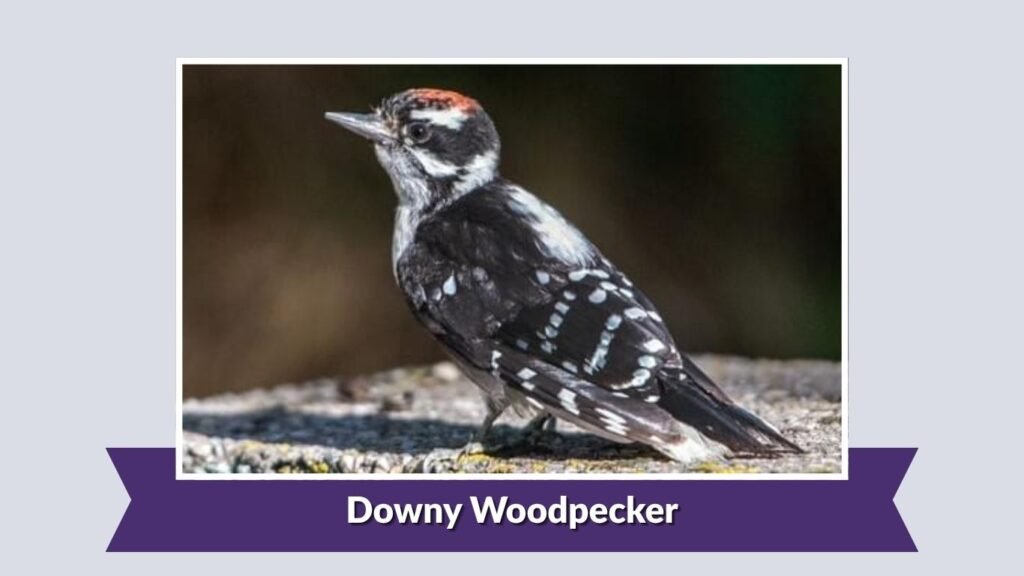
The downy woodpecker is the smallest woodpecker in Florida and North America. It is common in open woodland, parks, orchards, wetlands, and wooded residential areas. Its small body allows it to forage on slender branches and plant stems that cannot support larger woodpeckers.
Identification
- Scientific name: Dryobates pubescens
- Length: Approximately 5.5 to 6.7 inches
- Back: White central stripe
- Wings: Black with white spots
- Bill: Short and delicate
- Male: Small red patch behind the head
- Female: No red head marking
Downy woodpeckers eat beetle larvae, ants, caterpillars, spiders, seeds, berries, and grains. They are frequent visitors to suet, peanut, and sunflower feeders. A tiny black-and-white Florida woodpecker with a short bill is usually a downy.
4. Hairy Woodpecker
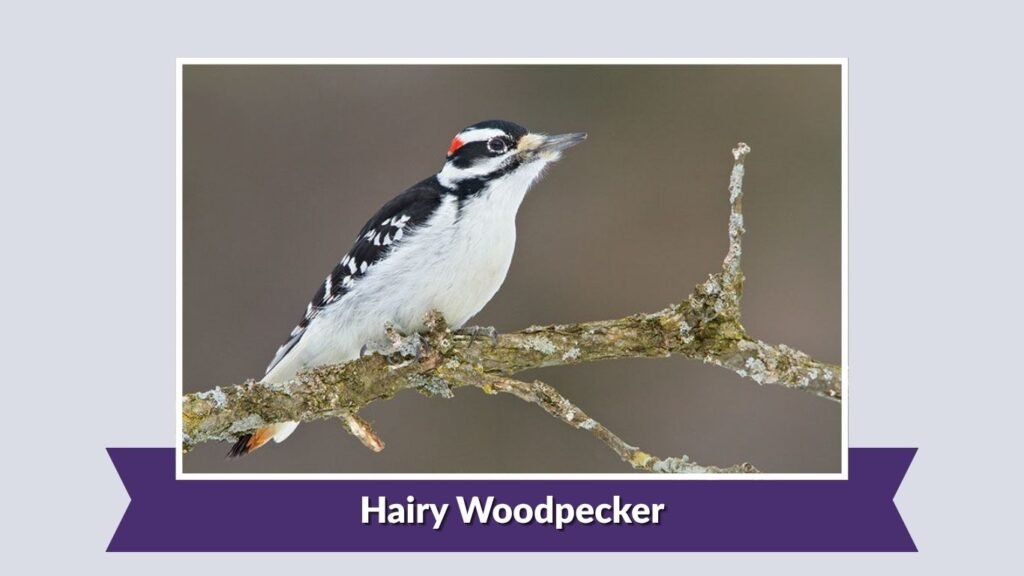
The hairy woodpecker looks remarkably similar to the downy but is larger and has a much longer bill. It occurs throughout Florida, although it is less likely to appear in an ordinary backyard. Look for it in mature forests, wooded swamps, burned areas, and locations with standing dead trees.
Identification
- Scientific name: Dryobates villosus
- Length: Approximately 7 to 10 inches
- Body: Black and white
- Back: Large white central patch
- Bill: Nearly as long as the head
- Male: Red patch on the back of the head
- Female: Entirely black crown
Hairy woodpeckers feed mainly on bark beetles, wood-boring larvae, ants, caterpillars, and moth pupae. They also consume fruit and seeds and occasionally visit feeders for suet, peanuts, or sunflower seeds.
5. Northern Flicker
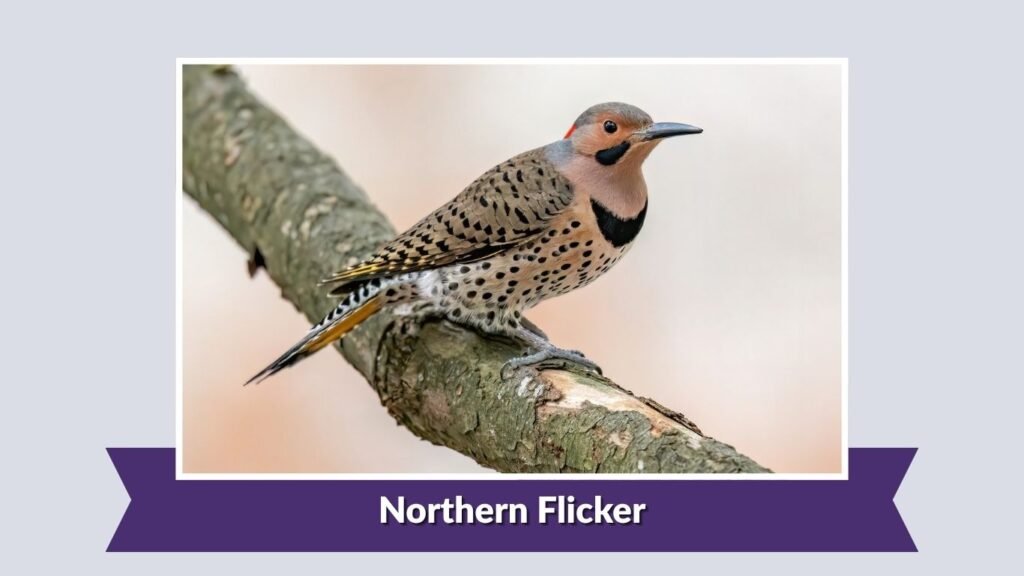
Florida’s Northern flickers belong primarily to the yellow-shafted form. They look browner than most other woodpeckers and often search for food on lawns, roadsides, and open ground. Their yellow wing and tail feathers are particularly noticeable during flight.
Identification
- Scientific name: Colaptes auratus
- Length: Approximately 11 to 12 inches
- Body: Brown with dark spots
- Chest: Large black crescent
- Rump: Bright white in flight
- Wings and tail: Yellow underneath
- Male: Black mustache stripe
- Female: Lacks the black mustache
Northern flickers eat large quantities of ants and beetles. They use their slightly curved bills and long tongues to probe the ground but also consume fruit, berries, seeds, and other insects.
6. Red-Headed Woodpecker
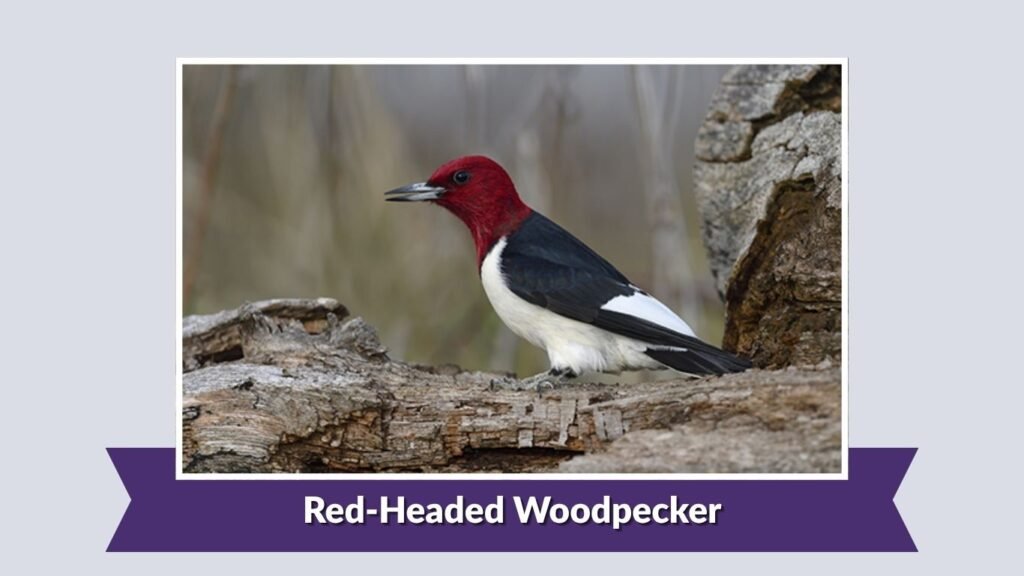
The red-headed woodpecker has an entirely crimson head, white belly, and boldly divided black-and-white wings. It is much less common than the red-bellied woodpecker and prefers open forests, burned woodland, pine savannas, farmland, and places containing dead trees.
Identification
- Scientific name: Melanerpes erythrocephalus
- Length: Approximately 8 to 9 inches
- Adult head: Completely red
- Body: Clean black, white, and red pattern
- Wings: Large white sections visible in flight
- Juvenile: Brownish head rather than red
- Flight: Relatively straight and powerful
Red-headed woodpeckers catch flying insects and eat beetles, grasshoppers, acorns, beechnuts, pecans, corn, berries, and fruit. They store nuts and insects inside tree crevices for winter.
Not every Florida woodpecker with red on its head is a red-headed woodpecker. Only this species has an entirely red head and neck as an adult.
7. Yellow-Bellied Sapsucker
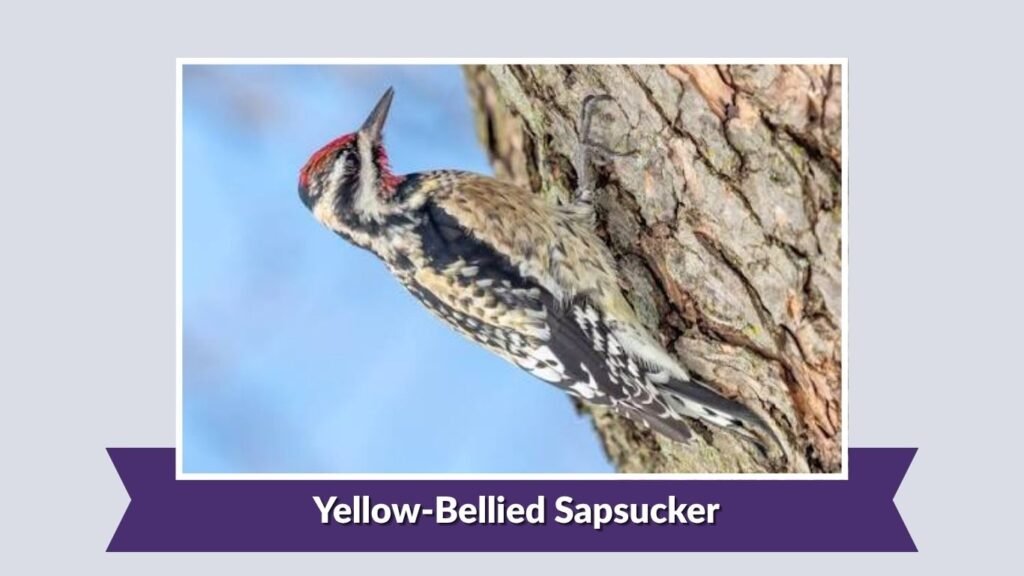
The yellow-bellied sapsucker is primarily a winter visitor to Florida. It arrives during autumn and returns north in spring. It can appear in forests, orchards, parks, and residential areas throughout the state, including South Florida.
Identification
- Scientific name: Sphyrapicus varius
- Length: Approximately 7 to 9 inches
- Face: Bold black-and-white stripes
- Wing: Long white patch
- Crown: Red in adults
- Male: Red throat
- Female: Usually white throat
- Underparts: Pale with a faint yellow wash
Sapsuckers drill organized rows of shallow holes and return to drink the sap. They also eat insects attracted to these wells, along with berries and fruit.
Small, evenly spaced holes arranged in horizontal rows are usually sapsucker feeding marks. Deep, irregular excavations are more likely to have been made while another woodpecker searched for insects.
8. Red-Cockaded Woodpecker
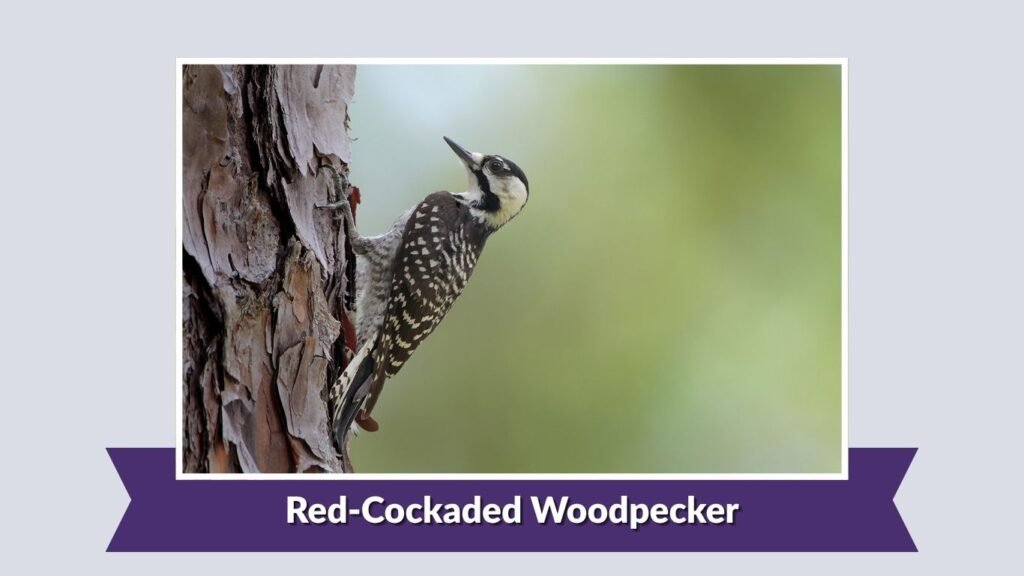
The red-cockaded woodpecker is Florida’s rarest regularly occurring woodpecker. It lives in open, mature pine forests maintained by frequent fire. Important populations occur on protected and actively managed lands in northern, central, and southern Florida.
Identification
- Scientific name: Dryobates borealis
- Length: Approximately 8 to 9 inches
- Back: Narrow black-and-white horizontal bars
- Cheeks: Large white patches
- Crown: Black
- Male: Tiny, usually hidden red streak beside the cheek
- Female: No red cockade
Unlike Florida’s other woodpeckers, this species excavates nesting and roosting cavities exclusively in living pine trees. It drills small resin wells around the entrance, and the flowing resin helps discourage climbing snakes.
Red-cockaded woodpeckers eat ants, beetles, cockroaches, spiders, caterpillars, and other insects found on pine trees. Habitat loss and fire suppression caused severe declines. The species was reclassified federally from endangered to threatened in 2024 but remains protected and dependent on active conservation.
Quick Florida Woodpecker Comparison
Size, color, and feeding location can quickly separate most species. Pay particular attention to whether the bird has an entirely red head, a red crest, zebra-like back markings, or brown spotted plumage.
Identification Chart
| Species | Size | Best Identification Clue | Florida Status |
| Red-bellied | Medium | Zebra back and red nape | Common resident |
| Pileated | Very large | Red crest and black body | Resident |
| Downy | Very small | Short bill and white back | Common resident |
| Hairy | Medium | Long bill and white back | Uncommon resident |
| Northern flicker | Large | Brown spots and white rump | Resident |
| Red-headed | Medium | Entirely red adult head | Localized resident |
| Yellow-bellied sapsucker | Medium | White wing patch and sap rows | Winter visitor |
| Red-cockaded | Small-medium | White cheeks and barred back | Rare resident |
Woodpeckers in Different Parts of Florida
Florida’s regions contain different combinations of habitats. Northern Florida offers extensive pine forests and hardwood woodland, while South Florida contains cypress swamps, tropical vegetation, pine rocklands, parks, and residential areas.
North and Central Florida
All eight regular species can potentially be observed in northern or central Florida. Red-bellied, downy, and pileated woodpeckers are widespread. Red-headed woodpeckers favor open areas with dead trees, while red-cockaded woodpeckers require managed pine habitat.
Hairy woodpeckers and Northern flickers can be locally distributed. Yellow-bellied sapsuckers become considerably easier to find during winter.
Woodpeckers in South Florida
Common South Florida species include red-bellied, downy, and pileated woodpeckers. Yellow-bellied sapsuckers appear during the cooler months.
Northern flickers, hairy woodpeckers, and red-headed woodpeckers are generally more localized or less frequently encountered in the far south. Red-cockaded woodpeckers survive in particularly protected pine habitats rather than ordinary suburban neighborhoods.
What About the Ivory-Billed Woodpecker?
The ivory-billed woodpecker historically inhabited Florida’s extensive swamps and mature forests. It was even larger than the pileated woodpecker and had broad white wing markings, white neck stripes, and an ivory-colored bill.
There has been no universally accepted modern evidence of a surviving Florida population. Reports and recordings occasionally receive attention, but they have not provided definitive confirmation. The species is therefore not included among Florida’s eight regularly occurring living woodpeckers.
Someone reporting an ivory-billed woodpecker has most likely seen a pileated woodpecker, particularly if the bird had a red crest and white flashes under its wings.
Are Woodpeckers Protected in Florida?
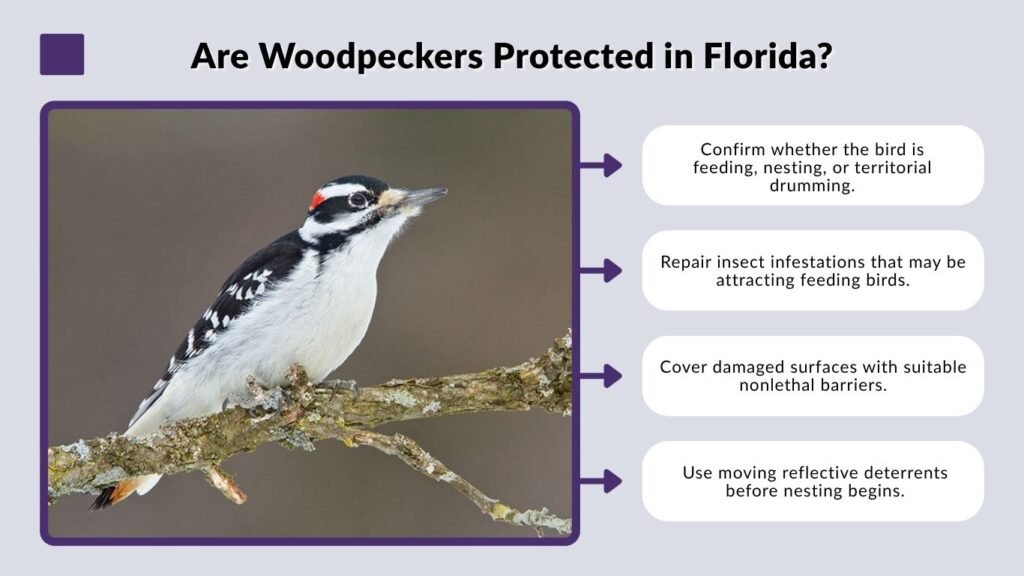
Florida’s native woodpeckers are protected under federal migratory bird law. It is generally illegal to capture, kill, possess, or deliberately destroy an active nest, eggs, or young without authorization. Red-cockaded woodpeckers receive additional protection as a federally threatened species.
Handling Woodpecker Problems
- Confirm whether the bird is feeding, nesting, or territorial drumming.
- Repair insect infestations that may be attracting feeding birds.
- Cover damaged surfaces with suitable nonlethal barriers.
- Use moving reflective deterrents before nesting begins.
- Never seal a hole containing an active nest.
- Avoid sticky gels, poisons, traps, or lethal control.
- Contact wildlife authorities when an active nest or protected species is involved.
FAQs
How many woodpecker species live in Florida?
Eight species regularly occur: red-bellied, pileated, downy, hairy, Northern flicker, red-headed, yellow-bellied sapsucker, and red-cockaded woodpecker.
What is the most common Florida woodpecker?
The red-bellied woodpecker is generally the most familiar and widespread species, especially in wooded neighborhoods, parks, and gardens.
What is Florida’s largest woodpecker?
The pileated woodpecker is the largest living woodpecker regularly found in Florida. It can reach approximately 19 inches in length.
What is the rarest woodpecker in Florida?
The red-cockaded woodpecker is the rarest regular species. It is restricted mainly to protected and actively managed mature pine forests.
Is there a blue woodpecker in Florida?
Florida does not have a native blue woodpecker. A reported blue woodpecker may be a blue jay, nuthatch, or another bird whose dark feathers appear bluish in strong light.
