
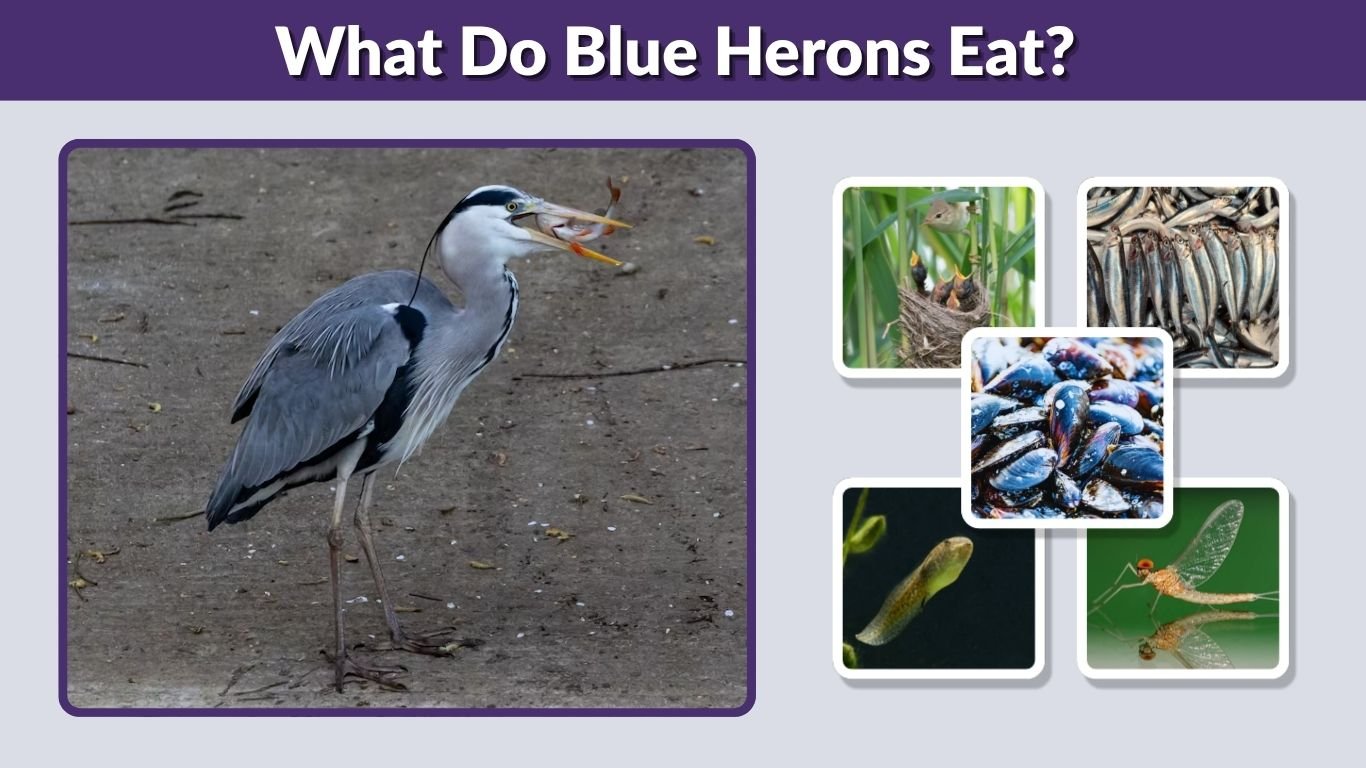
Blue herons are patient and adaptable hunters that eat a wide variety of animals. Fish make up a large part of their diet, but these birds also consume frogs, crayfish, insects, snakes, rodents, and even smaller birds. Great Blue Herons usually hunt in shallow water, although they may also search fields, shorelines, marshes, and backyard ponds for food. Their diet changes with location, season, prey availability, and the bird’s age. Here are 10 foods blue herons commonly love to eat.
What Do Blue Herons Eat?
Great Blue Herons are carnivorous birds. They do not depend on one specific type of food and will capture almost any animal they can overpower and swallow.
Their most common foods include fish, amphibians, crustaceans, reptiles, insects, small mammals, and occasionally other birds. They normally hunt alone by standing motionless or walking slowly until prey comes within striking distance.
1. Fish
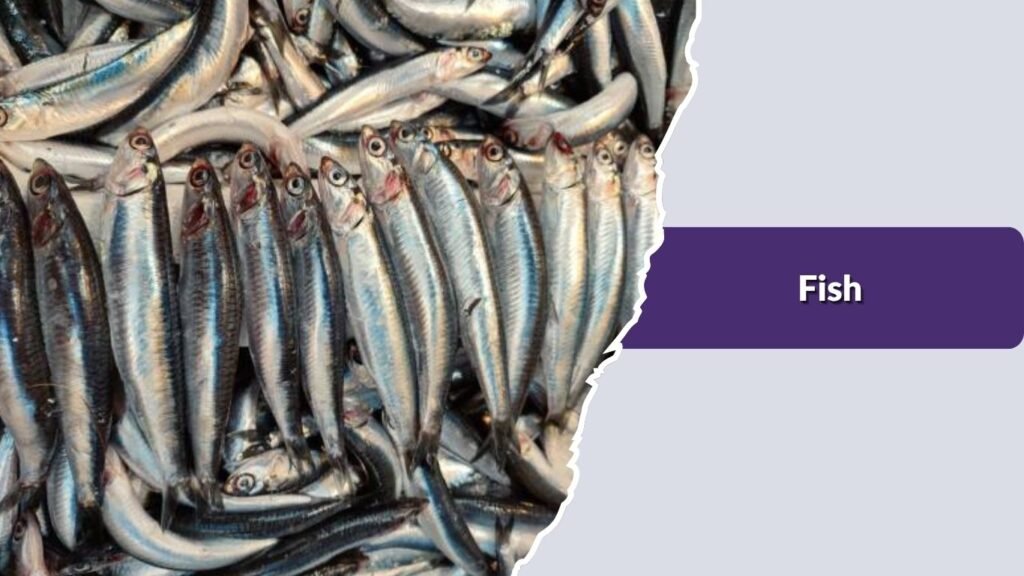
Fish are the most familiar and important food in a blue heron’s diet. Great Blue Herons catch fish in lakes, ponds, rivers, marshes, estuaries, canals, and coastal shallows.
What Fish Do Blue Herons Eat?
Blue herons may catch:
- Minnows
- Sunfish
- Perch
- Small bass
- Catfish
- Carp
- Eels
- Mullet
- Goldfish
- Young trout
The exact species depends on what is available locally. A heron usually catches fish that are small enough to swallow whole.
After capturing a fish, the bird often turns it so the head enters first. Swallowing fish headfirst helps prevent fins and scales from becoming caught in the throat.
2. Frogs
Frogs are another common food for blue herons. Wetlands, pond edges, flooded fields, and drainage canals provide excellent frog-hunting areas.
A heron may stand beside vegetation and wait for a frog to move. It then strikes rapidly with its long, pointed bill.
Blue herons eat both adult frogs and tadpoles. During spring and summer, frogs may become especially important because they are active, abundant, and easy to locate around shallow water.
3. Crayfish
Crayfish provide blue herons with protein and are commonly found in freshwater marshes, streams, ponds, and muddy wetlands.
The bird may watch for crayfish moving along the bottom or stir shallow water with its feet to expose hidden prey. Once caught, small crayfish can be swallowed whole.
Larger individuals may be handled or repositioned before being eaten. Herons must avoid the crayfish’s claws, but their long bills allow them to maintain some distance while capturing it.
4. Crabs and Shrimp
Blue herons living near salt marshes, mangroves, estuaries, tidal flats, and coastal lagoons often eat crabs and shrimp.
In Florida mangroves and the Everglades, Great Blue Herons may feed on small marine fish, shrimp, fiddler crabs, juvenile blue crabs, and other crustaceans.
The birds usually search in shallow water at low tide, when aquatic prey becomes concentrated in pools and channels. Coastal herons may depend more heavily on crustaceans than birds living around inland lakes.
5. Aquatic Insects
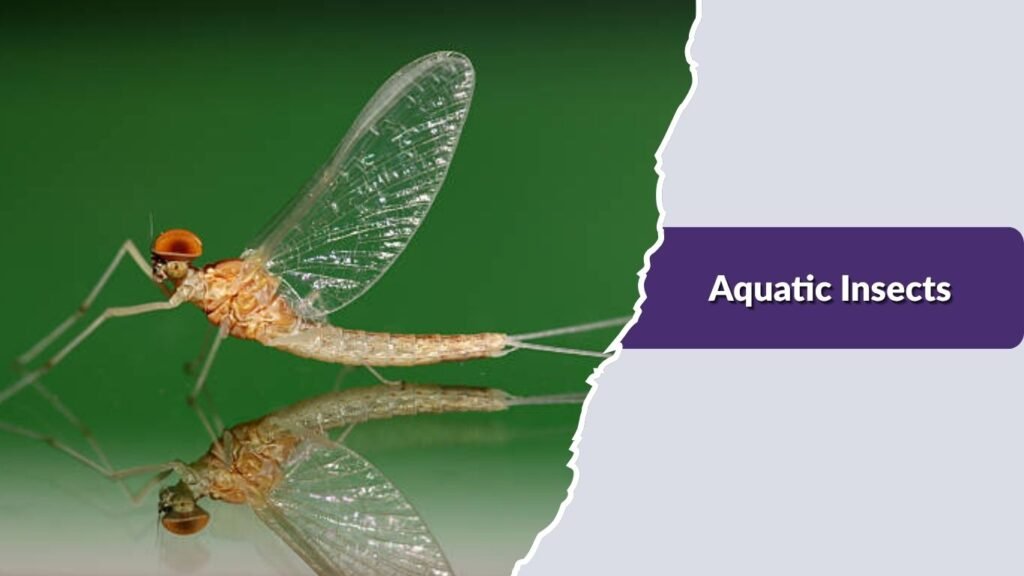
Insects are an important part of the blue heron diet, particularly for younger birds and herons feeding in shallow marshes.
They may consume:
- Dragonfly nymphs
- Water beetles
- Grasshoppers
- Crickets
- Damselfly larvae
- Giant water bugs
- Aquatic insect larvae
Insects are smaller than the fish normally targeted by adult Great Blue Herons, but they are abundant and easy to catch. A heron may pick insects directly from the water, mud, plants, or nearby grass.
6. Snakes
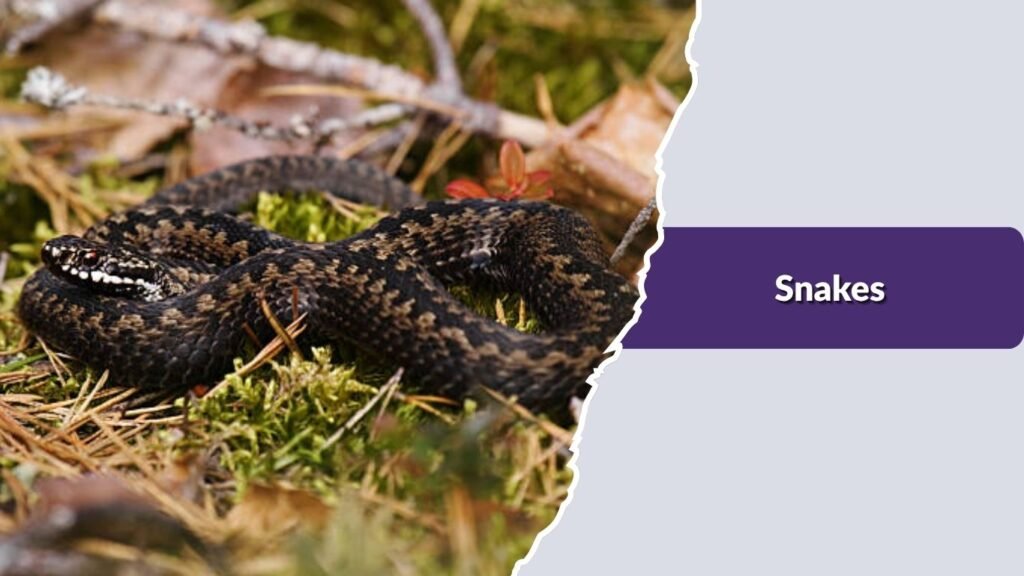
Great Blue Herons are capable of capturing small aquatic and land-dwelling snakes. They may find snakes along marsh edges, in shallow water, or among wetland vegetation.
The heron normally grabs the snake with its bill and may shake or strike it before swallowing. Small snakes are usually swallowed whole.
Although a snake can be difficult prey, the heron’s long neck, fast strike, and strong bill allow it to attack while keeping its body at a safer distance.
7. Salamanders and Other Amphibians
Blue herons also eat salamanders, newts, and other amphibians. These animals are commonly found beneath shallow water, around muddy banks, and among wetland plants.
Amphibians may become more available after rain or during breeding seasons when they move toward ponds and temporary pools.
Great Blue Herons use their excellent vision to detect subtle movement. Once an amphibian is noticed, the bird quickly extends its neck and captures it with the bill.
8. Mice and Other Small Mammals
Blue herons do not always hunt in water. They may enter fields, meadows, roadsides, and marshy grasslands to catch small mammals.
Their mammal prey can include:
- Mice
- Voles
- Shrews
- Young rats
- Small gophers
A heron may stand quietly in grass and watch for movement, much like it waits for fish beside a pond. It then strikes downward and swallows the prey whole.
Small mammals can become particularly useful during cold weather when shallow water freezes or fish become harder to reach.
9. Small Birds and Nestlings
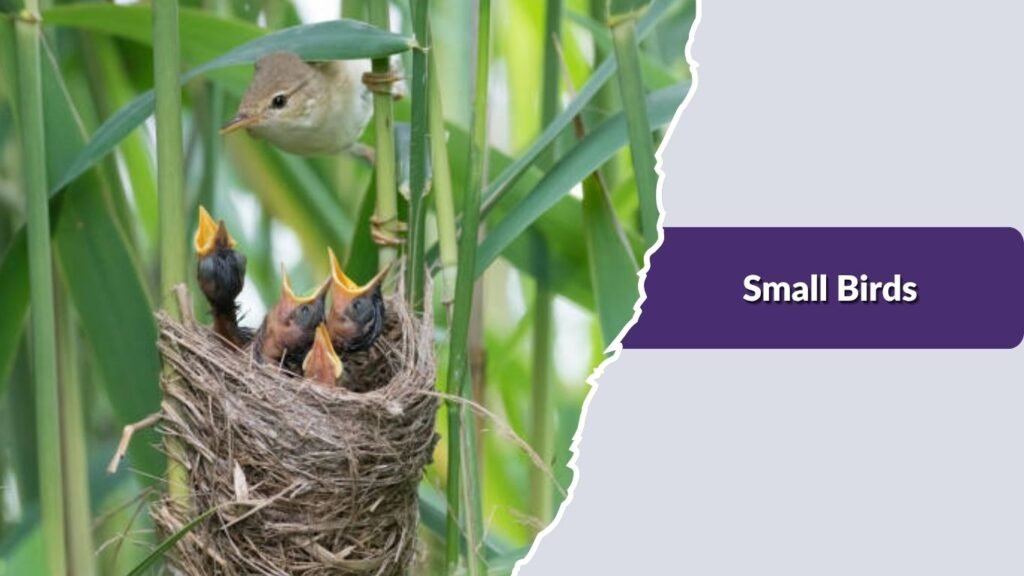
Great Blue Herons occasionally eat other birds. Their prey may include ducklings, young waterbirds, nestlings, or small adult birds that can be captured and swallowed.
Birds are not a blue heron’s primary food, and most individuals depend far more heavily on fish and amphibians. However, Great Blue Herons are opportunistic predators and may take a bird when an easy opportunity appears.
Their ability to swallow surprisingly large prey makes these feeding events dramatic, but they are part of the heron’s natural behavior.
10. Small Reptiles
In addition to snakes, blue herons may eat small lizards and young turtles. These animals are more likely to be captured in warm regions where reptiles are active around wetlands.
Young turtles may be taken when their shells are still small and soft enough to swallow. Lizards may be caught along shorelines, mud banks, mangrove roots, or grassy pond edges.
Large turtles and reptiles are generally too difficult to handle, so herons focus on small individuals.
What Do Blue Herons Eat Besides Fish?
Although fish are their best-known food, blue herons have a much broader diet. They regularly eat frogs, tadpoles, crayfish, crabs, shrimp, insects, snakes, salamanders, mice, voles, lizards, and small turtles.
They may also eat ducklings or nestlings occasionally. This flexible diet allows blue herons to survive in many habitats and adjust when their preferred prey becomes scarce.
What Do Blue Herons Eat in Winter?
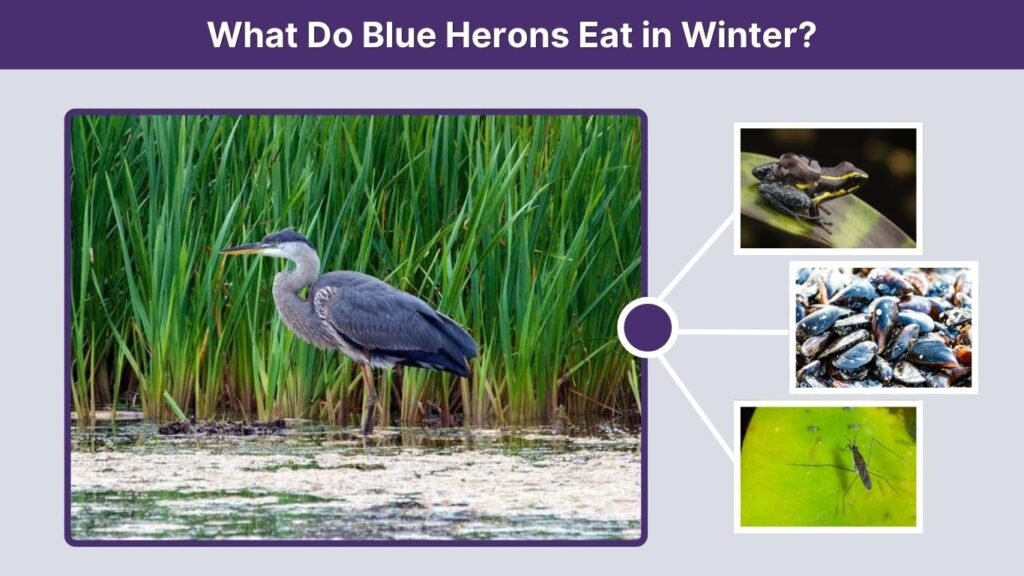
Winter feeding depends heavily on local conditions. Blue herons living in warmer regions can continue catching fish, frogs, crustaceans, and aquatic insects throughout the season.
In colder regions, frozen lakes and ponds make aquatic prey harder to reach. Herons may move toward:
- Unfrozen rivers
- Coastal shorelines
- Tidal marshes
- Streams with flowing water
- Drainage channels
- Open agricultural fields
During winter, they may eat more mice, voles, insects, and other land-based prey. Northern birds often migrate south when feeding water freezes completely.
What Do Blue Herons Eat at Ponds?
Blue herons visiting natural or backyard ponds commonly eat small fish, frogs, tadpoles, crayfish, aquatic insects, and occasionally small snakes.
At ornamental ponds, they may capture goldfish, koi, or other visible fish. The bird prefers shallow edges where it can stand comfortably and strike downward.
Pond owners can protect fish by providing deeper sections, underwater shelters, dense plants, or properly installed protective netting.
What Do Baby Blue Herons Eat?
Baby blue herons eat the same basic animal foods as adults, but they do not hunt independently at first.
Both parents capture fish, frogs, insects, crayfish, and other prey. They partially digest the food and return to the nest, where the chicks receive regurgitated meals.
As the chicks grow, their parents provide larger pieces of food. Young herons begin practicing hunting after leaving the nest, but it may take time for them to become accurate and efficient hunters.
What Do Little Blue Herons Eat?
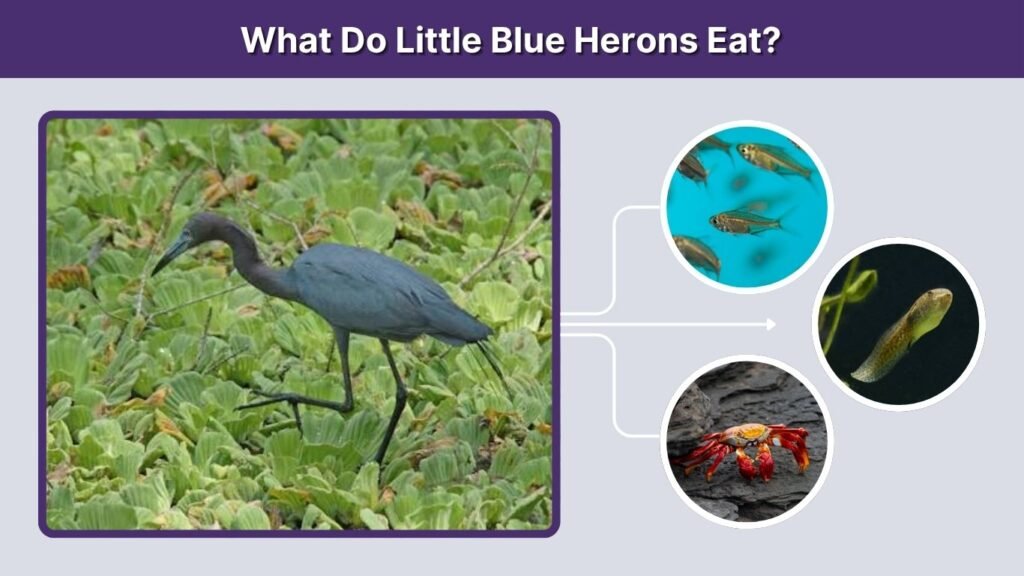
Little Blue Herons eat many of the same foods as Great Blue Herons, but they usually capture smaller prey because of their smaller bodies and bills.
Their diet includes small fish, frogs, tadpoles, shrimp, crayfish, crabs, aquatic insects, and insect larvae.
Little Blue Herons often walk slowly through shallow water and use quick movements to catch prey. Juvenile Little Blue Herons are white, but their diet is similar to that of dark-plumaged adults.
How Do Blue Herons Catch Their Food?
Blue herons mainly use a hunting technique called stalking. The bird stands still or walks slowly while watching the water closely.
When it detects prey, it rapidly straightens its folded neck and drives its bill forward. Smaller animals may be grabbed between the bill tips, while larger fish can be pierced or struck.
Blue herons have forward-focused vision that helps them judge distance. They can also compensate for the way water bends light, allowing them to estimate a fish’s actual position before striking.
FAQs
Do blue herons eat plants?
Blue herons are primarily carnivorous and do not intentionally depend on plants for food. They may accidentally swallow small pieces of vegetation while catching fish, insects, or amphibians, but plants do not form a meaningful part of their normal diet.
Do blue herons eat cats?
Blue herons do not normally eat cats. Even small domestic cats are generally too large and dangerous for a heron to capture. A Great Blue Heron is far more likely to avoid a cat, although it may defend itself with its sharp bill if threatened.
Do Great Blue Herons eat koi?
Yes, Great Blue Herons may eat small or medium-sized koi from backyard ponds. Brightly colored fish are easy to see in shallow water. Deep pond sections, fish shelters, vegetation, and protective netting can make koi more difficult for herons to capture.
How much does a blue heron eat daily?
The amount varies according to the bird’s size, prey type, weather, breeding condition, and food availability. A Great Blue Heron may consume several fish and other small animals during a day, but there is no fixed number for every individual.
Do blue herons chew their food?
No. Blue herons do not have teeth and cannot chew. They swallow most prey whole. Large prey may be shaken, stabbed, or repositioned before swallowing. Fish are generally swallowed headfirst so their fins are less likely to catch in the bird’s throat.
