
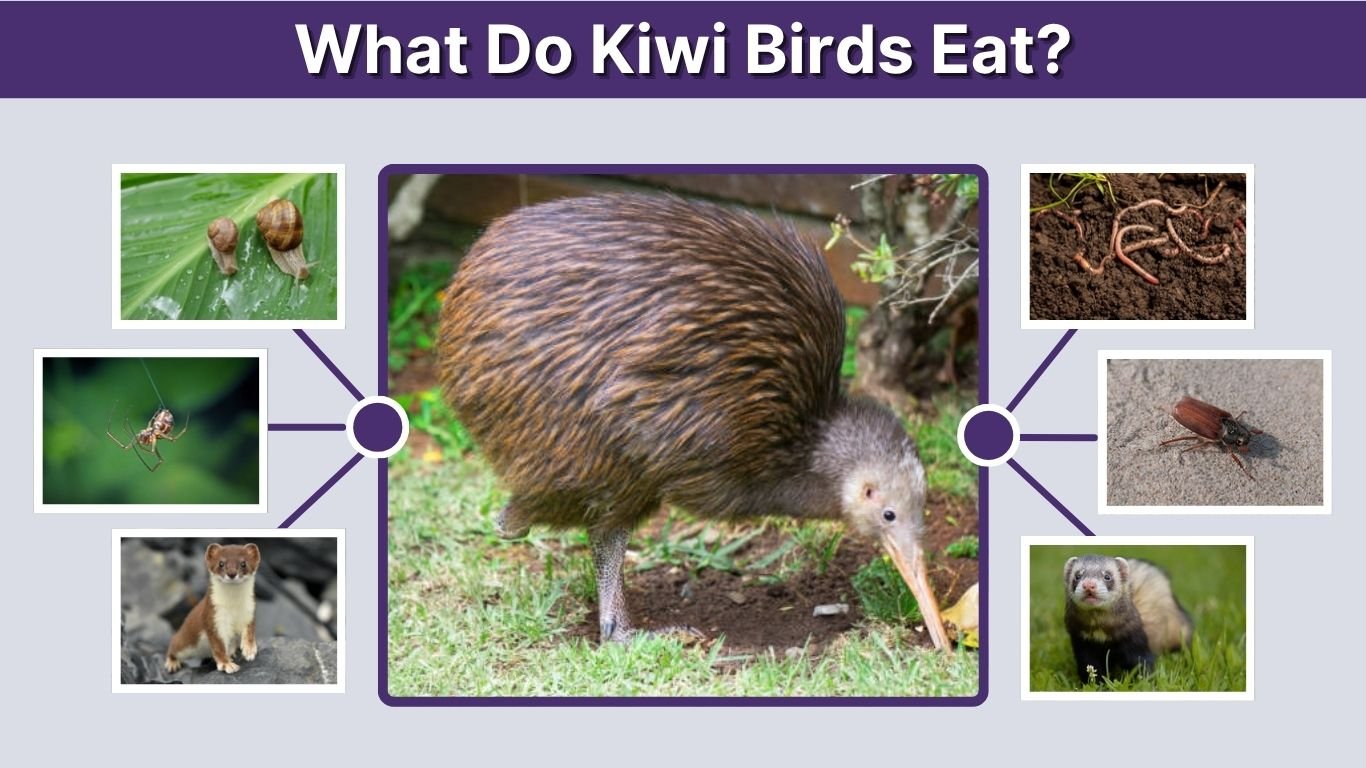
Kiwi birds are omnivores, but most of their natural diet consists of small animals hidden in soil and leaf litter. Earthworms, beetle larvae, cicada nymphs, spiders, centipedes, wētā, and other invertebrates are especially important. Some kiwi also eat freshwater crayfish, snails, fallen fruit, seeds, and leaves. Using a long bill with nostrils near the tip, a kiwi searches the forest floor after dark and probes underground for food. Diet varies somewhat among New Zealand’s five kiwi species and between different habitats.
What Do Kiwi Birds Eat in the Wild?
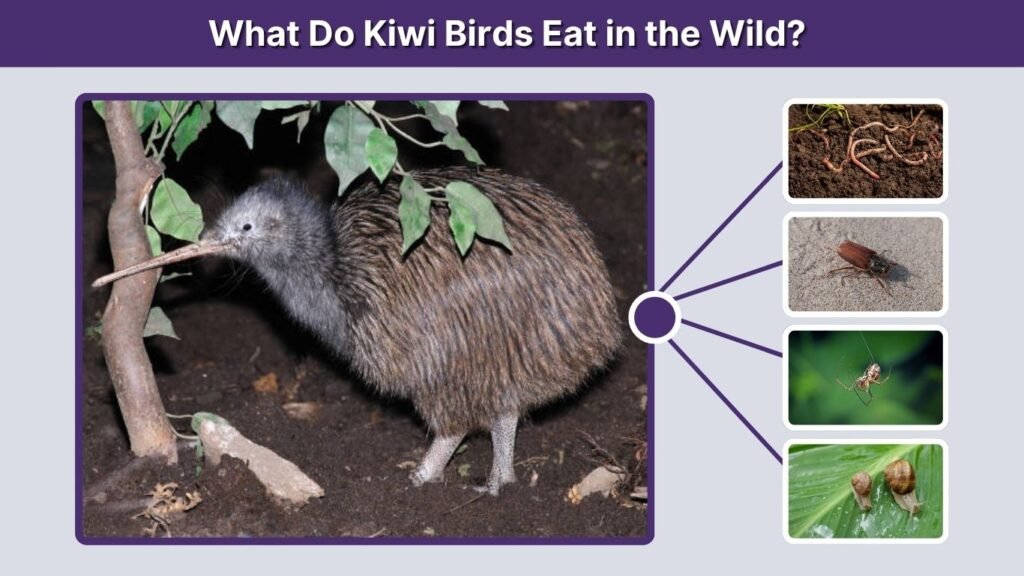
Kiwi are predominantly invertebrate feeders. Research on brown kiwi has found insects to be particularly prominent, while earthworms occur frequently in their diet. Other species show broadly similar preferences. Plant material is eaten too, but generally forms a smaller portion of the diet than worms, insect larvae, and other small animals.
1. Earthworms
Earthworms are among the most important foods for kiwi. Southern brown kiwi, rowi, little spotted kiwi, great spotted kiwi, and North Island brown kiwi all regularly consume them.
Kiwi locate worms underground by probing damp soil with their long bills. In studies of brown kiwi, earthworms appeared in a very high proportion of sampled diets, illustrating how important they can be wherever suitable soil conditions occur.
2. Beetles and Beetle Larvae
Adult beetles and their larvae provide another major source of animal food. Larvae are particularly useful because many live beneath soil, leaf litter, or decaying wood—the exact places kiwi are adapted to investigate.
Brown kiwi diet studies have recorded beetles as a substantial component of insect prey.
3. Cicada Nymphs
Cicada nymphs spend much of their lives underground before emerging as adults, putting them directly within reach of a probing kiwi.
DOC’s kiwi recovery literature lists cicada nymphs, along with earthworms and beetles, among the principal natural foods of kiwi.
4. Moth and Fly Larvae
Kiwi also consume the larvae of moths, flies, and other insects. These soft-bodied prey may be discovered beneath leaves, inside decomposing vegetation, or below the soil surface.
Little spotted kiwi are specifically recorded eating larvae of beetles, cicadas, flies, and moths, while other kiwi species also consume moth larvae.
5. Wētā and Crickets
Wētā and crickets add larger insect prey to the kiwi diet. Their presence varies with habitat, but several kiwi species are documented eating them.
These nocturnal invertebrates are especially appropriate prey for kiwi because both predator and prey can be active during the same nighttime hours.
6. Spiders
Spiders are another regular food. Brown kiwi dietary studies have found spiders frequently, and they are also listed in the diets of tokoeka, rowi, and great spotted kiwi.
Kiwi encounter spiders while searching leaf litter, rotten logs, soil surfaces, and other ground-level microhabitats.
7. Centipedes and Millipedes
Centipedes are consumed by several kiwi species, while millipedes have also appeared in brown kiwi dietary studies.
Although these animals are not necessarily as important as earthworms or insects overall, they help demonstrate how opportunistically kiwi exploit small creatures living on and beneath the forest floor.
8. Snails
Great spotted kiwi are known to consume snails, and snails have also been recorded in dietary analysis of brown kiwi.
Their ground-dwelling lifestyle makes them accessible to a bird that spends much of each night’s feeding period examining damp soil and leaf litter.
9. Freshwater Crayfish
Some larger kiwi will take freshwater crayfish, or kōura, when they are available.
Rowi and great spotted kiwi are both recorded eating freshwater crayfish. This illustrates how diet can differ with local habitat: kiwi living near suitable freshwater environments may have access to prey unavailable to birds in drier forests.
10. Fallen Fruit, Seeds, and Leaves
Kiwi are not strict carnivores. Various species eat small quantities of fallen fruit and leaves, while DOC material also identifies seeds as part of their supplementary diet.
Plant foods generally appear to be secondary compared with invertebrates. For example, detailed brown kiwi diet data show plant matter at much lower proportions than insects in several samples.
Do Kiwi Birds Eat Kiwi Fruit?
The idea of a kiwi bird eating a kiwi fruit is popular because both share the same name. However, kiwifruit should not be confused with an important natural food of the bird. Reliable kiwi diet accounts describe small fallen fruits and other plant material, but they do not identify cultivated kiwifruit as a major or characteristic component of wild kiwi diets.
Can a Kiwi Bird Eat Kiwi Fruit?
Kiwi clearly have the biological ability to consume soft fallen fruit, so encountering fruit is not inherently outside their feeding behavior. But there is no good reason to describe kiwifruit as one of their normal staple foods.
Wild kiwi should also not be approached or fed simply to test whether they will eat it. Their natural foraging behavior should be left undisturbed.
So, when people search for a “kiwi bird eating kiwi,” the accurate answer is: kiwi birds do eat some fruit, but kiwifruit is not known as a normal major part of their natural diet.
How Do Kiwi Birds Find and Eat Food?
A kiwi’s feeding method is unusually specialized. Unlike most birds, its nostrils are positioned near the tip of its long bill. Kiwi move slowly across the forest floor after nightfall, tapping and probing soil, leaf litter, and decaying wood while searching for prey.
Their Long Bill Works Like a Probe
When a kiwi detects something below ground, it can push much of its bill into soft soil to reach it. Great spotted and brown kiwi have both been described probing leaf litter and rotten wood and sometimes plunging the bill deeply into the ground.
This method gives kiwi access to food that many other birds cannot easily reach, including worms and subterranean insect larvae.
What Do Baby Kiwi Birds Eat?
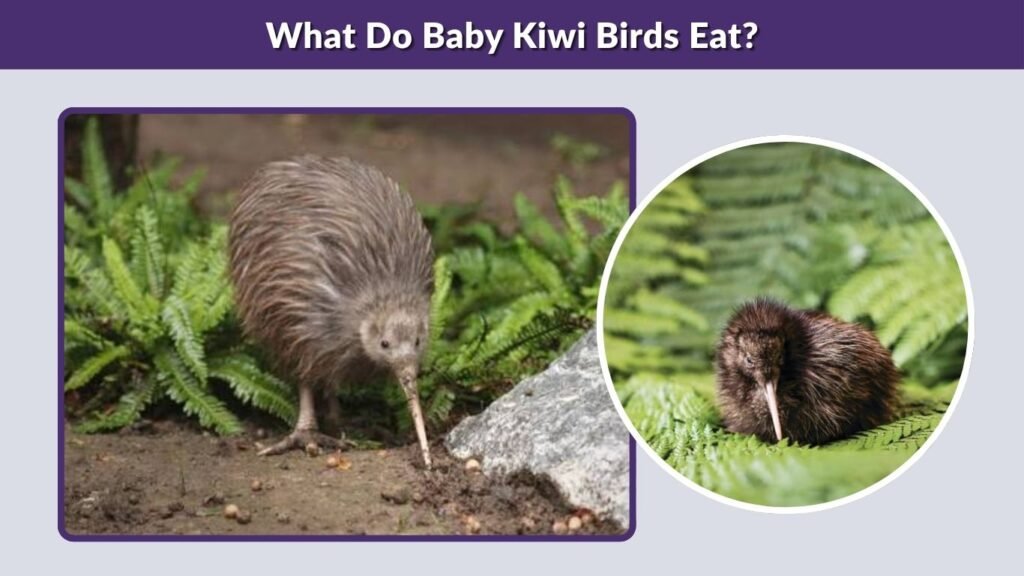
One of the most unusual facts about kiwi parenting is that newly hatched chicks are not routinely fed by their parents. Kiwi chicks hatch already covered in feathers and survive initially on nutrients remaining from their yolk reserves.
Kiwi Chicks Find Their Own Food
DOC reports that chicks begin leaving the nest to feed at approximately five days old and are never fed by their parents.
As young kiwi become independent foragers, they search for the same general categories of natural foods as adults, especially small soil-dwelling invertebrates. Juveniles grow relatively slowly and can require three to five years to reach adult size.
How Much and How Often Do Kiwi Birds Eat?
Wild food intake naturally varies with species, body size, season, habitat quality, and prey availability, so there is no useful single daily quantity for every wild kiwi.
Feeding Mostly Happens at Night
Kiwi are primarily nocturnal and may spend several hours feeding after dusk. DOC veterinary guidance notes that an adult kiwi receiving an artificial captive diet may consume approximately 100–200 grams per night, but this figure should not be treated as an exact measure of what a wild kiwi consumes.
Captive kiwi diets are specially balanced. DOC warns that feeding meat alone can cause serious nutritional imbalances, which is another reason people should not improvise diets for kiwi.
What Animals Eat Kiwi Birds?
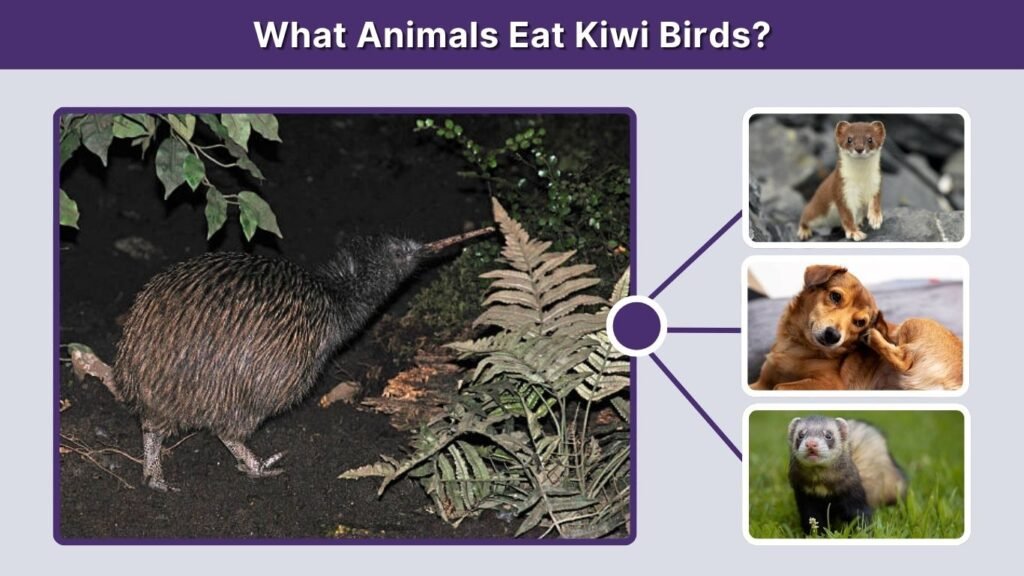
Despite being powerful birds with strong legs and claws, kiwi evolved in New Zealand without native land-mammal predators. Introduced mammals therefore became an especially serious threat.
Major Kiwi Predators
- Stoats are a major predator of kiwi chicks.
- Dogs are particularly dangerous to adult kiwi.
- Cats can kill young kiwi.
- Ferrets can kill adult birds.
- Introduced rodents can compete with kiwi chicks for some food resources.
Predator control is consequently one of the most important parts of modern kiwi conservation.
FAQs
1. Do kiwi birds eat worms?
Yes. Earthworms are one of the most important natural kiwi foods and occur prominently in the diets of multiple kiwi species. Kiwi use their long bills to detect and pull worms from the soil.
2. Do kiwi birds eat berries and seeds?
They can eat plant material. Reliable sources document small fallen fruits, leaves, and some seeds in kiwi diets, although animal foods such as worms and insects generally make up a much larger portion.
3. Do kiwi birds eat fish?
Fish are not generally listed among the principal foods of wild kiwi. Some species do take freshwater crayfish, but their typical diet centers on earthworms, insects, spiders, centipedes, and similar small invertebrates.
4. Can people eat kiwi birds?
Kiwi are absolutely protected wildlife in New Zealand. Without the appropriate legal authority, catching, hunting, killing, possessing, buying, or selling them is an offence under the Wildlife Act framework. They are protected native birds, not a legal game species.
5. Can other birds eat kiwi fruit?
Many bird species can consume fruit, and some New Zealand birds are documented eating cultivated kiwifruit seeds. Whether kiwifruit is suitable for a particular pet or captive bird depends on that species and its veterinary diet requirements. This is separate from the kiwi bird’s natural diet.