
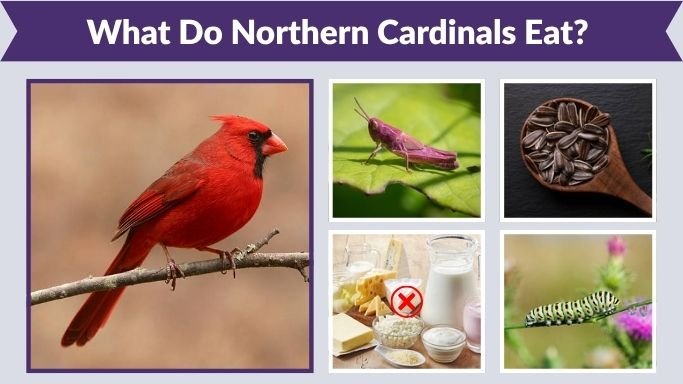
Northern Cardinals eat a mixed diet of seeds, fruits, berries, insects, and grains. These bright red birds are frequent backyard visitors because they readily come to feeders, especially when sunflower seeds or safflower seeds are available. Their diet changes with the season: adults often eat more seeds and berries, while baby cardinals need protein-rich insects. Knowing what cardinals eat helps you attract them safely and support them year-round.
Northern Cardinal Diet Overview
Northern Cardinals are mostly seed- and fruit-eating birds, but they are not strict vegetarians. They also eat insects, especially during the breeding season. This flexible diet helps them survive in forests, shrublands, gardens, parks, and suburban backyards.
Cardinals have strong, cone-shaped bills designed for cracking seeds. Their bills can handle sunflower seeds, safflower seeds, weed seeds, grass seeds, and small grains. They also feed on berries and soft fruits when available.
What Northern Cardinals Eat in the Wild
In the wild, Northern Cardinals search for food on the ground, in shrubs, and in low trees. They often forage in pairs or small family groups. Their natural diet includes seeds from grasses and weeds, wild berries, fruits, insects, and small plant parts.
They are especially active in the early morning and late afternoon. You may see them hopping under bushes, picking seeds from plants, or feeding near woodland edges. Dense cover is important because cardinals prefer to eat near shrubs where they can hide from predators.
During spring and summer, insects become more important. Adult cardinals may eat insects themselves, but they also bring soft-bodied insects to their chicks. In fall and winter, seeds and berries become the main food sources.
What Cardinals Eat at Feeders
At backyard feeders, cardinals prefer larger seeds that are easy to crack. They often avoid tiny seeds if better options are available. They also like stable feeding surfaces because they are medium-sized songbirds and may not feel comfortable on small swinging feeders.
Good feeder foods include:
- Black oil sunflower seeds
- Safflower seeds
- Striped sunflower seeds
- Hulled sunflower hearts
- Cracked corn
- Millet in small amounts
- Peanut pieces
- Dried berries
- Mealworms during nesting season
- Cardinal-friendly seed mixes
Platform feeders, hopper feeders, and tray feeders work well for cardinals. They also feed from the ground, but food placed directly on the ground can attract rodents or spoil quickly, so clean feeding areas are important.
10 Foods Northern Cardinals Eat
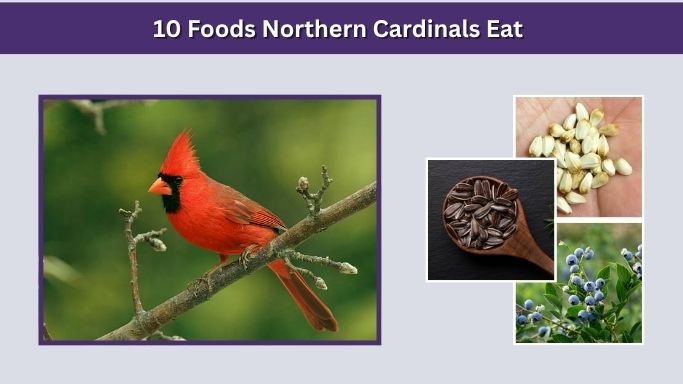
Northern Cardinals are not difficult to feed, but some foods are much better than others. The best foods match their natural diet and provide energy, protein, or seasonal nutrition.
A good backyard feeding plan should include seeds, berries, water, and natural plants. Feeders can attract cardinals, but native shrubs and seed-producing plants help them even more.
1. Black Oil Sunflower Seeds
Black oil sunflower seeds are one of the best foods for Northern Cardinals. These seeds have thin shells, high fat content, and plenty of energy. Cardinals can crack them easily with their strong bills.
This food is especially helpful in winter when birds need extra calories to stay warm. Cardinals often visit feeders with black oil sunflower seeds early in the morning and again before sunset.
Black oil sunflower seeds attract many birds, not just cardinals. Chickadees, finches, titmice, nuthatches, and sparrows may also visit. If you want to attract cardinals specifically, use a feeder with enough space for them to perch comfortably.
2. Safflower Seeds
Safflower seeds are another favorite food for Northern Cardinals. Many bird lovers use safflower because cardinals enjoy it, while some squirrels and blackbirds may show less interest in it compared with sunflower seeds.
Safflower seeds are white, firm, and nutritious. Cardinals can crack them easily, and they often return to feeders that offer them regularly.
This is a useful choice if your feeder is being crowded by grackles, starlings, or squirrels. It may not stop every unwanted visitor, but it can make your feeder more cardinal-friendly.
3. Sunflower Hearts
Sunflower hearts are sunflower seeds with the shell removed. They are easy for cardinals to eat and create less mess around feeders. Because there is no shell, birds get quick access to the nutritious inner seed.
These are excellent for winter feeding, but they can spoil faster than seeds in shells if they become wet. Use smaller amounts during rainy weather and clean feeders often.
Sunflower hearts may attract many bird species, so place them in a feeder that cardinals can use comfortably. A tray feeder or hopper feeder is usually better than a small tube feeder.
4. Wild Berries
Northern Cardinals eat many types of wild berries. Berries provide natural sugars, moisture, and nutrients. They are especially important in late summer, fall, and winter when insects become less common.
Cardinals may eat berries from shrubs and vines such as dogwood, elderberry, serviceberry, blackberry, raspberry, grape, holly, and viburnum. These plants also provide cover, which makes cardinals feel safer while feeding.
Planting berry-producing shrubs is one of the best ways to support cardinals naturally. It gives them food and shelter at the same time.
5. Fruits
Cardinals eat fruits when they are available. They may peck at soft fruits in gardens, orchards, or wild areas. Fruits are not their only food, but they add variety to the diet.
They may eat small pieces of apple, grape, cherry, mulberry, blueberry, blackberry, and other soft fruits. In the wild, they often choose fruits that are already ripe or damaged enough to access easily.
If offering fruit at a feeder, use small amounts and remove leftovers quickly. Fruit spoils faster than seeds and can attract insects, mold, or unwanted animals.
Seasonal Foods and Natural Feeding
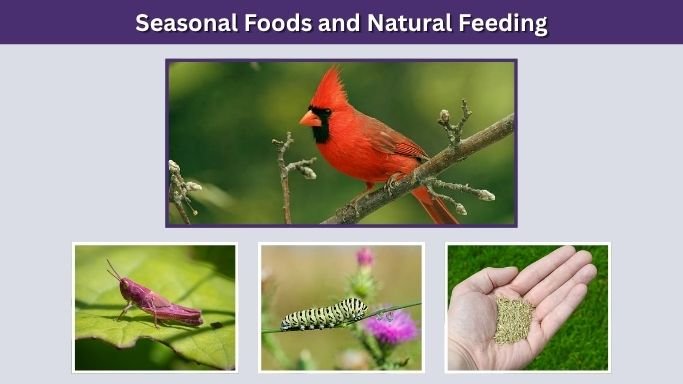
Northern Cardinals change their diet throughout the year. They eat what is available, which is why they can survive in many habitats. In spring and summer, insects are more common. In fall and winter, seeds and berries become more important.
Understanding seasonal feeding helps you offer the right foods at the right time. It also helps you avoid feeding mistakes, such as relying only on processed food or leaving spoiled items outside.
6. Insects
Insects are a key food for Northern Cardinals, especially during nesting season. Adult cardinals eat beetles, grasshoppers, caterpillars, spiders, flies, moths, and other small invertebrates. These foods provide protein.
Baby cardinals depend heavily on insects because they need protein for rapid growth. Seeds are useful for adults, but chicks need softer, protein-rich food during their early days.
A yard with native plants naturally supports more insects. Avoiding heavy pesticide use is also important. If there are no insects, parent cardinals may struggle to find enough food for their young.
7. Caterpillars
Caterpillars are especially valuable because they are soft and rich in protein. Parent cardinals often feed caterpillars to nestlings because they are easier for young birds to swallow than hard seeds.
Caterpillars also contain moisture, which helps chicks stay hydrated. Many songbirds depend on caterpillars during breeding season, not only cardinals.
To support this food source, grow native plants that host moth and butterfly larvae. A perfectly “clean” garden with no insects may look tidy, but it is often less useful for nesting birds.
8. Grains and Cracked Corn
Northern Cardinals may eat grains and cracked corn, especially at backyard feeders or in open areas near farms and gardens. Cracked corn can provide energy, but it should not be the only food offered.
Corn can spoil when wet, so it must be kept dry and fresh. Moldy corn is dangerous for birds. Offer it in small amounts and clean the feeding area regularly.
Cardinals may also eat oats, small grains, and seed mixes, but they usually prefer sunflower and safflower seeds. If you use mixed seed, choose a high-quality blend with fewer fillers.
9. Weed and Grass Seeds
In nature, Northern Cardinals eat many weed and grass seeds. These seeds are easy to find in fields, edges, gardens, and overgrown areas. Cardinals often forage low to the ground, picking seeds from plants or fallen seed heads.
This is one reason cardinals like brushy yards and natural borders. A yard that leaves some seed heads standing can provide winter food.
Plants such as grasses, goldenrod, ragweed, and other seed-producing wild plants can help birds. Not every part of a yard needs to be heavily trimmed. A small natural area can support cardinals and many other wildlife species.
10. Peanuts and Mealworms
Cardinals may eat peanut pieces and dried or live mealworms. Peanuts provide fat and protein, while mealworms are useful during breeding season when birds need more animal protein.
Only offer unsalted, unflavored peanut pieces. Salted or seasoned peanuts are not safe for birds. Peanut pieces should be fresh and dry because spoiled nuts can be harmful.
Mealworms can be offered in small amounts on a tray feeder. They may attract cardinals, especially when adults are feeding chicks. However, natural insects from a healthy yard are still better than relying only on feeder food.
Best Foods to Attract Northern Cardinals
The best foods for attracting Northern Cardinals are black oil sunflower seeds, safflower seeds, sunflower hearts, and berry-producing plants. Cardinals prefer reliable food sources near protective cover.
They are often shy around open spaces. If your feeder is far from shrubs or trees, cardinals may visit less often. Place feeders near cover, but not so close that cats or other predators can hide beside them.
Best Feeder Setup for Cardinals
Cardinals are larger than many small feeder birds, so they need a comfortable feeding space. They often prefer feeders with trays, wide perches, or platforms.
Good feeder choices include:
- Platform feeders
- Hopper feeders
- Tray feeders
- Ground-level feeding trays
- Large tube feeders with cardinal rings
- Window feeders with wide ledges, if placed safely
Cardinals often feed at dawn and dusk. Keeping feeders filled during these times can increase visits. They may also become regular visitors if the food source is consistent and the area feels safe.
Natural Plants Cardinals Love
Feeders help, but plants create long-term habitat. The best cardinal-friendly yards include shrubs, vines, seed plants, and small trees. These provide food, nesting places, and shelter from predators.
Good plant choices include:
- Dogwood
- Serviceberry
- Elderberry
- Viburnum
- Holly
- Blackberry
- Raspberry
- Grape
- Native grasses
- Sunflowers
- Coneflowers
Native plants are usually better than ornamental plants because they support more insects and produce natural foods birds recognize. A mix of evergreens, berry shrubs, and seed plants can support cardinals in every season.
What Baby Northern Cardinals Eat
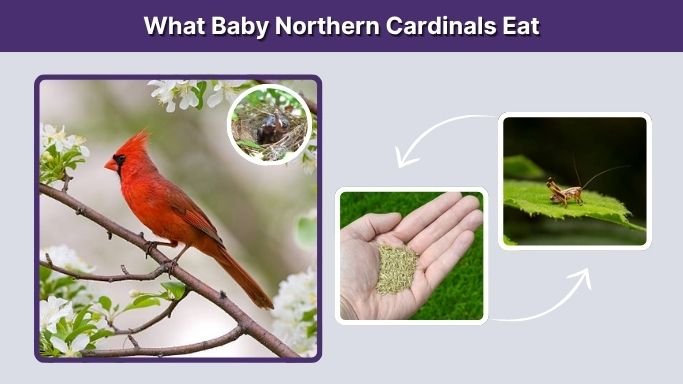
Baby Northern Cardinals eat mostly insects and other soft invertebrates. Their parents bring food directly to the nest. Chicks grow quickly, so they need frequent meals with plenty of protein.
Even though adult cardinals love seeds, baby cardinals cannot survive on hard seeds alone. They need soft foods that are easy to swallow and digest.
Foods Parent Cardinals Bring to Chicks
Parent cardinals search for small, soft prey when feeding nestlings. They may bring caterpillars, beetles, spiders, grasshoppers, moth larvae, flies, and other insects.
As chicks grow, parents may gradually add more plant foods. After leaving the nest, young cardinals continue to depend on their parents for a while. During this fledgling stage, they learn to find food but still receive meals from adults.
If you find a baby cardinal, do not try to feed it seeds or bread. Incorrect food can harm young birds. If the bird is injured or truly orphaned, contact a licensed wildlife rehabilitator.
Why Insects Matter During Nesting Season
Insects are essential during nesting season because they provide protein, fat, and moisture. Without enough insects, parent cardinals may have difficulty raising healthy chicks.
This is why pesticide use can harm backyard birds indirectly. Chemicals may reduce the insect population or poison the insects birds eat.
A bird-friendly yard should include native plants, leaf litter in some areas, and fewer chemical sprays. These simple choices can increase the natural food supply for nesting cardinals.
Foods Northern Cardinals Should Not Eat
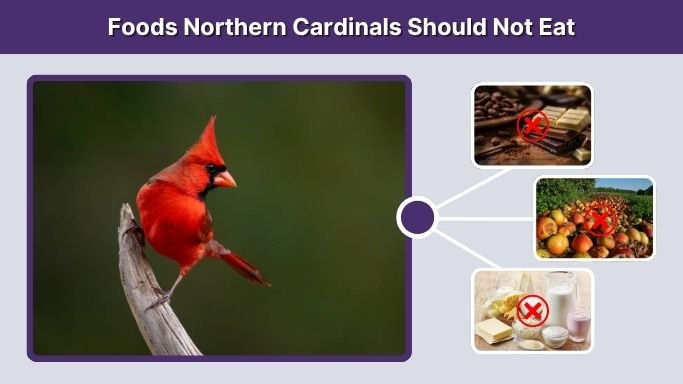
Not all foods are safe for cardinals. Some human foods can cause health problems, attract pests, or spoil quickly outside. Feeding birds the wrong foods can do more harm than good.
Cardinals do best with natural seeds, berries, fruits, insects, and clean water. Avoid processed foods, salty snacks, and anything moldy.
Unsafe Foods to Avoid
Do not feed Northern Cardinals foods that are salty, sugary, moldy, or heavily processed.
Avoid these foods:
- Bread as a main food
- Chips or salty snacks
- Cookies or sweets
- Chocolate
- Moldy seeds
- Spoiled fruit
- Salted peanuts
- Seasoned nuts
- Milk or dairy foods
- Greasy leftovers
Bread is especially common but not helpful. It fills birds without giving proper nutrition. Moldy bread can also be dangerous.
Feeder Cleanliness
Clean feeders are just as important as good food. Dirty feeders can spread disease among birds. Seeds that become wet can grow mold, and old food can attract rodents.
Clean feeders regularly with hot water and allow them to dry before refilling. Remove old fruit, wet seeds, and seed hull buildup. If you notice sick birds, take feeders down temporarily and clean the area well.
Fresh water is also important. A shallow birdbath can attract cardinals, especially in hot weather. Change the water often to keep it clean.
FAQs
What is a Northern Cardinal’s favorite food?
Northern Cardinals strongly prefer black oil sunflower seeds and safflower seeds at backyard feeders. They also eat sunflower hearts, berries, fruits, insects, and weed seeds. If you want to attract cardinals, offer sunflower or safflower seeds in a platform or hopper feeder near shrubs.
Do Northern Cardinals eat insects?
Yes, Northern Cardinals eat insects, especially during spring and summer. Insects are very important during nesting season because baby cardinals need protein-rich food. Parent cardinals may bring caterpillars, beetles, spiders, grasshoppers, flies, and moth larvae to their chicks.
Do cardinals eat fruit?
Yes, cardinals eat many fruits and berries. They may feed on grapes, blackberries, raspberries, mulberries, serviceberries, dogwood berries, elderberries, and other soft fruits. Berry-producing shrubs are excellent for attracting cardinals because they provide both food and protective cover.
What should I put in a feeder for cardinals?
The best feeder foods for cardinals are black oil sunflower seeds, safflower seeds, sunflower hearts, and small amounts of peanut pieces. Use a platform, tray, or hopper feeder because cardinals need space to perch comfortably. Place the feeder near shrubs for safety.
Is bread safe for Northern Cardinals?
Bread is not a good food for Northern Cardinals. Small amounts may not instantly harm them, but bread has poor nutrition and can fill birds without helping them stay healthy. Moldy bread is dangerous. Seeds, berries, insects, and clean water are much better choices.
