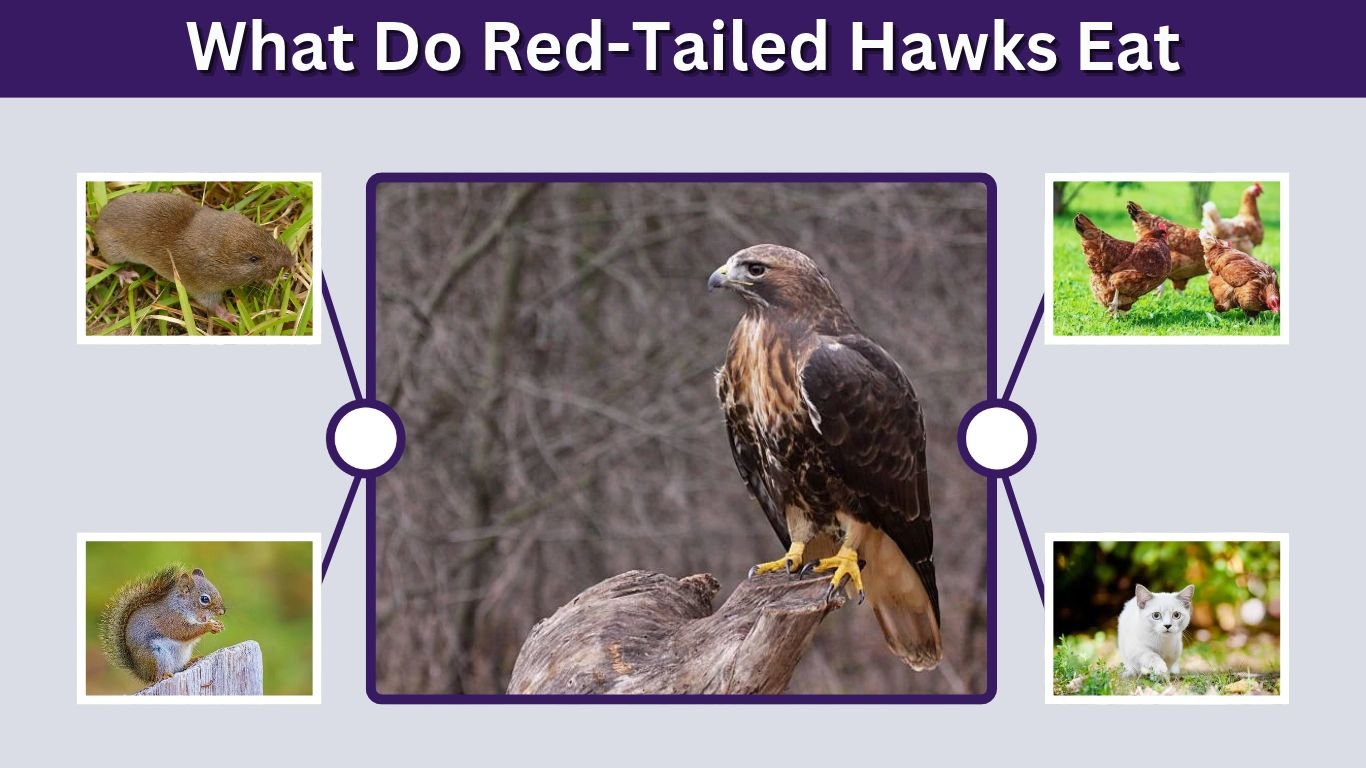
What do red-tailed hawks eat in the wild? These powerful birds of prey primarily feed on small mammals, including mice, rats, rabbits, voles, and squirrels. However, their diet also includes snakes, lizards, birds, amphibians, and insects. Red-tailed hawks are opportunistic hunters that select prey based on availability, habitat, and seasonal conditions. Their sharp talons, excellent eyesight, and powerful beaks help them capture different animals. Understanding their eating habits reveals how these widespread North American raptors survive in forests, grasslands, deserts, and suburban environments.
10 Best Foods Red-Tailed Hawks Eat in the Wild
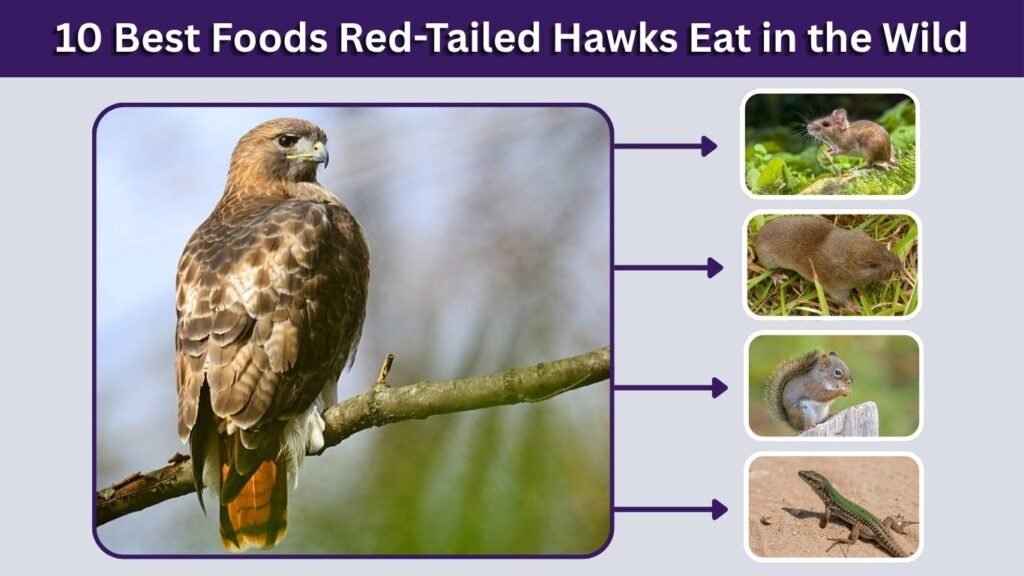
Red-tailed hawks (Buteo jamaicensis) are carnivorous birds that consume various animals. Small mammals make up the largest portion of their diet, although other prey becomes important depending on the environment. The following ten food sources represent commonly eaten prey and additional animals they occasionally capture in the wild.
1. Voles
Voles are among the most important food sources for red-tailed hawks. These small rodents inhabit grasslands, agricultural fields, and open meadows.
Hawks frequently hunt voles by watching the ground from elevated perches. Their small size makes them manageable prey, while their abundance in suitable habitats provides a reliable food supply.
2. Mice
Mice are another common part of the red-tailed hawk diet. These rodents live in fields, farmland, woodland edges, and suburban environments.
Red-tailed hawks locate mice using their excellent eyesight. Once they detect movement, they swoop downward and capture the animal with their sharp talons. Mice provide valuable energy and protein.
3. Rats
Red-tailed hawks frequently capture rats, particularly in agricultural and urban environments where rodents are abundant.
Wood rats, cotton rats, and other appropriately sized species may become prey. Hunting rats helps regulate local rodent populations. However, hawks that consume poisoned rodents can suffer secondary poisoning from rodenticides.
4. Rabbits and Hares
Rabbits are an important food source because they provide substantial energy. Red-tailed hawks commonly hunt cottontail rabbits, while larger individuals may capture young hares.
These mammals usually inhabit open fields, grasslands, and woodland edges. Capturing larger prey requires considerable strength, and hawks may eat such animals on the ground rather than carrying them away.
5. Squirrels
Red-tailed hawks eat both ground squirrels and tree squirrels. Ground squirrels are particularly vulnerable when feeding in open areas.
Tree squirrels may also become prey when they move between branches or travel across exposed ground. Hawks use surprise attacks and powerful talons to capture them before they escape into protective vegetation.
6. Snakes
Snakes are a regular part of the red-tailed hawk diet in some regions. Hawks capture various nonvenomous snakes and occasionally venomous species, including rattlesnakes.
They usually attack from above, using their feet to seize the reptile. Snake hunting can be dangerous, so successful attacks depend on the hawk’s positioning and control of its prey.
7. Lizards
Lizards provide an additional food source, particularly in warm environments such as deserts and dry grasslands.
Red-tailed hawks may capture lizards while they bask on rocks or move across exposed soil. These reptiles are generally smaller than the mammals hawks prefer, but they can supplement the diet when available.
8. Wild Birds
Red-tailed hawks sometimes hunt other birds, including blackbirds, starlings, pigeons, quail, and pheasants.
Although mammals dominate their diet in many regions, birds can become important prey when local conditions change. Red-tailed hawks usually catch birds on the ground or through surprise attacks rather than pursuing fast-flying birds over long distances.
9. Frogs and Toads
Frogs and toads are occasional food sources for red-tailed hawks living near wetlands, ponds, and marshes.
These amphibians are not major prey in most habitats. However, hawks may capture them when they are accessible, particularly during warmer seasons when amphibian activity increases.
10. Large Insects
Red-tailed hawks occasionally consume large insects, including grasshoppers, crickets, and beetles.
Insects generally contribute much less food than mammals. However, young hawks and individuals living where large insects are abundant may take advantage of these smaller prey items.
How Do Red-Tailed Hawks Hunt and Eat?
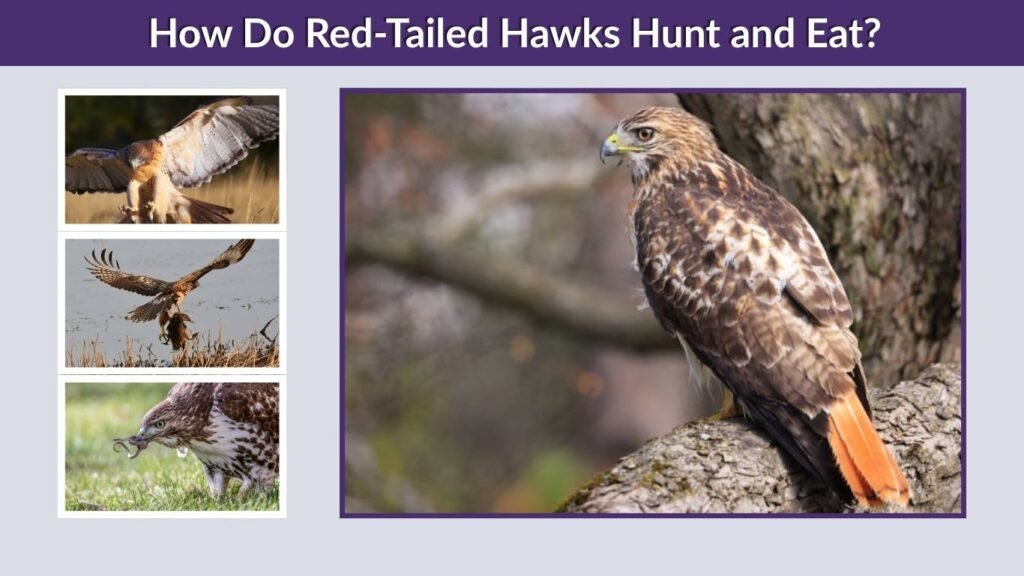
Red-tailed hawks are daytime hunters that depend heavily on their exceptional vision. They usually search open landscapes from elevated perches or while soaring overhead. Their broad wings allow efficient flight, while their strong feet help capture and restrain animals.
Common Hunting Techniques
- Perch hunting: Watching from trees, utility poles, or fence posts before diving toward prey.
- Soaring: Circling above open fields to detect animal movement below.
- Ground feeding: Eating larger prey at the capture location when carrying it would be difficult.
- Opportunistic feeding: Consuming carrion when available instead of capturing live prey.
How Much and How Often Do They Eat?
Food requirements vary depending on the hawk’s size, activity, temperature, and reproductive condition.
Red-tailed hawks may eat several small prey animals or a portion of one larger animal. They hunt regularly but do not necessarily capture food every day. Breeding adults generally need additional food to support their growing chicks.
What Do Red-Tailed Hawks Eat in Winter and Deserts?
Seasonal changes influence prey availability. Red-tailed hawks adjust their diets according to local weather, vegetation, and the animals living nearby. They can survive in both cold northern environments and warm southwestern deserts.
Winter Food Sources
During winter, red-tailed hawks continue hunting mammals, although snow cover can make some prey harder to locate.
Common winter foods include:
- Voles and mice moving through exposed vegetation.
- Rabbits and squirrels are active during colder weather.
- Birds feeding in agricultural fields.
- Carrion is discovered when other food is difficult to obtain.
Desert Food Sources
In desert environments, red-tailed hawks commonly hunt rodents, ground squirrels, rabbits, snakes, and lizards.
They often use tall cacti, rocks, utility poles, and isolated trees as hunting perches. Their diet reflects the animals most accessible in the surrounding landscape.
Do Red-Tailed Hawks Eat Cats, Dogs, or Chickens?
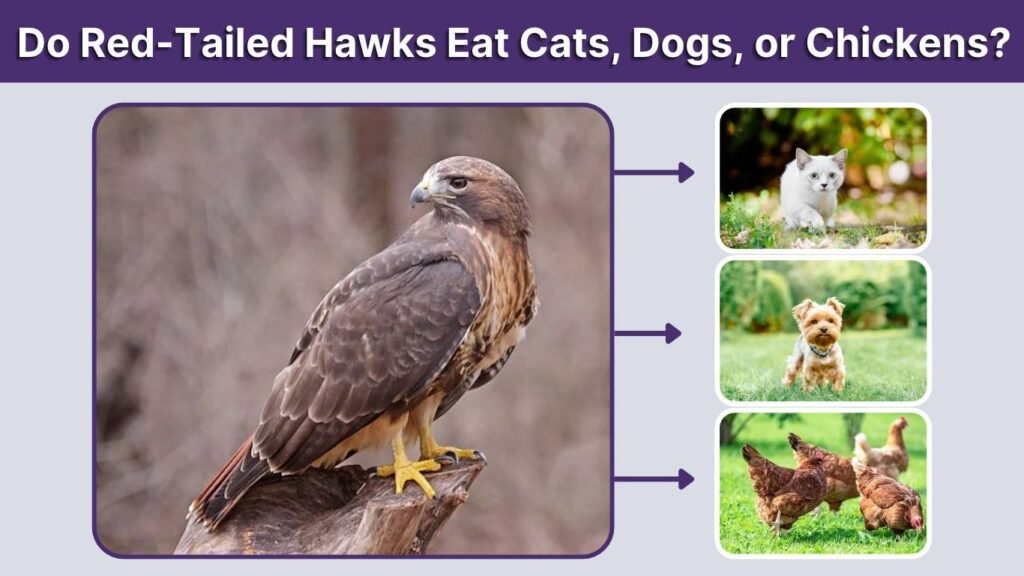
Red-tailed hawks occasionally hunt domestic animals, but the risk varies significantly according to the animal’s size. Their normal prey consists primarily of wild mammals, reptiles, and birds rather than household pets.
Cats and Small Dogs
Attacks on cats and dogs are extremely rare. Most adult cats and dogs are too large or difficult for a red-tailed hawk to capture successfully.
Very small pets may be vulnerable to large birds of prey in unusual circumstances. Supervising tiny pets outdoors is a sensible precaution, although red-tailed hawks are not typical predators of household pets.
Backyard Chickens
Red-tailed hawks can attack chickens, particularly chicks and smaller birds.
They may occasionally target young poultry when opportunities arise. Protective overhead netting, covered runs, and secure enclosures help prevent attacks without harming wildlife.
What Animals Eat Red-Tailed Hawks?
Adult red-tailed hawks have relatively few natural predators because of their size, flight abilities, and defensive talons. However, eggs and young hawks are more vulnerable to predation.
Potential threats include:
- Great horned owls: Known to prey on red-tailed hawk nestlings.
- Crows and other corvids: May consume eggs or vulnerable young birds.
- Large eagles: Can threaten other raptors, although routine predation on adult red-tailed hawks is uncommon.
- Climbing mammals: Some predators may raid accessible nests containing eggs or young.
Protective nesting locations and aggressive territorial behavior help reduce these risks.
FAQs
1. Do Red-Tailed Hawks Eat Squirrels?
Yes, red-tailed hawks commonly eat squirrels, including ground squirrels and tree squirrels. They capture these mammals using sharp talons and surprise attacks. Ground squirrels are particularly important prey in open grasslands, agricultural regions, and areas where they are abundant.
2. Do Red-Tailed Hawks Eat Other Birds?
Yes, red-tailed hawks eat various birds, including pigeons, blackbirds, starlings, quail, and pheasants. However, small mammals generally form a larger portion of their diet. Birds become more important where they are accessible or local mammal populations are less abundant.
3. Do Red-Tailed Hawks Eat Fish?
Red-tailed hawks occasionally eat fish, but fish are not a major component of their natural diet. They primarily hunt terrestrial animals, particularly rodents and rabbits. They are less specialized for catching aquatic prey than fish-eating raptors such as ospreys.
4. Do Red-Tailed Hawks Eat Dead Animals?
Yes, red-tailed hawks sometimes feed on carrion, including dead mammals and birds. Although they normally hunt living animals, scavenging provides an additional food source. This behavior may become useful when hunting conditions are difficult or an accessible carcass is available.
5. What Is a Red-Tailed Hawk’s Favorite Food?
Red-tailed hawks do not have one universal favorite food. Their preferred prey depends on habitat, season, and availability. Voles, mice, rats, rabbits, and squirrels are especially important because small mammals generally provide most of their natural diet.