
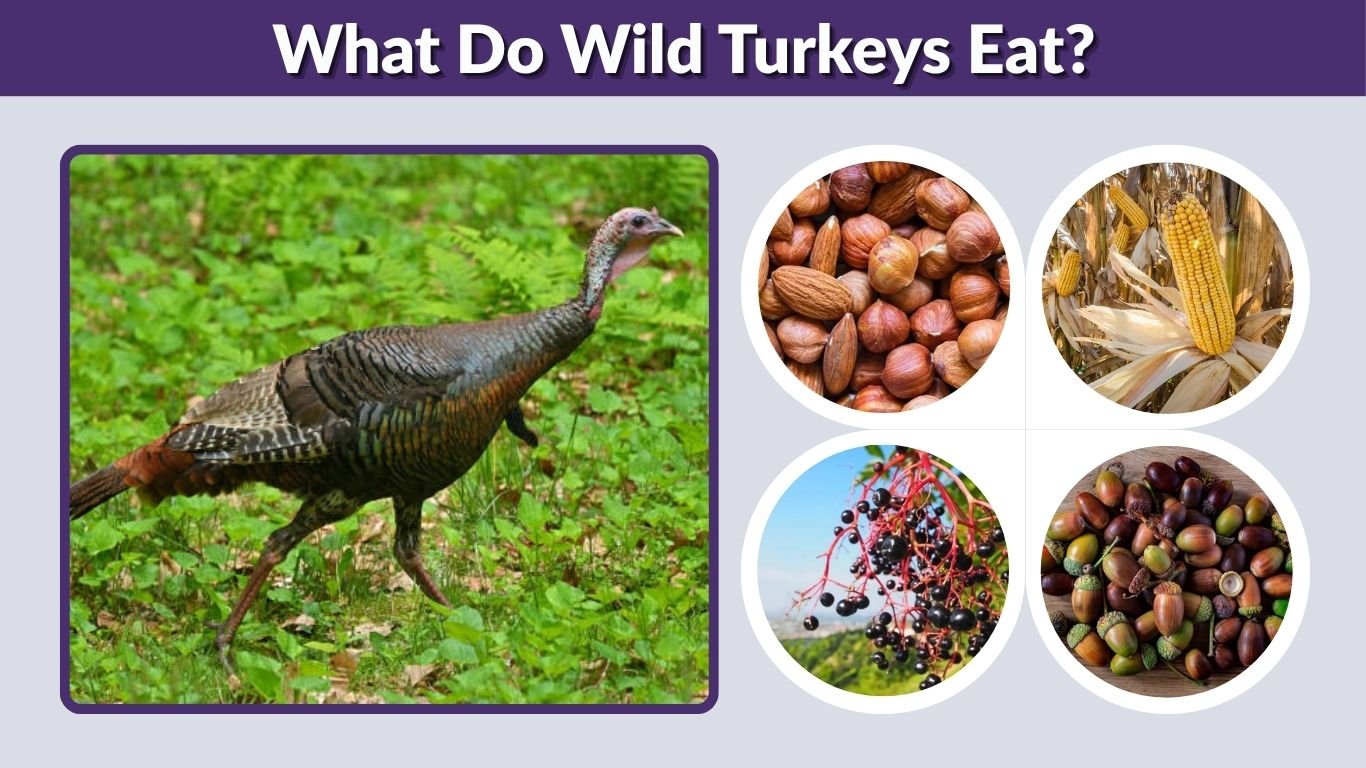
Wild turkeys are adaptable omnivores that eat nuts, seeds, fruits, grasses, insects, and small animals. Their diet changes throughout the year according to food availability. Acorns and other hard nuts are especially important during fall and winter, while green plants, seeds, berries, and insects become more abundant in spring and summer. Young wild turkeys depend heavily on protein-rich insects during their first few weeks of life.
What Do Wild Turkeys Eat in the Wild?
Wild turkeys spend much of the day walking slowly through forests, fields, woodland edges, and clearings in search of food. They usually feed on the ground, scratching through leaves and loose soil with their powerful feet.
They occasionally climb into low shrubs or trees to reach berries and fruits. Their broad diet allows them to survive in many habitats, from oak forests and agricultural areas to grasslands and open woodland.
Wild Turkey Diet at a Glance
| Food group | Common examples |
| Nuts | Acorns, beechnuts, pecans, hickory nuts |
| Seeds | Grass seeds, sedge seeds, sunflower seeds |
| Fruits | Berries, cherries, grapes, apples |
| Plants | Leaves, shoots, buds, ferns, bulbs |
| Insects | Beetles, grasshoppers, ants, caterpillars |
| Other animals | Snails, spiders, salamanders |
| Farm crops | Corn, soybeans, wheat and other grains |
10 Common Foods Wild Turkeys Eat
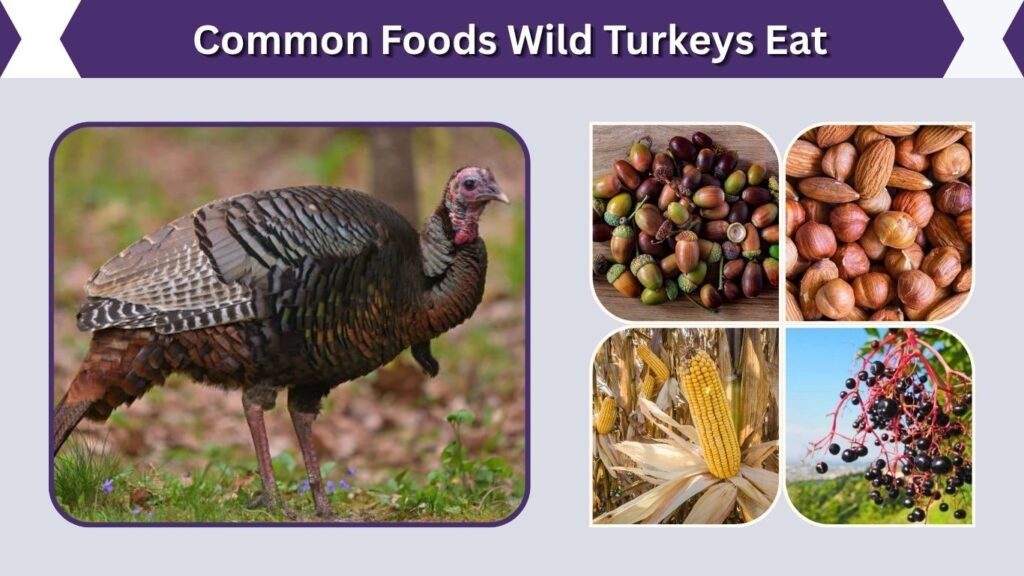
Although wild turkeys may consume hundreds of different items, the following foods make up some of the most important parts of their natural diet.
1. Acorns
Acorns are one of the most valuable wild turkey foods, particularly during fall, winter, and early spring. Turkeys scratch through fallen leaves beneath oak trees to uncover acorns from red, white, black, chestnut, and other oak species.
Acorns provide concentrated energy that helps turkeys maintain weight during cold weather. A productive oak forest can attract large flocks because the birds repeatedly visit areas where nuts are abundant.
2. Other Nuts
Wild turkeys also eat beechnuts, hickory nuts, pecans, and similar hard foods. These nuts are commonly found on forest floors during fall and can remain available into winter.
Turkeys swallow small nuts whole or break larger pieces apart with their bills. They also swallow grit—tiny stones and coarse particles—which remains in the muscular gizzard and helps grind hard foods during digestion.
3. Seeds
Grass, sedge, weed, and wildflower seeds become important during warmer months. Turkeys remove seeds directly from plants or collect those that have fallen onto the ground.
Seeds are especially common in meadows, old fields, forest clearings, and along woodland edges. These open habitats also contain insects and tender plant growth, allowing turkeys to obtain several types of food in one area.
4. Berries and Fruits
Wild turkeys eat blackberries, blueberries, wild cherries, grapes, crabapples, and other available fruits. They usually collect fallen fruit but may jump or climb into low vegetation to reach berries.
Fruit supplies natural sugars, water, and nutrients. Its importance varies by region and season because different plants produce fruit at different times of the year.
5. Corn and Agricultural Grains
Wild turkeys may eat corn, wheat, oats, soybeans, and other crops when fields are accessible. Waste grain left after harvesting can provide an easy food source during fall and winter.
Corn can supply energy, but it does not provide a complete diet by itself. Natural foods such as nuts, insects, seeds, and plants offer a wider range of nutrients. Regularly scattering corn may also attract rodents and cause turkeys to gather unnaturally close to homes.
6. Grass and Plant Material
Tender grasses, leaves, shoots, buds, roots, bulbs, and fern fronds are all eaten by wild turkeys. Fresh green growth is particularly useful in spring when plants begin emerging after winter.
When snow covers their usual ground foods, turkeys may turn to hemlock buds, evergreen ferns, club mosses, burdock, and other vegetation that remains accessible.
7. Beetles and Grubs
Adult beetles, ground beetles, beetle larvae, and underground grubs provide valuable animal protein. Turkeys uncover them by scratching through leaf litter, turning loose soil, and investigating decaying vegetation.
Beetles are particularly important to young poults because they are abundant, nutritious, and generally easy to catch.
8. Grasshoppers and Other Insects
Wild turkeys eat grasshoppers, crickets, caterpillars, moths, ants, leafhoppers, and many other insects. These foods become especially abundant in grasslands and open fields during spring and summer.
Young birds require far more insects than adults. During their earliest weeks, poults consume an almost entirely insect-based diet to obtain the protein and energy needed for rapid growth.
9. Spiders, Snails, and Worms
Turkeys frequently encounter spiders, snails, worms, and similar invertebrates while searching through grass and leaf litter. These animals are not always the largest part of an adult’s diet, but they add protein and nutritional variety.
Poults are particularly active insect and invertebrate hunters. They follow their mother into grassy areas that provide both protective cover and abundant small prey.
10. Small Amphibians and Reptiles
Wild turkeys occasionally eat salamanders and other small animals they can capture and swallow. Small snakes may also be taken opportunistically, although they are not a major food source.
Turkeys do not normally hunt large vertebrates. Most of their animal-based diet consists of insects and other small invertebrates found during routine ground foraging.
What Do Wild Turkeys Eat in Winter?
Winter food consists mainly of acorns, beechnuts, hickory nuts, seeds, leftover agricultural grain, and persistent fruits. Turkeys use their feet to move snow and leaves aside when searching for food.
When deep snow makes the forest floor inaccessible, they may eat buds, fern fronds, club mosses, and vegetation rising above the snow. Severe winters can make survival difficult when snow remains deep or ice prevents birds from reaching nuts and seeds.
What Do Wild Turkey Chicks Eat?
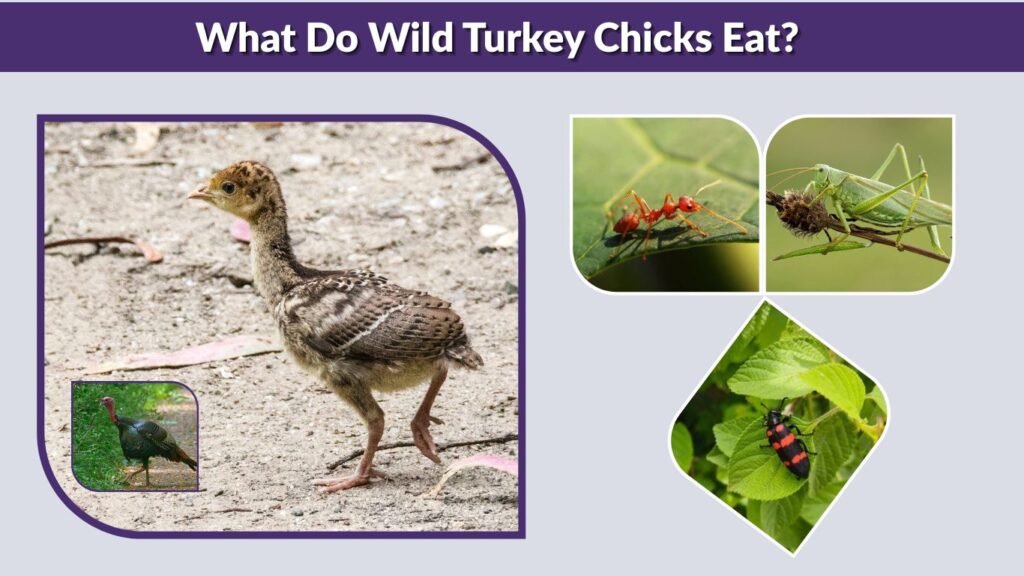
Young wild turkeys, called poults, eat primarily insects during their first several weeks. Grasshoppers, beetles, ants, spiders, caterpillars, moths, and leafhoppers supply the protein required to develop muscles and feathers.
Poults can feed themselves shortly after hatching, but they follow their mother to suitable foraging areas. As they grow, they gradually consume more seeds, fruits, and green vegetation. By approximately their third week, plant material begins forming a larger percentage of their diet.
Do Wild Turkeys Eat Ticks?
Wild turkeys can eat ticks when they encounter them, but ticks are not considered a major part of their diet. They consume many insects and other arthropods while foraging, making an occasional tick possible.
However, there is not strong evidence that wild turkeys reliably control tick populations. Their main invertebrate foods include larger and easier-to-find prey such as grasshoppers, beetles, caterpillars, ants, and spiders.
What Do Wild Turkeys Eat in Your Yard?
Turkeys entering yards may search for fallen acorns, berries, grass seeds, insects, birdseed, garden plants, and spilled food. They may also investigate compost, fruit trees, and areas beneath bird feeders.
Regular feeding is best avoided. It can attract rodents, encourage large flocks to remain around homes, increase disease transmission, and cause birds to lose their natural caution around people. Maintaining native oaks, berry-producing shrubs, natural grass, and insect-rich ground cover is a safer way to support wildlife.
FAQs
Do wild turkeys eat meat?
Wild turkeys eat animal matter, so they are omnivores rather than strict herbivores. Their animal foods include insects, spiders, worms, snails, salamanders, and occasionally other small animals. However, adult diets consist mainly of plants, nuts, seeds, and fruits.
Do wild turkeys eat bread?
Wild turkeys may consume bread when people offer it, but bread is not a suitable natural food. It provides limited nutrition and may encourage birds to gather around people. Turkeys are better supported through natural habitat than direct feeding.
Do wild turkeys eat peanuts?
Wild turkeys can eat unsalted peanuts, especially when broken into manageable pieces. However, peanuts should not become a regular artificial food source. Naturally occurring acorns, seeds, insects, berries, and green plants provide a more balanced diet.
Do wild turkeys eat apples?
Yes. Wild turkeys eat fallen apples and other soft fruits when available. They may peck the fruit into smaller portions before swallowing it. Apples are a seasonal food rather than the foundation of their diet.
Can people eat wild turkey?
Yes, legally harvested wild turkey can be eaten. Its meat is generally leaner and firmer than meat from commercially raised turkeys. Hunters should follow local regulations, handle the bird hygienically, and cook the meat thoroughly before eating it.
