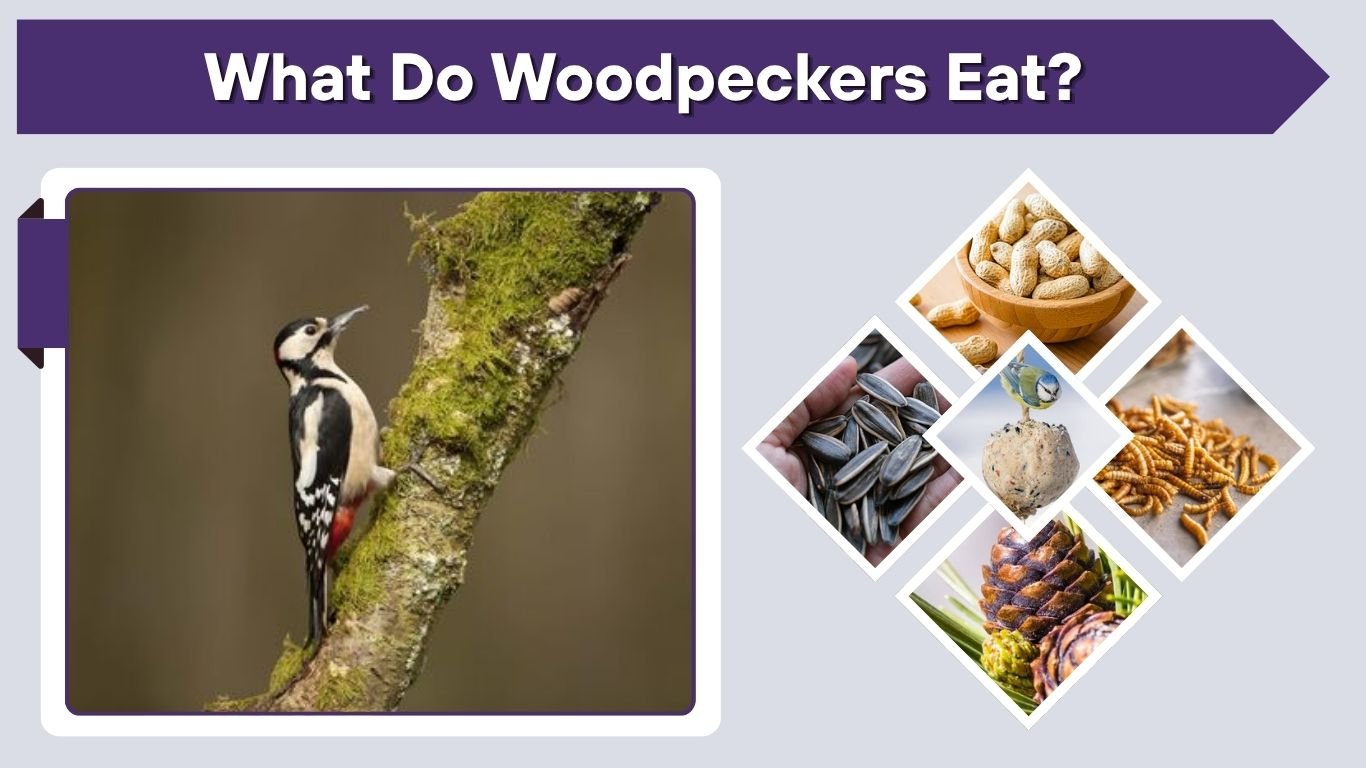
Woodpeckers eat far more than insects they pull from tree bark. Depending on the species and season, their diet can include ants, beetle larvae, nuts, seeds, berries, sap, nectar, and even small animals. Backyard visitors are especially attracted to suet, unsalted peanuts, and sunflower seeds, while wild woodpeckers depend heavily on natural woodland foods. Understanding what they eat helps you choose safe feeder options and explains why different species forage on trunks, branches, flowers, fruiting plants, or the ground throughout the year.
10 Best Foods for Woodpeckers
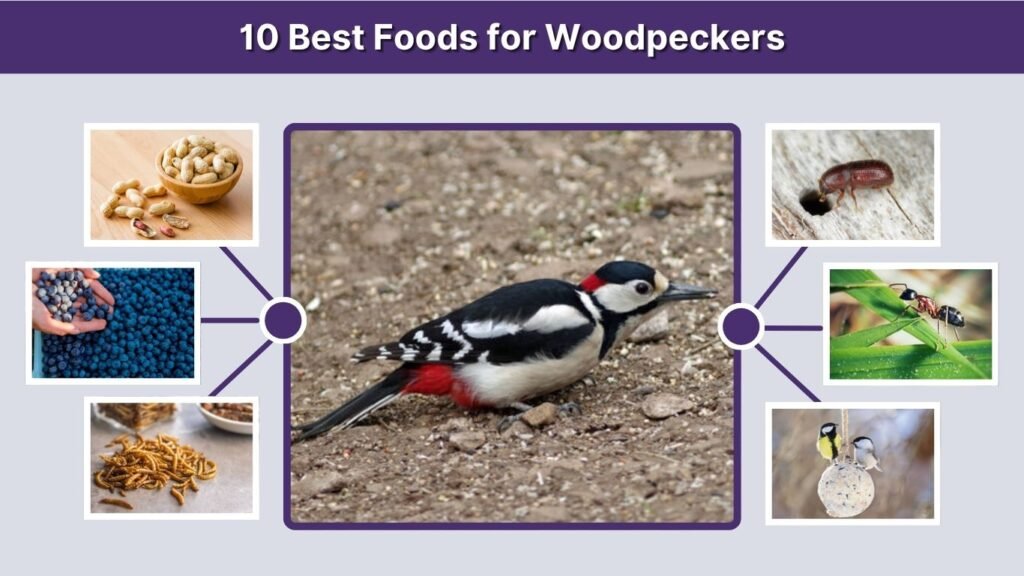
Most woodpeckers are omnivores, but their exact diets vary considerably. Pileated woodpeckers specialize in carpenter ants, flickers search the ground for ants and beetles, and acorn woodpeckers famously store nuts. The following foods cover the most important natural and feeder options used by numerous species.
1. Wood-Boring Insects and Larvae
Insects hiding beneath bark and inside decaying wood are among the most important foods for woodpeckers. Their strong bills expose tunnels, while long tongues reach larvae buried beyond the surface.
Common prey includes:
- Bark beetles
- Wood-boring beetle larvae
- Moth pupae
- Caterpillars
- Aphids
- Scale insects
- Crickets
- Grasshoppers
- Spiders
- Centipedes
Woodpeckers can help reduce certain forest and orchard pests. Hairy woodpeckers, for example, obtain more than three-quarters of their diet from insects in some locations.
2. Ants and Termites
Ants are especially important to pileated woodpeckers and Northern flickers. Pileated woodpeckers create deep, rectangular holes in rotting logs while following carpenter-ant tunnels. Ants may represent most of an individual pileated woodpecker’s diet when colonies are abundant.
Northern flickers spend considerable time on the ground, where they probe soil and anthills. Termites, ant larvae, and pupae provide valuable protein and fat.
3. Suet
Suet is one of the most effective feeder foods for attracting woodpeckers. Its high fat content replaces some of the energy birds normally obtain from insects and animal-based foods. It is particularly valuable during cold weather.
Place suet in a rigid cage feeder with a tail prop. Avoid loose plastic or soft net bags that could entangle a bird’s feet. In warm weather, use a heat-resistant commercial variety and replace it promptly if it becomes soft, spoiled, or moldy.
4. Unsalted Peanuts
Peanuts provide fat, protein, and calories. Downy, hairy, red-bellied, Gila, and red-headed woodpeckers may all visit peanut feeders.
Offer plain, unsalted peanuts without seasoning, chocolate, sugar, or artificial flavoring. Shelled peanut pieces can be placed in a secure mesh or platform feeder. Whole peanuts in their shells are better suited to larger birds.
Never supply moldy peanuts because contaminated nuts can contain dangerous fungal toxins.
5. Black-Oil Sunflower Seeds
Black-oil sunflower seeds have thin shells and energy-rich kernels. Downy and hairy woodpeckers regularly take them, while red-bellied and other species may visit when preferred foods are scarce.
Sunflower hearts are easier for birds to consume and create less shell waste beneath a feeder. Keep the seeds dry and discard any that smell musty, appear clumped, or show signs of mold.
6. Acorns and Other Tree Nuts
Acorns, beechnuts, pecans, hazelnuts, almonds, and pine nuts provide dependable autumn and winter food. Red-headed woodpeckers store acorns and other foods inside bark crevices for later use.
Acorn woodpeckers create large storage structures called granaries. A single granary tree may contain thousands of individually stored nuts. These birds also move drying acorns into smaller holes so other animals cannot easily remove them.
At feeders, offer only plain, unsalted nut pieces.
7. Berries and Fresh Fruit
Many woodpeckers become increasingly dependent on fruit when insect activity declines. Red-bellied, red-headed, pileated, Gila, golden-fronted, and great spotted woodpeckers all consume fruit.
Suitable natural foods include:
- Blackberries
- Blueberries
- Raspberries
- Mulberries
- Elderberries
- Hackberries
- Cherries
- Grapes
- Dogwood berries
- Holly berries
- Persimmons
- Cactus fruit
Native fruit-producing trees and shrubs provide safer, longer-lasting feeding opportunities than scattered fruit at a feeder. Remove uneaten feeder fruit before it ferments or develops mold.
8. Mealworms
Live or dried mealworms provide animal protein and can attract downy, ladder-backed, and other small woodpeckers. Live mealworms usually receive a stronger response because their movement catches a bird’s attention.
Place a small quantity in a smooth-sided dish or platform feeder. Dried mealworms can be soaked briefly in clean water to soften them, but wet leftovers should be removed quickly. Mealworms should supplement rather than replace the bird’s naturally varied diet.
9. Tree Sap and Flower Nectar
Sapsuckers drill neat rows of shallow holes in trees and return to drink the flowing sap. They also consume insects attracted to these wells. Other woodpeckers sometimes use abandoned sap holes.
Gila, golden-fronted, downy, and red-bellied woodpeckers may drink flower nectar or sugar water from hummingbird feeders. Native flowering plants provide a more natural option. If a hummingbird feeder is used, keep it clean and never add honey, artificial sweetener, or red dye.
10. Corn and Other Grains
Red-headed, Gila, golden-fronted, and downy woodpeckers may consume corn, millet, oats, and other grains. Cracked corn is especially useful for species that forage on the ground or visit platform feeders.
Offer only dry, clean grain in modest quantities because corn can spoil rapidly when wet. It may also attract squirrels, rodents, pigeons, and other large visitors. Grain is generally less attractive to woodpeckers than suet, nuts, or insects.
What Different Woodpecker Species Eat
Woodpecker feeding behavior reflects body size, bill shape, habitat, and food availability. Large forest species can excavate deeply into logs, while smaller species collect insects from bark and thin branches. Desert woodpeckers depend more heavily on cactus fruit, berries, and nectar.
Diets of Common Woodpeckers
| Woodpecker | Main Wild Foods | Common Feeder Foods |
| Pileated | Carpenter ants, beetle larvae, termites, berries | Suet and seeds occasionally |
| Downy | Beetle larvae, ants, caterpillars, berries | Suet, peanuts, sunflower seeds |
| Hairy | Wood-boring insects, ants, moth pupae | Suet, peanuts, sunflower seeds |
| Red-headed | Insects, acorns, seeds, berries, fruit | Suet, corn, nuts |
| Red-bellied | Insects, spiders, acorns, fruits | Suet, peanuts, sunflower seeds |
| Gila | Insects, cactus fruit, berries, small animals | Corn, suet, nuts, fruit |
| Acorn | Acorns, flying insects, fruit, sap | Nuts and suet |
| Northern flicker | Ants, beetles, fruit, seeds | Suet and sunflower seeds |
| Great spotted | Beetle larvae, insects, pine seeds, nuts | Peanuts, suet, sunflower seeds |
| Red-cockaded | Ants, wood roaches, beetles, spiders | Rarely visits feeders |
What Do Pileated Woodpeckers Eat?
Carpenter ants are the primary food of pileated woodpeckers. They also eat termites, wood-boring beetle larvae, caterpillars, flies, grasshoppers, and cockroaches.
Their plant foods include blackberries, elderberries, dogwood fruit, hackberries, persimmons, sumac, and nuts. Although pileated woodpeckers occasionally visit suet feeders, retaining large dead trees and fallen logs provides more valuable natural foraging habitat.
What Do Downy and Hairy Woodpeckers Eat?
Downy woodpeckers feed mainly on beetle larvae, ants, caterpillars, and other insects. Plant material such as berries, acorns, and grain may form roughly a quarter of their diet. They are among the most frequent woodpecker visitors at feeders.
Hairy woodpeckers consume similar foods but often forage on larger trunks and branches. Both species are readily attracted to suet, unsalted peanuts, and black-oil sunflower seeds.
What Do Red-Headed Woodpeckers Eat?
Red-headed woodpeckers eat a particularly high proportion of plant material. Acorns, beechnuts, corn, pecans, berries, cherries, grapes, and other fruits are important foods.
They are also skilled aerial hunters that catch grasshoppers, beetles, cicadas, and other flying insects. They sometimes consume eggs, nestlings, mice, or small birds, but these are occasional foods rather than their primary diet.
What Do Red-Bellied Woodpeckers Eat?
Red-bellied woodpeckers consume beetles, ants, grasshoppers, caterpillars, spiders, and other arthropods. They also eat acorns, pine seeds, nuts, grapes, oranges, hackberries, and seasonal fruit.
At feeders, they favor suet, unsalted peanuts, and sunflower seeds. They may carry larger food pieces away and wedge them into bark before breaking them apart.
What Do Woodpeckers Eat in Winter?
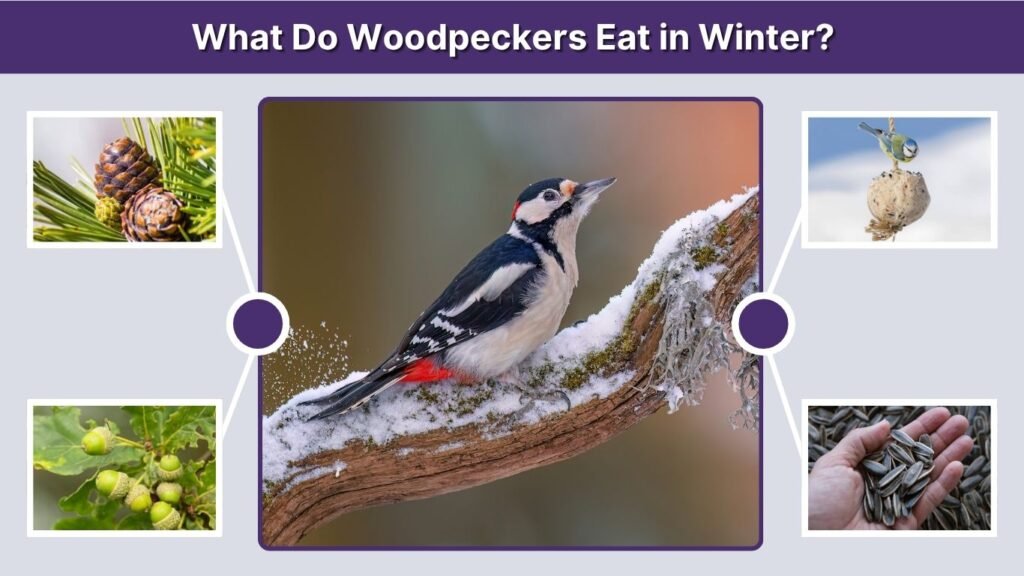
Winter diets contain more fat-rich nuts, seeds, fruits, and stored food because cold temperatures reduce insect activity. However, many larvae remain hidden beneath bark or inside wood, allowing woodpeckers to continue finding animal protein.
Important winter foods include:
- Suet
- Unsalted peanuts
- Sunflower seeds
- Acorns
- Beechnuts
- Pine seeds
- Stored corn
- Persistent berries
- Overwintering insects
- Beetle larvae beneath bark
Pileated woodpeckers continue opening logs for carpenter ants. Red-headed woodpeckers retrieve cached nuts, while downy and hairy woodpeckers search bark and visit feeders more frequently.
What Do Woodpeckers Eat in Summer?
Insects become more abundant during spring and summer. Adult woodpeckers collect caterpillars, ants, beetle larvae, spiders, and other protein-rich prey for their growing chicks.
Summer diets may also contain berries, cherries, flower nectar, and early-ripening fruit. Feeders can remain available, but suet requires closer monitoring during hot weather. Spoiled or melting food should be removed immediately.
What Do Baby Woodpeckers Eat?
Newly hatched woodpeckers are blind, featherless, and completely dependent on their parents. Adults bring insects, larvae, ants, spiders, and other soft animal foods to the nest. Some species also deliver fruit, seeds, or softened nuts as the chicks grow.
Do not give a baby woodpecker milk, bread, seeds, or water by mouth. Incorrect feeding can cause choking, aspiration, nutritional deficiencies, or death. If a featherless chick is genuinely orphaned or injured, contact a licensed wildlife rehabilitator.
A fully feathered fledgling found near a tree may still be receiving care from its parents and usually should not be removed.
How to Feed Woodpeckers Safely
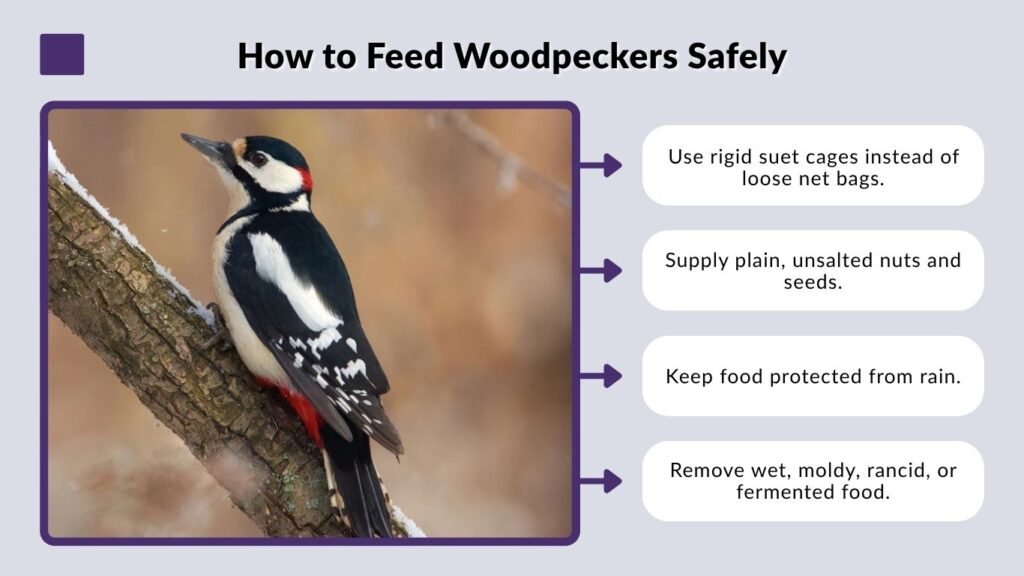
Providing food can help birds during severe winter weather and make them easier to observe. Poorly maintained feeders, however, can spread disease or expose birds to predators and window collisions.
Essential Feeding Tips
- Use rigid suet cages instead of loose net bags.
- Supply plain, unsalted nuts and seeds.
- Keep food protected from rain.
- Remove wet, moldy, rancid, or fermented food.
- Clean feeders regularly and allow them to dry.
- Sweep away accumulated shells and spoiled food.
- Place feeders close to protective trees or shrubs.
- Make nearby windows visible to flying birds.
- Keep cats indoors or away from feeding areas.
- Provide fresh water in a shallow, clean container.
Natural habitat remains the best food source. Native trees, berry-producing shrubs, standing deadwood where safe, and pesticide-free gardens support insects and provide feeding opportunities throughout the year.
FAQs
What is a woodpecker’s favorite food?
Many woodpeckers prefer insects and larvae in the wild. At backyard feeders, suet is usually the most consistently attractive food.
What birdseed do woodpeckers eat?
They commonly eat black-oil sunflower seeds, sunflower hearts, cracked corn, and occasionally millet. Sunflower seeds generally attract more species than inexpensive mixed grain.
Do woodpeckers drink water?
Yes. They drink from puddles, streams, natural tree cavities, birdbaths, and droplets on vegetation. Some species also obtain moisture from fruit, sap, and nectar.
Do woodpeckers eat blueberries?
Yes. Several species eat blueberries and other soft fruits, particularly when berries are naturally available during summer and autumn.
Can woodpeckers be kept as pets?
No. Woodpeckers are wild birds, and keeping native species without authorization is generally illegal. They also require specialized diets, large territories, and natural surfaces for climbing and foraging.