
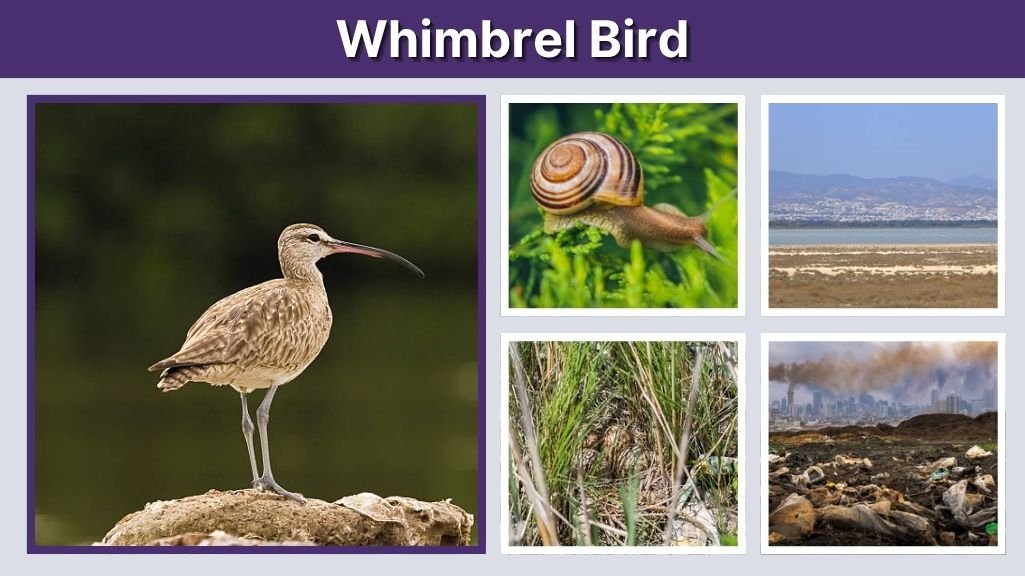
The Whimbrel is a remarkable shorebird recognized for its long, curved bill, elegant flight, and impressive migratory journeys. Found across multiple continents, it attracts birdwatchers with its distinctive call and fascinating feeding behavior. This guide explores the Whimbrel’s physical traits, habitats, diet, migration patterns, behavior, and comparisons with similar species like Curlews and Sandpipers, helping enthusiasts identify and understand this fascinating bird in the wild.
Whimbrel Overview
The Whimbrel is a medium-sized shorebird known for its striking bill and rapid movements. It belongs to the family Scolopacidae and is highly migratory, traveling thousands of miles between breeding and wintering grounds. This section introduces the species, its scientific classification, and the general characteristics that make it distinct among shorebirds.
What is a Whimbrel?
- Whimbrel definition: A medium-sized migratory shorebird with a long, downward-curved bill.
- Whimbrel scientific name: Numenius phaeopus
- Whimbrel shorebird characteristics: Brownish plumage, streaked crown, and distinctive eye stripe.
Key Identifying Features
- Size and wingspan: Approximately 37–45 cm in length with a 76–88 cm wingspan.
- Juvenile vs adult differences: Juveniles have slightly paler plumage and shorter bills.
- Long-billed Curlew comparison: Smaller and with shorter, more sharply curved bill than the Long-billed Curlew.
Whimbrel Physical Characteristics and Size
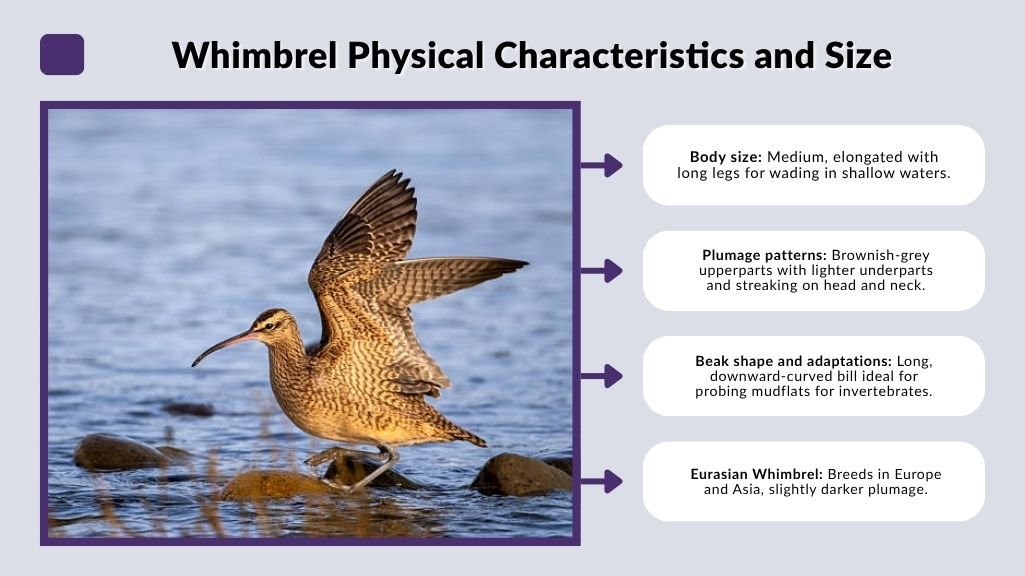
Whimbrels have unique physical traits that help distinguish them from similar species. Their curved bills, streaked crowns, and agile flight patterns are notable, while subtle size differences aid in identification across subspecies.
Appearance Details
- Body size: Medium, elongated with long legs for wading in shallow waters.
- Plumage patterns: Brownish-grey upperparts with lighter underparts and streaking on head and neck.
- Beak shape and adaptations: Long, downward-curved bill ideal for probing mudflats for invertebrates.
Subspecies Variations
- Eurasian Whimbrel: Breeds in Europe and Asia, slightly darker plumage.
- Hudsonian Whimbrel: Found in North America, often paler and shorter-billed.
- Steppe Whimbrel: Central Asian populations with subtle variations in size and streaking.
Whimbrel Sounds and Vocalizations
The Whimbrel’s calls are crucial for identification, especially during migration when flocks are on the move. Understanding their sounds helps birdwatchers locate and monitor populations effectively.
Whimbrel Calls and Songs
- Typical call: A high-pitched, rolling “pee-oo” or “whi-whi-whi” sound.
- Sounds in flight: Repeated call notes when flying in flocks.
- Comparison with Curlew and Sandpiper calls: More rapid and less melodic than Curlew calls; higher-pitched than most Sandpipers.
Whimbrel Distribution and Migration
Whimbrels are long-distance migrants, breeding in temperate and Arctic regions and wintering in tropical and subtropical coasts. Their migration is one of the most impressive among shorebirds, spanning thousands of kilometers.
Migration Routes
- North America to South America and the Caribbean for wintering.
- Europe to Africa via the western European coast and Mediterranean.
Geographic Range
- North America: Alaska, Canada; wintering in U.S. coasts, Central and South America.
- Europe and Asia: Breeding in Scandinavia, Russia; wintering in West Africa and South Asia.
- Notable locations: South Carolina, Costa Rica, Iceland, Ireland, Singapore, Galapagos Islands.
Whimbrel Habitat Preferences
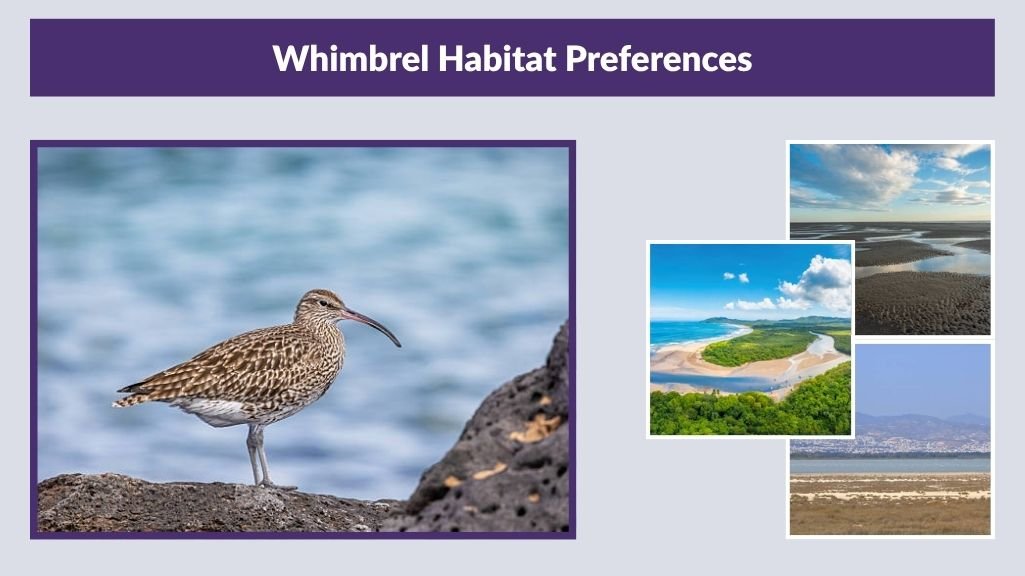
Whimbrels are found in coastal habitats, estuaries, mudflats, and sometimes inland wetlands during migration. Their habitat choice ensures access to abundant invertebrates and safety from predators, making these areas critical for feeding and resting.
Common Habitats
- Coastal wetlands with shallow water and exposed mudflats.
- Estuaries and river mouths rich in crustaceans and worms.
- Island and shore habitats provide resting sites during migration.
Notable Locations
- Whimbrel Point: Popular observation site for migratory flocks.
- Deveaux Bank: Critical stopover for feeding and resting.
- South Whimbrel Circle: Known for high-density wintering populations.
Whimbrel Diet and Feeding Behavior
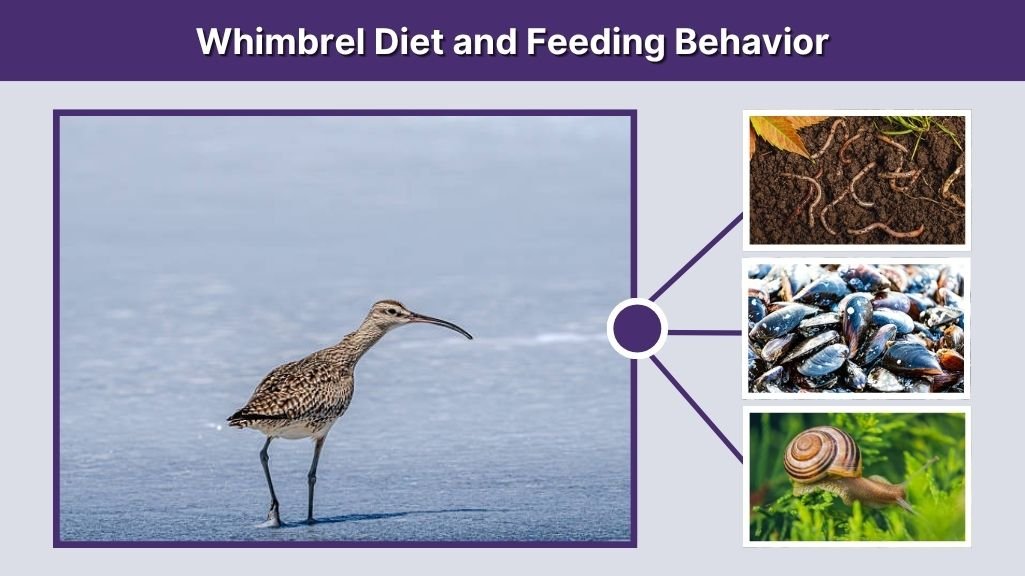
Whimbrels are opportunistic feeders that use their long, curved bills to probe mud and sand for prey. Their diet shifts slightly with seasons and locations, helping them thrive along coasts, estuaries, and wetlands. Understanding their feeding habits is key for birdwatchers and researchers studying ecosystem roles.
What Do Whimbrels Eat?
- Invertebrates: worms, crustaceans, mollusks
- Small aquatic insects and larvae
- Occasional berries or seeds during migration
Foraging Techniques
- Probing the mud with their curved bill
- Picking prey from shallow water surfaces
- Feeding in groups during low tide for safety
Whimbrel Similar Species and Identification Tips
Whimbrels are often mistaken for Curlews or Sandpipers. Observing bill shape, size, plumage, and vocalizations is crucial for proper identification. This section highlights distinctions to prevent confusion in the field.
Whimbrel vs Curlew
- Long-billed Curlew: larger, longer, more gently curved bill
- Bristle-thighed Curlew: heavier body and slightly different wing pattern
- Eurasian vs Hudsonian Whimbrel: slight plumage and bill length variations
Whimbrel vs Sandpiper
- Smaller, less chunky than most Sandpipers
- Flight call is higher-pitched and rapid
- Body posture: Whimbrels appear more elongated in flight
Whimbrel Behavior and Lifestyle
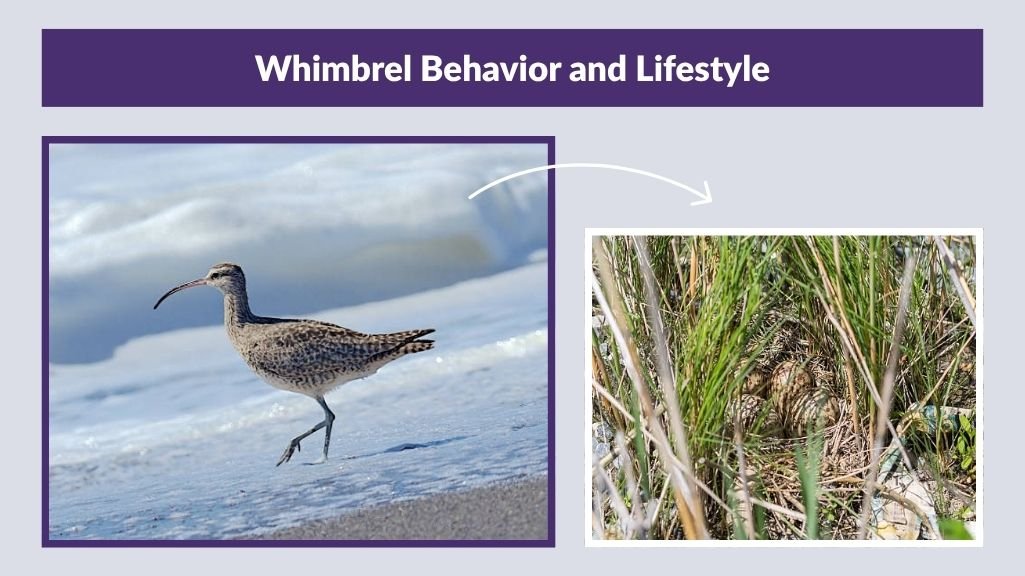
Whimbrels display fascinating behaviors, from flocking during migration to nesting strategies. Observing these behaviors enhances understanding of their survival strategies and ecological role.
Flocking and Social Patterns
- Migratory flocks often include dozens to hundreds of individuals
- Interaction with other shorebirds at feeding grounds
- Alert behavior: constant scanning for predators
Breeding and Nesting
- Nesting in Arctic and temperate regions
- Ground nests lined with grass and feathers
- Clutch typically contains 3–5 eggs
- Both parents care for chicks until fledging
Observation and Birdwatching Tips
Successful observation of Whimbrels relies on knowledge of habitats, seasonal patterns, and vocalizations. Birdwatchers can improve spotting success with proper timing and techniques.
Best Times to Observe
- Spring and fall migration periods
- Low tide at mudflats and estuaries for feeding
Photography Tips
- Capture flight with long lenses for clear wing patterns
- Use call playback cautiously to locate individuals
- Early morning light provides best visibility
Cultural and Miscellaneous References
Whimbrels appear in literature, architecture, and media, often inspiring names, artistic references, and popular culture mentions. This section adds context for enthusiasts beyond natural observation.
Media and Literature Mentions
- Sir Whimbrel in Enola Holmes
- Charlie Holmberg Whimbrel House (fictional reference)
- Quince and Co Whimbrel (creative inspiration)
Architecture and Models
- Schell Brothers Whimbrel model homes
- Whimbrel House series in residential design
Conservation and Population

Whimbrel populations are affected by habitat loss, climate change, and human disturbance. Conservation efforts focus on protecting migratory stopover sites, breeding areas, and wintering habitats. Awareness of threats is vital for sustaining global populations.
Population Status
- North America: moderate populations, concentrated in coastal zones
- Europe and Asia: variable, with some localized declines
- Key threats: habitat loss, pollution, human disturbance
Conservation Efforts
- Wetland and estuary preservation
- Migratory route protection programs
- International birdwatching and research monitoring
Fun Facts and Summary
This section highlights interesting trivia and memorable features about Whimbrels, reinforcing key points from the article and leaving readers with lasting insights.
Interesting Facts
- The name “Whimbrel” is derived from the bird’s distinctive call.
- Flight patterns include rapid wingbeats with gliding intervals.
- Whimbrels often feed in groups but maintain individual spacing.
- “The Whimbrels” also refers to a musical group inspired by the bird.
- They are one of the few shorebirds capable of long, non-stop migrations.
FAQs
What is the typical size of a Whimbrel?
Whimbrels are medium-sized shorebirds, averaging 37–45 cm in length with a wingspan of 76–88 cm. Their long, curved bill and streaked head are distinguishing features, making them recognizable among similar shorebirds.
Where can Whimbrels be seen during migration?
Whimbrels migrate long distances from breeding grounds in Arctic and temperate regions to wintering areas in South America, West Africa, South Asia, and coastal zones such as South Carolina, Costa Rica, and Iceland.
How do Whimbrels find food?
They probe mudflats, estuaries, and shallow waters with their long bills to catch invertebrates, crustaceans, and small aquatic insects. Some may also eat seeds or berries, especially during migration.
How can you tell a Whimbrel from a Curlew?
Whimbrels are smaller, with shorter, more sharply curved bills. Curlews are larger, with gently curved bills and slightly different plumage patterns. Vocalizations also differ, with Whimbrels having higher-pitched, rolling calls.
What are the conservation threats to Whimbrels?
Primary threats include habitat loss, wetland degradation, climate change, and human disturbance at migratory stopovers and wintering sites. Conservation focuses on protecting critical habitats and monitoring populations globally.
