

The white-tailed eagle (Haliaeetus albicilla) is one of the largest birds of prey in the world and the largest eagle found in Europe. Often called the sea eagle, this magnificent raptor is known for its enormous wingspan, powerful build, and distinctive white tail. Found across Europe and Asia, the species has become a conservation success story in several countries. Its impressive appearance and remarkable hunting skills have made the white-tailed eagle a symbol of wilderness and natural heritage throughout its range.
What Is a White-Tailed Eagle?
The white-tailed eagle is a large bird of prey belonging to the sea eagle group. It inhabits coastal regions, lakes, rivers, and wetlands where fish and waterbirds are abundant. As an apex predator, it plays an important role in maintaining healthy ecosystems. Its broad wings, strong beak, and powerful talons make it one of the most recognizable eagles in the world.
Scientific Classification
The white-tailed eagle belongs to the Accipitridae family and is scientifically known as Haliaeetus albicilla. It is closely related to other sea eagles, including the bald eagle of North America. The species has existed for thousands of years and remains one of the most iconic birds across Europe and northern Asia.
Why Is It Called the Sea Eagle?
Unlike many eagles that prefer mountains or grasslands, the white-tailed eagle is strongly associated with coastal habitats and large bodies of water. Because of this preference, it is commonly known as the sea eagle. Fish form an important part of its diet, and many populations spend their entire lives near water.
White-Tailed Eagle Size and Appearance
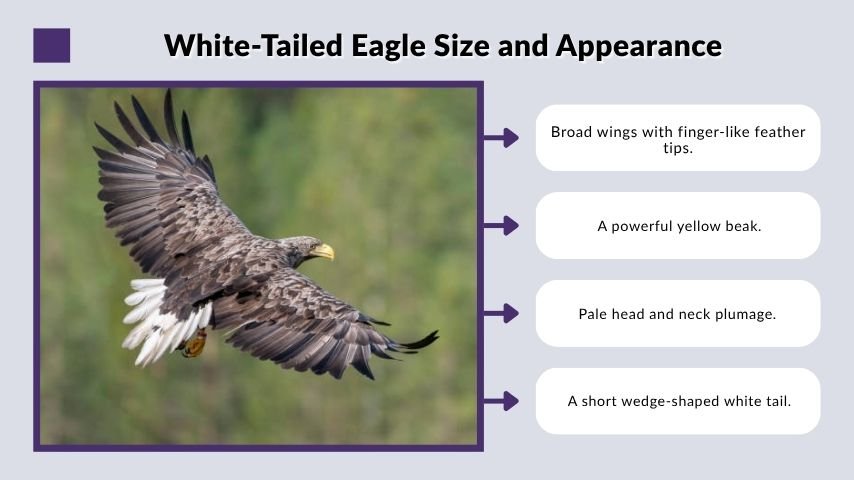
The white-tailed eagle is among the largest eagles on Earth. Its impressive dimensions and broad wings create a commanding presence in the sky. While females are generally larger than males, both sexes possess similar plumage and physical characteristics. Their size enables them to hunt large prey and dominate many aquatic ecosystems.
How Big Is a White-Tailed Eagle?
Adult white-tailed eagles typically measure between 26 and 37 inches (66–94 centimeters) in body length. Females are usually heavier, weighing up to 15 pounds (7 kilograms), while males are slightly smaller. Their large body size contributes to their status as Europe’s largest bird of prey.
White-Tailed Eagle Wingspan
One of the species’ most impressive features is its enormous wingspan. Adult birds commonly reach wingspans between 6 and 8 feet (1.8–2.5 meters). Their long, broad wings allow efficient soaring over coastlines, lakes, and open landscapes.
Distinctive Physical Features
Key identifying characteristics include:
- Broad wings with finger-like feather tips.
- A powerful yellow beak.
- Pale head and neck plumage.
- A short wedge-shaped white tail.
- Strong talons designed for gripping prey.
These features make the white-tailed eagle easy to distinguish from most other raptors.
Why Does the White-Tailed Eagle Have a White Tail?
The white tail is one of the defining features of this species. However, not all white-tailed eagles display this characteristic throughout their lives. Juveniles appear quite different from adults and undergo gradual changes in coloration as they mature. The development of the bright white tail is an important indicator of adulthood.
Juvenile White-Tailed Eagles
Young white-tailed eagles are primarily dark brown and lack the distinctive white tail. Their feathers often display mottled patterns that help camouflage them in natural habitats. Juveniles may take several years to develop adult plumage.
When Does the Tail Turn White?
The white tail gradually appears as the bird matures. Most individuals achieve their characteristic adult appearance between four and five years of age. At this stage, the tail becomes bright white, while the beak develops its distinctive yellow coloration.
Importance of Adult Plumage
The white tail serves as a visual signal during territorial displays and courtship. It also helps birdwatchers and researchers quickly identify mature individuals in the wild.
Where Do White-Tailed Eagles Live?

The white-tailed eagle has one of the widest distributions of any eagle species. It occupies habitats across Europe and Asia, ranging from Atlantic coastlines to the Pacific region. Access to water and suitable nesting sites is essential for sustaining healthy populations.
Geographic Distribution
The species is found in numerous countries throughout its range, including parts of Northern and Eastern Europe as well as large areas of Asia. Some populations remain year-round residents, while others migrate seasonally depending on weather conditions and food availability.
Countries With Notable Populations
Important white-tailed eagle populations occur in:
- Norway
- Poland
- Germany
- Iceland
- Ireland
- Scotland
- Japan
Many of these countries have implemented successful conservation measures that support population growth.
Preferred Habitat
White-tailed eagles favor coastal cliffs, estuaries, lakes, wetlands, and river systems. Large trees near water provide ideal nesting locations, while nearby fishing opportunities ensure a reliable food supply. These habitats allow the birds to hunt efficiently and raise young successfully.
What Do White-Tailed Eagles Eat?

The white-tailed eagle is an opportunistic predator with a varied diet. While fish make up a large portion of its food intake, the species also hunts birds and small mammals. Its adaptability allows it to thrive in different environments, from coastal regions to inland lakes. In addition to active hunting, white-tailed eagles are known to scavenge carrion when opportunities arise.
Main Diet
White-tailed eagles consume a wide range of prey depending on habitat and season. Common food sources include:
- Fish such as salmon, trout, and pike.
- Waterfowl including ducks and geese.
- Seabirds found along coastlines.
- Rabbits and other small mammals.
- Carrion from dead animals.
This diverse diet helps the species survive even when certain prey becomes scarce.
Hunting Techniques
White-tailed eagles often patrol above water before swooping down to seize fish with their talons. They may also capture birds in flight or on the water’s surface. Their excellent eyesight allows them to spot prey from considerable distances.
Scavenging Behavior
Unlike some eagle species that rely primarily on hunting, white-tailed eagles frequently scavenge. They may feed on stranded fish, marine mammals, or carcasses left by other predators. This behavior reduces energy expenditure and increases survival opportunities during harsh winters.
White-Tailed Eagle Life Cycle
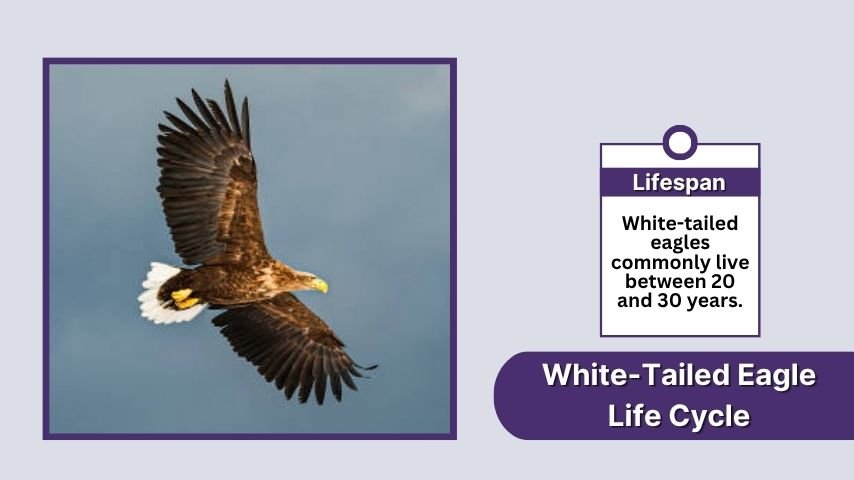
The life cycle of a white-tailed eagle is relatively slow, with individuals taking several years to reach maturity. Strong pair bonds, long lifespans, and dedicated parental care contribute to successful reproduction. These birds often return to the same nesting territories year after year, reinforcing their connection to established breeding sites.
Courtship and Breeding
Breeding pairs perform spectacular aerial displays that strengthen pair bonds. These displays often involve synchronized flying, diving, and calling. Once paired, white-tailed eagles generally remain together for many years.
Nest Building
White-tailed eagles construct some of the largest nests of any bird. Over time, nests may become enormous as additional materials are added each breeding season. Typical nest materials include:
- Large branches
- Twigs
- Grass
- Moss
- Seaweed in coastal areas
Some nests can weigh hundreds of kilograms after years of use.
Lifespan
In the wild, white-tailed eagles commonly live between 20 and 30 years. Under favorable conditions, some individuals may survive even longer. Their longevity contributes to stable breeding populations when habitats remain protected.
White-Tailed Eagle Conservation Status
The white-tailed eagle was once heavily persecuted throughout much of its range. Hunting, poisoning, and habitat destruction caused severe population declines in many regions. Fortunately, conservation efforts have helped reverse these trends, making the species one of Europe’s greatest wildlife recovery success stories.
Is the White-Tailed Eagle Endangered?
The species is currently classified as Least Concern globally, although regional populations may face different challenges. In several countries, numbers have increased significantly thanks to legal protection and habitat conservation.
Major Threats
Despite population recovery, white-tailed eagles still face several threats:
- Habitat loss and development.
- Pollution affecting aquatic ecosystems.
- Disturbance near nesting sites.
- Illegal persecution.
- Collisions with power infrastructure.
Ongoing conservation programs aim to reduce these risks.
Recovery Programs
Reintroduction projects in Scotland, Ireland, and other parts of Europe have helped restore populations to areas where the species had disappeared. These efforts demonstrate the effectiveness of long-term conservation planning.
White-Tailed Eagle vs Bald Eagle

The white-tailed eagle and bald eagle are closely related sea eagles that occupy similar ecological niches on different continents. While they share several characteristics, notable differences exist in appearance, size, and distribution.
Size Comparison
White-tailed eagles are generally slightly larger and heavier than bald eagles. Their wings are broader, giving them a more rectangular appearance during flight.
Appearance Differences
The bald eagle is famous for its white head and tail, while the white-tailed eagle has a pale brown head and only a white tail. The bald eagle’s contrasting plumage makes it easier to identify at a distance.
Habitat Differences
Bald eagles are native to North America, whereas white-tailed eagles are found throughout Europe and Asia. Both species prefer habitats near water and depend heavily on fish as a food source.
Fascinating White-Tailed Eagle Facts
The white-tailed eagle has captured human attention for centuries. Its impressive size, longevity, and remarkable recovery from population declines make it one of the most celebrated birds of prey in the world.
Amazing Facts About White-Tailed Eagles
- Europe’s largest eagle species.
- Wingspans can exceed 8 feet.
- Known as the sea eagle because of its connection to water.
- Builds some of the largest bird nests in the world.
- Can live for decades in the wild.
- Uses the same nesting territory for many years.
- Has recovered successfully in several European countries.
- Plays an important role as a top predator.
FAQs
How big is a white-tailed eagle?
Adults typically measure 26–37 inches (66–94 centimeters) long and may have wingspans reaching 8 feet (2.5 meters).
What do white-tailed eagles eat?
Their diet includes fish, waterfowl, seabirds, small mammals, and carrion.
Where do white-tailed eagles live?
They are found across Europe and Asia, particularly near coasts, lakes, rivers, and wetlands.
Are white-tailed eagles endangered?
Globally, they are not considered endangered, although some local populations remain vulnerable.
How long do white-tailed eagles live?
Most individuals live between 20 and 30 years in the wild, with some surviving longer under favorable conditions.
