
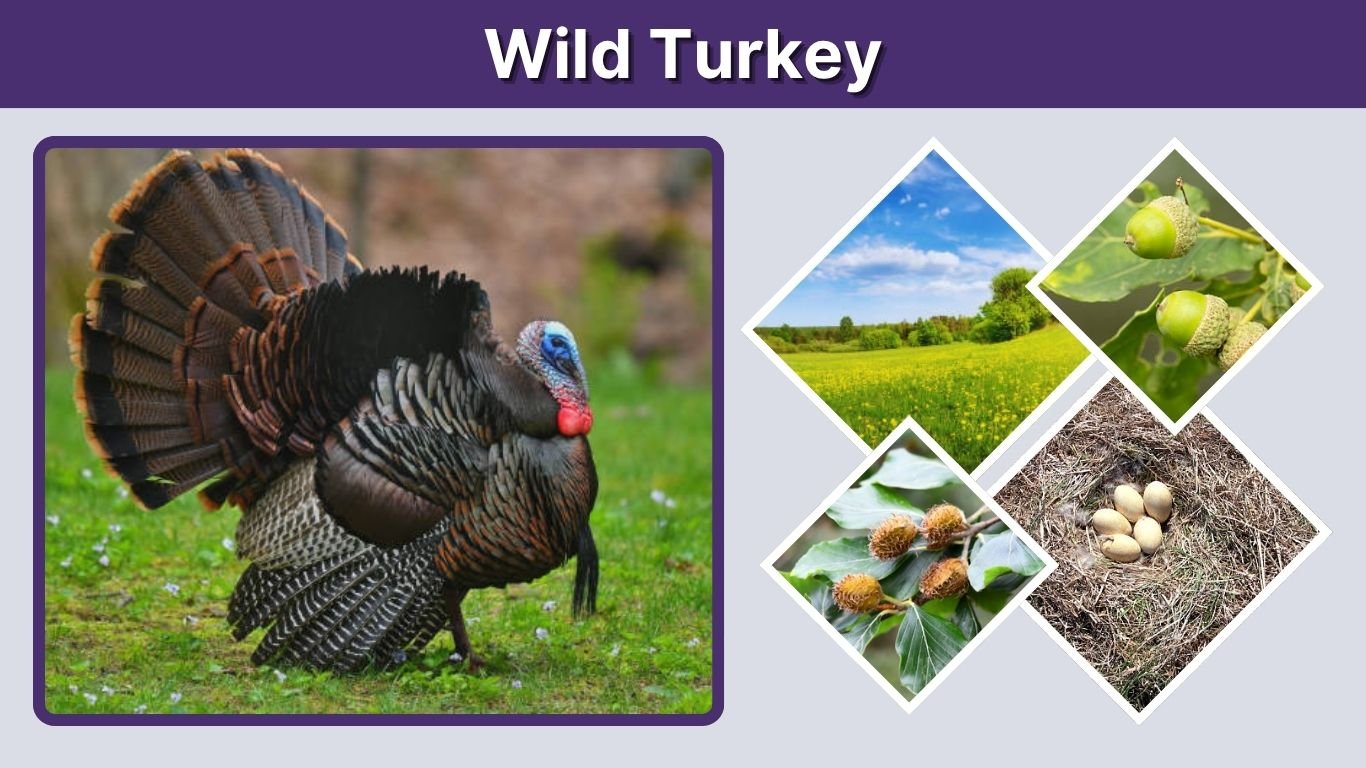
The wild turkey is a large North American game bird recognized by its powerful legs, rounded wings, broad tail, and colorful bare head. Although it spends most of its time walking and feeding on the ground, it can run quickly and fly into trees when threatened. Wild turkeys inhabit forests, woodland edges, grasslands, and agricultural areas where food and secure roosting trees are available. Their scientific name is Meleagris gallopavo.
Wild Turkey Identification
Wild turkeys are among the largest ground-dwelling birds in North America. Their bodies appear dark brown or black from a distance, but sunlight reveals glossy bronze, green, copper, and reddish tones across the feathers.
Identification Features
- Body: Large, heavy, and rounded
- Head: Small, bare, and usually red, blue, or gray
- Neck: Long, mostly featherless, and covered with fleshy bumps
- Legs: Long, strong, and adapted for walking and scratching
- Tail: Broad and fan-shaped when displayed
- Wings: Rounded with bold black-and-white barring
- Plumage: Dark brown with bronze-green iridescence
- Bill: Short, slightly curved, and pale-colored
A fleshy structure called the snood hangs above the bill. The wattle hangs beneath the throat, while small fleshy bumps called caruncles cover parts of the head and neck.
Wild Turkey Size and Weight
Wild turkeys vary considerably in weight because males are much larger than females. Their long legs and upright posture also make them appear taller than many other woodland birds.
| Measurement | Typical Range |
| Body length | 43–45 inches |
| Wingspan | 49–57 inches |
| Weight | 5.5–24 pounds |
| Average lifespan | About 3–4 years |
| Clutch size | 4–17 eggs |
The species is smaller than a swan but substantially larger and heavier than most pheasants.
Male vs. Female Wild Turkey
A mature male is called a tom or gobbler, while a young male is called a jake. An adult female is called a hen.
Males are larger, darker, and more colorful than females. They usually have prominent wattles, longer snoods, leg spurs, and a hair-like cluster of modified feathers called a beard. During courtship, a male spreads his tail, lowers his wings, puffs out his feathers, and struts.
Females are smaller and generally have duller brown plumage. Their less colorful feathers provide camouflage while nesting on the ground. Some hens can have small beards, but this is less common.
Where Do Wild Turkeys Live?
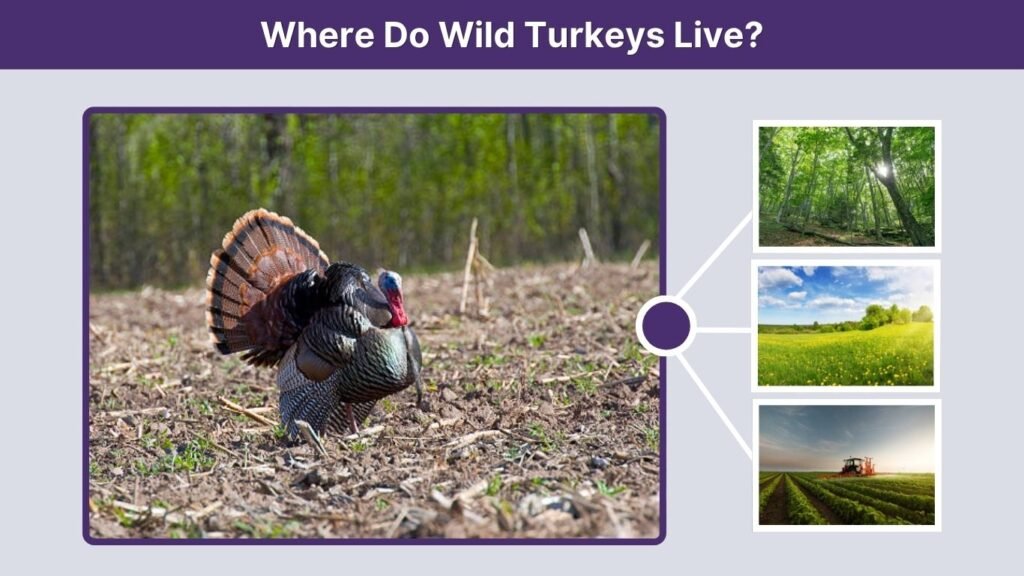
Wild turkeys occupy a wide variety of habitats, but they generally need a combination of trees and open ground. Forests provide roosting sites, protection, and nuts, while fields and clearings offer grasses, seeds, insects, and space for courtship.
Preferred Habitat
Wild turkeys commonly inhabit:
- Mature oak and hickory forests
- Woodland edges
- Pine savannas
- Grasslands and meadows
- River corridors
- Agricultural fields
- Forest clearings
- Wooded suburban areas
They are widely distributed across the United States, southern Canada, and parts of Mexico. Suitable habitat usually contains mature trees for nighttime roosting, dense cover for nesting, and open areas where adults and young birds can forage.
What Do Wild Turkeys Eat?
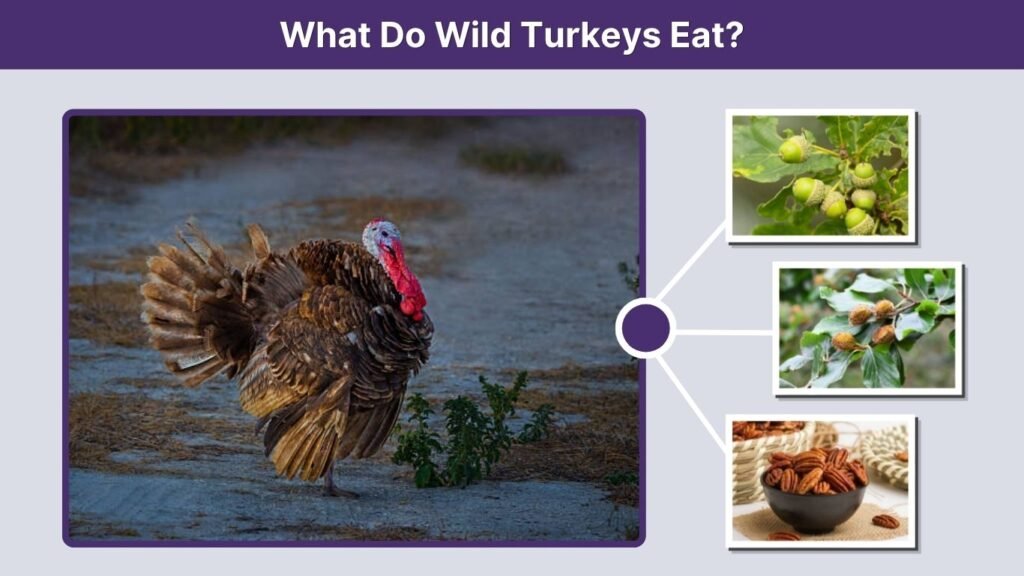
Wild turkeys are omnivores. Adult birds eat mostly plant material but also consume insects and other small animals. They search for food by walking slowly and using their strong feet to scratch leaves and soil.
Common Wild Turkey Foods
Their diet includes:
- Acorns
- Beechnuts
- Hickory nuts
- Pecans
- Grass seeds
- Berries and wild fruit
- Plant shoots and leaves
- Beetles and larvae
- Grasshoppers
- Snails and salamanders
Season strongly influences what they eat. Acorns, nuts, berries, and seeds become especially important in fall and winter. During spring and summer, they eat fresh plants, grasses, insects, and other protein-rich foods.
Young turkeys, known as poults, depend heavily on insects during their first weeks. Beetles, grasshoppers, and other invertebrates provide the protein required for rapid growth. Adults consume a much larger percentage of plant material.
Do Wild Turkeys Eat Ticks?
Wild turkeys may occasionally eat ticks while feeding on the ground, but ticks are not considered a major or dependable part of their diet. They are more likely to consume larger and easier-to-find invertebrates, including beetles, larvae, snails, and grasshoppers.
Can Wild Turkeys Fly?
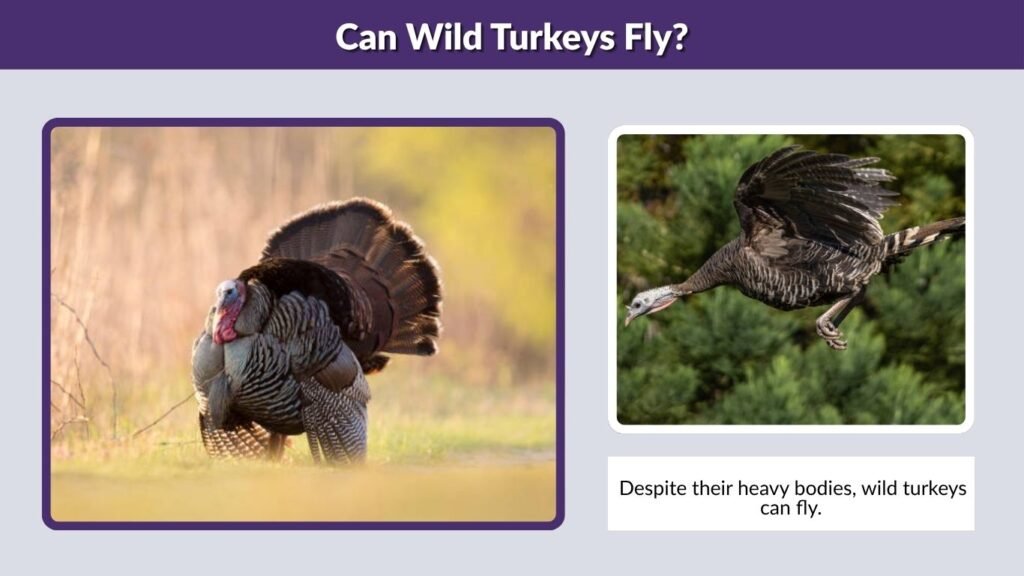
Despite their heavy bodies, wild turkeys can fly. They usually fly only for short distances, such as escaping danger, crossing an obstacle, or reaching a nighttime roost.
Their takeoff is sudden and noisy, involving rapid, powerful wingbeats. Once airborne, they can move quickly through open woodland. The U.S. Fish and Wildlife Service reports that wild turkeys can reach approximately 50 miles per hour in flight.
How Fast Can a Wild Turkey Run?
Wild turkeys are strong runners and normally prefer escaping on foot before flying. They can reportedly run at speeds approaching 18 miles per hour. Their powerful legs help them move quickly through forests, fields, and uneven ground.
Where Do Wild Turkeys Sleep?
Wild turkeys sleep in trees, a behavior known as roosting. Near sunset, they fly onto lower branches and then move upward until they find a secure resting position.
Roosting above the ground protects them from coyotes, foxes, bobcats, and other predators. They often select large, mature trees with strong horizontal branches. Hardwood trees may be used during mild weather, while dense evergreens provide better protection from wind, rain, or snow.
Turkeys may return to the same general roosting area, although they can change individual trees. Poults begin sleeping in trees once they become capable of short flights, generally within their first few weeks.
Wild Turkey Nest and Life Cycle
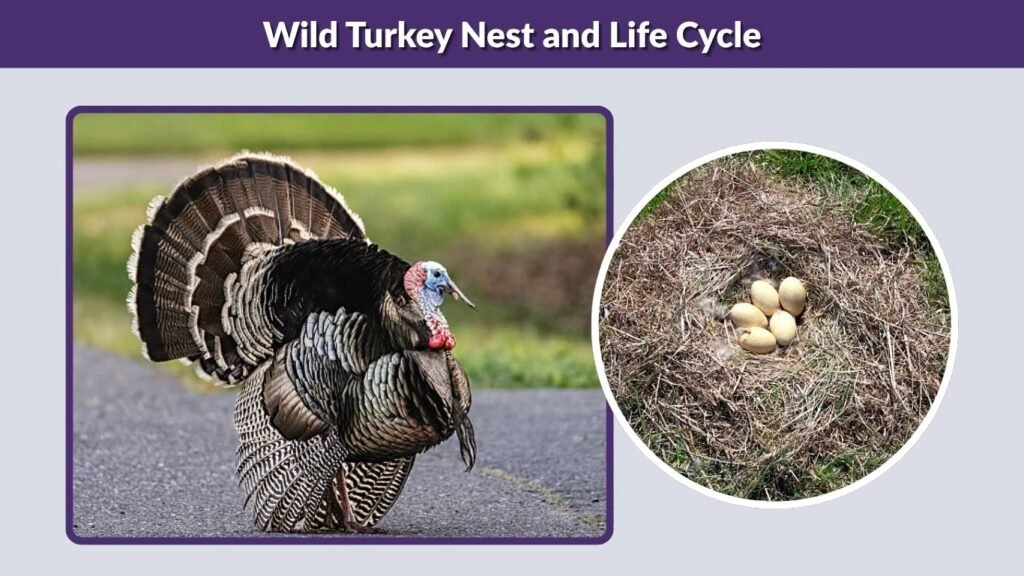
Female wild turkeys build their nests on the ground. They choose concealed places beneath shrubs, brush piles, fallen branches, or thick vegetation.
Eggs and Incubation
A hen creates a shallow depression and lines it with leaves and nearby plant material. She commonly lays between 4 and 17 pale, spotted eggs. Incubation lasts approximately 25 to 31 days.
Newly hatched poults can leave the nest within about one day. They follow their mother, feed independently, and remain under her protection. The hen teaches them where to find food, how to avoid danger, and eventually where to roost.
Wild Turkey Lifespan
The average life expectancy of a wild turkey that survives its first year is approximately three to four years. Predators, disease, accidents, severe weather, food shortages, and hunting keep the average relatively low.
However, some individuals live much longer. Documented birds have survived beyond 12 years, and rare records include turkeys reaching approximately 15 years.
Wild Turkey Sounds
The gobble is the best-known wild turkey sound, but these birds have a much larger vocabulary. Males gobble most often during the spring breeding season to attract females and communicate with competing males.
Other sounds include clucks, purrs, yelps, whistles, cackles, and alarm calls. Hens use yelps and clucks to communicate with their poults and other flock members. Young poults make soft whistles and distress calls when separated from their mother.
Interesting Wild Turkey Facts
- A male wild turkey is called a tom or gobbler.
- A female is called a hen, and a young bird is a poult.
- Turkeys can fly even though they spend most of their lives on the ground.
- Adult birds may have thousands of individual feathers.
- Males can change the color of their bare head and neck.
- Wild turkeys sleep high in trees to avoid predators.
- Poults eat more insects than adult turkeys.
- Males use gobbling, strutting, and tail-fanning during courtship.
- A flock of wild turkeys may be called a rafter.
- The species made a major recovery after severe historical declines.
FAQs
Are wild turkeys dangerous?
Wild turkeys normally avoid people, but territorial males can become aggressive, especially during breeding season or after becoming accustomed to human feeding. Keep a safe distance, avoid cornering them, and never encourage wild birds to approach by offering food.
Do wild turkeys migrate?
Wild turkeys do not undertake long seasonal migrations. They remain within a general home range throughout the year but may travel farther in winter or during drought when they need to locate better food, water, shelter, or roosting sites.
Do wild turkeys live alone?
They are social birds that commonly form flocks. Hens and poults often remain together, while adult males may form separate groups outside the breeding season. Flock size and composition change according to age, sex, season, and food availability.
Where do wild turkeys build their nests?
Hens build shallow nests directly on the ground, usually in concealed locations beneath shrubs, tall grass, fallen branches, or dense vegetation. Good camouflage is essential because the hen remains vulnerable while incubating her eggs.
What is the difference between a wild and domestic turkey?
Wild turkeys are leaner, faster, stronger flyers, and better adapted to surviving without human care. Domestic turkeys are generally heavier and have been selectively bred for meat production. Many large domestic breeds cannot fly effectively because of their body weight.