
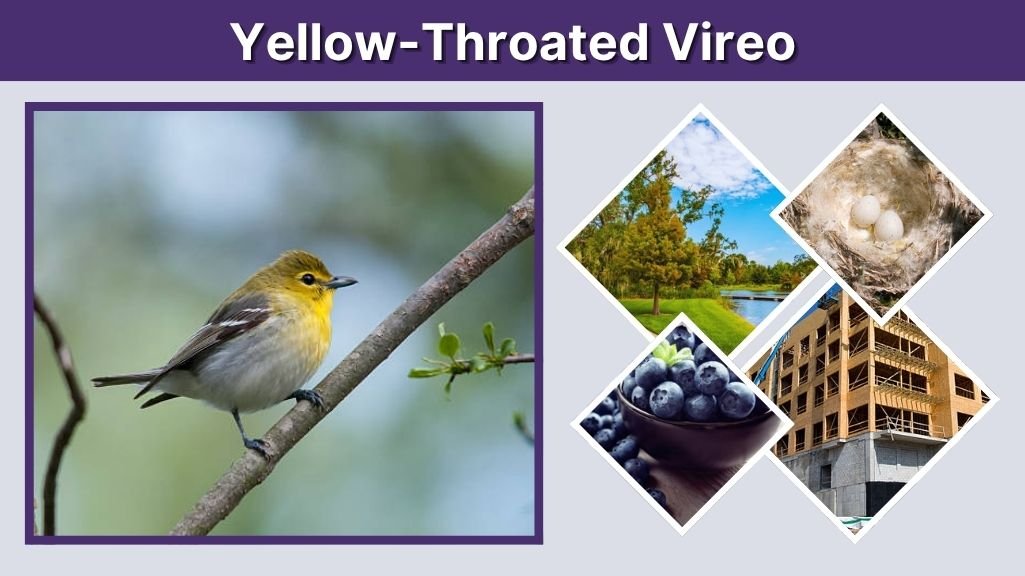
The yellow-throated vireo is a colorful woodland songbird recognized for its bright yellow throat, olive upperparts, and bold white eye markings. This species spends much of its time high in forest canopies, where birdwatchers often hear its slow and musical song before spotting the bird itself. Its calm feeding behavior and striking appearance make it a favorite among bird enthusiasts.
Yellow-throated vireos migrate seasonally across North America and feed mainly on insects found in trees. This guide explains their habitat, identification, song, diet, migration, nesting habits, and comparisons with similar species like the pine warbler.
What Is a Yellow-Throated Vireo?
The yellow-throated vireo is a small songbird belonging to the vireo family. It is known for its bright throat coloring, careful feeding behavior, and repeated singing from high tree branches.
Scientific Name of the Yellow-Throated Vireo
The scientific name of the yellow-throated vireo is Vireo flavifrons. It belongs to the bird family Vireonidae.
Yellow-Throated Vireo Appearance
- Bright yellow throat
- Olive-green upperparts
- White belly
- Bold white eye ring
Yellow-Throated Vireo Size
This bird has a compact body, short neck, rounded head, and sturdy bill designed for catching insects among leaves.
Why It Is Called a Yellow-Throated Vireo
The species gets its name from the bright yellow coloring covering the throat and upper chest area.
Yellow-Throated Vireo Habitat and Range
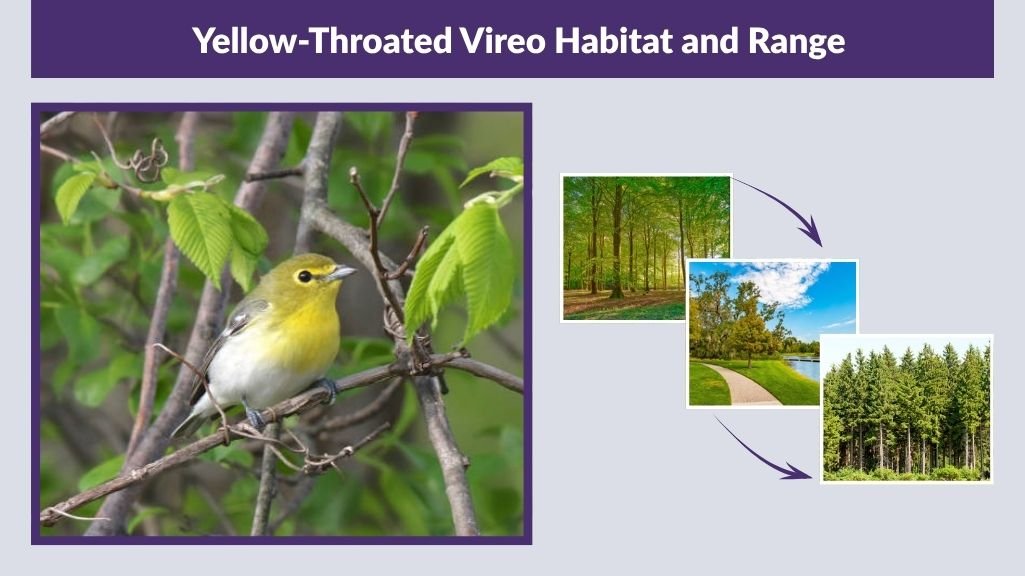
Yellow-throated vireos prefer mature forests and wooded habitats with tall trees that provide nesting and feeding opportunities.
Preferred Habitat
These birds are commonly found in deciduous forests, mixed woodlands, river forests, parks, and large tree-filled habitats.
Yellow-Throated Vireo Range
- Breeds in eastern North America
- Migrates through the United States
- Winters in Central America
- Found in forested migration routes
Yellow-Throated Vireo in Kentucky and Ontario
Kentucky and parts of Ontario support breeding populations during warmer months when insects become abundant.
Yellow-Throated Vireo Range Map
The species occupies a broad breeding range across eastern North America with migration extending southward during winter.
Yellow-Throated Vireo Identification
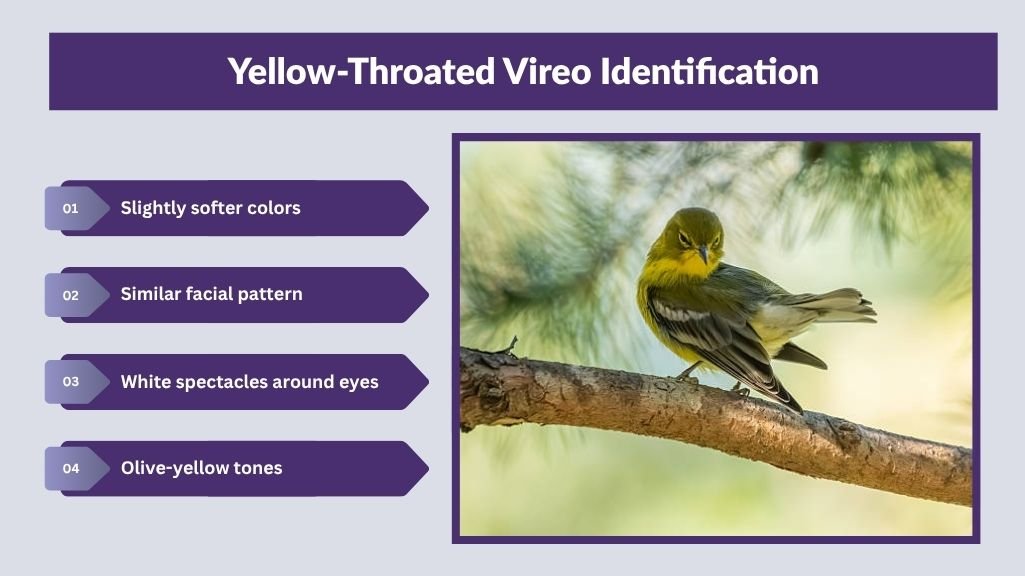
Correct identification is important because yellow-throated vireos can resemble pine warblers and other small woodland birds.
Male Yellow-Throated Vireo Identification
Breeding males often show brighter yellow throats and stronger olive coloration around the head and back.
Female Yellow-Throated Vireo Identification
- Slightly softer colors
- Similar facial pattern
- White spectacles around eyes
- Olive-yellow tones
Juvenile and Immature Yellow-Throated Vireo
Young birds usually appear duller than adults and may have less vivid yellow coloring during early plumage stages.
Fall Plumage Appearance
During fall migration, many birds appear less colorful and slightly faded compared to bright spring breeding plumage.
Yellow-Throated Vireo Song and Calls
Yellow-throated vireos are famous for their slow and deliberate songs repeated from tree canopies throughout breeding season.
Yellow-Throated Vireo Song
The song usually consists of clear musical phrases delivered slowly with pauses between repeated notes.
Yellow-Throated Vireo Call
- Sharp contact calls
- Alarm sounds
- Short chirping notes
- Communication between birds
Recognizing Yellow-Throated Vireo Sounds
Birdwatchers often identify this species by listening for its calm repetitive singing high in forest trees.
Compare Song to Blue-Headed Vireo
Yellow-throated vireos usually sing more slowly and clearly than blue-headed vireos, which often sound quicker and softer.
Yellow-Throated Vireo Diet and Feeding Habits
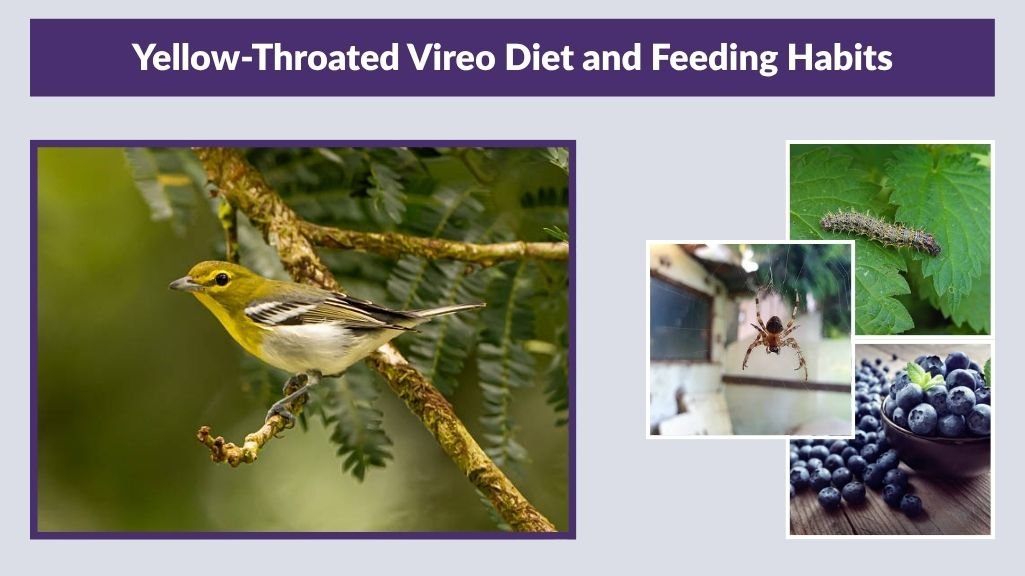
Yellow-throated vireos feed mainly on insects and small invertebrates found among tree leaves and branches.
What Do Yellow-Throated Vireos Eat?
- Caterpillars
- Beetles
- Spiders
- Small berries and fruits
Feeding Behavior
These birds move methodically through tree branches while carefully inspecting leaves for hidden insects and prey.
Seasonal Diet Changes
Food choices may change during migration and autumn when insects become less available and fruit becomes more important.
Water and Nutritional Needs
Fresh water and protein-rich insect diets help support energy needs during breeding and long-distance migration.
Yellow-Throated Vireo Nesting and Breeding
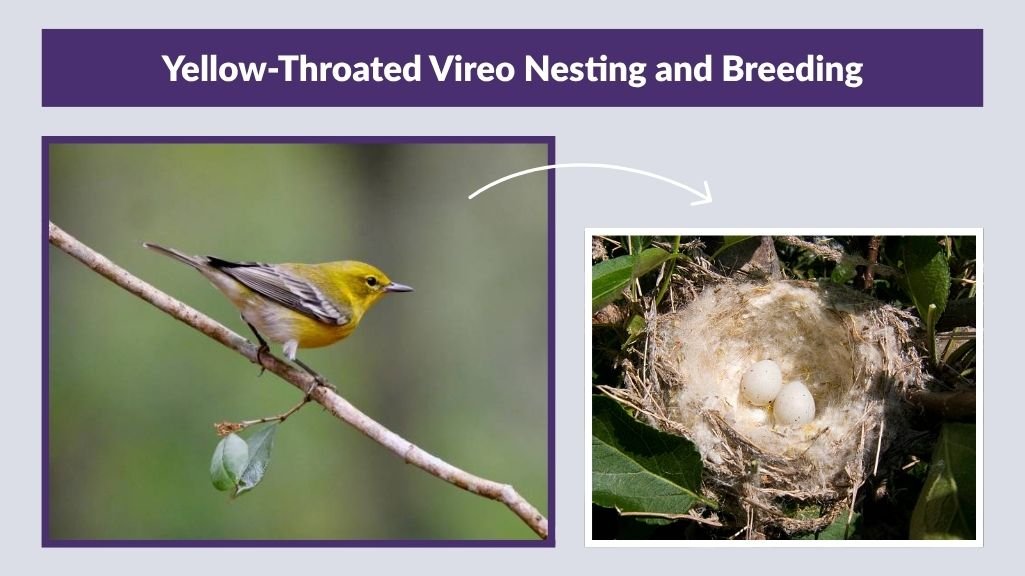
Yellow-throated vireos build carefully woven hanging nests in tree branches during breeding season.
Yellow-Throated Vireo Nest Locations
Nests are often suspended from forked branches high in trees where foliage provides protection and camouflage.
Yellow-Throated Vireo Eggs
- Small pale eggs
- Dark speckled markings
- Several eggs per clutch
- Hidden nest placement
Breeding Season
Breeding usually begins during spring when forests contain abundant insects for feeding growing chicks.
Chicks and Juveniles
Both parent birds help feed chicks until young birds develop strong flight abilities and leave the nest independently.
Yellow-Throated Vireo Migration
Yellow-throated vireos are migratory birds that travel between North American breeding habitats and warmer wintering regions farther south.
When Do Yellow-Throated Vireos Migrate?
Most yellow-throated vireos begin spring migration as temperatures warm and insect populations increase in breeding areas.
Spring Migration Patterns
- Northward seasonal travel
- Arrival in forest habitats
- Singing increases during breeding
- Territory establishment
Fall Migration Behavior
During fall migration, birds move south through forests and woodland edges while feeding heavily before winter.
Wintering Areas in Central America
Many yellow-throated vireos spend winter in Central America where tropical forests provide food and shelter.
Yellow-Throated Vireo vs Similar Species
Several woodland birds resemble the yellow-throated vireo, especially pine warblers and some other vireos.
Yellow-Throated Vireo vs Pine Warbler
Pine warblers usually have thinner bills and weaker facial markings, while yellow-throated vireos show bold white eye rings and thicker bills.
Yellow-Throated Vireo vs Goldfinch
- Goldfinches brighter yellow overall
- Different body shape
- Shorter and thicker finch bill
- Different flight behavior
Yellow-Throated Vireo vs Blue-Headed Vireo
Blue-headed vireos often have cooler gray-blue head coloration and less intense yellow throat coloring.
Yellow-Throated Vireo vs Tennessee Warbler
Tennessee warblers are slimmer, more active feeders with thinner bills and less bold facial patterns than vireos.
Yellow-Throated Vireo Behavior
Yellow-throated vireos are calm and methodical birds that spend much of their time searching carefully for insects among leaves.
Feeding and Foraging Behavior
These birds move slowly through tree branches while inspecting leaves and bark for insects and spiders.
Territorial Habits
- Singing from high branches
- Defending breeding areas
- Chasing rival birds
- Active during nesting season
Flight Style
Their flight is steady and direct with short movements between trees and feeding locations.
Interaction With Other Birds
Yellow-throated vireos sometimes join mixed feeding flocks during migration but remain territorial while breeding.
Yellow-Throated Vireo Adaptations
The species has several useful adaptations that help it survive in forest environments.
Camouflage Coloration
Olive-green feathers blend well with leaves and forest vegetation, helping hide the bird from predators.
Strong Insect-Hunting Skills
- Careful leaf searching
- Sharp eyesight
- Strong grasping feet
- Thick insect-catching bill
Nesting Adaptations
Their hanging cup nests are carefully woven and hidden among leaves for extra protection.
Migration Adaptations
Long wings and strong endurance help yellow-throated vireos complete seasonal migrations successfully.
Yellow-Throated Vireo Predators and Threats
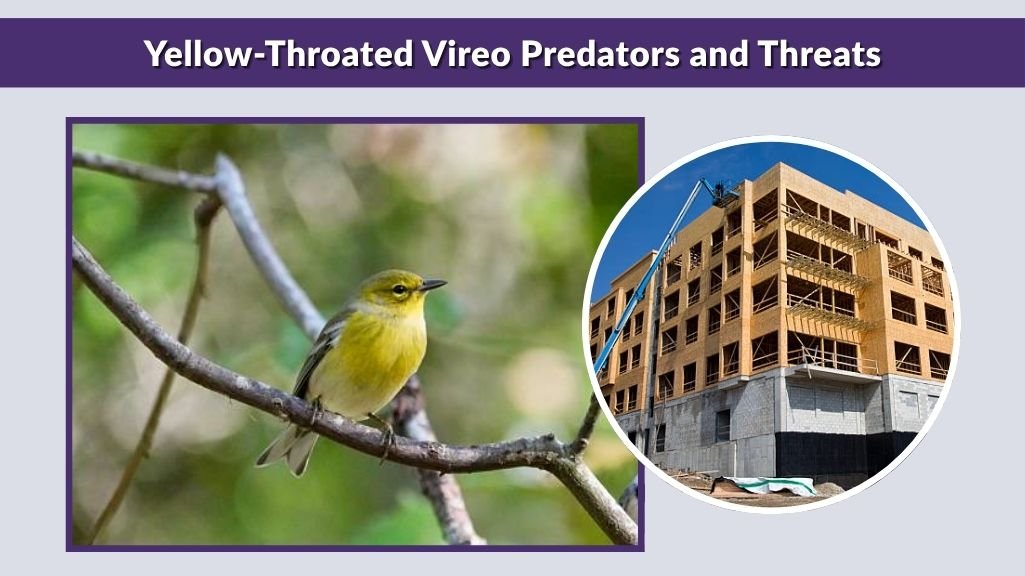
Like many songbirds, yellow-throated vireos face both natural predators and environmental challenges.
Common Predators
Snakes, hawks, squirrels, cats, and larger birds may prey on eggs, chicks, or adult vireos.
Habitat Loss
- Forest clearing
- Urban development
- Reduced nesting habitat
- Fragmented woodlands
Climate and Environmental Changes
Changing weather patterns and declining insect populations may affect migration timing and breeding success.
Conservation Status
Although still widespread, healthy forests remain important for maintaining stable yellow-throated vireo populations.
Yellow-Throated Vireo Spiritual Meaning and Symbolism
Some bird enthusiasts associate the yellow-throated vireo with calmness, patience, and harmony in forest environments.
Symbolic Meaning
The bird is sometimes viewed as a symbol of peaceful observation and thoughtful communication.
Birdwatching Interest
- Popular woodland songbird
- Recognizable musical song
- Bright throat coloring
- Attractive forest species
Cultural Associations
In some traditions, songbirds symbolize freedom, communication, and seasonal renewal.
Why People Admire Yellow-Throated Vireos
Birdwatchers enjoy their clear songs, calm behavior, and striking yellow throat markings high in forest canopies.
FAQs
Where do yellow-throated vireos build nests?
Yellow-throated vireos usually build hanging cup-shaped nests suspended from forked tree branches high in forest canopies.
What does a yellow-throated vireo song sound like?
Their song is slow, clear, and musical with repeated phrases separated by short pauses between notes.
Are yellow-throated vireos rare birds?
Yellow-throated vireos are not generally rare, but they may be difficult to spot because they spend much of their time high in trees.
Do yellow-throated vireos stay in the same area year-round?
No, yellow-throated vireos are migratory birds that move south during winter and return north during breeding season.
What habitat do yellow-throated vireos prefer?
They prefer mature deciduous forests, mixed woodlands, and wooded river habitats with tall trees and dense foliage.
