
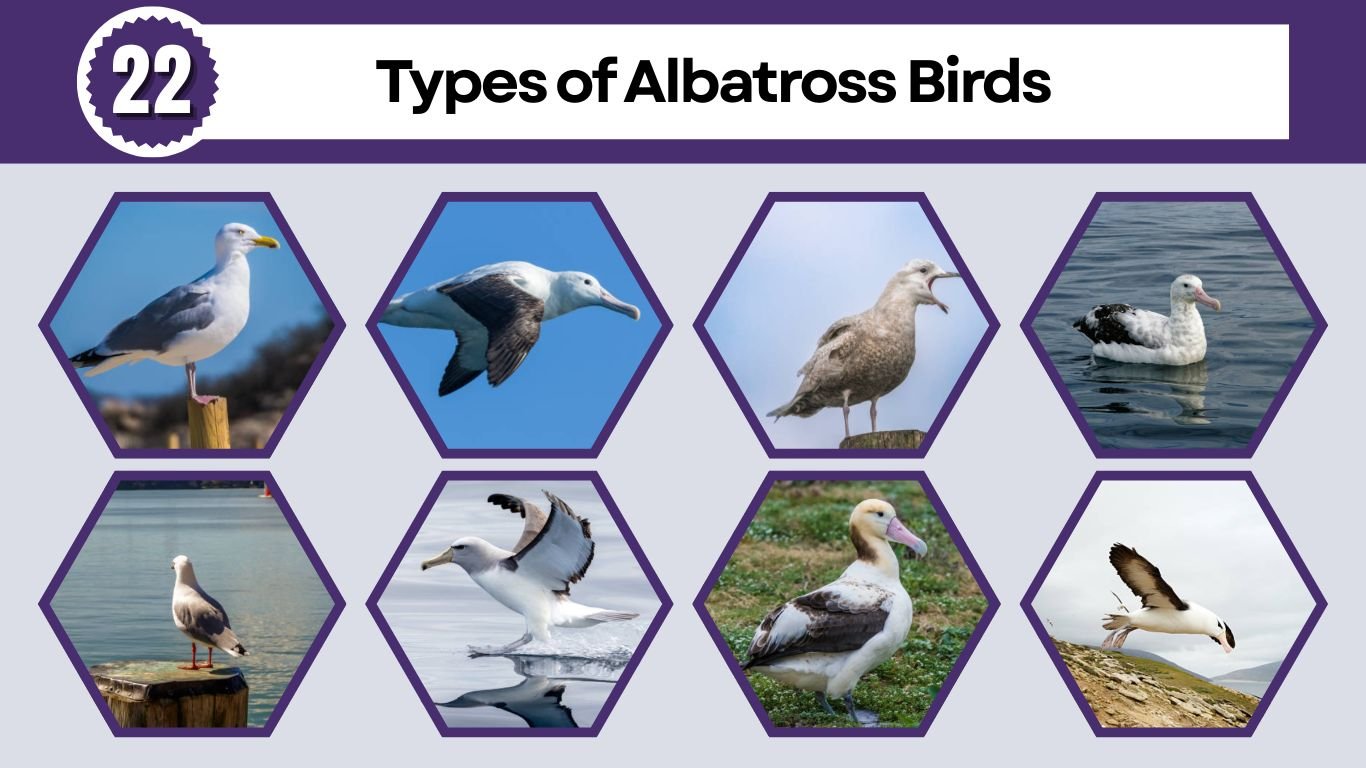
Albatrosses are among the largest and most impressive seabirds in the world, known for their enormous wingspans and ability to glide effortlessly over vast ocean distances. These birds spend most of their lives at sea, only returning to remote islands for breeding. Their graceful flight and long-distance travel make them unique among bird species.
This guide explores 22 types of albatross birds, helping you identify each species based on key features such as size, plumage, habitat, and behavior.
1. Wandering Albatross
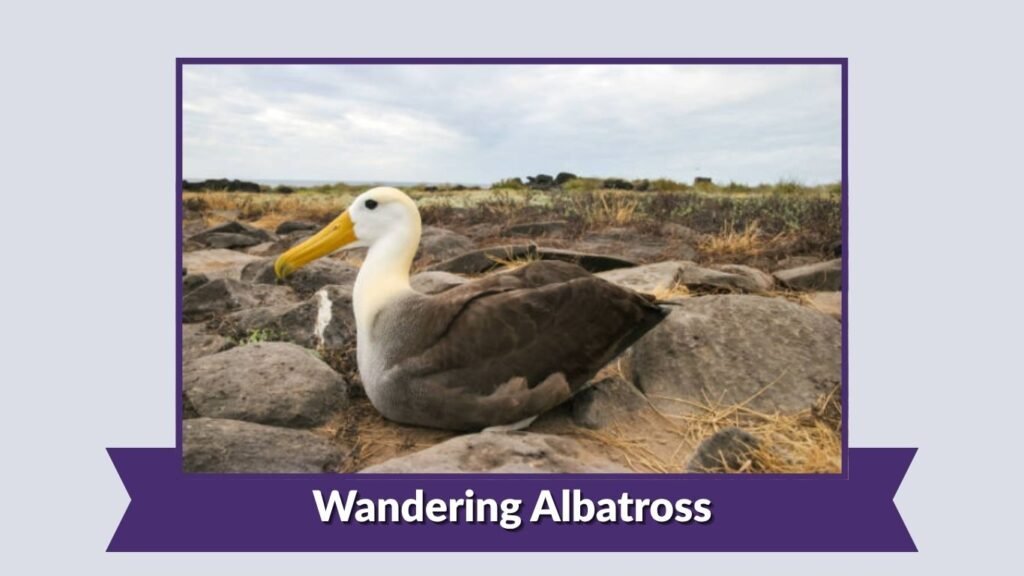
The Wandering Albatross is one of the largest flying birds in the world, famous for its incredible wingspan and ability to glide over vast ocean distances. It spends most of its life at sea and is rarely seen on land except during breeding.
Identification
- Very large seabird with the longest wingspan of any bird (up to 3.5 meters)
- Mostly white body with black markings on wings
- Long, narrow wings adapted for gliding
- Large pink or pale bill
- Males are generally whiter than females
Habitat and Distribution
Wandering Albatrosses are found across the Southern Ocean, especially around Antarctica and subantarctic islands. They roam vast stretches of open ocean and only come to remote islands to breed.
Behavior
This species is known for its effortless soaring flight, using wind currents to travel thousands of kilometers without flapping its wings much. They are solitary at sea but form pairs during breeding, often returning to the same partner and nesting site each year.
Diet
Their diet mainly consists of squid, fish, and marine organisms. They often feed by picking prey from the ocean surface and may also scavenge from fishing vessels.
2. Royal Albatross
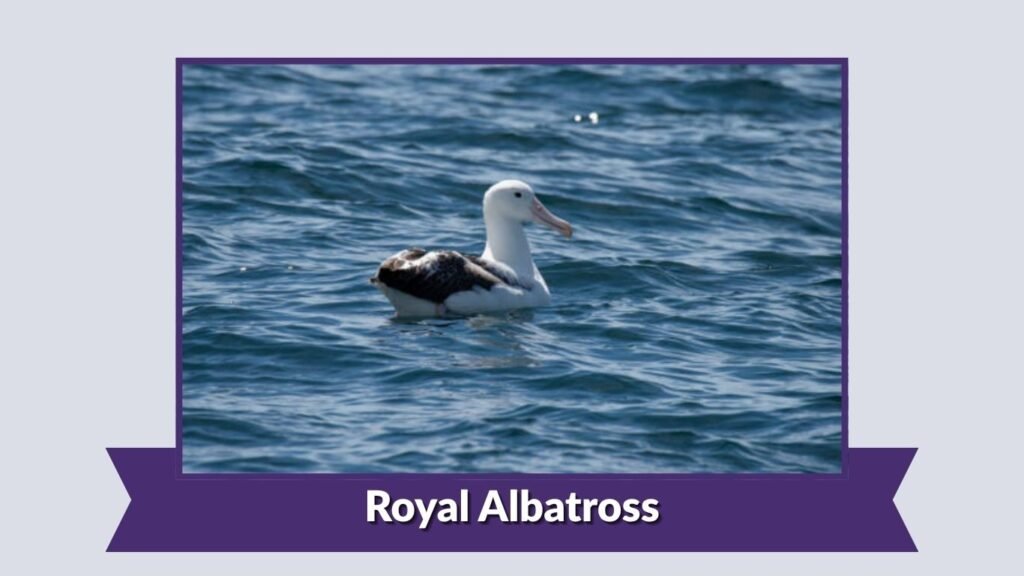
The Royal Albatross is one of the largest and most majestic seabirds, closely related to the Wandering Albatross. It is known for its impressive wingspan and graceful soaring flight over the Southern Ocean, where it spends most of its life.
Identification
- Very large albatross with wingspan up to about 3 meters
- Mostly white body with black upper wings
- Large pale pink bill with a hooked tip
- Long, broad wings designed for gliding
- Clean white appearance compared to many other albatrosses
Habitat and Distribution
Royal Albatrosses are found in the Southern Ocean, particularly around New Zealand and subantarctic islands. They spend most of their time over open ocean but return to remote islands and coastal headlands for breeding.
Behavior
This species is known for its powerful and efficient gliding flight, covering long distances with minimal effort. They are usually solitary at sea but form strong pair bonds during breeding. They often nest in isolated colonies on cliffs or open grassy areas.
Diet
Their diet mainly includes squid, fish, and other marine organisms. They feed at the ocean surface and may also scavenge from fishing vessels when the opportunity arises.
3. Black-browed Albatross
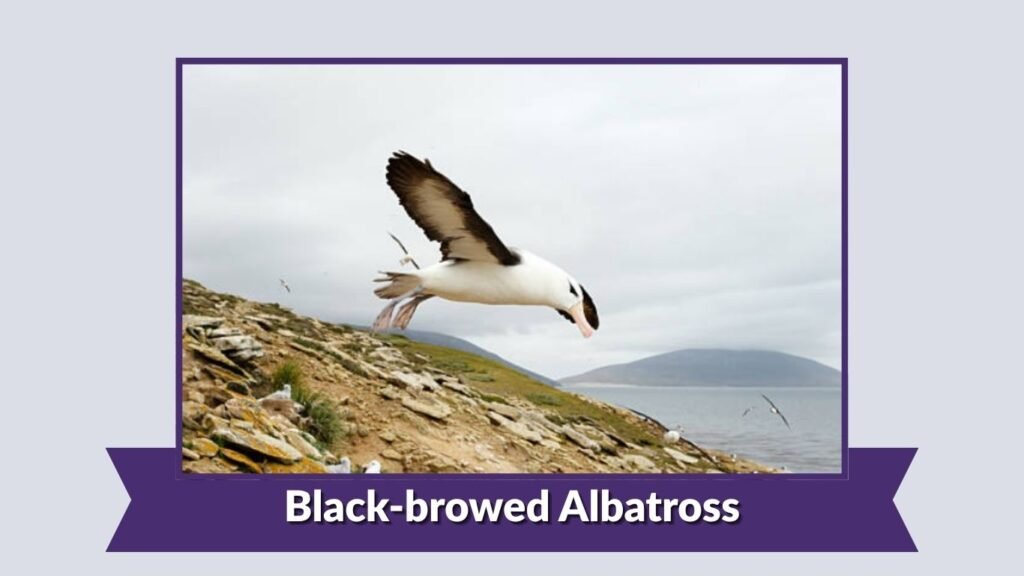
The Black-browed Albatross is one of the most widespread and commonly seen albatross species. It is easily recognized by the dark eyebrow-like marking above its eyes and is often observed following ships at sea.
Identification
- Medium to large albatross with white head and body
- Distinct dark “eyebrow” marking above the eyes
- Dark upper wings with white underside
- Yellow to orange bill with darker tip
- Strong, streamlined body
Habitat and Distribution
Black-browed Albatrosses are found across the Southern Ocean, breeding on islands such as the Falklands, South Georgia, and parts of Chile. They range widely over open ocean waters, often traveling great distances in search of food.
Behavior
This species is highly active and often seen gliding close to the water surface. It frequently follows ships, taking advantage of food scraps. Black-browed Albatrosses are social during breeding, nesting in large colonies on cliffs or steep slopes.
Diet
They mainly feed on fish, squid, and crustaceans. They are opportunistic feeders and often scavenge, especially around fishing vessels, using their sharp bill to catch or grab prey from the water surface.
4. Laysan Albatross
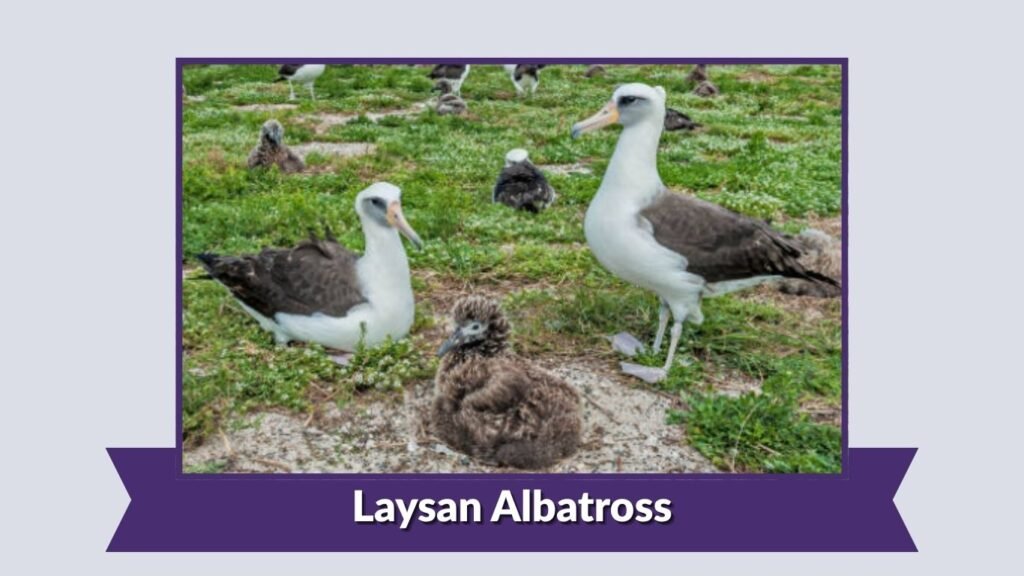
The Laysan Albatross is a well-known seabird of the North Pacific, famous for its long-distance flights and strong site fidelity. It spends most of its life at sea but returns to remote islands to breed in large colonies.
Identification
- Medium to large albatross with white head and body
- Dark upper wings and back
- Dark eye patch giving a gentle “masked” look
- Pale pink bill with slightly hooked tip
- Black tail contrasting with white body
Habitat and Distribution
Laysan Albatrosses are mainly found in the North Pacific Ocean. They breed on islands such as Hawaii, Midway Atoll, and other remote Pacific islands. Outside the breeding season, they roam vast ocean areas.
Behavior
This species is known for its graceful gliding and long-distance travel. It forms long-term pair bonds and performs elaborate courtship dances. During breeding, they nest in large colonies on open sandy or grassy areas.
Diet
Their diet mainly includes squid, fish, and crustaceans. They feed by picking prey from the ocean surface and may also scavenge behind ships.
5. Short-tailed Albatross
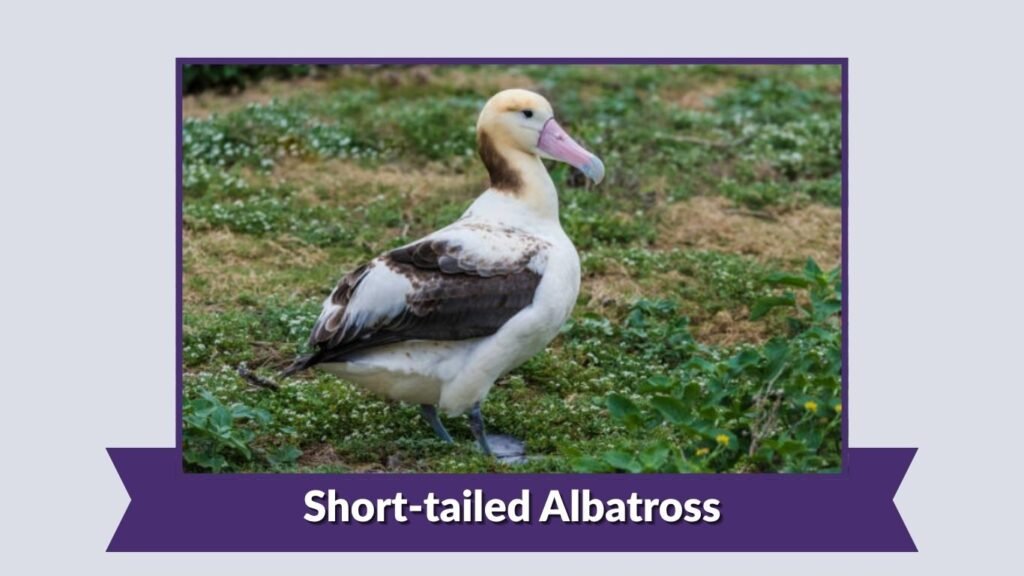
The Short-tailed Albatross is a rare and historically endangered species that has made a slow recovery. It is larger than many other North Pacific albatrosses and is known for its distinctive coloring.
Identification
- Large albatross with mostly white body
- Golden-yellow head and neck in adults
- Large pink bill with bluish tip
- Dark wings with white patches
- Juveniles appear darker overall
Habitat and Distribution
Short-tailed Albatrosses are found in the North Pacific Ocean. They breed mainly on a few islands in Japan, especially Torishima. At sea, they range widely across the Pacific, including waters near Alaska and the western United States.
Behavior
This species spends most of its life at sea and returns to land only for breeding. It glides efficiently over ocean waves and is usually seen alone or in small numbers. Due to its rarity, it is less commonly observed than other albatross species.
Diet
Their diet consists mainly of squid, fish, and marine invertebrates. They feed at the surface and sometimes follow fishing vessels to take advantage of available food.
6. Sooty Albatross
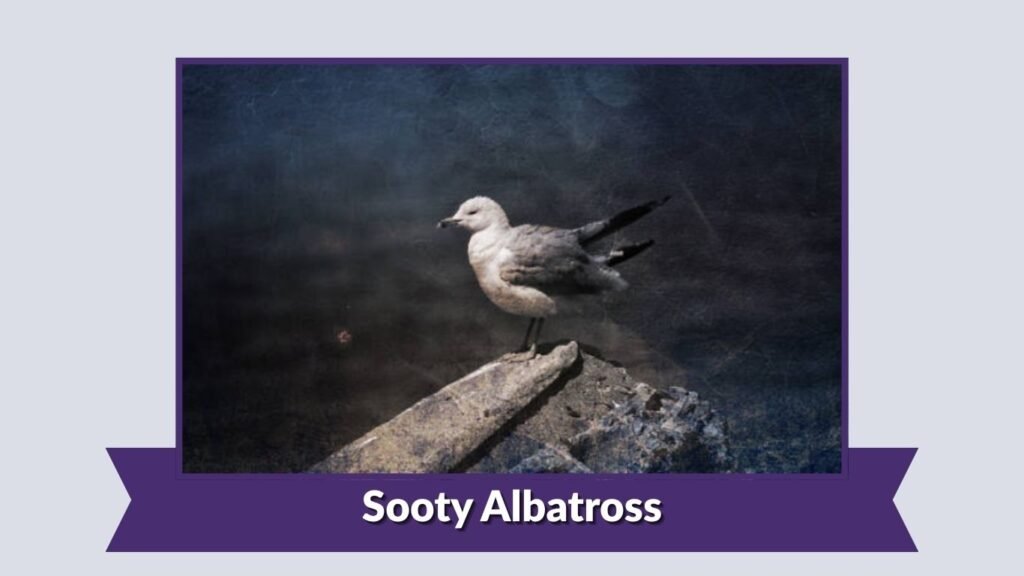
The Sooty Albatross is a sleek and elegant seabird known for its darker plumage and agile flight. It is often seen gliding swiftly over the Southern Ocean, sometimes performing more dynamic movements than larger albatross species.
Identification
- Medium-sized albatross with dark brown to sooty-black plumage
- Slim body with long, narrow wings
- Pale line around the eye
- Dark bill with lighter groove
- More streamlined appearance than larger albatrosses
Habitat and Distribution
Sooty Albatrosses are found in the Southern Ocean, particularly around subantarctic islands. They breed on steep cliffs and remote islands, preferring rugged coastal environments.
Behavior
This species is known for its fast and agile flight, often flying lower and more actively than other albatrosses. It is usually seen alone or in pairs at sea. During breeding, it nests on narrow cliff ledges, often in isolated locations.
Diet
Their diet mainly includes squid, fish, and crustaceans. They catch prey near the ocean surface and may also take advantage of food disturbed by other marine animals.
7. Light-mantled Albatross
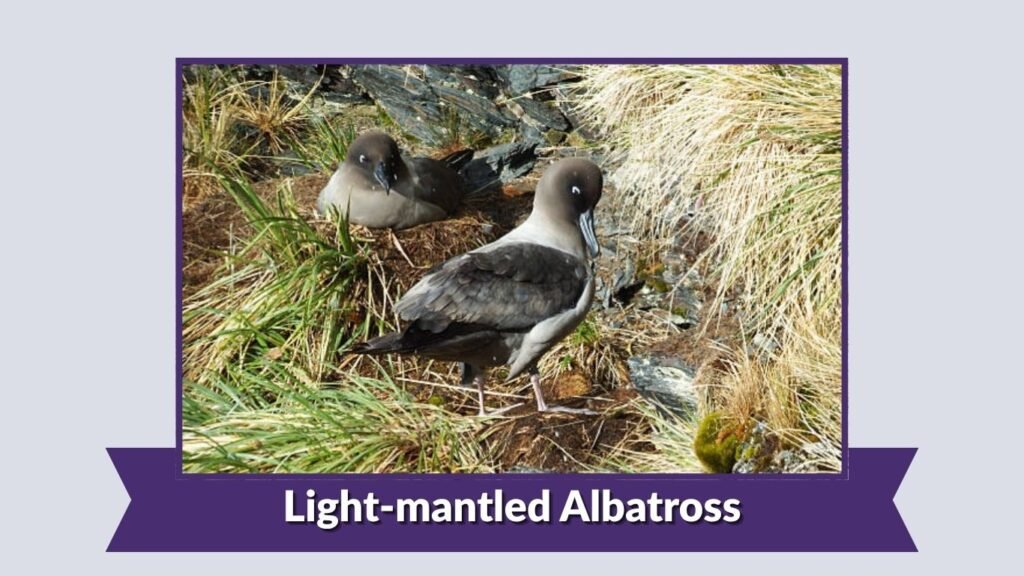
The Light-mantled Albatross is a graceful and striking species, recognized by its smoky-gray coloration and elegant flight style. It is often considered one of the most beautiful albatrosses due to its smooth, flowing movements.
Identification
- Medium-sized albatross with smoky-gray body
- Darker wings with lighter gray mantle
- White crescent above the eye
- Slim, streamlined body
- Long, narrow wings adapted for gliding
Habitat and Distribution
Light-mantled Albatrosses are found across the Southern Ocean. They breed on remote subantarctic islands, often on steep cliffs and rocky slopes. Outside the breeding season, they roam widely over open ocean waters.
Behavior
This species is known for its elegant and buoyant flight, often gliding effortlessly along ocean winds. It is usually solitary at sea but returns to colonies during breeding. It nests on cliffs, often in more isolated spots than other albatrosses.
Diet
Their diet mainly consists of squid, small fish, and crustaceans. They forage at the ocean surface, using their keen eyesight and agile flight to locate and capture prey.
8. Grey-headed Albatross
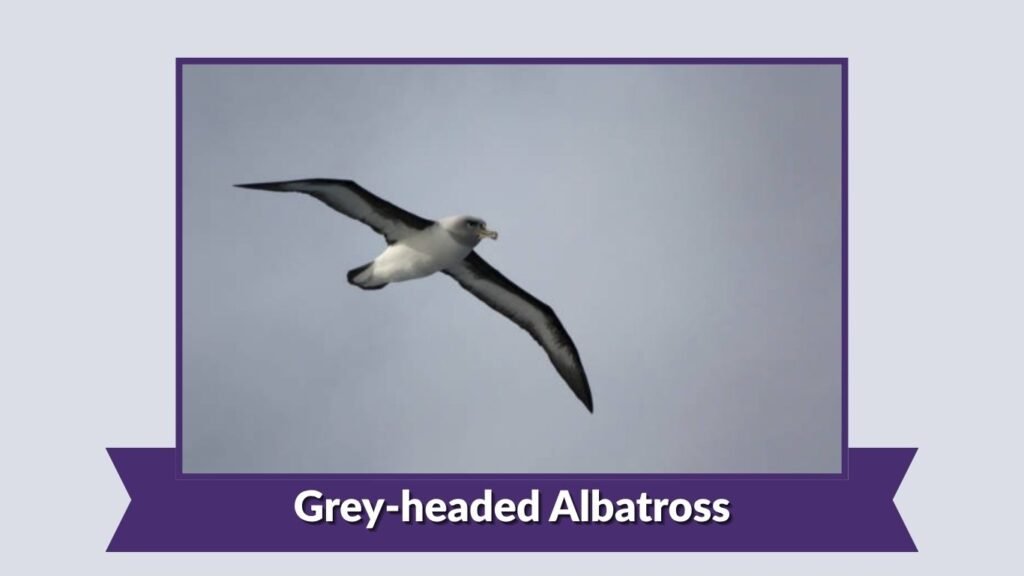
The Grey-headed Albatross is a distinctive seabird known for its ash-gray head and strong oceanic lifestyle. It is a powerful flier, often traveling vast distances across the Southern Ocean in search of food.
Identification
- Medium-sized albatross with gray head and white body
- Dark upper wings and back
- Black bill with yellow and orange streaks
- White underparts with contrasting dark edges
- Strong, streamlined body
Habitat and Distribution
Grey-headed Albatrosses are found throughout the Southern Ocean, breeding on subantarctic islands such as South Georgia and the Kerguelen Islands. They spend most of their lives far out at sea, rarely approaching land outside the breeding season.
Behavior
This species is a strong and enduring flier, capable of traveling long distances over open ocean. It is usually seen alone or in small numbers at sea. During breeding, it nests in colonies on steep slopes and cliffs.
Diet
Their diet mainly consists of squid, fish, and crustaceans. They often feed at the ocean surface and may follow fishing vessels to take advantage of discarded food.
9. Yellow-nosed Albatross
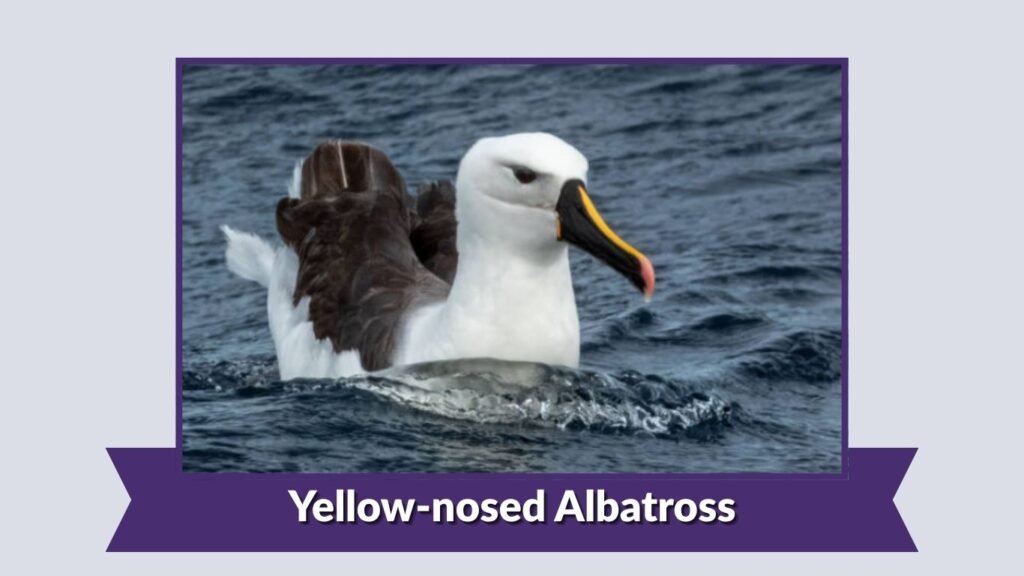
The Yellow-nosed Albatross is a smaller albatross species, easily recognized by the bright yellow stripe running along its bill. It is commonly seen in the Southern Ocean and is often observed near ships.
Identification
- Small to medium-sized albatross
- White head with dark upper wings
- Distinct yellow stripe along the bill
- Dark eye and slender body
- Black-tipped bill
Habitat and Distribution
Yellow-nosed Albatrosses are found in the Southern Ocean, with populations in both the Atlantic and Indian Oceans. They breed on remote islands such as Tristan da Cunha and islands in the southern Indian Ocean.
Behavior
This species is active and often seen gliding close to the water. It frequently follows ships, feeding on scraps or disturbed prey. During breeding season, it nests in colonies on cliffs or steep grassy slopes.
Diet
Their diet mainly includes squid, fish, and small marine organisms. They feed at the surface and are known to be opportunistic, often scavenging when food is available.
10. Indian Yellow-nosed Albatross
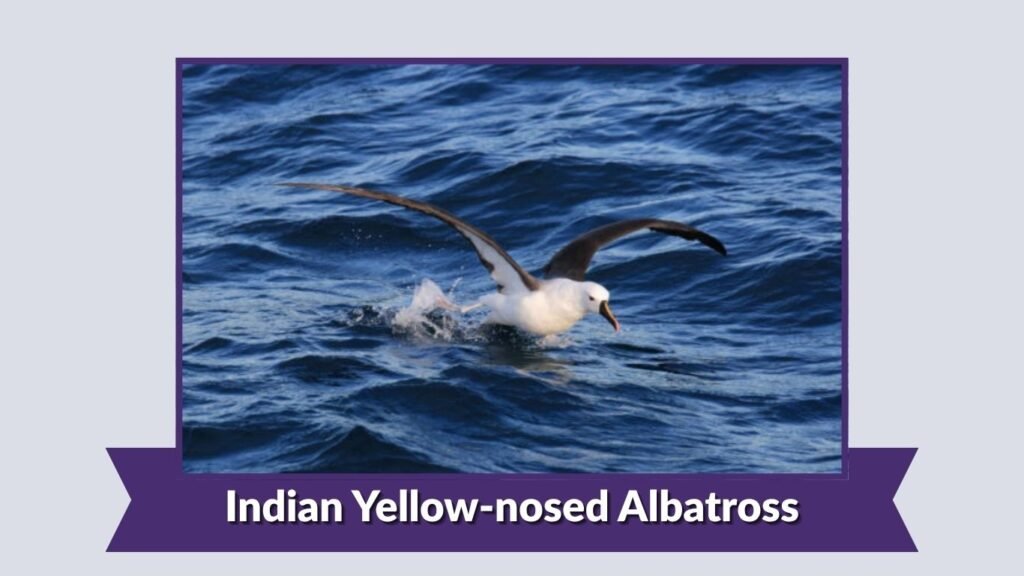
The Indian Yellow-nosed Albatross is a graceful and relatively small albatross species, known for the yellow stripe along its bill. It is commonly found over the southern Indian Ocean and is often seen gliding smoothly above the waves.
Identification
- Small to medium-sized albatross
- White head with dark upper wings
- Distinct yellow stripe along the bill
- Slender body with long narrow wings
- Black-tipped bill
Habitat and Distribution
This species is found mainly in the southern Indian Ocean. It breeds on islands such as Amsterdam Island and Saint-Paul Island. Outside the breeding season, it ranges widely across open ocean waters.
Behavior
Indian Yellow-nosed Albatrosses are active fliers, often gliding close to the water surface. They are usually seen alone or in small groups. During breeding, they form colonies on steep island slopes and cliffs.
Diet
Their diet mainly consists of squid, fish, and crustaceans. They feed at the ocean surface and may also scavenge near fishing vessels.
11. Atlantic Yellow-nosed Albatross
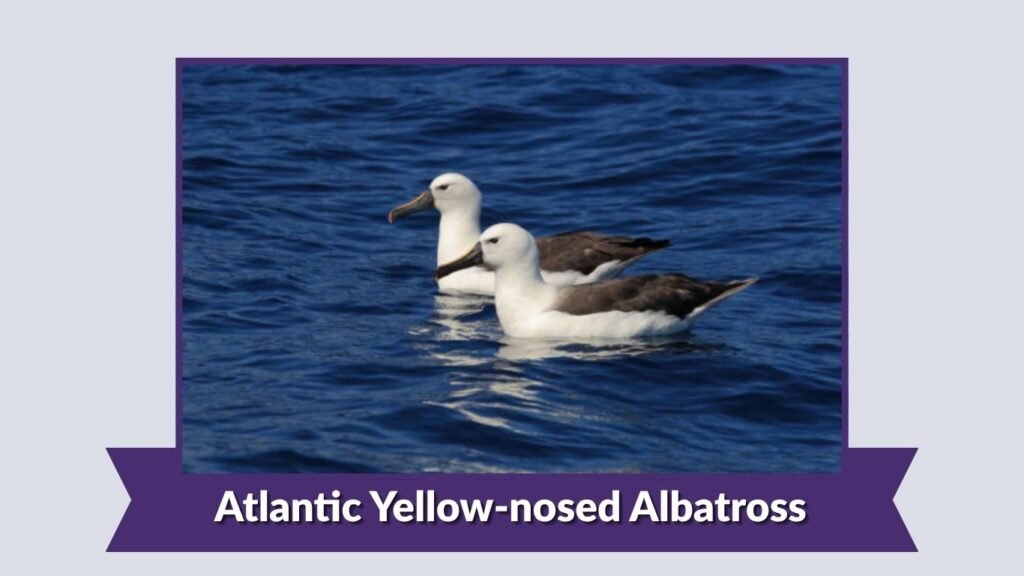
The Atlantic Yellow-nosed Albatross is closely related to its Indian Ocean counterpart but is found in the South Atlantic. It is a fast and agile flier, often seen following ships or gliding over rough seas.
Identification
- Small to medium-sized albatross
- White head with dark upper wings
- Bright yellow stripe on the bill
- Dark eye and slim body
- Black-tipped bill
Habitat and Distribution
Atlantic Yellow-nosed Albatrosses are found in the South Atlantic Ocean. They breed on islands such as Tristan da Cunha and Gough Island. They spend most of their time over open ocean waters.
Behavior
This species is energetic and often follows ships, feeding on scraps. It is usually seen in small groups at sea. During breeding, it nests in colonies on steep slopes and cliffs.
Diet
Their diet includes squid, fish, and small marine organisms. They are opportunistic feeders and often take advantage of food sources created by human activity, such as fishing operations.
12. Buller’s Albatross
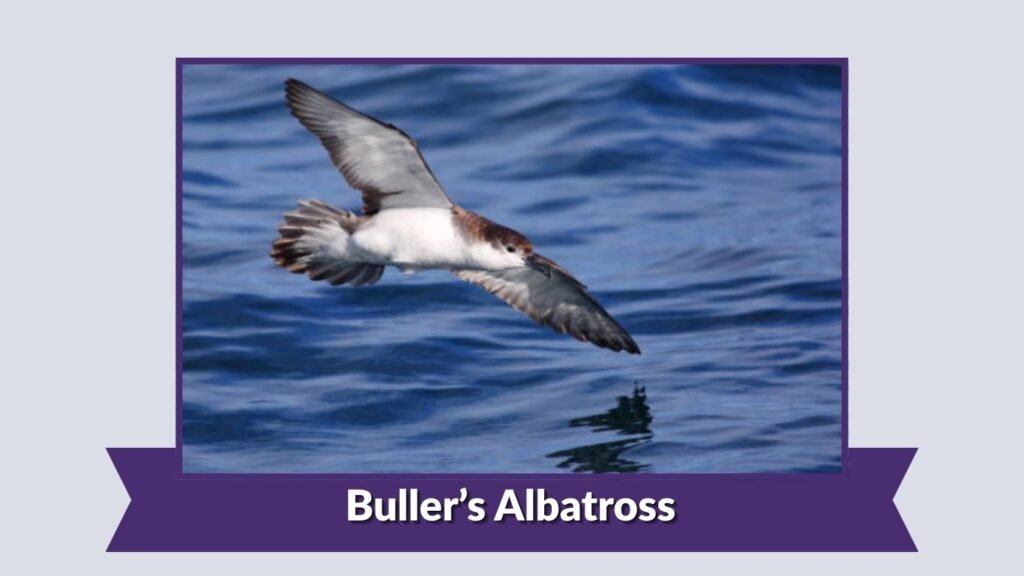
Buller’s Albatross is a medium-sized albatross known for its sleek appearance and elegant flight. It is commonly found around New Zealand and nearby oceanic regions, where it spends most of its life gliding over open waters.
Identification
- Medium-sized albatross with white head and underparts
- Dark upper wings and back
- Distinct yellow bill with black tip
- Thin black line around the eye
- Slim, streamlined body
Habitat and Distribution
Buller’s Albatrosses are mainly found around New Zealand and the southwestern Pacific Ocean. They breed on offshore islands and spend the rest of the year over open ocean waters, often traveling long distances.
Behavior
This species is an agile flier, often seen gliding low over the sea surface. It may be seen alone or in small groups and is known to follow ships. During breeding, it nests in colonies on coastal cliffs and slopes.
Diet
Their diet mainly includes fish, squid, and crustaceans. They feed at the surface and may also scavenge behind fishing vessels.
13. Chatham Albatross
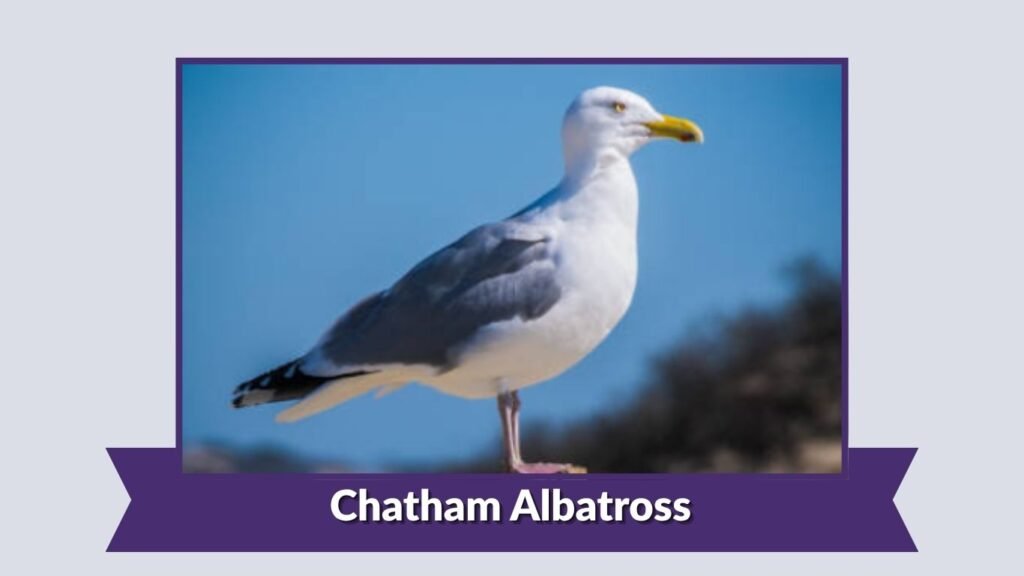
The Chatham Albatross is a rare species with a very limited breeding range, making it one of the more vulnerable albatrosses. It is mainly associated with the Chatham Islands near New Zealand.
Identification
- Medium-sized albatross with white head and body
- Dark upper wings with strong contrast
- Bright yellow bill with a dark tip
- Dark eye giving a bold facial look
- Compact and sturdy body
Habitat and Distribution
Chatham Albatrosses breed almost exclusively on a small rocky outcrop called The Pyramid near the Chatham Islands. Outside the breeding season, they range across the South Pacific Ocean.
Behavior
This species is usually seen alone or in small numbers at sea. It is a strong and efficient glider, capable of traveling long distances. During breeding, it forms dense colonies on steep rocky cliffs.
Diet
Their diet mainly consists of fish, squid, and other marine organisms. They feed at the ocean surface and may also scavenge when opportunities arise.
14. Salvin’s Albatross
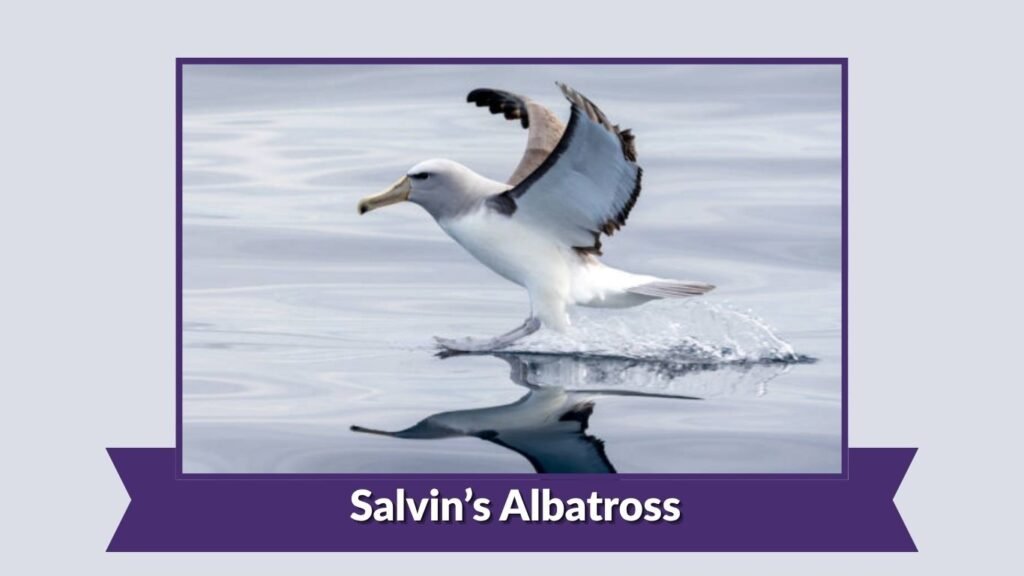
Salvin’s Albatross is a medium-sized seabird known for its strong build and striking contrast between its white body and dark wings. It is commonly found in the Southern Ocean and is often seen far from land.
Identification
- Medium-sized albatross with white head and body
- Dark gray to black upper wings and back
- Yellow bill with darker tip
- Pale gray shading on head and neck
- Strong, compact body
Habitat and Distribution
Salvin’s Albatrosses are mainly found in the Southern Ocean, especially around New Zealand and nearby islands. They breed on remote subantarctic islands and spend most of their time over open ocean waters.
Behavior
This species is a powerful flier, often gliding long distances over rough seas. It is usually seen alone or in small groups. During breeding, it nests in colonies on rocky islands and coastal cliffs.
Diet
Their diet mainly includes fish, squid, and crustaceans. They feed at the surface and may also scavenge from fishing vessels when food is available.
15. White-capped Albatross
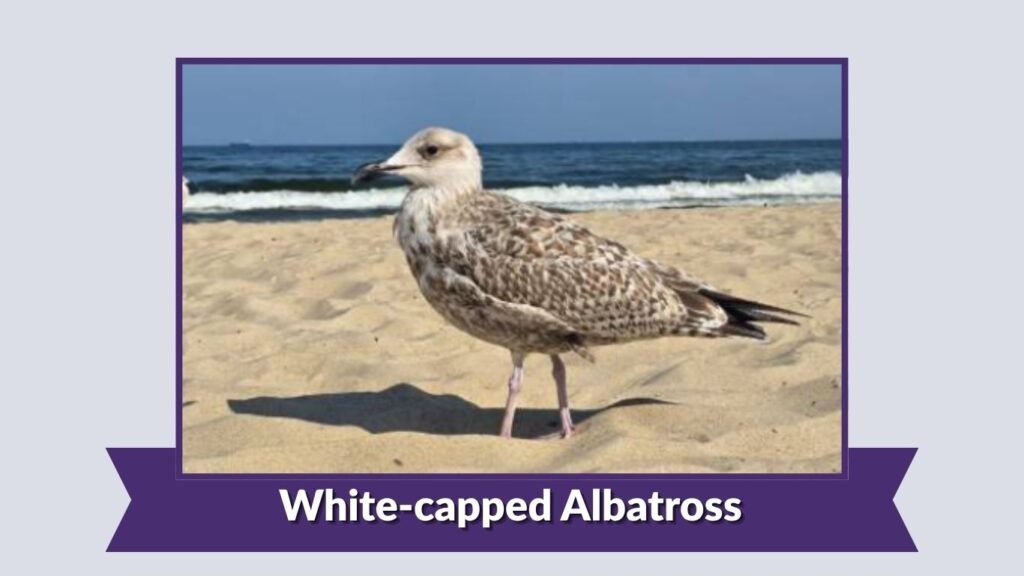
The White-capped Albatross is a large and elegant species, recognized by its clean white head and strong contrast with dark wings. It is widely distributed across southern ocean regions.
Identification
- Large albatross with white head and underparts
- Dark upper wings and back
- Pale bill with darker edges
- Clean, bright white head appearance
- Robust body with broad wings
Habitat and Distribution
White-capped Albatrosses are found across the Southern Ocean, particularly around New Zealand. They breed on offshore islands and range widely over open ocean waters during the non-breeding season.
Behavior
This species is often seen gliding smoothly over the sea, sometimes in small groups. It may follow ships to feed on scraps. During breeding, it forms colonies on remote islands, often nesting on slopes or cliffs.
Diet
Their diet mainly consists of fish, squid, and marine invertebrates. They feed at the ocean surface and are known to scavenge when opportunities arise.
16. Auckland Albatross
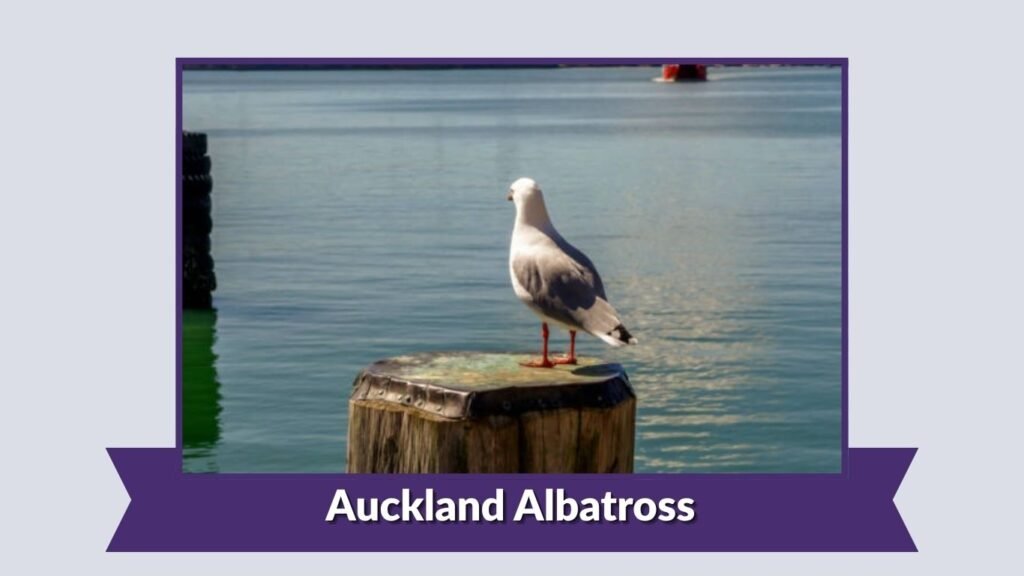
The Auckland Albatross is a large and impressive seabird closely related to the Wandering Albatross. It is mainly found in the Southern Ocean and is known for its powerful gliding flight and restricted breeding range.
Identification
- Large albatross with mostly white body
- Black markings on upper wings
- Large pale pink bill
- Long, broad wings for soaring
- Clean white head with minimal markings
Habitat and Distribution
Auckland Albatrosses are primarily found in the Southern Ocean. They breed mainly on the Auckland Islands south of New Zealand. Outside the breeding season, they roam widely across open ocean waters.
Behavior
This species is a strong and efficient glider, using wind currents to travel long distances with little effort. It is usually seen alone or in small numbers at sea. During breeding, it nests in colonies on remote islands.
Diet
Their diet mainly includes squid, fish, and other marine organisms. They feed at the ocean surface and may also scavenge from fishing vessels.
17. Antipodean Albatross
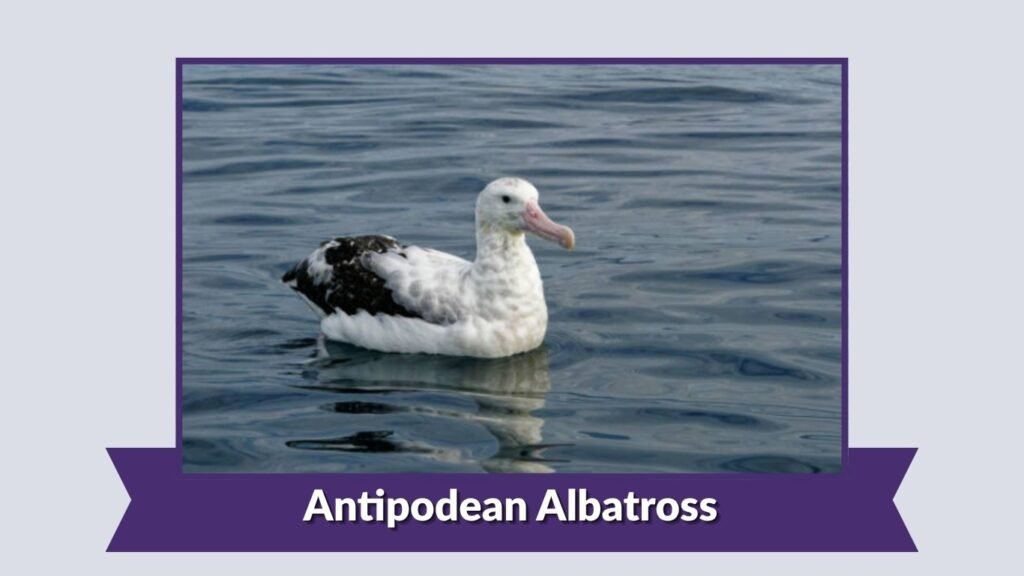
The Antipodean Albatross is another large albatross species, similar to the Wandering group, known for its long-distance movements and oceanic lifestyle. It is considered vulnerable due to environmental threats.
Identification
- Very large albatross with long wings
- Mostly white body with dark wing edges
- Large pale pink bill
- Slightly darker upper wings than some relatives
- Males generally whiter than females
Habitat and Distribution
Antipodean Albatrosses breed mainly on the Antipodes Islands and other subantarctic islands near New Zealand. They spend most of their lives over the Southern Ocean, traveling vast distances.
Behavior
This species is known for its long-distance soaring, often covering thousands of kilometers across the ocean. It is typically solitary at sea but forms pairs during breeding. They nest on remote islands in isolated colonies.
Diet
Their diet mainly consists of squid, fish, and marine invertebrates. They feed at the surface and sometimes follow fishing vessels to take advantage of food availability.
18. Amsterdam Albatross
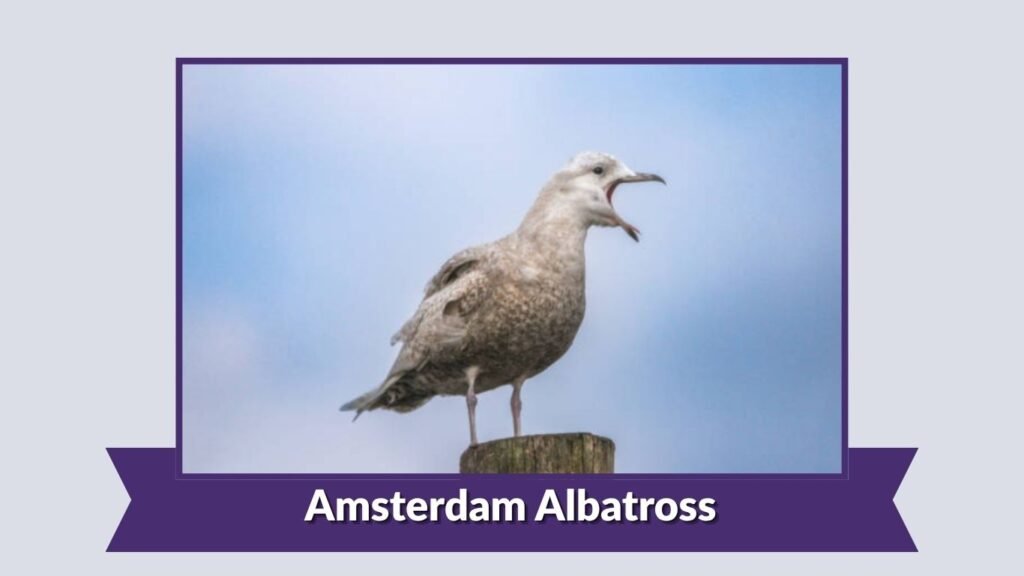
The Amsterdam Albatross is one of the rarest albatross species in the world, with a very limited breeding range. It is closely related to the wandering albatross group and is known for its large size and restricted population.
Identification
- Large albatross with mostly dark brown plumage
- Paler face and throat compared to body
- Long wings adapted for gliding
- Large pinkish bill
- Overall darker appearance than wandering-type albatrosses
Habitat and Distribution
Amsterdam Albatrosses breed only on Amsterdam Island in the southern Indian Ocean. Outside the breeding season, they roam widely across the Southern Ocean, but sightings are rare due to their small population.
Behavior
This species is generally solitary at sea. Like other albatrosses, it is an expert glider, using ocean winds to travel long distances. During breeding, it nests in isolated areas, often in small, scattered groups.
Diet
Their diet mainly includes squid, fish, and other marine organisms. They feed at the ocean surface and may occasionally scavenge from fishing activities.
19. Tristan Albatross
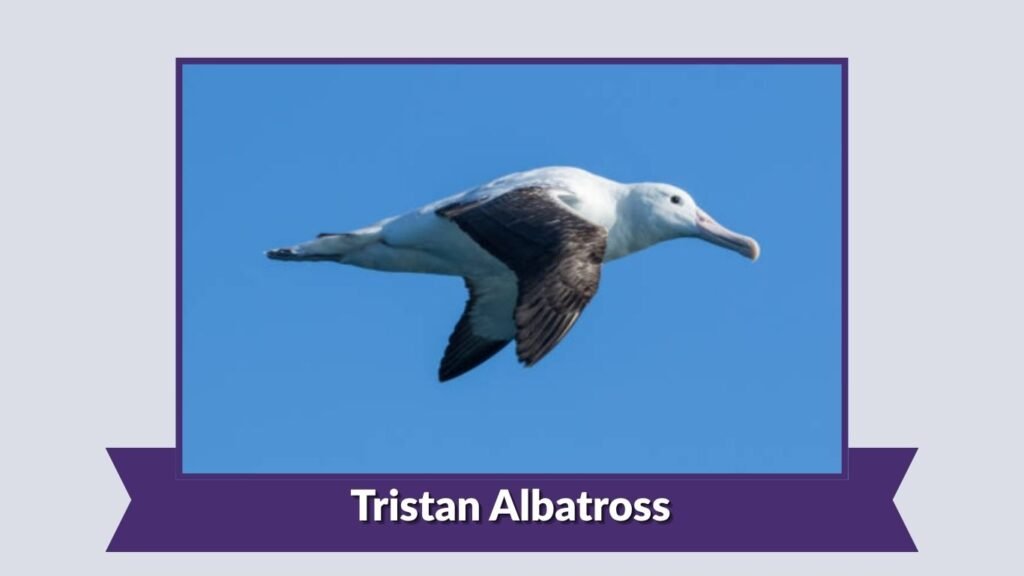
The Tristan Albatross is a large seabird closely related to the wandering albatross group. It is named after Tristan da Cunha, where it primarily breeds, and is considered endangered due to its limited population.
Identification
- Very large albatross with mostly white body
- Dark upper wings with strong contrast
- Large pink bill
- Long, narrow wings for efficient gliding
- Similar in appearance to Wandering Albatross but slightly darker
Habitat and Distribution
Tristan Albatrosses breed mainly on Gough Island near Tristan da Cunha in the South Atlantic Ocean. They spend most of their lives over the Southern Ocean, traveling across vast open waters.
Behavior
This species is a powerful glider, capable of covering great distances without much wing flapping. It is usually seen alone at sea. During breeding, it forms colonies in remote and undisturbed areas.
Diet
Their diet consists mainly of squid, fish, and marine invertebrates. They feed at the surface and may also scavenge when food is available.
20. Northern Royal Albatross
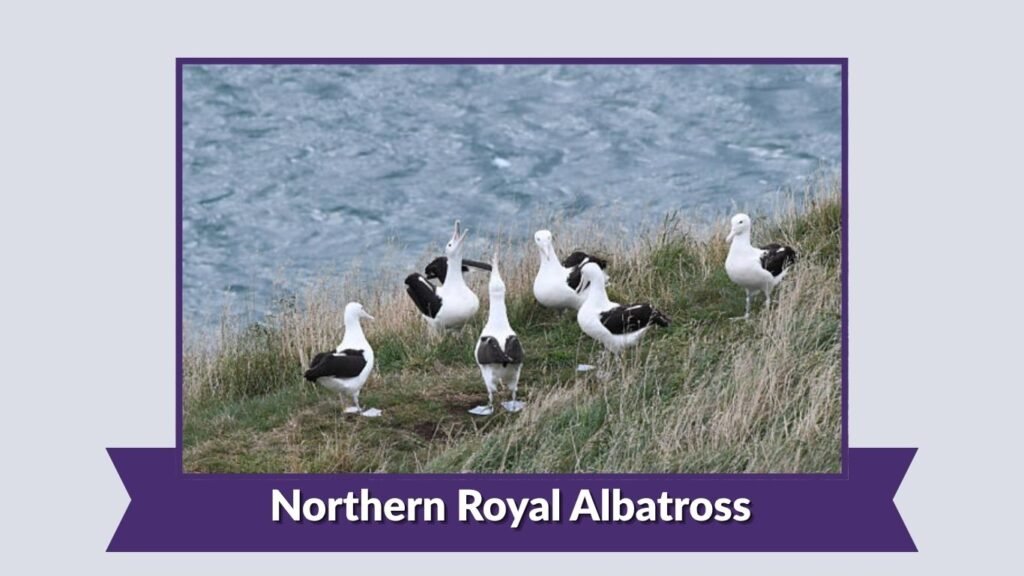
The Northern Royal Albatross is a magnificent seabird known for its large size and graceful flight. It is one of the largest albatross species and is closely related to the Southern Royal Albatross, with which it shares many similarities.
Identification
- Very large albatross with mostly white body
- Black upper wings with sharp contrast
- Large pale pink bill
- Long, broad wings for soaring
- Clean white head and neck
Habitat and Distribution
Northern Royal Albatrosses are mainly found in the Southern Ocean, breeding primarily in New Zealand, especially at Taiaroa Head and nearby islands. They spend most of their time over open ocean waters.
Behavior
This species is famous for its effortless gliding, using wind currents to travel long distances. It is usually solitary at sea but forms strong pair bonds during breeding. They nest in colonies on coastal cliffs and grassy headlands.
Diet
Their diet mainly includes squid, fish, and marine invertebrates. They feed at the ocean surface and may also scavenge from fishing vessels.
21. Southern Royal Albatross
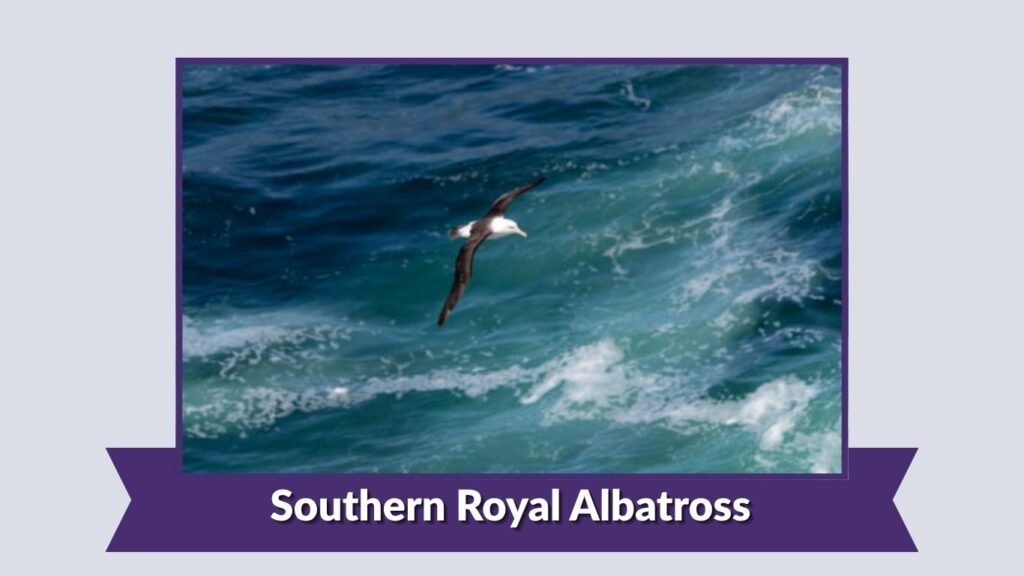
The Southern Royal Albatross is one of the largest flying birds in the world, closely related to the Northern Royal Albatross. It is known for its impressive wingspan and powerful soaring ability across the Southern Ocean.
Identification
- Very large albatross with mostly white body
- Extensive black on upper wings
- Large pink bill
- Long, broad wings adapted for gliding
- Slightly more white on wings compared to Northern Royal
Habitat and Distribution
Southern Royal Albatrosses are found across the Southern Ocean, breeding mainly on subantarctic islands such as Campbell Island. They spend most of their lives at sea, far from land.
Behavior
This species is an expert glider, capable of traveling vast distances with minimal effort. It is usually solitary at sea but gathers in colonies during breeding. They nest in remote, undisturbed island habitats.
Diet
Their diet mainly consists of squid, fish, and other marine organisms. They feed at the surface and are also known to scavenge when food is available.
22. Gibson’s Albatross
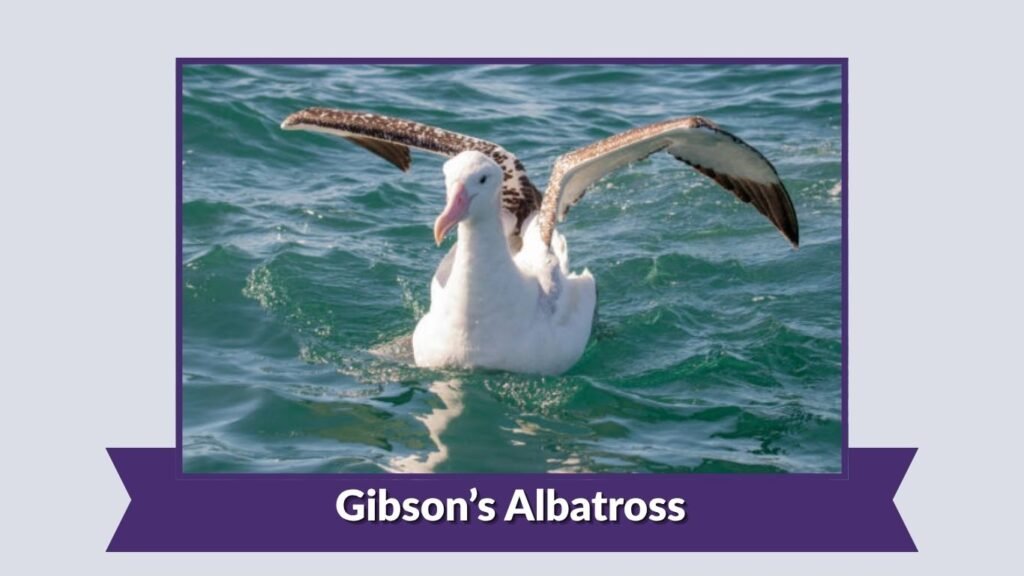
Gibson’s Albatross is a large seabird closely related to the Antipodean and Wandering Albatross groups. It is known for its powerful flight and long-distance movements across the Southern Ocean, though it is less commonly recognized as a separate species.
Identification
- Very large albatross with long, broad wings
- Mostly white body with dark upper wings
- Large pale pink bill
- Slight variation in plumage compared to similar species
- Males generally appear whiter than females
Habitat and Distribution
Gibson’s Albatrosses breed mainly on subantarctic islands near New Zealand, especially the Auckland Islands. Outside the breeding season, they roam widely across the Southern Ocean, covering vast distances.
Behavior
This species is an expert glider, using strong ocean winds to travel efficiently over long distances. It is typically solitary at sea but forms pairs during the breeding season. They nest in remote island colonies, often in grassy or open areas.
Diet
Their diet mainly includes squid, fish, and marine invertebrates. They feed at the ocean surface and may also scavenge near fishing vessels when food is available.
