
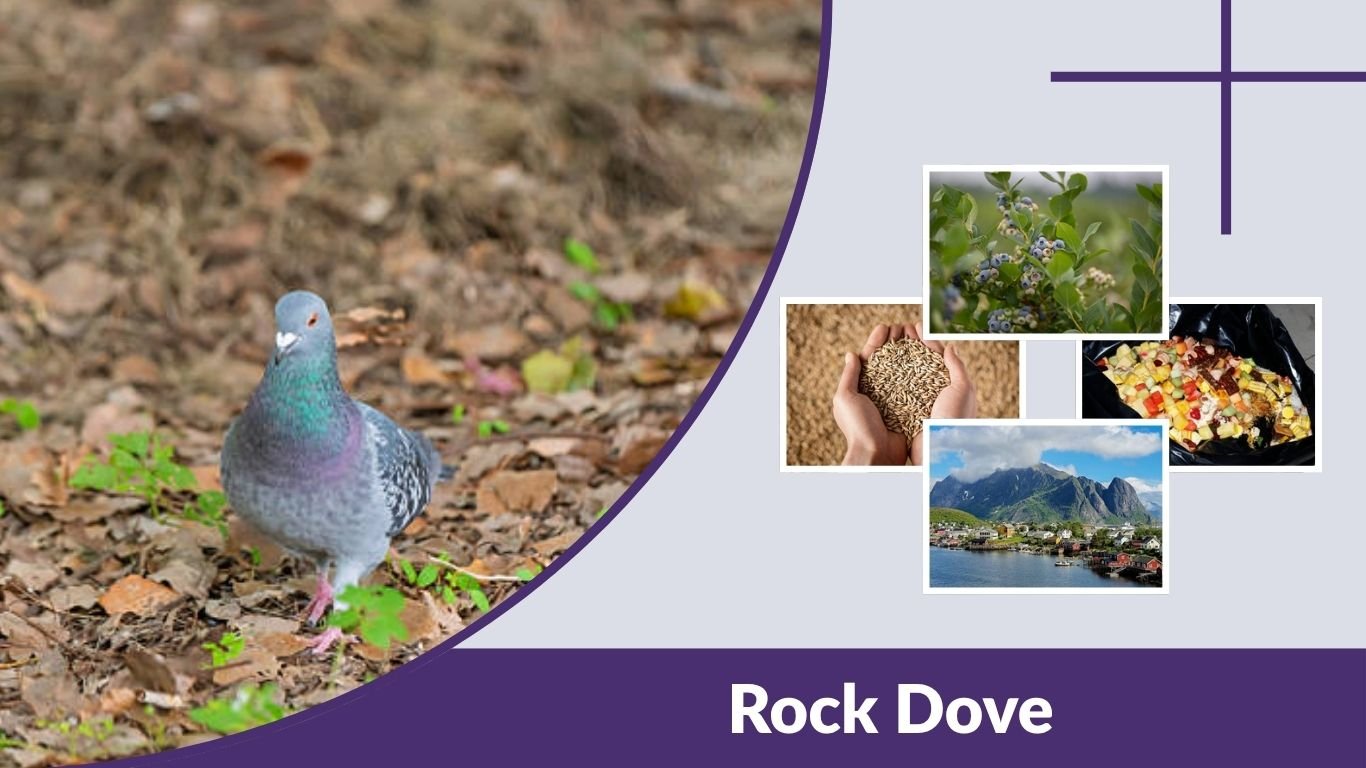
The rock dove, commonly known as the pigeon, is one of the most familiar birds found around the world. Scientifically called Columba livia, it has adapted from natural cliff habitats to modern cities with remarkable success. Often seen in large flocks, this bird plays an important role in both natural ecosystems and urban environments. Despite its common presence, many people are unaware of its origins, behavior, and unique traits. This guide explains how to identify it, where it lives, and how it differs from similar species.
What Is a Rock Dove?
The rock dove is a medium-sized bird that belongs to the pigeon family. It is the original wild species from which most domestic and feral pigeons are descended. Over time, it has spread globally due to human activity and domestication.
Key Characteristics
- Scientific name: Columba livia
- Also called rock pigeon or feral pigeon
- Native to Europe, North Africa, and parts of Asia
- Highly adaptable to urban environments
Rock Dove Identification
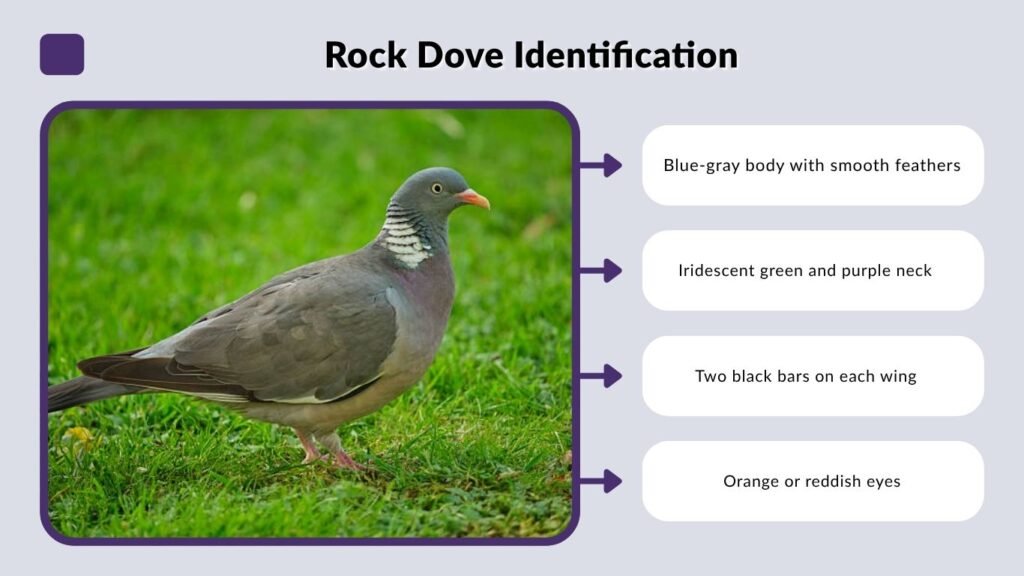
Identifying a rock dove is straightforward when you know its key physical features. Its coloration and body shape are consistent, although variations can occur due to domestication and breeding.
Physical Appearance
- Blue-gray body with smooth feathers
- Iridescent green and purple neck
- Two black bars on each wing
- Orange or reddish eyes
Size and Structure
- Medium-sized bird with compact body
- Short neck and rounded head
- Broad wings suited for strong flight
Rock Dove vs Pigeon

The terms rock dove and pigeon are often used interchangeably, which can cause confusion. Understanding the difference helps clarify how these birds are classified and identified in different environments.
Are They the Same?
The rock dove is the original wild species, while pigeon is a general term used for both domesticated and feral birds. Most pigeons seen in cities today are descendants of domesticated rock doves that have returned to the wild.
Feral vs Wild Forms
Wild rock doves live in natural rocky habitats, while feral pigeons are commonly found in cities. Feral birds often show more color variation due to mixed breeding, whereas wild forms are more uniform in appearance.
Rock Dove Habitat and Distribution
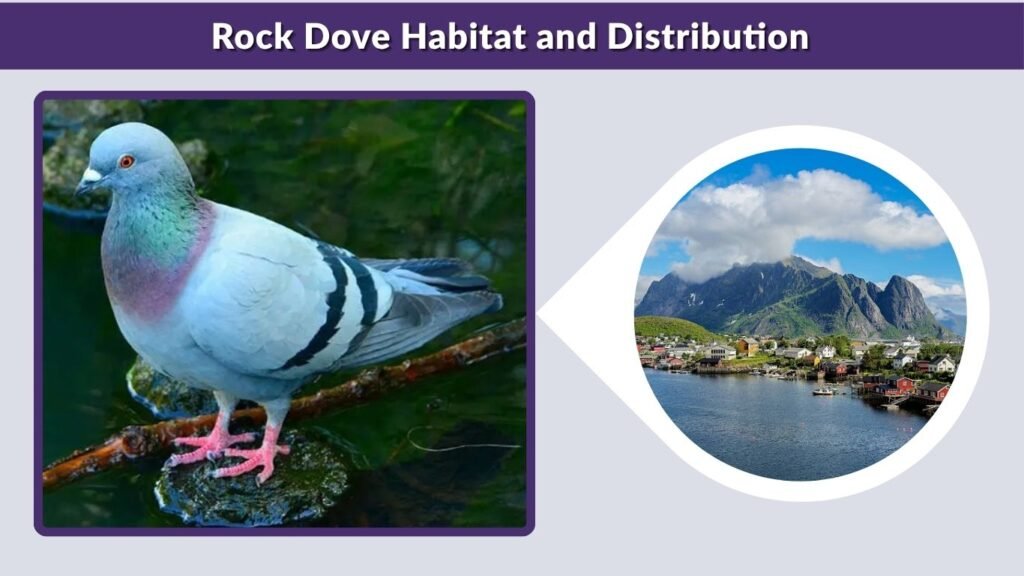
The rock dove has one of the widest distributions of any bird species. Its ability to adapt to different environments allows it to thrive in both natural landscapes and heavily populated urban areas.
Natural Habitat
Originally, rock doves lived on cliffs, coastal regions, and mountainous areas. These locations provided safe nesting sites and protection from predators. They prefer ledges and crevices that mimic modern building structures.
Urban Environment
Today, cities provide ideal conditions for rock doves. Buildings act as artificial cliffs, offering nesting spaces and shelter. Access to food from human activity has allowed them to establish large populations in urban centers.
Rock Dove vs Mourning Dove
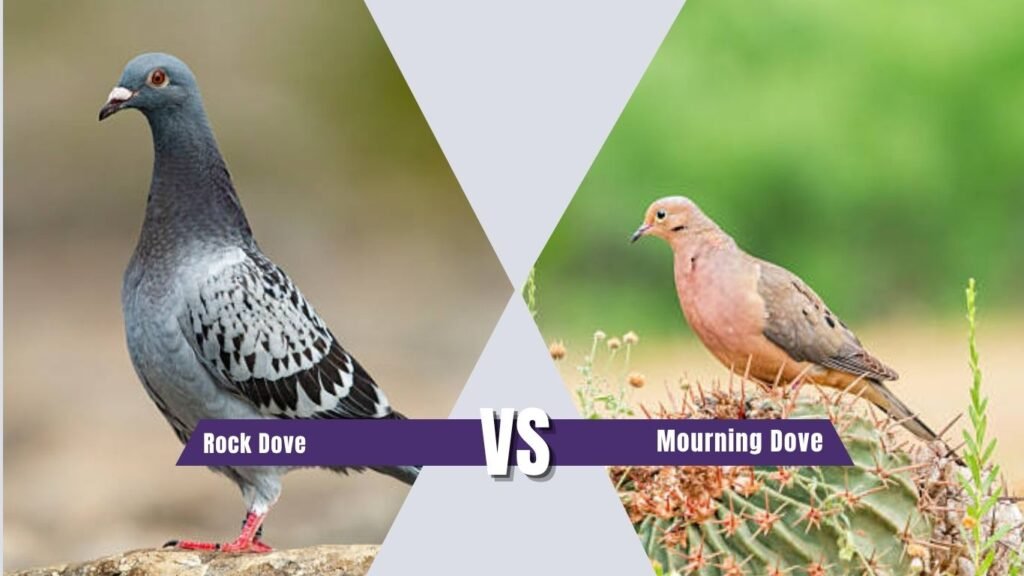
Although they share similar names, the rock dove and mourning dove are different species with distinct features. Comparing them helps avoid misidentification, especially for beginners.
Key Differences
- Rock doves are larger and more compact
- Mourning doves have longer, pointed tails
- Rock doves show iridescent neck colors
- Mourning doves have softer, brown tones
Behavior Differences
- Rock doves form large flocks in cities
- Mourning doves are more solitary or found in pairs
- Flight patterns differ, with mourning doves appearing more graceful
Rock Dove Behavior
The behavior of the rock dove reflects its adaptability and social nature. It has developed habits that allow it to survive and thrive in a wide range of environments, especially in close proximity to humans.
Social Behavior
Rock doves are highly social birds that live in flocks. They often gather in large groups for feeding and roosting. This social structure helps them stay safe from predators and locate food more efficiently.
Sound and Communication
- Produce soft cooing sounds
- Use calls for mating and bonding
- Vocalize more during breeding periods
Flight and Navigation
Rock doves are strong and fast fliers. They are well known for their homing ability, which allows them to return to a specific location over long distances. This skill has been used by humans for communication in the past.
Rock Dove Diet and Feeding

The rock dove has a flexible diet that allows it to survive in many environments. It primarily feeds on plant-based foods but easily adapts to available resources in urban areas. This adaptability is one reason it thrives in cities worldwide.
What They Eat
- Seeds and grains as the main diet
- Small fruits and plant material
- Human food scraps in cities
Feeding Behavior
- Forage on the ground in groups
- Quick pecking movements while eating
- Often return to the same feeding areas
Rock Dove Nesting and Reproduction
Reproduction is an important part of the rock dove’s success as a species. Its ability to breed multiple times a year helps maintain stable populations, especially in urban environments where food is abundant.
Nesting Habits
- Build simple nests from twigs
- Use ledges, buildings, and cliffs
- Reuse nesting sites frequently
Eggs and Chicks
- Usually lay two white eggs
- Both parents share incubation duties
- Chicks are fed with nutrient-rich crop milk
Rock Dove Lifespan and Survival
The lifespan of a rock dove depends on its environment and access to resources. Urban birds may face different challenges compared to those in natural habitats, including predators and human-related risks.
Survival Factors
- Availability of food and water
- Presence of predators such as hawks
- Environmental conditions and shelter
Are Rock Doves Invasive?
The rock dove is considered invasive in many parts of the world due to its widespread presence and adaptability. Its introduction to new regions has led to large populations that can impact local ecosystems and urban environments.
Environmental Impact
- Compete with native bird species
- Contribute to urban overpopulation
- Affect buildings and public spaces
Human Interaction
- Often viewed as pests in cities
- Historically valued for communication and domestication
- Commonly fed by people in public areas
Interesting Facts About Rock Doves
The rock dove has several fascinating traits that explain its long relationship with humans and its success as a global species. These facts highlight its intelligence, adaptability, and historical importance.
- One of the oldest domesticated birds
- Can recognize human faces
- Known for strong homing ability
- Found on every continent except Antarctica
FAQs
Are pigeons rock doves?
Yes, most pigeons seen in cities are descendants of the rock dove. They are commonly referred to as feral pigeons but belong to the same original species.
What is the difference between a rock dove and a pigeon?
A rock dove refers specifically to the wild species, while pigeon is a broader term that includes domesticated and feral birds derived from that species.
Where do rock doves live?
They originally lived on cliffs and rocky areas but are now found worldwide, especially in cities where buildings provide similar nesting conditions.
Are rock doves invasive?
In many regions, they are considered invasive because they adapt quickly and compete with native species for resources.
What do rock doves eat?
They mainly eat seeds and grains but also consume fruits and human food scraps, especially in urban environments where such food is easily available.
