
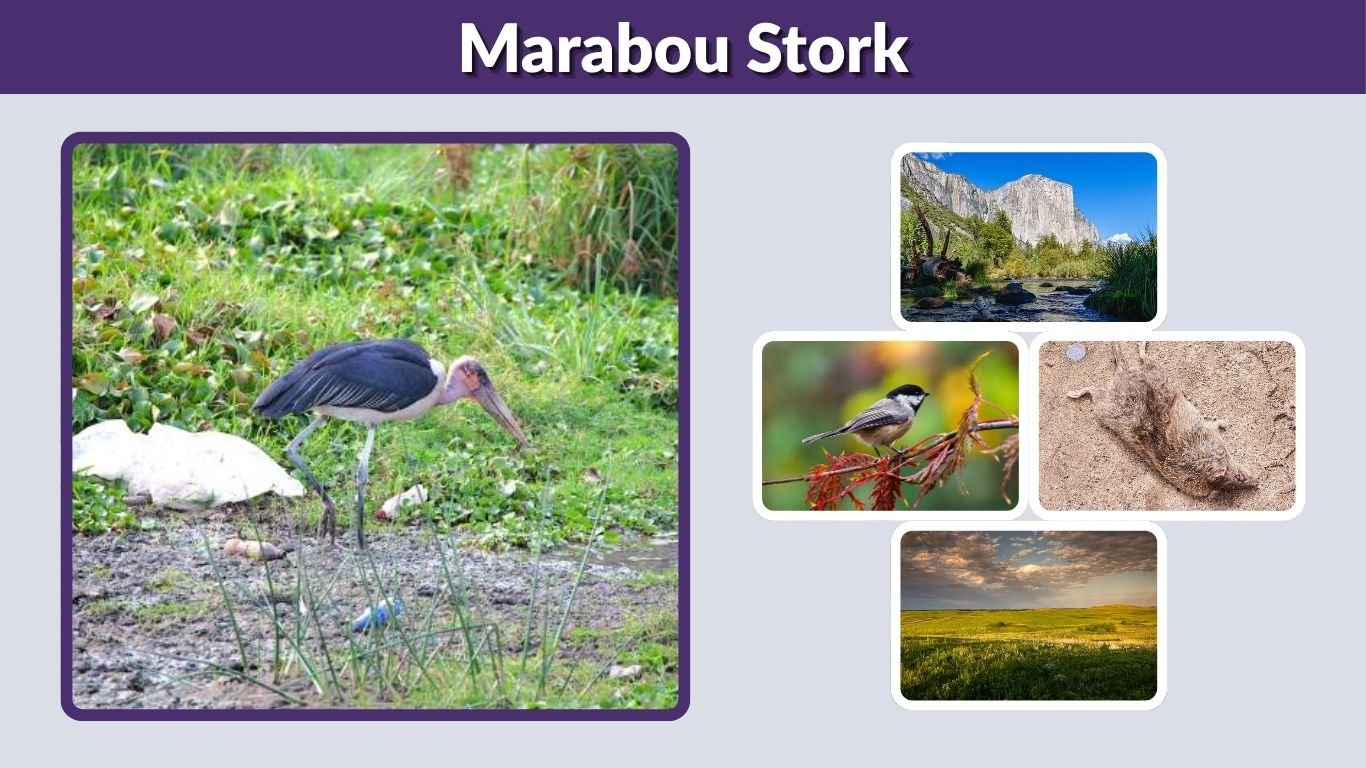
The marabou stork (Leptoptilos crumenifer) is one of the most recognizable birds in Africa, known for its towering height, bald head, and unusual appearance. Often called the “undertaker bird,” it plays a vital role as a scavenger, helping keep ecosystems clean. Despite its somewhat intimidating look, the marabou stork is a fascinating species with unique adaptations for survival. From its massive wingspan to its distinctive throat pouch, this bird stands out among the largest flying birds in the world.
What Is a Marabou Stork?
The marabou stork is a large wading bird belonging to the stork family. It is commonly found in sub-Saharan Africa and is known for its scavenging behavior, often feeding on carcasses alongside vultures. Its adaptability allows it to thrive in both natural wetlands and urban environments.
Scientific Classification
- Scientific name: Leptoptilos crumenifer
- Family: Ciconiidae
- Common name: African marabou stork
Key Features
- Bald head adapted for scavenging
- Long legs for wading in shallow water
- Large, heavy bill for tearing food
Physical Characteristics of the Marabou Stork
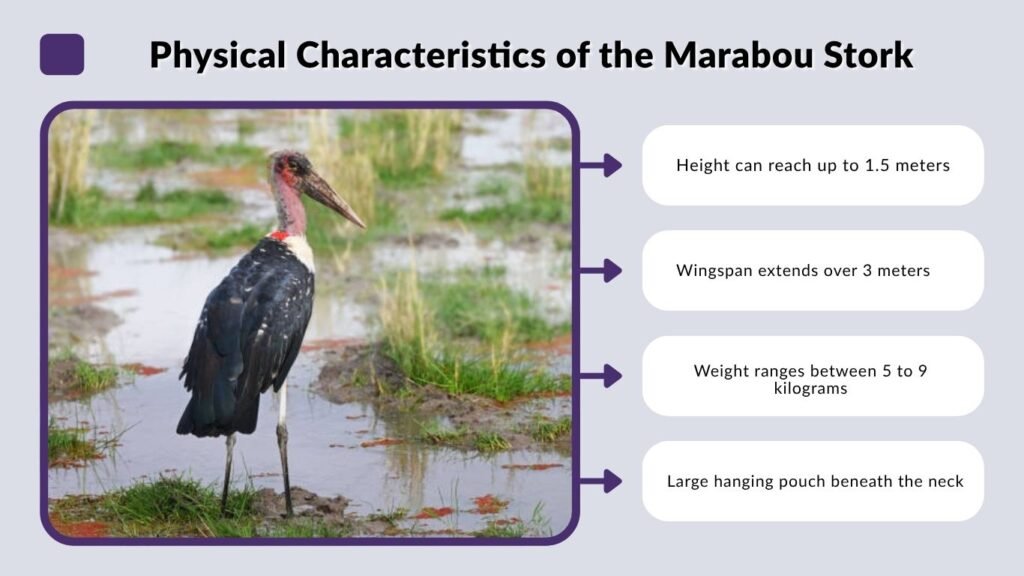
The marabou stork is among the largest flying birds, with a striking and somewhat unusual appearance. Its size and body structure make it easy to identify even from a distance. The bird’s featherless head helps maintain hygiene while feeding on carrion, while its massive wings allow efficient soaring.
Size and Appearance
- Height can reach up to 1.5 meters
- Wingspan extends over 3 meters
- Weight ranges between 5 to 9 kilograms
Neck Pouch (Gular Sac)
- Large hanging pouch beneath the neck
- Used in display and temperature regulation
- May play a role in sound production
Marabou Stork Habitat and Range
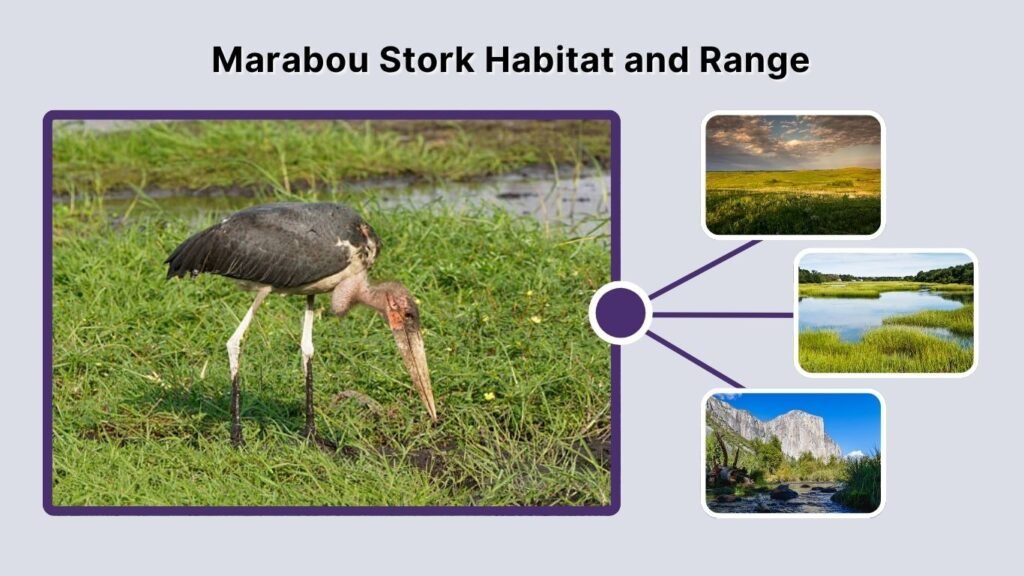
The marabou stork is widely distributed across sub-Saharan Africa and thrives in a variety of environments. It prefers areas where food is abundant and easy to access, which is why it is often seen near both natural and human-made habitats.
Where Do Marabou Storks Live?
- Wetlands, marshes, and riverbanks
- Open savannas and grasslands
- Urban areas such as landfills and markets
Geographic Distribution
- Common in Kenya, Uganda, and Tanzania
- Found throughout central and southern Africa
- Often seen near major water sources
Behavior and Lifestyle
The marabou stork has a calm yet opportunistic lifestyle. It spends much of its time standing still or soaring high in the sky using warm air currents. As a scavenger, it plays a crucial role in maintaining ecological balance by cleaning up dead animals.
Unlike many birds, it is relatively quiet and communicates through body movements and bill clattering. It often gathers in groups near food sources, especially in areas where carrion is available. Despite its social feeding habits, it can also be seen alone in quieter environments.
Marabou Stork Diet
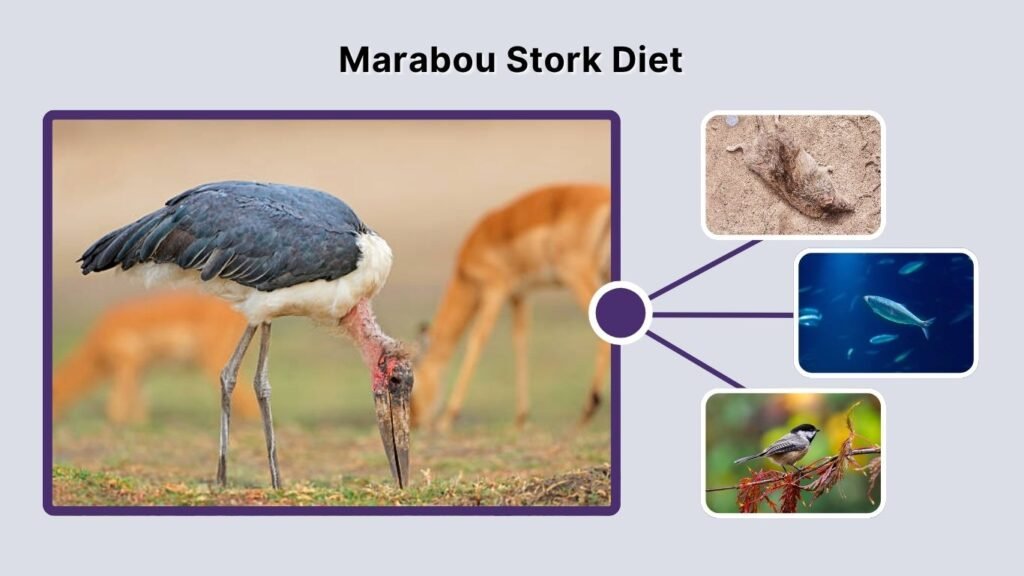
The marabou stork is primarily a scavenger, but it is also an opportunistic feeder. Its diet varies depending on availability, making it highly adaptable in different environments.
What Do Marabou Storks Eat?
- Carrion (dead animals)
- Fish and amphibians
- Small birds and mammals
Feeding Behavior
- Competes with vultures for carcasses
- Uses strong bill to tear flesh
- Occasionally hunts live prey in shallow water
Marabou Stork in Flight
The marabou stork is an impressive sight in the air, often soaring effortlessly for long periods. Its large wings allow it to glide using thermal currents, conserving energy while covering large distances.
Flight Characteristics
- Broad wings with minimal flapping
- Neck pulled back during flight
- Long legs trailing behind
Identification in Flight
- Large silhouette similar to vultures
- Steady and slow soaring motion
- Dark wings contrasting with lighter body
Are Marabou Storks Dangerous?
The marabou stork often appears intimidating due to its large size and scavenging habits, but it is not naturally aggressive toward humans. Most encounters occur when the bird is searching for food, especially near urban waste sites. Understanding its behavior helps separate myths from reality and reduces unnecessary fear around this species.
Do Marabou Storks Attack Humans?
- Attacks are extremely rare
- May act defensively if threatened
- More likely to avoid humans than confront them
Do Marabou Storks Eat Humans?
- They do not hunt humans
- Feed mainly on carrion and small animals
- Their scavenging role is often misunderstood
Marabou Stork vs Other Birds
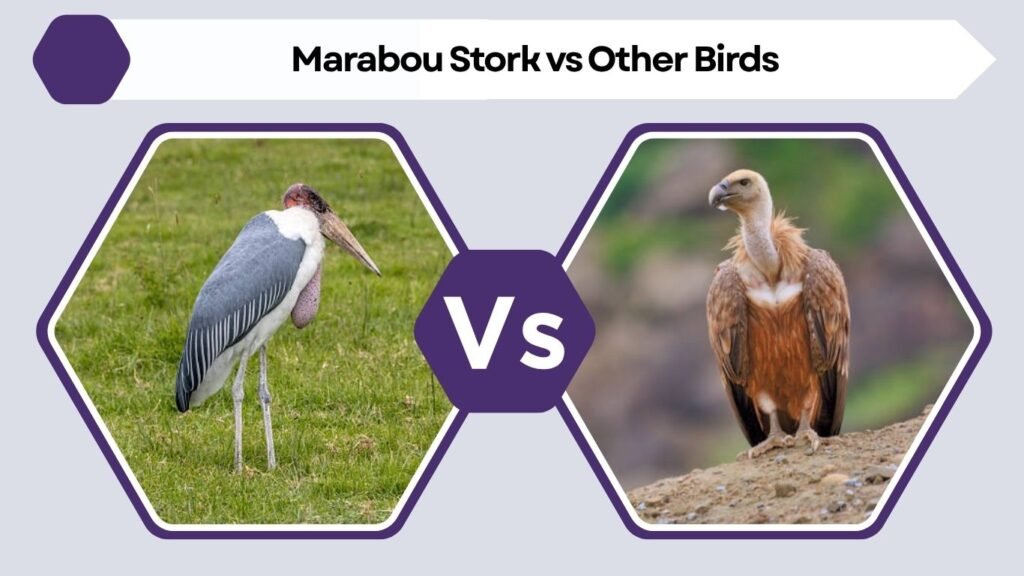
The marabou stork shares similarities with several large birds, but it also has distinct differences in behavior, diet, and appearance. Comparing it with other species helps clarify its ecological role and unique adaptations.
Marabou Stork vs Vulture
- Both are scavengers feeding on carrion
- Marabou storks rely on sight rather than smell
- Vultures are more specialized scavengers
Marabou Stork vs Shoebill
- Shoebills hunt live prey like fish
- Marabou storks prefer dead animals
- Shoebills are more solitary and elusive
Marabou Stork Around the World
The marabou stork is most commonly associated with Africa, where it is widely distributed across various regions. Its ability to adapt to human environments has increased its presence in cities, especially where food sources are abundant.
Marabou Stork in Africa
- Found throughout sub-Saharan regions
- Common in countries like Kenya and Uganda
- Frequently seen near rivers and wetlands
Marabou Stork in Urban Areas
- Often gathers near landfills and markets
- Benefits from human-generated waste
- Plays a role in urban waste cleanup
Marabou Stork Lifespan and Predators
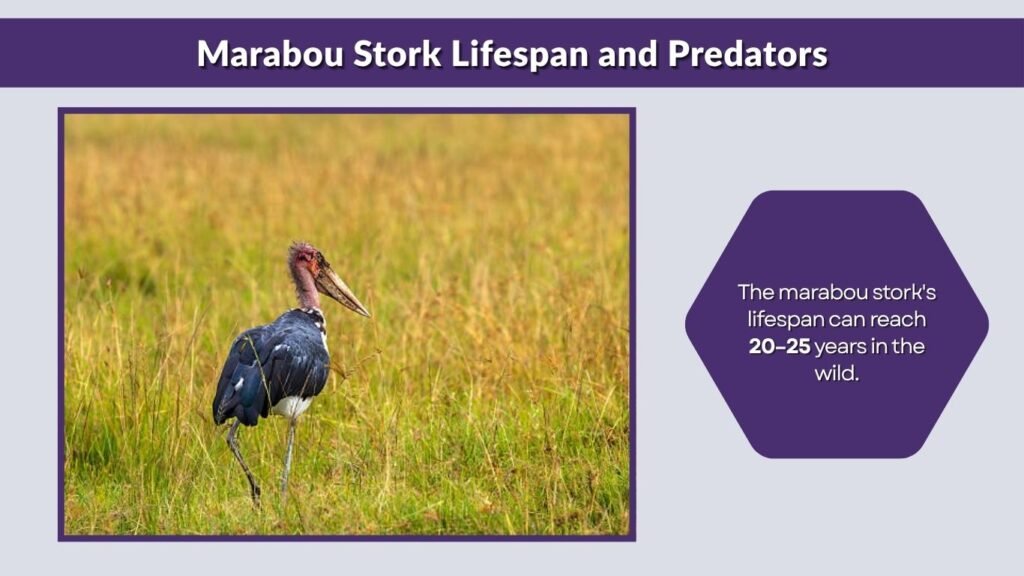
The marabou stork has relatively few natural predators due to its size. However, its eggs and chicks are more vulnerable to threats. Its survival largely depends on habitat conditions and food availability.
- Lifespan can reach 20–25 years in the wild
- Eggs may be preyed upon by large birds and mammals
- Adults face minimal predation
Marabou Stork and Bee Relationship (Myth Explained)
There is a common online claim about a symbiotic relationship between marabou storks and bees, but scientific evidence does not support this idea. Unlike some bird species that interact with insects, the marabou stork does not have a known mutual relationship with bees. This belief likely comes from confusion with other species or misinterpreted observations.
Is the Marabou Stork Endangered?
The marabou stork is currently listed as a species of “Least Concern,” meaning it is not at immediate risk of extinction. Its adaptability to both natural and urban environments has helped maintain stable populations. However, habitat destruction and pollution can still affect local populations, making conservation efforts important.
Interesting Marabou Stork Facts
The marabou stork has several unusual traits that make it one of the most unique birds in the world. These characteristics highlight its role as both a scavenger and an ecological cleaner.
- Nicknamed the “undertaker bird” due to its appearance
- One of the largest flying birds by wingspan
- Bald head helps maintain hygiene while feeding
- Plays a vital role in removing carcasses from ecosystems
FAQs
What is a marabou stork?
The marabou stork is a large African bird known for its scavenging behavior and distinctive bald head. It belongs to the stork family and plays an important role in cleaning the environment.
How tall is a marabou stork?
A marabou stork can grow up to 1.5 meters (about 5 feet) tall, making it one of the tallest flying birds in the world.
What do marabou storks eat?
They mainly eat carrion but also consume fish, insects, and small animals. Their diet depends on availability, making them highly adaptable feeders.
Are marabou storks dangerous to humans?
Marabou storks are generally not dangerous. They may look intimidating but rarely show aggression unless they feel threatened.
Where do marabou storks live?
They are found across sub-Saharan Africa, especially in wetlands, savannas, and urban areas where food sources are easily available.