
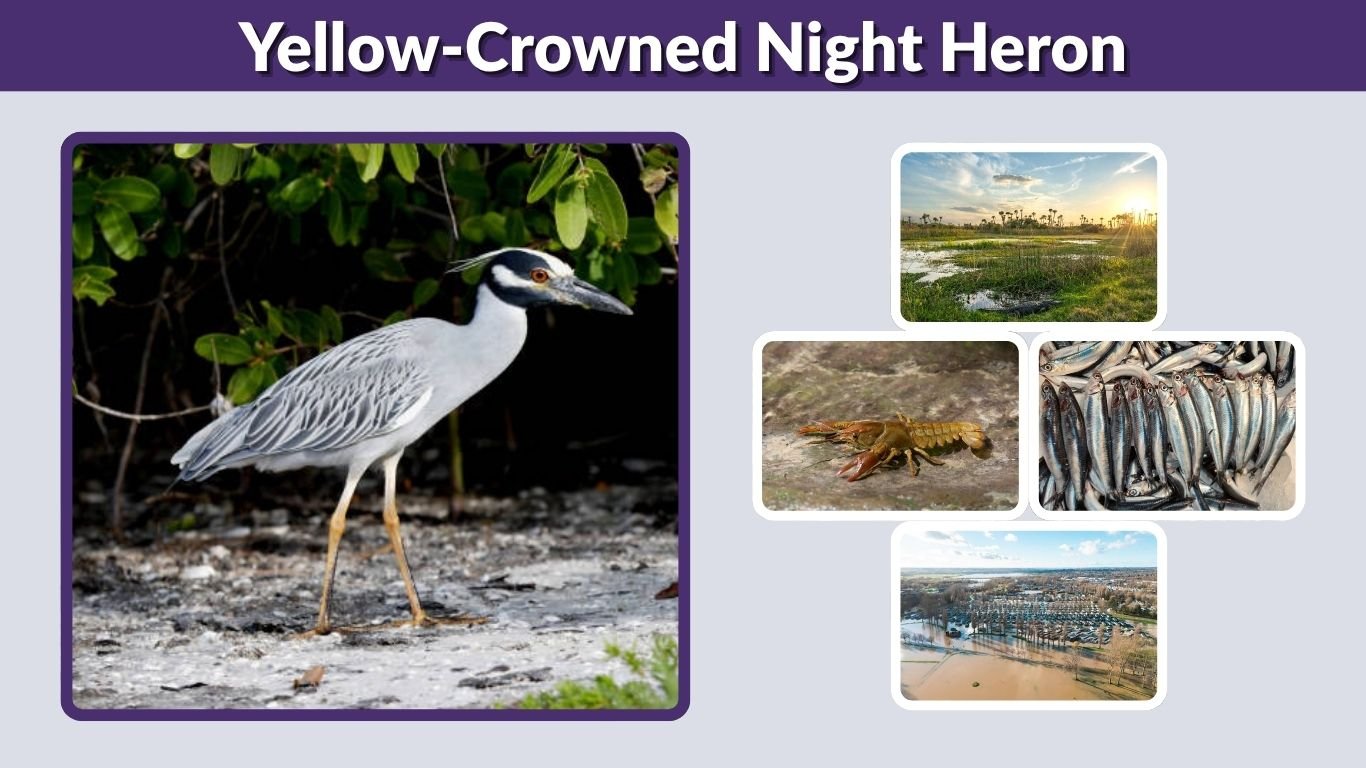
The yellow-crowned night heron is a striking wading bird known for its stealthy nighttime habits and bold facial markings. Often mistaken for its close relative, the black-crowned night heron, this species stands out with its pale crown stripe and specialized diet. Found across wetlands and coastal regions, it adapts surprisingly well to urban environments. This guide explores how to identify it, where it lives, and how it behaves in the wild.
What Is a Yellow-Crowned Night Heron?
The yellow-crowned night heron (Nyctanassa violacea) is a medium-sized heron that belongs to the Ardeidae family. Unlike many daytime waders, it is primarily active during dusk and nighttime hours. It is best known for its crab-based diet and calm, deliberate hunting style.
Key Characteristics
- Medium-sized, stocky heron
- Distinct pale yellow or white crown stripe
- Red eyes in adults
- Thick, strong bill adapted for hard-shelled prey
Yellow-Crowned Night Heron Identification
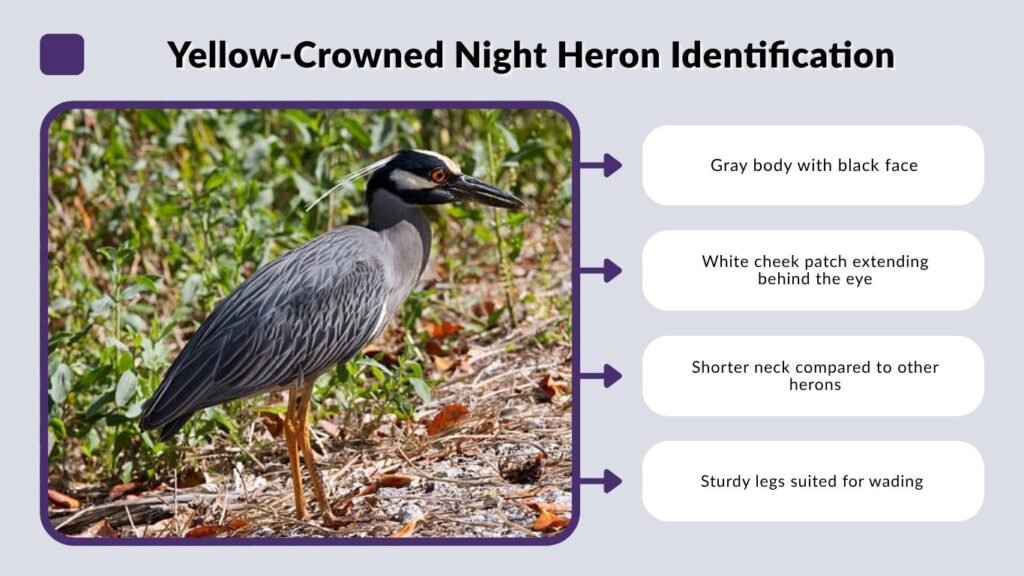
Identifying this bird becomes easier once you understand its unique features. From its body structure to its coloration, several traits set it apart from other herons and similar species.
Physical Appearance
- Gray body with black face
- White cheek patch extending behind the eye
- Shorter neck compared to other herons
- Sturdy legs suited for wading
Size and Wingspan
- Average height ranges from 22 to 28 inches
- Wingspan typically measures around 40 to 44 inches
- Appears compact but powerful in flight
Juvenile vs Adult Yellow-Crowned Night Heron
Recognizing the difference between juvenile and adult birds is essential for accurate identification. Their appearances differ significantly, especially in coloration and markings.
Juvenile Appearance
- Brown body with heavy streaks and spots
- Camouflaged look for protection
- Less defined crown marking
Adult Appearance
- Smooth gray body with clean lines
- Bold black-and-white face pattern
- Bright red eyes and distinct crown
Yellow-Crowned Night Heron vs Black-Crowned Night Heron
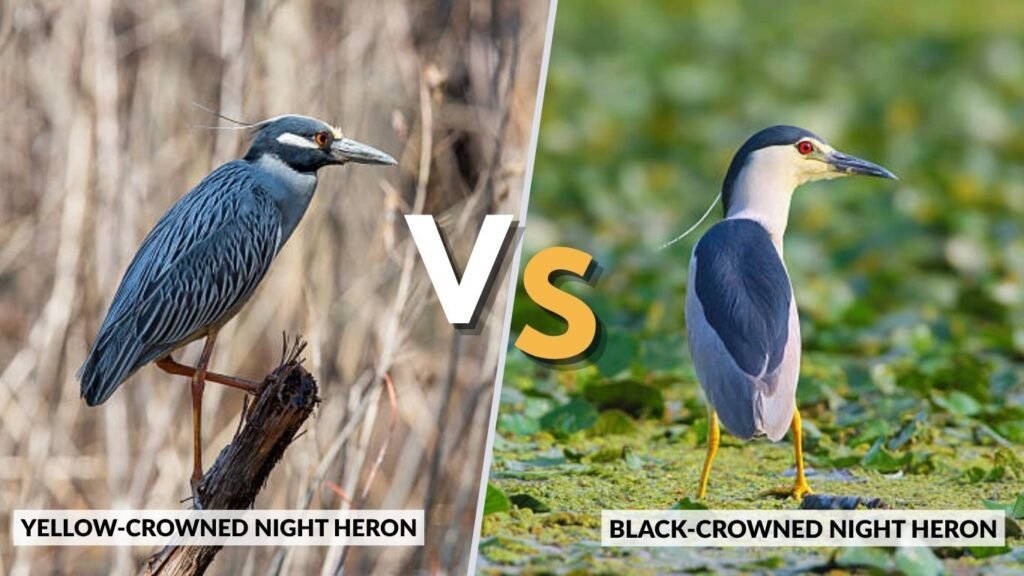
Many birdwatchers confuse these two species, but key differences make identification easier. Understanding these distinctions helps avoid misidentification in the field.
Key Differences
- Yellow-crowned has a pale crown; black-crowned has a dark cap
- Yellow-crowned prefers crustaceans; black-crowned has a varied diet
- Body tone differs, with yellow-crowned appearing lighter overall
Juvenile Comparison
- Yellow-crowned juveniles show heavier streaking
- Black-crowned juveniles appear more evenly spotted
- Shape and posture can also differ slightly
Yellow-Crowned Night Heron Habitat and Range
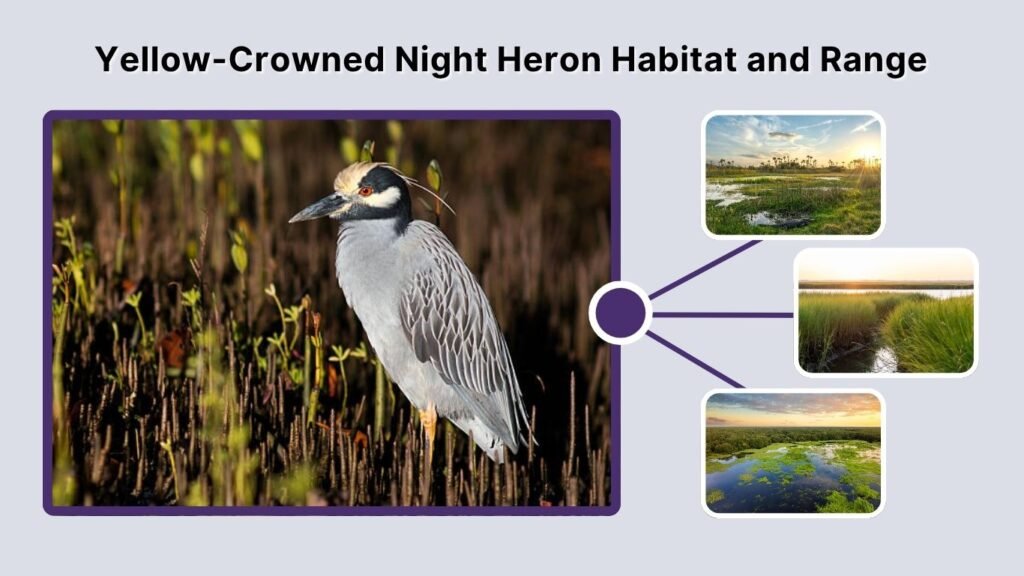
The yellow-crowned night heron thrives in a variety of environments, especially those close to water. Its adaptability allows it to live in both natural and human-altered landscapes.
Where They Live
These birds are commonly found in coastal wetlands, marshes, and swamps. They also inhabit wooded areas near rivers and lakes, and in some regions, they appear in suburban neighborhoods with ponds or drainage systems.
Geographic Distribution
Their range includes the southeastern United States, particularly Texas, Florida, Louisiana, and Virginia. They are also found in Central and South America, the Caribbean, and even parts of the Galapagos Islands.
Yellow-Crowned Night Heron Diet and Feeding Behavior
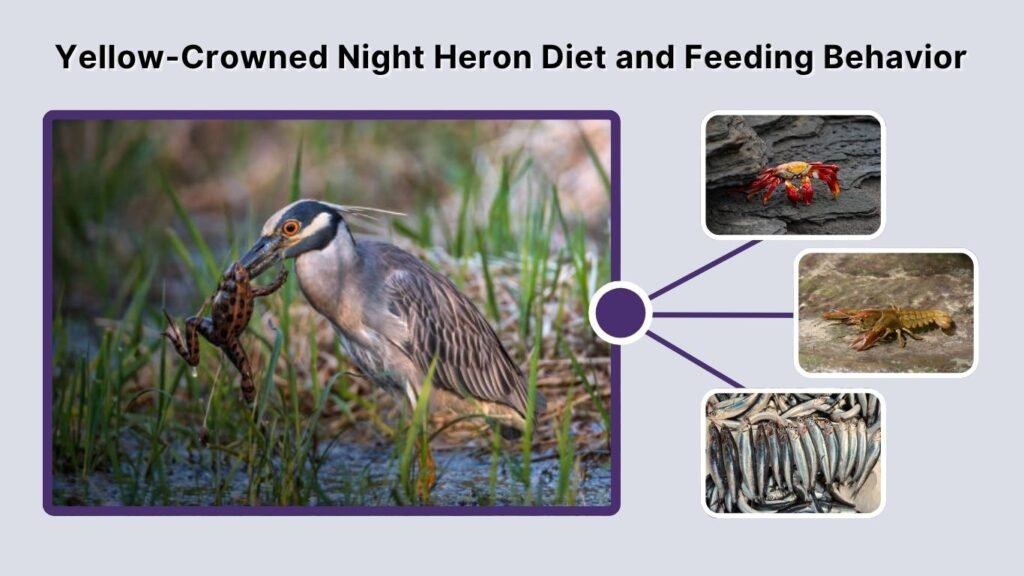
The feeding habits of the yellow-crowned night heron are one of its most defining features. Its diet and hunting style set it apart from many other herons.
What They Eat
- Crabs as the primary food source
- Crayfish and other crustaceans
- Small fish and aquatic insects
Hunting Style
Rather than chasing prey, this bird relies on patience. It stands still or moves slowly through shallow water, using its strong bill to grab and crush hard-shelled animals. This method is highly efficient and suits its nocturnal lifestyle.
Yellow-Crowned Night Heron Behavior and Sounds
This species is known for its calm and deliberate nature. Unlike more active daytime birds, it prefers quiet movement and low activity during daylight hours. Its behavior is closely tied to its nocturnal lifestyle, making it most active when other birds are resting.
Activity Patterns
The yellow-crowned night heron is primarily nocturnal, feeding during dusk and nighttime. During the day, it often rests in trees or dense vegetation. Its slow, careful movements help it remain unnoticed while hunting or avoiding predators.
Calls and Sounds
Its call is a harsh, short squawk that is often heard during flight or near nesting areas. These vocalizations are not frequent but can be loud and abrupt. Most communication happens during breeding season or when individuals are disturbed.
Yellow-Crowned Night Heron Nesting, Eggs, and Life Cycle
Reproduction plays a key role in the seasonal behavior of this bird. During breeding periods, they become more social and form small nesting colonies. Their life cycle follows a predictable pattern from egg to independent juvenile.
Nesting Habits
- Nests are built in trees or shrubs near water
- Constructed using sticks and lined with softer materials
- Often reused or rebuilt each breeding season
Eggs and Chicks
- Typically lay 2 to 5 pale blue-green eggs
- Incubation lasts about three to four weeks
- Both parents take part in caring for the young
Yellow-Crowned Night Heron Lifespan and Survival
The yellow-crowned night heron generally lives several years in the wild, depending on environmental conditions. Survival depends on access to food, safe nesting areas, and protection from predators. Young birds face the highest risks, while adults benefit from experience and strong hunting skills.
Conservation Status

Understanding the conservation status of this species helps highlight its ecological importance. While not currently endangered, its population can be affected by environmental changes and habitat loss.
Are They Endangered?
The species is not considered endangered and maintains a stable population across much of its range. Conservation efforts and protected wetland habitats have helped support its numbers in many regions.
Are They Rare?
They are not rare overall but may appear uncommon in certain inland or northern areas. In coastal and southern regions, they are more frequently observed, especially near suitable feeding habitats.
Interesting Facts About Yellow-Crowned Night Herons
This bird has several unique traits that make it stand out among wading birds. Its specialized diet and behavior are particularly fascinating to birdwatchers and researchers alike.
- One of the few herons that specializes in eating crabs
- Has excellent night vision for hunting in low light
- Can adapt well to urban environments
- Often remains motionless for long periods while hunting
Spiritual Meaning and Symbolism
The yellow-crowned night heron is sometimes associated with symbolic meanings related to patience and awareness. Its quiet and observant nature reflects stillness and focus. In many interpretations, it represents adaptability and the ability to move through life with calm precision and independence.
FAQs
What do yellow-crowned night herons eat?
They mainly eat crabs and crayfish, which form the majority of their diet. They also consume insects, small fish, and other aquatic creatures when available, making them adaptable feeders in different environments.
Where do yellow-crowned night herons live?
They live in wetlands, coastal areas, and places near water such as marshes, swamps, and rivers. They are commonly found in the southern United States as well as parts of Central and South America.
How can you tell a juvenile from an adult?
Juveniles are brown with streaks and spots, which help them blend into their surroundings. Adults have a smooth gray body, bold black-and-white facial markings, and a distinct pale crown stripe.
Are yellow-crowned night herons rare?
They are not considered rare overall, but their visibility depends on location. They are more commonly seen in coastal and southern regions, while they may be less frequent in inland areas.
What is the difference between yellow-crowned and black-crowned night herons?
The main difference lies in their head markings and diet. Yellow-crowned night herons have a pale crown and focus on crustaceans, while black-crowned night herons have darker head markings and a more varied diet.
