
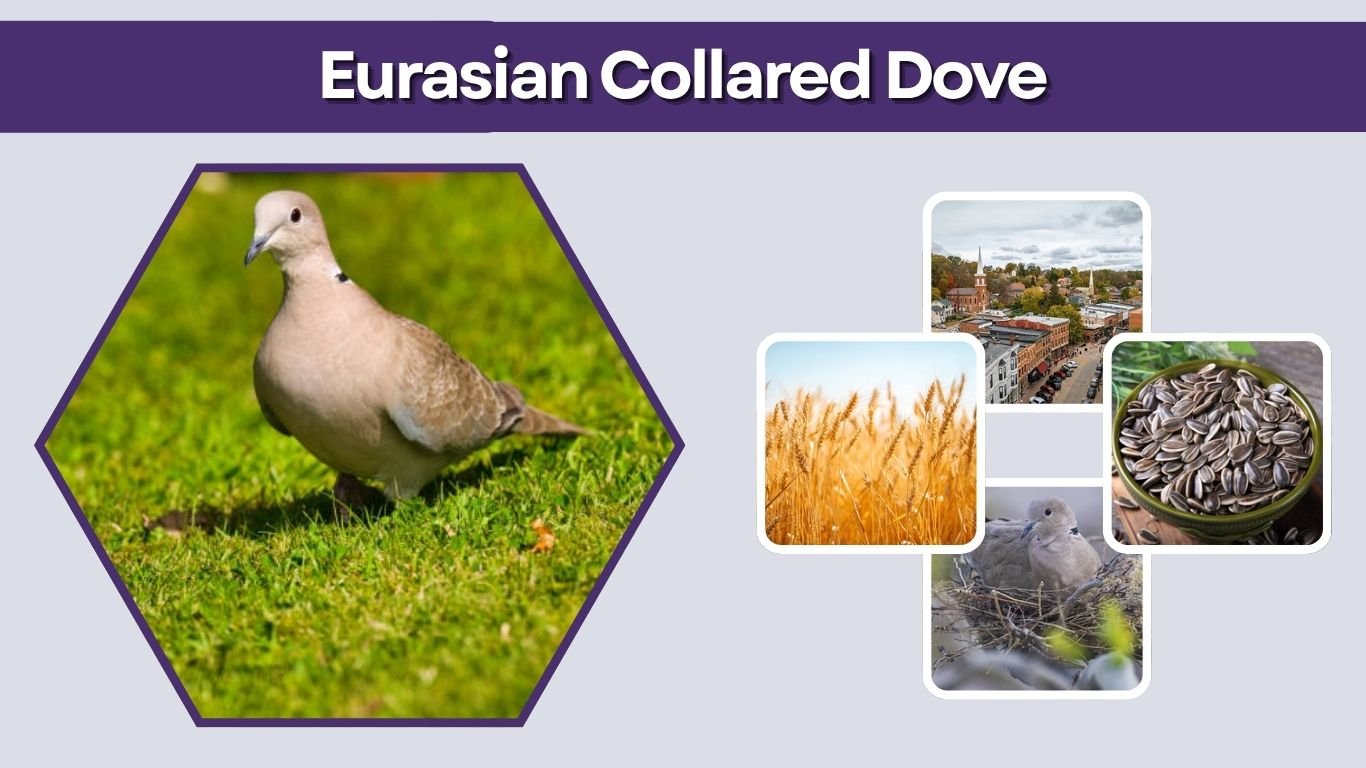
The Eurasian collared dove is a fast-spreading bird known for its calm nature and distinctive black neck ring. Originally native to Europe and Asia, it has successfully expanded across North America and other regions. Many people confuse it with the mourning dove, but there are clear differences in appearance, behavior, and sound. Understanding this species helps birdwatchers and homeowners identify it correctly. This guide explores its key traits, diet, habitat, and behavior in a simple and structured way.
What Is a Eurasian Collared Dove?
The Eurasian collared dove is a medium-sized bird recognized for its pale color and unique collar marking. It thrives in both rural and urban environments, adapting easily to human presence. Its rapid expansion has made it one of the most noticeable dove species in many regions today.
Scientific Name and Classification
The Eurasian collared dove is scientifically known as Streptopelia decaocto. It belongs to the dove and pigeon family, Columbidae. This species originally came from Europe and Asia but has spread widely due to its adaptability and breeding success.
Key Physical Characteristics
- Pale gray or beige body color
- Distinct black collar on the back of the neck
- Broad wings with a squared tail
- Larger size compared to mourning doves
Identification Tips
- Look for the black neck ring, which is the most defining feature
- Notice its squared tail instead of a pointed one
- Observe its steady, direct flight pattern
How to Identify a Eurasian Collared Dove
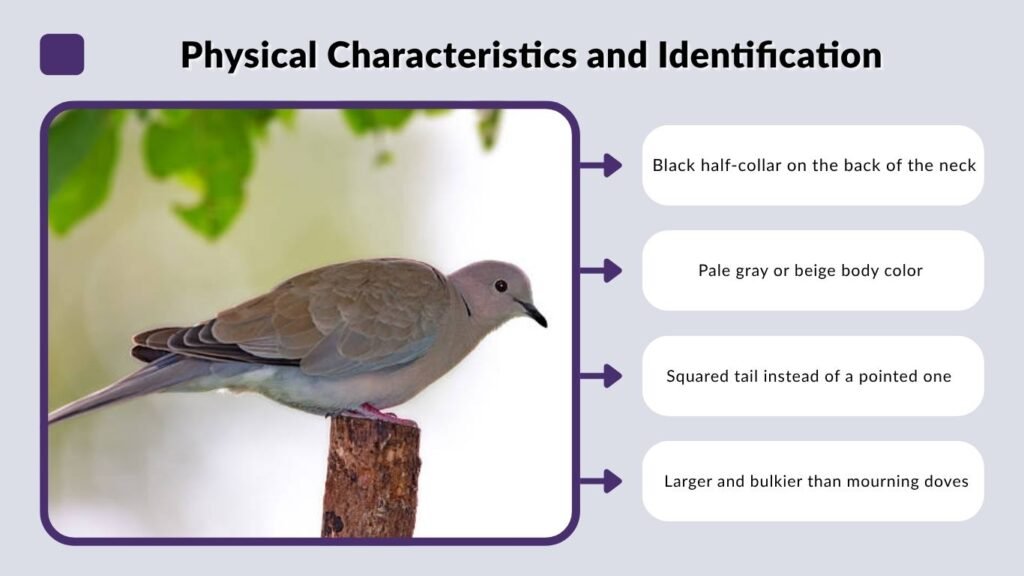
Identifying a Eurasian collared dove is relatively easy once you know the key features to look for. This bird has a clean, simple appearance with a few distinctive traits that set it apart from other doves. Paying attention to its shape, markings, and behavior will help you recognize it quickly in the wild.
Key Identification Features
- Black half-collar on the back of the neck
- Pale gray or beige body color
- Squared tail instead of a pointed one
- Larger and bulkier than mourning doves
- Steady, straight flight with consistent wing beats
Eurasian Collared Dove vs Mourning Dove
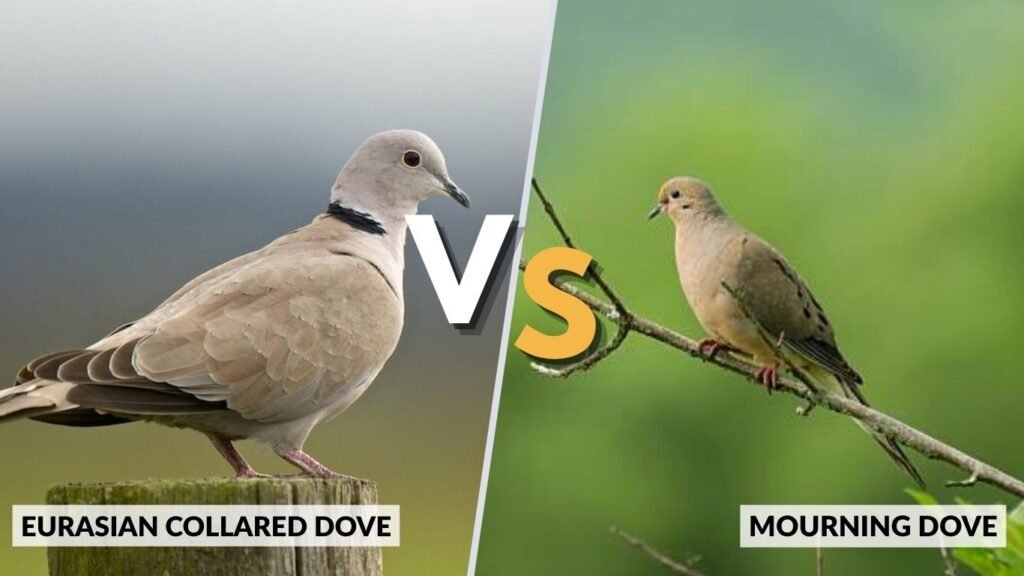
Many people confuse these two birds because they often share the same habitats. However, there are noticeable differences in their appearance, behavior, and sound that make identification easier with practice.
Key Differences
- Eurasian collared doves are larger and bulkier
- Mourning doves have a more slender body
- The collared dove has a black neck ring, while the mourning dove does not
Behavior Differences
Eurasian collared doves are often seen in pairs or small groups near human settlements. Mourning doves tend to be more cautious and may stay in more open natural areas.
Sound Differences
The Eurasian collared dove produces a simple, repetitive cooing sound. Mourning doves have a softer, more emotional call that sounds drawn out and slightly mournful.
Eurasian Collared Dove Range and Habitat
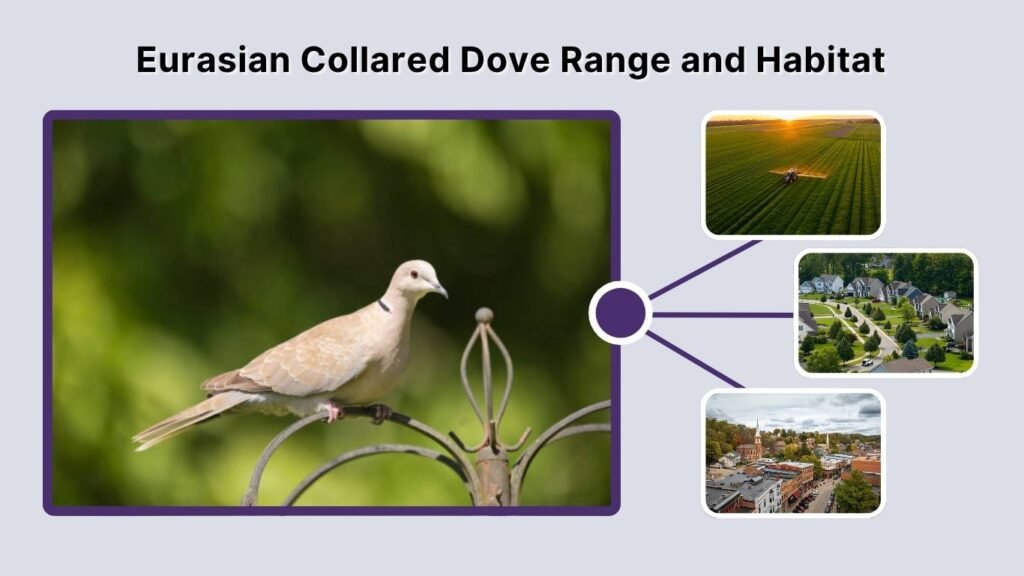
This species has expanded rapidly across different continents, becoming common in many regions. Its ability to adapt to various environments has played a key role in its successful spread.
Native Range
The Eurasian collared dove originally lived in parts of Europe and Asia. It began expanding its range naturally over time, moving into new territories.
Expansion Across Regions
- Widely found in North America
- Common in states like Texas, California, and Florida
- Continues to spread into new areas
Preferred Habitat
Eurasian collared doves prefer open spaces such as farmland, suburbs, and towns. They are often seen near buildings, power lines, and roads where food is easy to find.
Eurasian Collared Dove Diet
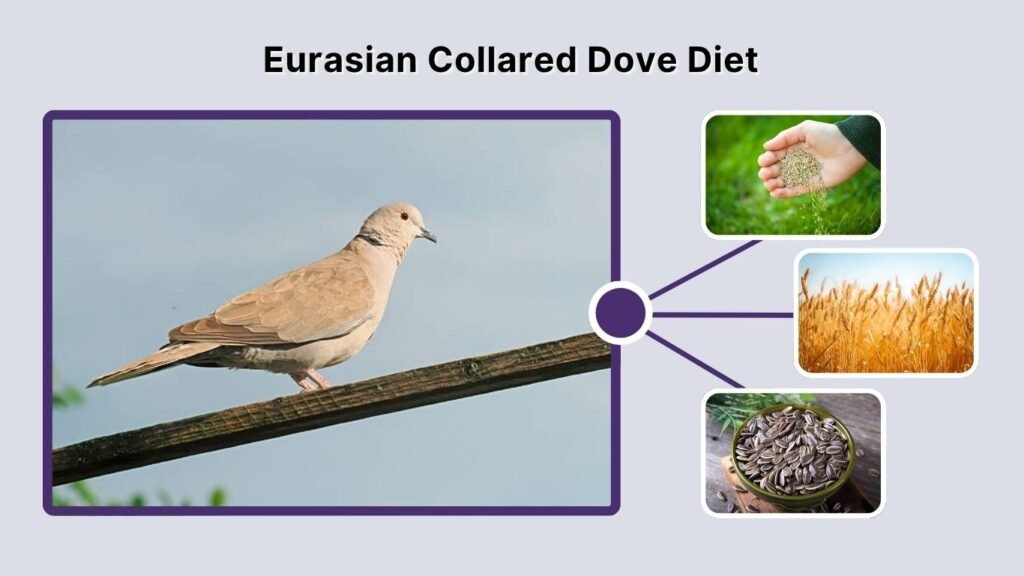
The diet of the Eurasian collared dove is simple but effective. It mainly consists of seeds and grains, which provide steady energy for daily activities and survival.
What Do Eurasian Collared Doves Eat
- Grass seeds and weed seeds
- Grains such as wheat and corn
- Sunflower seeds
- Small insects occasionally
Feeding Behavior
These birds are ground feeders, meaning they search for food on the ground rather than in trees. They walk slowly while picking up seeds, often in open areas where visibility is clear.
Seasonal Diet Changes
While seeds remain their primary food, they may adjust their diet slightly depending on availability. During warmer months, they may consume small insects to gain extra nutrients.
Eurasian Collared Dove Behavior
The Eurasian collared dove is known for its calm and predictable behavior. It adapts well to human environments and is often seen perched on wires or walking on the ground. Its social habits and daily routines make it easy to observe in both urban and rural settings.
Daily Activity
These doves are active during the day, especially in the early morning and late afternoon. They spend most of their time feeding, resting, and preening. During hotter parts of the day, they may remain inactive in shaded areas.
Social Behavior
Eurasian collared doves are generally social birds. They are often seen in pairs or small groups, especially outside the breeding season. Their calm nature allows them to live close to humans without much disturbance.
Do They Mate for Life?
Yes, Eurasian collared doves are known to form strong pair bonds. Once paired, they often stay together and share responsibilities such as nest building and caring for their young.
Do They Migrate?
These doves are non-migratory birds. Instead of long seasonal migrations, they gradually expand into new areas. Their spread is driven more by population growth than by seasonal movement.
Eurasian Collared Dove Sounds and Calls
The sound of the Eurasian collared dove is one of its most recognizable features. Its call is simple, repetitive, and easy to distinguish from other dove species, especially the mourning dove.
Common Call Description
The typical call is a three-part cooing sound that repeats in a steady rhythm. It is often described as a soft but clear “coo-coo-coo” pattern that can be heard throughout the day.
Mating Call
During the breeding season, males use their call more frequently to attract mates. The sound becomes more persistent and may be accompanied by display behaviors such as puffing up feathers or bowing.
Difference from Mourning Dove Sound
Unlike the soft, drawn-out call of the mourning dove, the Eurasian collared dove’s sound is more structured and rhythmic. This makes it easier to identify once you become familiar with it.
Eurasian Collared Dove Nesting and Reproduction
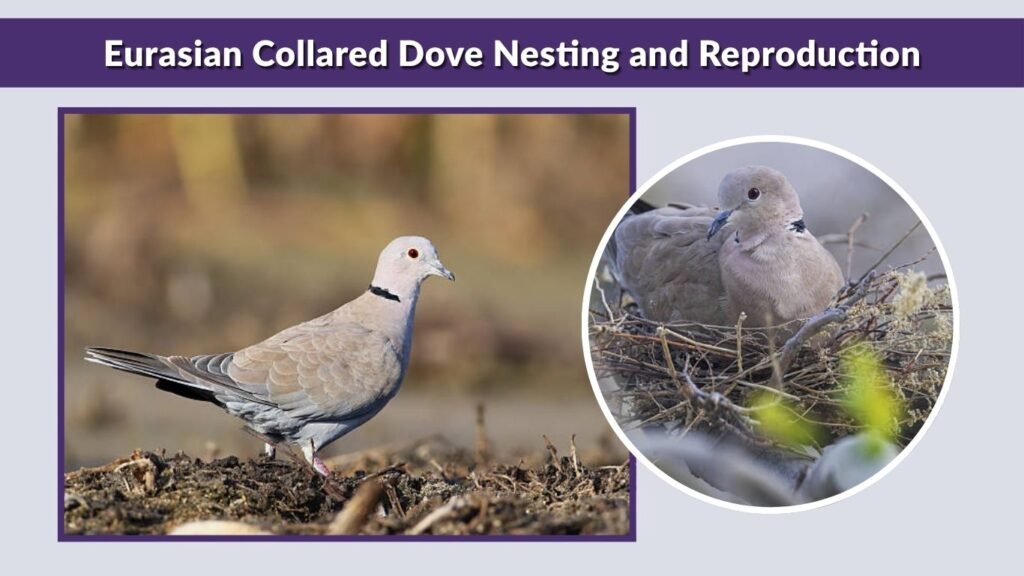
Eurasian collared doves reproduce quickly, which contributes to their growing population. Their nesting habits are simple, and they can raise multiple broods in a single year under favorable conditions.
Nesting Habits
- Builds simple nests using twigs
- Often nests in trees, shrubs, or on structures
- Prefers locations near food sources
Eggs and Chicks
- Usually lays two eggs per clutch
- Both parents take turns incubating
- Chicks grow quickly and leave the nest early
Life Cycle
The life cycle of this dove is relatively fast. After hatching, chicks develop rapidly and become independent within a few weeks, allowing parents to breed again soon after.
Lifespan, Predators, and Survival
The Eurasian collared dove has a moderate lifespan and faces several natural challenges. Despite this, its adaptability helps it maintain a strong and growing population.
Average Lifespan
In the wild, these doves typically live for several years. Their lifespan can vary depending on environmental conditions and threats.
Natural Predators
Common predators include hawks, owls, and domestic cats. Nests may also be vulnerable to other birds and small animals.
Survival Factors
- Ability to adapt to human environments
- Steady food supply from seeds and grains
- Fast reproduction rate
Interesting Facts About Eurasian Collared Doves
The Eurasian collared dove has several unique traits that make it stand out among other bird species. Its rapid spread and adaptability are especially notable.
- One of the fastest-expanding bird species in modern history
- Often stays close to human settlements
- Recognized by its distinct black neck collar
- Can breed multiple times in a year
FAQs
What do Eurasian collared doves eat?
Eurasian collared doves mainly eat seeds and grains such as grass seeds, wheat, and corn. They may also consume small insects occasionally. Their diet is simple but provides enough energy for daily activity and survival.
Are Eurasian collared doves invasive?
Yes, they are considered invasive in many regions because they spread quickly and compete with native bird species. Their adaptability and high reproduction rate contribute to their expanding population.
How do you identify a Eurasian collared dove?
You can identify this bird by its pale gray color, black collar on the neck, and squared tail. Its steady flight and repetitive cooing sound also help distinguish it from other doves.
Do Eurasian collared doves migrate?
No, they do not migrate. Instead, they expand gradually into new areas. Their movement is driven by population growth rather than seasonal migration patterns.
What is the difference between a mourning dove and Eurasian collared dove?
The Eurasian collared dove is larger, has a black neck ring, and produces a more rhythmic call. In contrast, the mourning dove is smaller, lacks the collar, and has a softer, more emotional-sounding call.
