
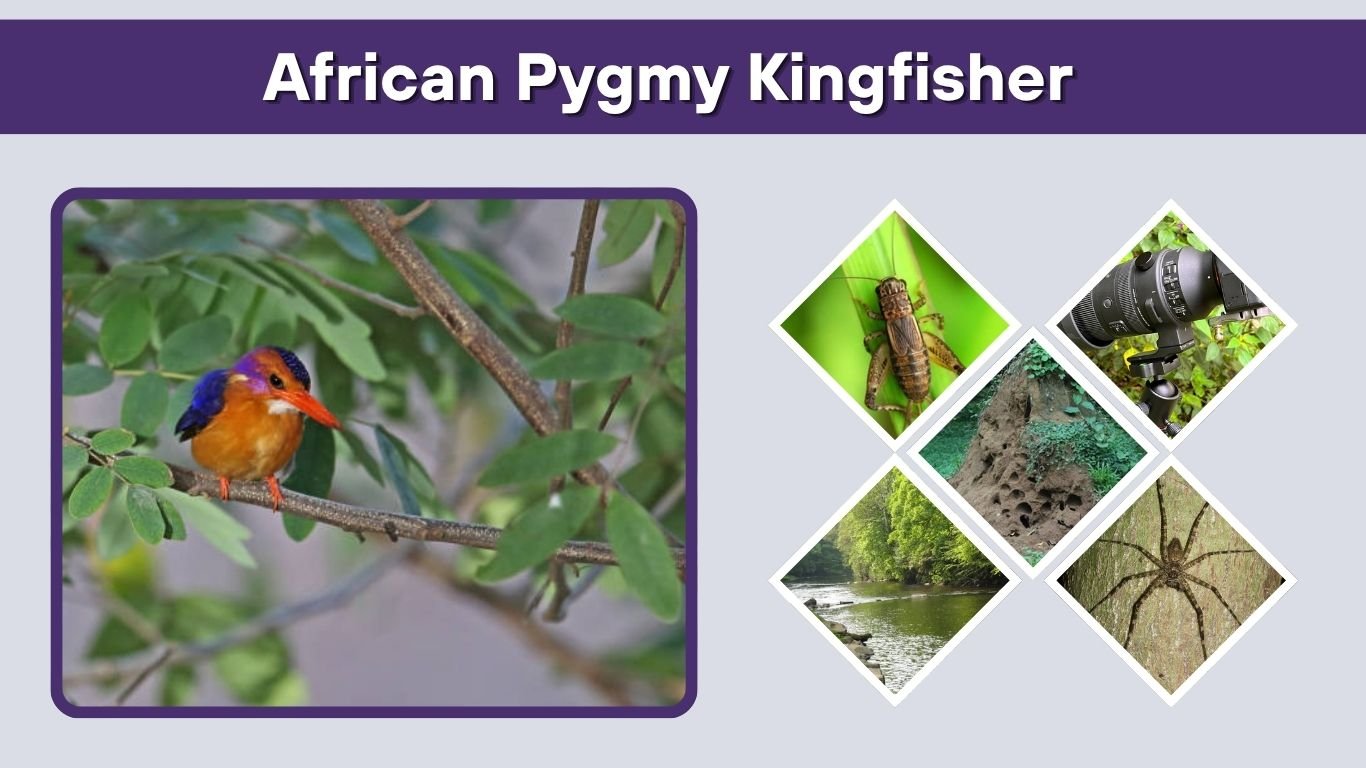
The African pygmy kingfisher is one of Africa’s smallest and most colorful kingfisher birds. Despite its name, it is not mainly a fishing bird. This bright blue, orange and white species often lives away from water, hunting insects from low branches in woodland, savanna and coastal forest. Birdwatchers in South Africa and across sub-Saharan Africa value it for its beauty, secretive behavior and seasonal movements.
Keyword Focus and Search Intent
The keyword data shows that most searches around “African pygmy kingfisher,” “African kingfisher,” and “kingfisher Africa” are informational. People want to identify the bird, learn facts, find pictures, understand its call, and know whether it occurs in South Africa.
The transactional terms, such as “kingfisher Africa reviews” or “kingfisher Africa menu,” appear to relate to businesses rather than the bird. For a bird-focused article, those should not be the main target.
Best Keywords to Target
Use the main keyword in the title, introduction, one H2, and naturally throughout the article.
- Primary keyword: African pygmy kingfisher
- Secondary keywords: African kingfisher, kingfisher Africa, African kingfisher bird
- South Africa keywords: pygmy kingfisher South Africa, kingfisher bird South Africa, kingfishers South Africa
- Supporting keywords: African pygmy kingfisher facts, call, sound, habitat, distribution, images
Search Intent Breakdown
Most readers are likely looking for quick identification and practical birding information. The content should answer these questions clearly: What does it look like? Where does it live? Does it eat fish? What does it sound like? Where can it be seen in South Africa?
What Is the African Pygmy Kingfisher?
The African pygmy kingfisher is a tiny, brightly colored bird found widely across sub-Saharan Africa. Its scientific name is Ispidina picta. Although it belongs to the kingfisher family, it is mostly an insect-eating woodland bird rather than a water-dependent fish hunter.
It is usually seen alone or in pairs. Because of its small size and quiet woodland habits, it can be easy to miss even where it is present. A quick flash of blue and orange in the undergrowth is often the first clue.
| Feature | African Pygmy Kingfisher Details |
| Scientific name | Ispidina picta |
| Bird family | Kingfishers |
| Main colors | Blue, orange, white and purple tones |
| Typical habitat | Woodland, savanna, thickets and coastal forest |
| Main food | Insects, spiders and small vertebrates |
| Water dependence | Not strongly tied to water |
| South Africa status | Seasonal breeding migrant in many areas |
African Pygmy Kingfisher Identification
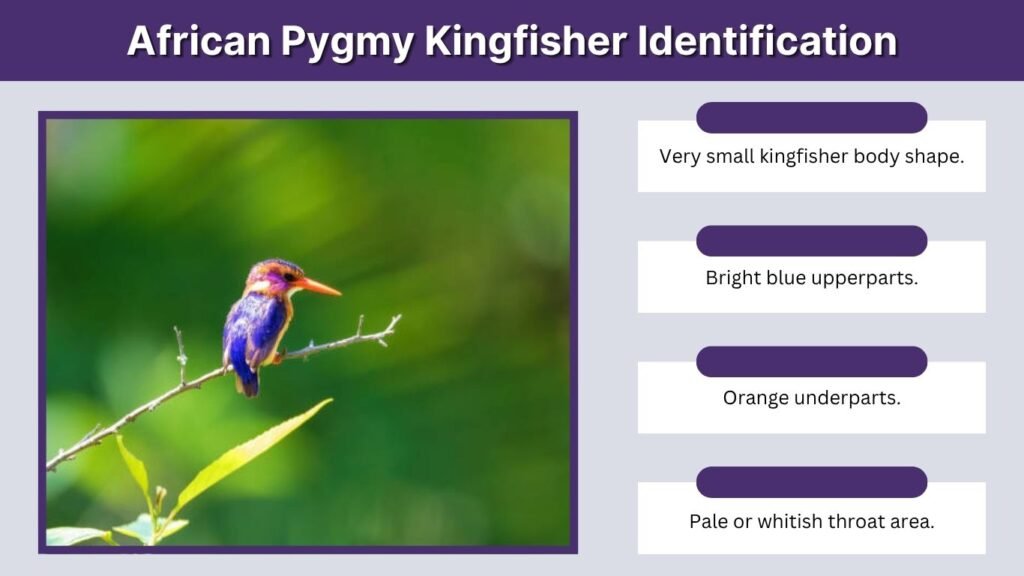
The African pygmy kingfisher is small, vivid and compact. Its bright colors make it look striking in photos, but in the field it can be surprisingly hard to spot because it often perches quietly in shaded vegetation.
Key Field Marks
Look for these features when identifying the bird:
- Very small kingfisher body shape
- Bright blue upperparts
- Orange underparts
- Pale or whitish throat area
- Short tail and compact posture
- Fine, pointed bill
- Fast, direct flight through low vegetation
Young birds are usually duller than adults. Their bill may also appear darker, making them less colorful than the bright adults shown in many African pygmy kingfisher images.
Is It the Same as the African Dwarf Kingfisher?
The names “African pygmy kingfisher” and “African dwarf kingfisher” are sometimes confused in searches. In common birding use, African pygmy kingfisher is the standard name for Ispidina picta. When writing for SEO, it is useful to mention the alternate search phrase, but the article should consistently use the accepted common name.
Habitat and Distribution in Africa
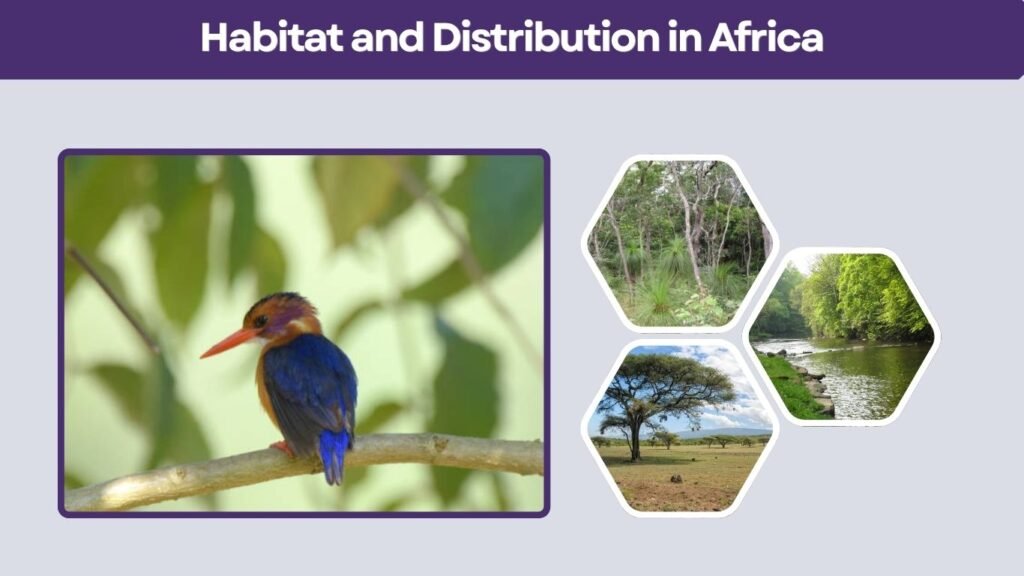
The African pygmy kingfisher is found across much of sub-Saharan Africa. It favors woodland, savanna, thickets, riverine vegetation and coastal forest. Unlike many kingfishers, it is not restricted to rivers, lakes or wetlands.
This is one reason people are surprised when they see it away from water. It may appear in wooded gardens, forest edges and bushy areas where insects are available.
Preferred Habitat
The bird is most often linked with:
- Open woodland
- Savanna with trees and shrubs
- Coastal forest
- Dense thickets
- Riverine woodland
- Well-vegetated gardens near natural habitat
It is generally less common in very dry areas, open desert-like landscapes or places without suitable perches and prey.
African Pygmy Kingfisher in South Africa
The African pygmy kingfisher is a special bird for South African birdwatchers because it is often seasonal. In parts of southern Africa, it arrives during the warmer months to breed and later moves northward again.
In South Africa, it is most often associated with the eastern and northeastern regions where suitable woodland, thicket and coastal forest occur. KwaZulu-Natal, Mpumalanga and the Lowveld region are especially relevant for birders searching for kingfishers in South Africa.
Where to Look in South Africa
Birders may have better chances in:
- Coastal forest and thicket areas
- KwaZulu-Natal woodland and forest edges
- Lowveld reserves and riverine vegetation
- Bushveld with good insect life
- Well-wooded areas during the breeding season
The bird is small and secretive, so patience matters. Listen for calls, watch low branches, and scan shaded understory rather than only looking near open water.
Diet: Does the African Pygmy Kingfisher Eat Fish?
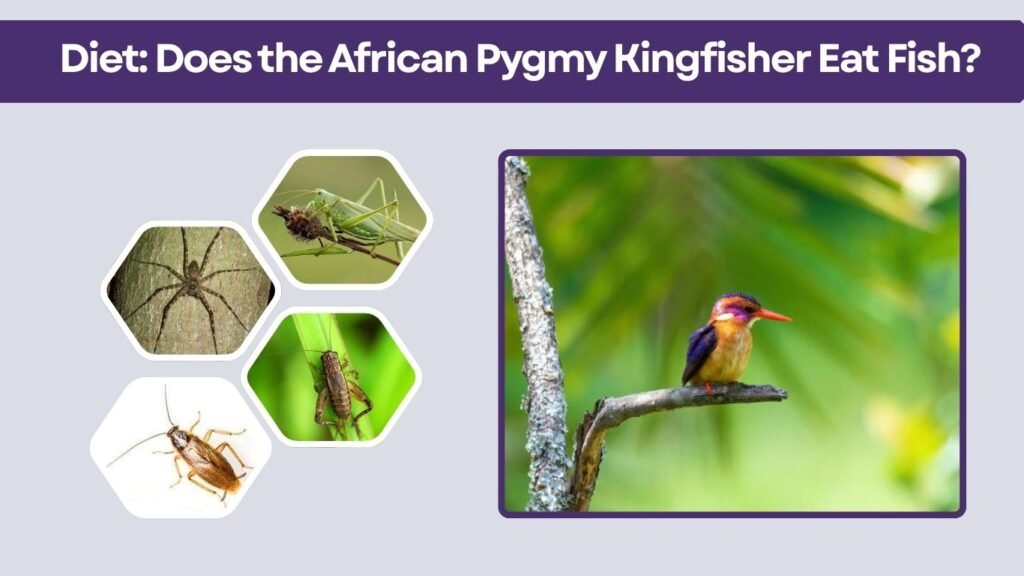
Despite being a kingfisher, the African pygmy kingfisher does not mainly eat fish. It is mostly insectivorous. This makes it different from fish-eating kingfishers such as the giant kingfisher, pied kingfisher and malachite kingfisher.
Common Food Items
Its diet may include:
- Beetles
- Grasshoppers
- Crickets
- Mantids
- Spiders
- Cockroaches
- Small frogs
- Tiny lizards or geckos
The bird usually hunts from a low perch. It waits quietly, then darts down to catch prey on the ground or among vegetation. This hunting style explains why it can live away from rivers and lakes.
Call and Sound of the African Pygmy Kingfisher
Many people search for the African pygmy kingfisher call because the bird is often heard before it is seen. Its call is typically high-pitched and sharp, helping birders locate it in dense vegetation.
The sound may be given from a concealed perch. During the breeding season, calling can become more noticeable as birds establish territories and communicate with mates.
Birding Tip for Hearing the Call
When birding in suitable habitat, stop often and listen. Small kingfishers can move quickly and disappear into shade. A sharp call from low or middle vegetation may help you locate the bird before it flies.
Breeding and Nesting Behavior
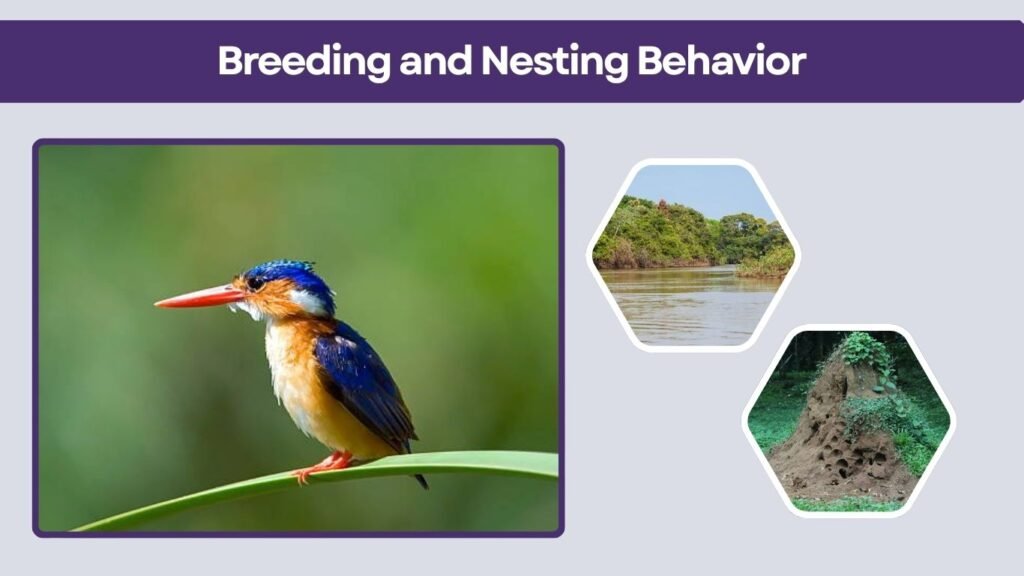
The African pygmy kingfisher usually nests in burrows. These may be dug into sandy banks, soil banks or termite mounds. Both members of a pair may help with nest excavation.
The eggs are white, as is common in many cavity-nesting birds. After hatching, the chicks remain in the nest until they are ready to fledge. Once fledged, young birds become independent relatively quickly.
Nesting Sites
Possible nesting locations include:
- Sandy soil banks
- Riverbanks
- Termite mounds
- Earth banks in woodland or thicket
Because nest sites can be sensitive, birdwatchers should avoid disturbing active burrows or approaching too closely for photos.
Similar African Kingfisher Species
Africa has many kingfishers, and several species may appear in similar searches. Some are water-dependent fish hunters, while others are woodland insect hunters.
Giant Kingfisher
The giant kingfisher is much larger and often found near rivers, dams and wetlands. It is strongly linked with fish and aquatic prey. Searches like “African giant kingfisher” or “giant kingfisher South Africa” usually refer to this species.
Malachite Kingfisher
The malachite kingfisher is small and colorful but more closely tied to water. It often perches near reeds, streams and wetlands, diving for tiny fish and aquatic prey.
Brown-Hooded Kingfisher
The brown-hooded kingfisher is another South African species that often eats insects and small animals rather than fish. It is larger than the African pygmy kingfisher and has a different color pattern.
Woodland Kingfisher
The woodland kingfisher is a bright blue and white species often heard in summer. It is also associated with woodland habitats and is one of the well-known seasonal kingfishers in southern Africa.
How to Photograph the African Pygmy Kingfisher
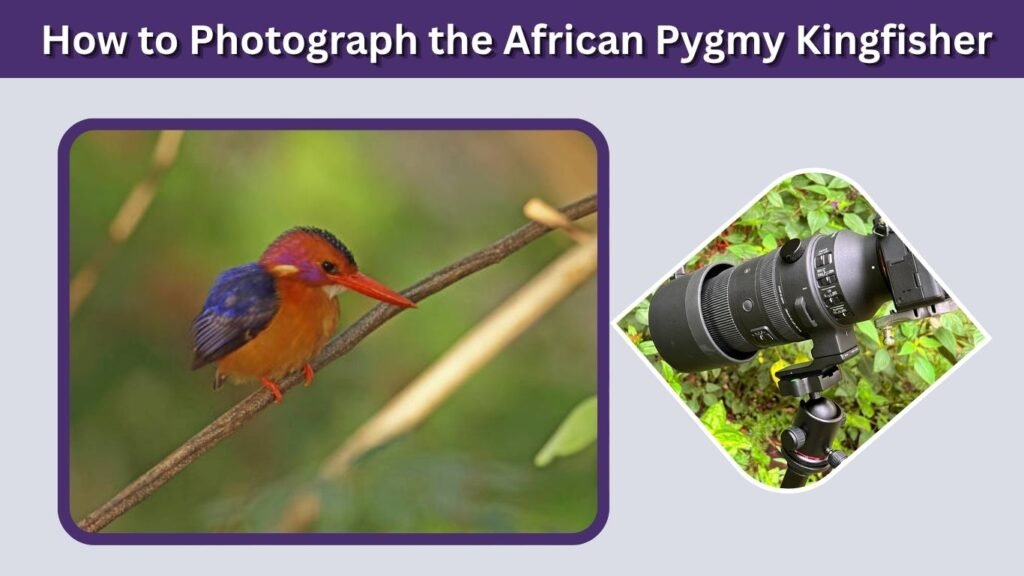
Photographing this species can be challenging because it is small, fast and often hidden in vegetation. However, its bright colors make it a rewarding subject.
For better results, use quiet movement and avoid flushing the bird. Find a likely perch, keep some distance, and wait for the bird to return. Early morning light can help reveal its blue and orange plumage without harsh shadows.
Practical Photography Tips
- Use a zoom lens if available
- Watch low perches in shaded woodland
- Avoid sudden movement
- Do not approach nesting burrows
- Capture natural behavior instead of forcing a closer view
- Listen for calls to locate hidden birds
Ethical bird photography is especially important for small breeding birds. The best images come from patience, not disturbance.
Conservation Status and Threats
The African pygmy kingfisher is generally described as common or frequent across much of its range, although it can be less common near the edges of that range. Its wide distribution helps its overall status, but habitat quality still matters.
Loss of woodland, coastal forest and natural thicket can reduce suitable habitat. In southern Africa, night migration may also expose some birds to window collisions and artificial light hazards.
Protecting natural vegetation, reducing unnecessary clearing, and keeping bird-friendly gardens can all support small insect-eating birds like this kingfisher.
FAQs
Is the African pygmy kingfisher found in South Africa?
Yes, the African pygmy kingfisher occurs in South Africa, especially in suitable eastern and northeastern habitats. It is often regarded as a warm-season breeding migrant in parts of southern Africa. Birders may look for it in woodland, thicket, coastal forest and well-vegetated areas during the right season.
Does the African pygmy kingfisher eat fish?
No, fish are not its main food. Although it belongs to the kingfisher family, the African pygmy kingfisher mostly eats insects, spiders and small vertebrates. It often hunts away from water by perching quietly and dropping down to catch prey on the ground or in vegetation.
What does the African pygmy kingfisher sound like?
Its call is generally high-pitched and sharp. Because the bird is small and often hidden in vegetation, the call can be one of the best ways to detect it. Birdwatchers should pause in suitable habitat and listen carefully before trying to spot movement.
Where does the African pygmy kingfisher live?
The species lives across much of sub-Saharan Africa. It prefers woodland, savanna, thickets, coastal forest and riverine vegetation. Unlike many kingfishers, it is not strictly dependent on rivers or lakes, so it may be found in wooded areas away from obvious water sources.
What is the difference between a pygmy kingfisher and a malachite kingfisher?
The African pygmy kingfisher is more of a woodland and insect-eating species, while the malachite kingfisher is more strongly associated with water and often catches small fish. Both are colorful and small, but their habitats, feeding behavior and field appearance differ.
