
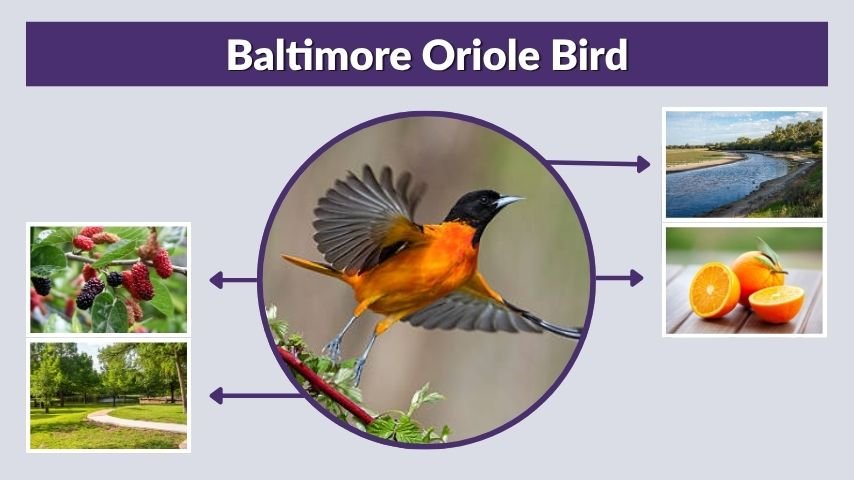
The Baltimore oriole bird is one of the most colorful songbirds in eastern North America. Males are famous for their bright orange and black feathers, while females show softer yellow-orange tones. These birds are also known for their hanging pouch-like nests, sweet songs, and love of fruit and nectar. For birdwatchers, seeing a Baltimore oriole in spring is often a seasonal highlight.
What Is a Baltimore Oriole Bird?
The Baltimore oriole is a medium-sized songbird from the blackbird family. Its scientific name is Icterus galbula. It is named after the orange and black colors found in the coat of arms of Lord Baltimore, the colonial founder associated with Maryland.
This bird is especially popular in gardens and wooded neighborhoods because of its striking colors and pleasant song. During spring and summer, it breeds across much of the eastern and central United States and parts of Canada. In winter, it migrates south to warmer areas, including Central America, Mexico, and the Caribbean.
Why People Notice Baltimore Orioles
Baltimore orioles stand out because they are bright, active, and vocal. Males often perch high in trees and sing from exposed branches. Their orange body flashes clearly against green leaves, making them easier to notice than many other small birds.
They are also drawn to backyard feeders when offered oranges, grape jelly, nectar, or mealworms.
Baltimore Oriole Appearance
Male and female Baltimore orioles look different, which can make identification confusing for beginners. Adult males have a deep orange underside, black head, black back, and white wing bars. Their orange color can vary from bright golden-orange to rich flame orange.
Females are usually yellow-orange below with grayish or brownish upperparts. They may have darker wings with pale wing bars, but they are not as bold as males. Young males can look similar to females before they develop stronger black and orange plumage.
| Feature | Male Baltimore Oriole | Female Baltimore Oriole |
|---|---|---|
| Main color | Bright orange and black | Yellow-orange and gray-brown |
| Head | Black | Grayish or olive-brown |
| Wings | Black with white bars | Darker wings with pale bars |
| Brightness | Very bold | Softer and less contrasting |
| Best clue | Black head with orange body | Warm yellow-orange underside |
Baltimore Oriole Size and Shape
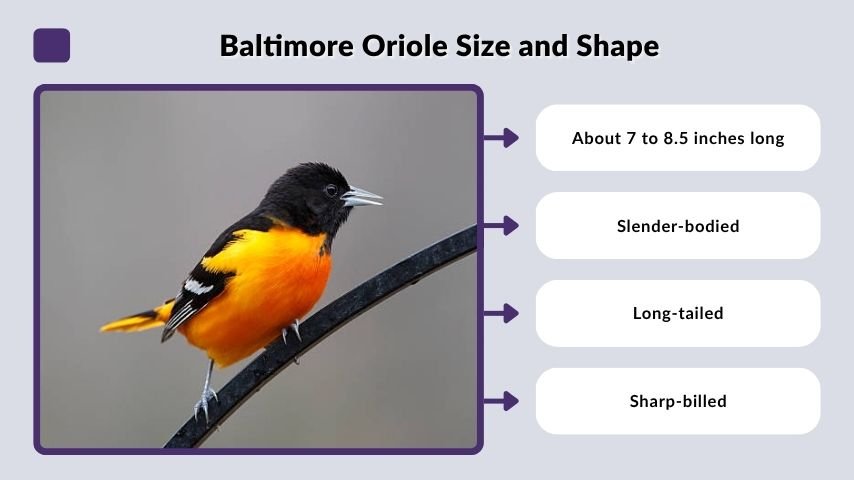
Baltimore orioles are medium-sized songbirds. They are larger than warblers and sparrows but smaller than robins. Their body is slender, and they have a long tail, pointed bill, and strong legs for perching among branches.
The bill is sharp and slightly pointed, which helps them feed on insects, fruit, and nectar. Their overall shape is sleek and graceful, especially when moving through tree canopies.
Quick Size Details
Baltimore orioles are usually:
- About 7 to 8.5 inches long
- Slender-bodied
- Long-tailed
- Sharp-billed
- Strong-winged migratory birds
- Often seen high in trees
Because they often stay in the upper canopy, their color and song are usually easier to notice than their size.
Baltimore Oriole Habitat
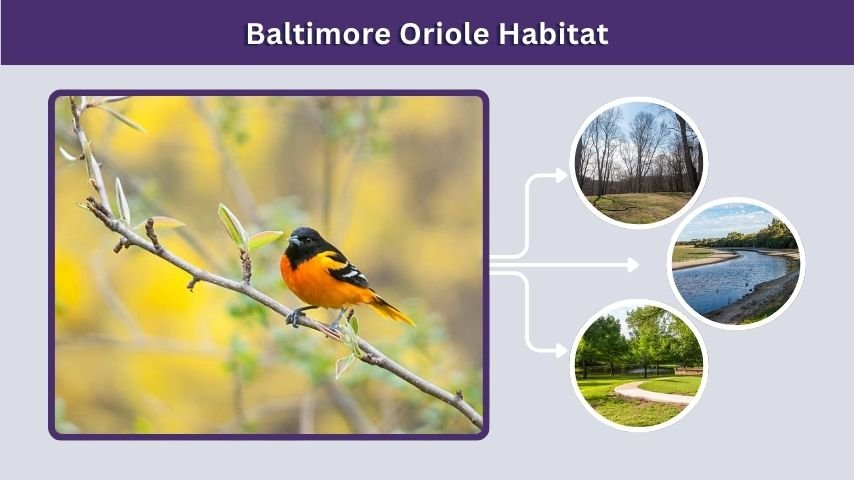
Baltimore orioles prefer open woodlands, forest edges, riverbanks, parks, orchards, and neighborhoods with tall deciduous trees. They are not deep-forest birds. Instead, they often choose places where large trees stand near open areas.
They are commonly found in:
- Oak trees
- Elms
- Maples
- Cottonwoods
- Sycamores
- Orchards
- Backyard shade trees
- Parks and wooded streets
During migration, they may stop in gardens, fruiting trees, and feeding stations. In winter, they use tropical forests, plantations, and open woodland habitats.
Why Tall Trees Matter
Baltimore orioles build their nests high in trees, often near the tips of hanging branches. Tall trees give them safety from many predators and provide a good place to search for caterpillars, beetles, and other insects.
If you want to attract orioles, planting native trees and shrubs can be just as important as putting out feeders.
Baltimore Oriole Diet
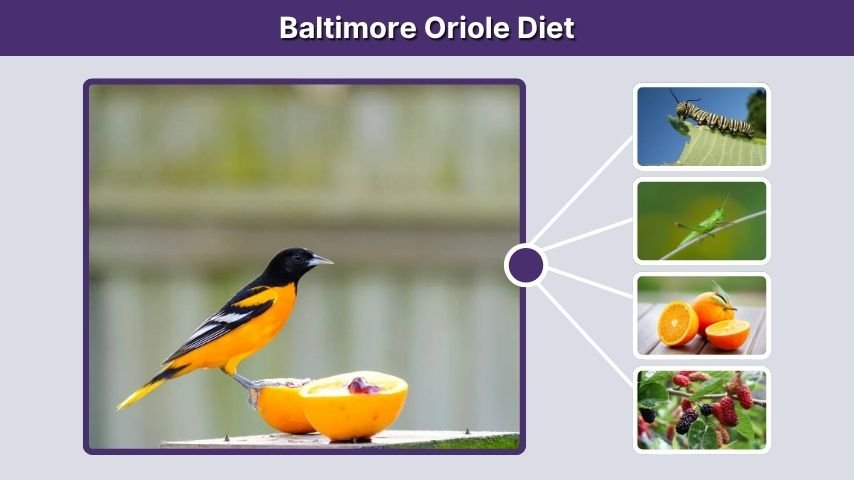
Baltimore orioles eat a mixed diet of insects, fruit, and nectar. During the breeding season, insects are especially important because young birds need protein to grow. Orioles help control insects by eating caterpillars, beetles, grasshoppers, and other small invertebrates.
They also enjoy sweet foods. This is why they are attracted to oranges, berries, nectar feeders, and grape jelly. In nature, they feed on wild fruits and flower nectar.
Common Foods
Baltimore orioles may eat:
- Caterpillars
- Beetles
- Grasshoppers
- Spiders
- Moths
- Berries
- Oranges
- Grapes
- Mulberries
- Nectar
- Grape jelly at feeders
- Mealworms
In spring, fruit and nectar can help attract migrating orioles. In summer, insects become very important for nesting pairs and chicks.
How to Attract Baltimore Orioles
Baltimore orioles can visit backyards if the habitat and food are right. The best time to attract them is early spring, when they return from migration and search for energy-rich foods.
Best Backyard Attractants
You can attract Baltimore orioles by offering:
- Fresh orange halves
- Small amounts of grape jelly
- Oriole nectar feeders
- Mealworms
- Native berry shrubs
- Flowering plants
- Tall shade trees
- Clean water sources
Place feeders where birds can find them easily, such as near trees or visible open areas. Orioles often arrive hungry after migration, so putting feeders out before they return can help.
Feeding Tips
Use only a small amount of jelly at a time. Too much jelly can spoil, attract bees, or create an unhealthy feeding pattern. Clean feeders often, especially in warm weather. Nectar can ferment quickly, so it should be replaced regularly.
Avoid using red dye in nectar. A simple sugar-water solution in a clean feeder is enough.
Baltimore Oriole Nest
The Baltimore oriole nest is one of the most impressive nests in the bird world. Females weave a hanging pouch nest from plant fibers, grasses, bark strips, hair, string-like materials, and other flexible fibers. The nest often hangs from the end of a thin branch.
This design helps protect eggs and chicks from many climbing predators. The nest may sway in the wind but is strongly attached to the branch.
Nesting Behavior
The female does most of the nest building. She carefully weaves the structure over several days. The male may stay nearby and defend the territory, but the female is the main builder.
Orioles usually nest high in deciduous trees. Their nests can be difficult to see until leaves fall later in the year.
Baltimore Oriole Song and Call
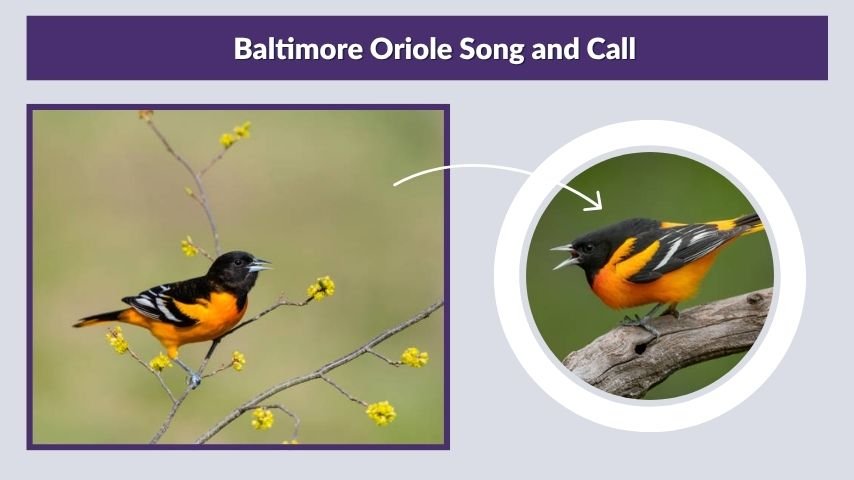
The Baltimore oriole has a rich, flute-like song. Males sing to attract mates and defend territory. Their song is usually a series of clear whistles that can vary between individuals.
The calls are shorter and may sound like chatter, sharp notes, or scolding sounds. Once you learn the song, it becomes easier to find orioles even when they are hidden among leaves.
When They Sing
Baltimore orioles sing most actively during spring and early summer. Males often sing from high perches, especially after arriving on breeding grounds. Singing may become less frequent later in the season as nesting progresses.
Baltimore Oriole Migration
Baltimore orioles are migratory birds. They spend the breeding season in North America and migrate south for winter. Many return to the United States and Canada in spring, often appearing in April or May depending on location.
In fall, they leave breeding areas and travel south. Migration timing depends on weather, food availability, and region.
Migration Pattern
Their general yearly pattern is:
- Spring: return north to breed
- Summer: nest and raise young
- Late summer/fall: move south
- Winter: stay in warmer tropical regions
Backyard feeders are most likely to attract orioles during spring migration and early breeding season, though some may continue visiting through summer.
Male vs Female Baltimore Oriole
Male and female Baltimore orioles can look so different that some people think they are separate species. The male is bold orange and black, while the female is softer yellow-orange and grayish brown.
Young males may take time to develop full adult colors. This means an orange-yellow bird with some dark patches may be an immature male.
Simple Identification Tips
Use these clues:
- Bright orange body with black head: adult male
- Yellow-orange body with grayish head: female
- Patchy orange and black: young male
- Long pointed bill: oriole clue
- High tree movement: common behavior
- Flute-like song: strong identification clue
Baltimore Oriole vs Orchard Oriole
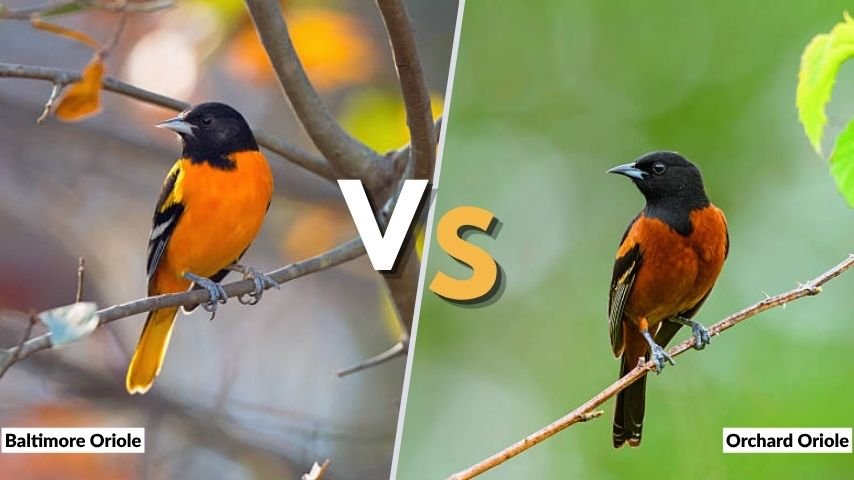
Baltimore orioles are sometimes confused with orchard orioles. Both can appear in similar habitats, but orchard orioles are smaller and darker. Adult male orchard orioles have a deep chestnut color rather than bright orange.
Female orchard orioles are yellow-green and usually less orange than female Baltimore orioles. If the bird is bright orange and black, it is more likely a Baltimore oriole.
Are Baltimore Orioles Rare?
Baltimore orioles are not usually considered rare across their normal range, but they can be seasonal and easy to miss. Since they migrate and often stay high in trees, people may only notice them for a short time each year.
They may be more common in suitable habitats with tall trees, insects, and fruit sources. In heavily urban or treeless areas, they may be less frequent.
How to Help Baltimore Orioles
Supporting orioles means supporting the habitat they need. Feeders can help, but natural food and nesting places are more important over the long term.
Helpful Actions
You can help Baltimore orioles by:
- Planting native trees
- Growing berry-producing shrubs
- Avoiding broad insecticide use
- Keeping cats indoors
- Providing clean water
- Cleaning feeders regularly
- Offering oranges during migration
- Leaving safe nesting materials naturally available
Avoid putting out synthetic string, fishing line, or long thread for nests. These can tangle around birds. Natural plant fibers are safer.
FAQs
What does a Baltimore oriole bird look like?
A male Baltimore oriole has a bright orange body, black head, black back, and white wing bars. A female is softer yellow-orange with grayish or brownish upperparts. Young males may look patchy before developing adult colors. Their pointed bill and tree-canopy behavior also help with identification.
What do Baltimore orioles eat?
Baltimore orioles eat insects, fruit, and nectar. During nesting season, insects such as caterpillars and beetles are very important for feeding chicks. They also enjoy berries, oranges, nectar, and small amounts of grape jelly at feeders. A varied natural diet is best for their health.
How do you attract Baltimore orioles?
To attract Baltimore orioles, put out orange halves, clean nectar feeders, small amounts of grape jelly, and mealworms in spring. Plant native trees and berry shrubs for long-term support. Place feeders near trees, keep them clean, and replace nectar often so it does not spoil.
Where do Baltimore orioles build nests?
Baltimore orioles usually build nests high in deciduous trees. The female weaves a hanging pouch-like nest near the end of a thin branch. This nest design helps protect eggs and chicks from many predators. Nests are often easier to see after leaves fall.
Are Baltimore orioles migratory birds?
Yes, Baltimore orioles are migratory birds. They breed in eastern and central North America during spring and summer, then migrate south for winter. Many spend winter in Mexico, Central America, the Caribbean, or northern South America. They often return north in April or May.
