
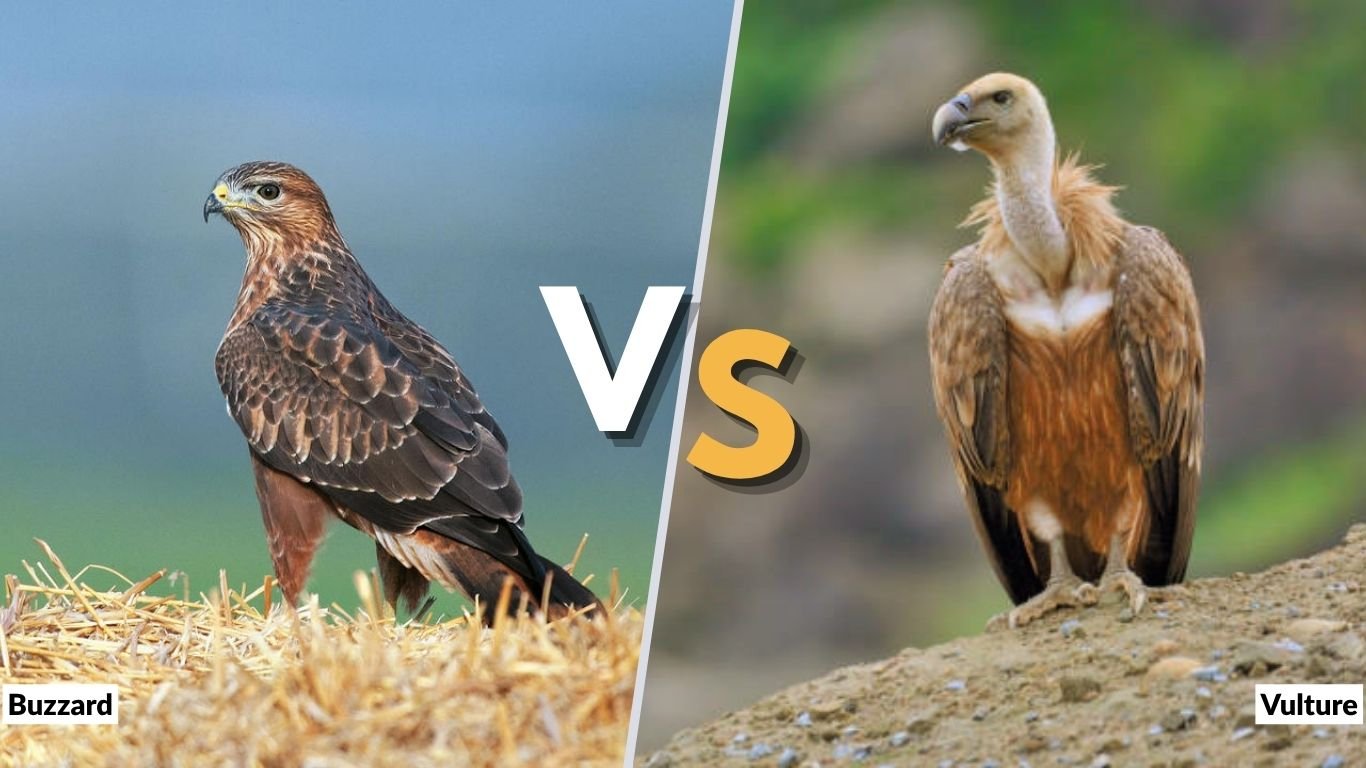
Buzzards and vultures are both large birds of prey, but the words can be confusing. In Britain and many other countries, a buzzard is a broad-winged hunting raptor related to hawks and eagles. In North America, however, people sometimes use “buzzard” as an informal name for a vulture, especially the turkey vulture. True buzzards mainly hunt living prey, while vultures are specialized scavengers that primarily consume dead animals.
Buzzard vs Vulture: Quick Comparison
True buzzards and vultures differ in appearance, feeding behavior, size, and taxonomic relationships. Vultures usually have larger bodies and broader wings, while buzzards are more compact and active hunters.
| Feature | Buzzard | Vulture |
| Bird group | Usually Buteo raptors | Old World or New World vultures |
| Main diet | Rodents, reptiles, birds, insects, and carrion | Primarily carrion |
| Head | Fully feathered | Often partly or completely bare |
| Body shape | Compact and hawk-like | Large with broad wings |
| Hunting style | Watches or soars before attacking prey | Searches for dead animals |
| Flight | Flapping and soaring | Long periods of energy-saving soaring |
| Typical size | Medium to large | Usually large to very large |
| Beak | Hooked and suited to killing prey | Hooked and suited to tearing flesh |
The Main Difference
A true buzzard is a predatory bird that frequently catches live animals. A vulture is primarily a scavenger that searches for animals that are already dead.
Both may eat carrion, so diet alone does not always identify them. Their body structure, head feathers, flight style, and hunting behavior provide stronger clues.
Why Are Vultures Called Buzzards?
The confusion is mainly caused by regional language. The word “buzzard” has different meanings in Europe and North America.
Buzzard Meaning in Britain and Europe
In British English, buzzard generally refers to birds belonging to the genus Buteo. The common buzzard is a widespread European example.
These birds are related to hawks and eagles. They usually have broad wings, rounded tails, feathered heads, and strong feet for capturing prey.
Buzzard Meaning in North America
In parts of the United States, “buzzard” is an informal name for vultures. People may call turkey vultures “turkey buzzards” and black vultures “black buzzards.”
This use does not mean the birds are true buzzards. Turkey and black vultures belong to the New World vulture family rather than the Buteo group.
What Does a Buzzard Look Like?
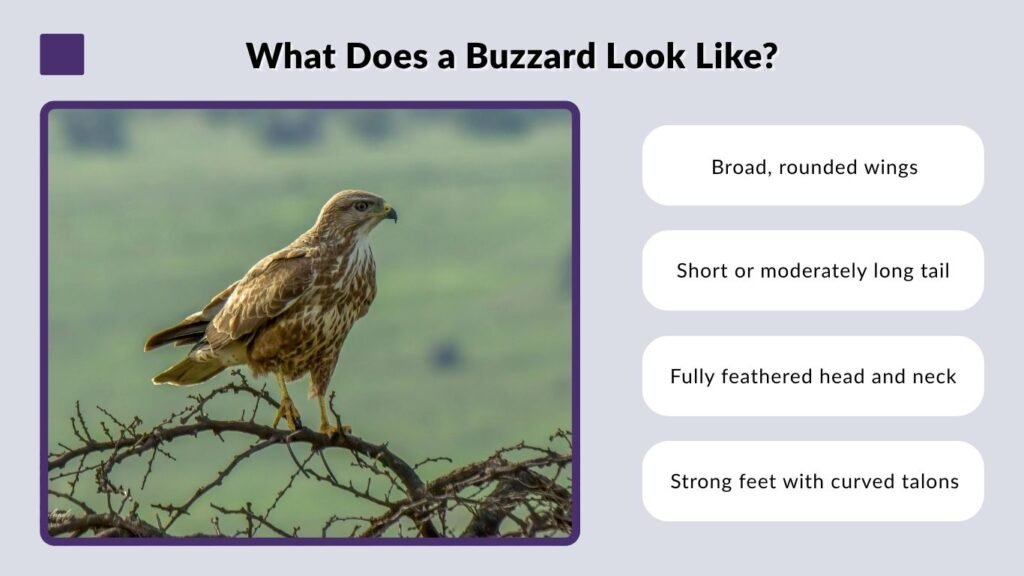
True buzzards have the general appearance of a broad-winged hawk. Their plumage varies greatly among species and individuals, but most have fully feathered heads and powerful legs.
Buzzard Identification
Common features include:
- Broad, rounded wings
- Short or moderately long tail
- Fully feathered head and neck
- Strong feet with curved talons
- Sharply hooked beak
- Brown, gray, white, or reddish plumage
- Upright posture when perched
- Slow circling flight
Buzzards often perch on trees, fence posts, poles, and rocks while searching for prey. When flying, they may alternate between flapping and soaring.
Common Buzzard Appearance
The common buzzard is usually brown, although its coloration ranges from very pale to almost black. It has broad wings, a rounded tail, and a compact body.
Adults are approximately 40–58 centimeters long, with a wingspan that commonly exceeds one meter. Females are generally larger than males.
What Does a Vulture Look Like?
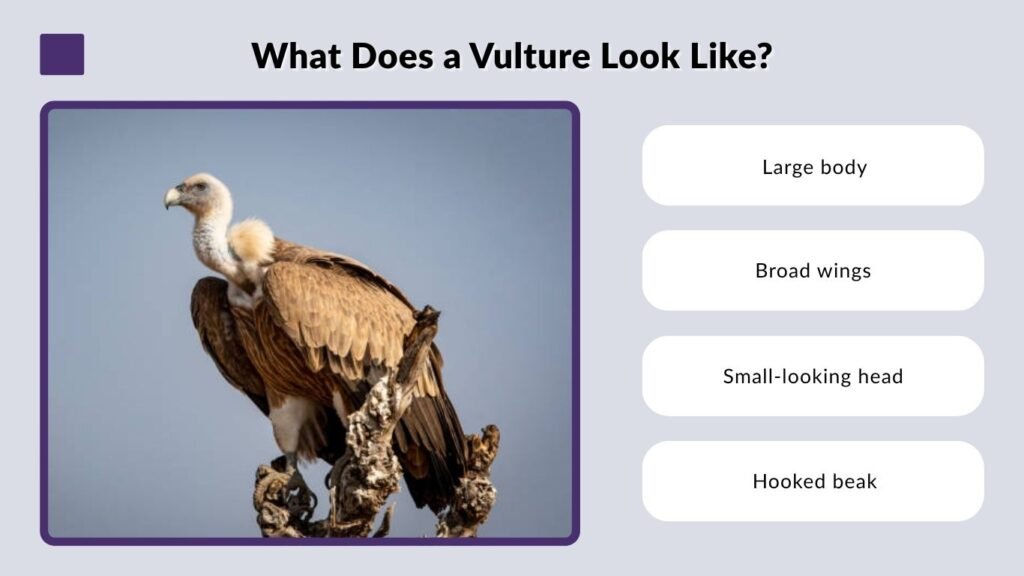
Vultures are usually larger and more strongly adapted for soaring. Many have bare or sparsely feathered heads, which helps prevent feathers from becoming heavily soiled while feeding inside carcasses.
Vulture Identification
Typical vulture features include:
- Large body
- Broad wings
- Small-looking head
- Bare or partly featherless face and neck
- Hooked beak
- Relatively weak feet compared with eagles
- Long, soaring flight
- Frequent circling in groups
Vultures use their beaks to tear flesh, but most are not built to capture and carry active prey. Their feet are better suited to standing and walking than gripping struggling animals.
Buzzard vs Vulture Size
Vultures are generally larger than true buzzards, although size varies among species.
| Bird | Approximate Length | Approximate Wingspan |
| Common buzzard | 40–58 cm | 110–140 cm |
| Red-tailed hawk, often compared with buzzards | 45–65 cm | 105–145 cm |
| Turkey vulture | 62–81 cm | 160–183 cm |
| Black vulture | 56–69 cm | 130–150 cm |
| Andean condor | 100–130 cm | Up to about 320 cm |
A turkey vulture usually has a much larger wingspan than a common buzzard. However, the black vulture’s wingspan may overlap with that of the largest buzzards.
Buzzard vs Vulture Diet
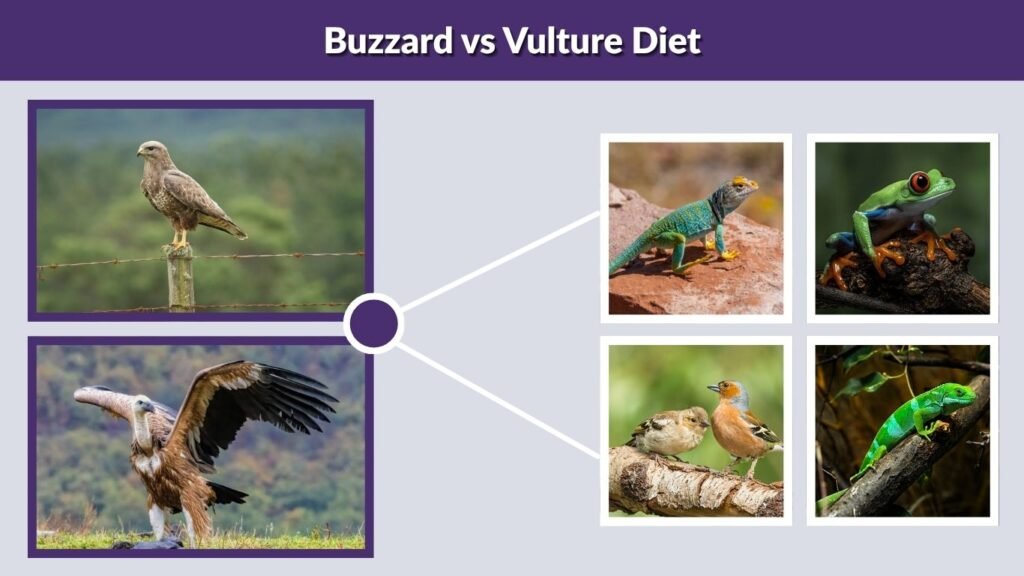
Both birds may consume dead animals, but they obtain most of their food differently. Buzzards are flexible hunters, while vultures are more specialized for scavenging.
What Do Buzzards Eat?
Buzzards commonly eat:
- Mice and voles
- Rabbits
- Small birds
- Snakes and lizards
- Frogs
- Large insects
- Earthworms
- Carrion
A buzzard may wait quietly on a perch before dropping onto prey. It may also circle over open ground and attack after spotting movement.
What Do Vultures Eat?
Vultures mainly consume carcasses of mammals, birds, reptiles, and other animals. They may also feed on roadkill, discarded meat, and afterbirth.
New World vultures such as turkey vultures can locate carrion using both sight and smell. Many Old World vultures rely more heavily on exceptional eyesight and the activity of other scavengers.
Buzzard vs Vulture Flight
Flight behavior is one of the easiest ways to distinguish these birds at a distance. Both use rising warm air, but vultures are usually more dependent on efficient soaring.
| Flight Feature | Buzzard | Vulture |
| Wing shape | Broad and rounded | Very broad and long |
| Flapping | Regularly used | Often limited while soaring |
| Circling | Common | Extremely common |
| Wing position | Flat or slightly raised | Often raised in a shallow V |
| Stability | Usually steady | Turkey vultures may appear unsteady |
| Purpose | Hunting and traveling | Searching large areas for carrion |
Buzzard Flight
Buzzards circle over fields, forests, and hillsides while looking for prey. They may flap several times and then glide.
Their rounded wings allow them to maneuver effectively over mixed landscapes. They also frequently hunt from stationary perches.
Vulture Flight
Vultures may remain airborne for long periods without much flapping. Their wide wings help them ride columns of rising warm air known as thermals.
A turkey vulture often holds its wings in a shallow V and rocks gently from side to side. Black vultures usually fly with flatter wings and use more frequent short wingbeats.
Turkey Buzzard vs Turkey Vulture
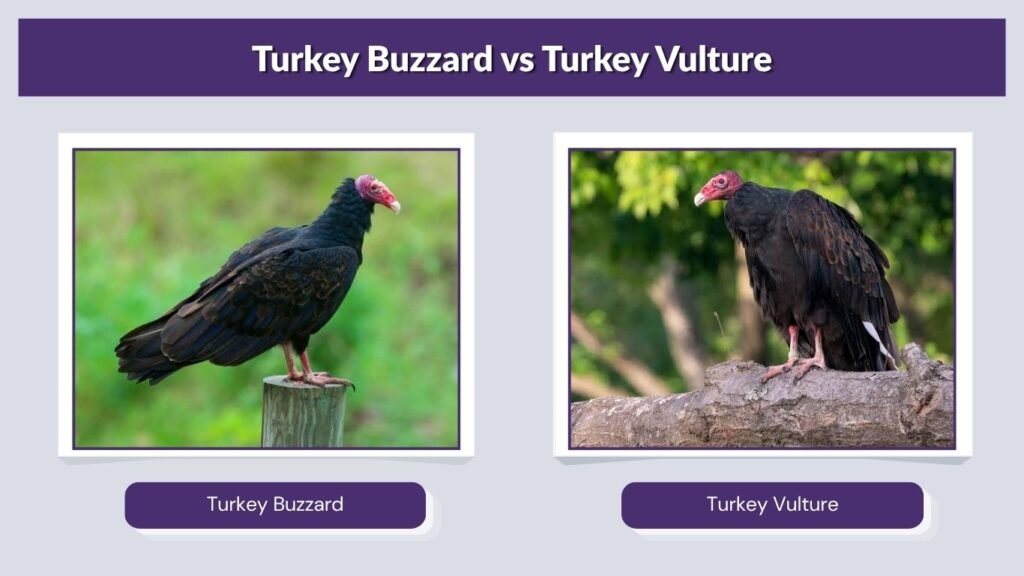
There is no biological difference between a turkey buzzard and a turkey vulture. Both names refer to the same North American species, Cathartes aura.
“Turkey vulture” is the accepted common name. “Turkey buzzard” is a traditional regional nickname based on the American use of the word buzzard.
Turkey Vulture Identification
Turkey vultures have dark brownish-black feathers, long wings, a red bare head in adults, and a relatively long tail. Young birds have darker heads.
When flying, they hold their wings in a shallow V and frequently tilt from side to side. Pale flight feathers create a two-toned appearance beneath the wings.
Black Vulture vs Turkey Buzzard
Black vultures and turkey vultures are separate species. They may feed together, but their appearance and behavior differ.
| Feature | Black Vulture | Turkey Vulture |
| Adult head | Black | Red |
| Tail | Short | Longer |
| Wings | Shorter and broader | Longer and narrower |
| Underwing pattern | White patches near wingtips | Pale along most flight feathers |
| Flight | Frequent strong wingbeats | Unsteady soaring in a shallow V |
| Sense of smell | Less developed | Highly developed |
Black vultures often follow turkey vultures to carcasses because turkey vultures are better at locating food by smell. Black vultures may then dominate the feeding site through their larger groups and more aggressive behavior.
Buzzard vs Vulture vs Condor
A condor is a type of New World vulture. It is not a true buzzard and does not represent a completely separate category from vultures.
The two living condor species are the Andean condor of South America and the California condor of North America. Both are enormous scavengers that feed mainly on carrion.
Condors differ from smaller vultures mainly in their size, range, and certain physical features. Their ecological role remains similar: finding and consuming dead animals.
Are Buzzards or Vultures Dangerous?
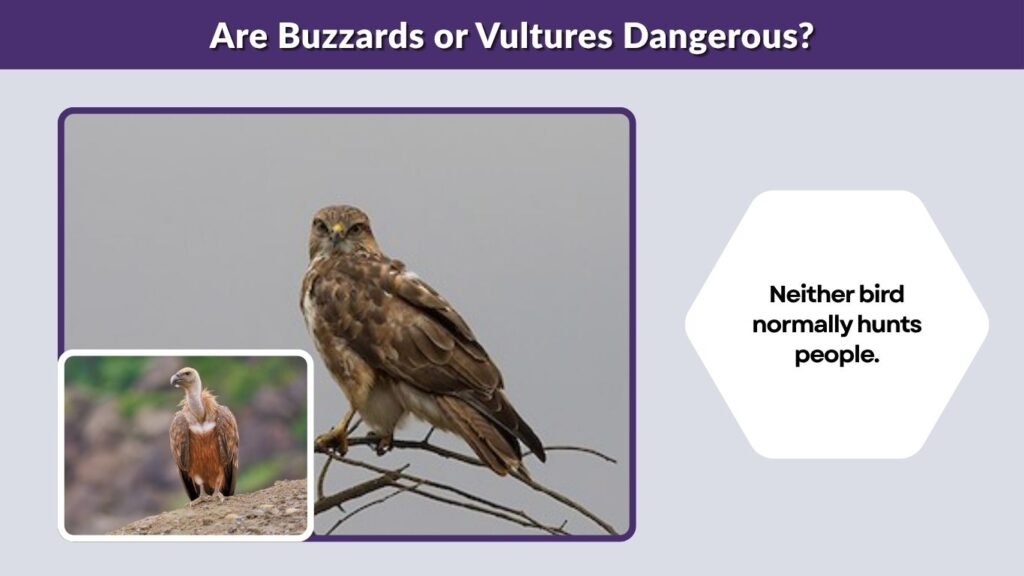
Neither bird normally hunts people. Buzzards may defend a nest by calling or diving near an intruder, but serious attacks are unusual.
Vultures generally avoid humans. They may gather around livestock, roadkill, garbage, or animal remains, but their presence usually indicates that food is already available. Black vultures may occasionally threaten vulnerable newborn livestock, although most vulture feeding involves carrion.
Ecological Importance
Buzzards help control rodents, insects, and other small animals. Their hunting can benefit farms by reducing populations of crop-damaging pests.
Vultures act as natural cleanup specialists. By rapidly consuming carcasses, they recycle nutrients and reduce the time dead animals remain exposed in the environment.
FAQs
Is a buzzard the same as a vulture?
Not usually. A true buzzard is a Buteo bird related to hawks and eagles. However, people in North America sometimes informally call vultures buzzards, creating confusion between the two groups.
Is a turkey buzzard different from a turkey vulture?
No. Turkey buzzard and turkey vulture are two names for the same species. Turkey vulture is the standard name, while turkey buzzard is a regional nickname.
Which is bigger, a buzzard or a vulture?
Most vultures are larger than true buzzards. Turkey vultures have longer wingspans than common buzzards, while giant condors are much larger than any typical buzzard.
Do buzzards eat dead animals?
Yes. Buzzards sometimes eat carrion, especially when hunting conditions are poor. However, they also capture live rodents, reptiles, birds, insects, and other small animals.
Is a condor a buzzard or a vulture?
A condor is a vulture. Andean and California condors belong to the New World vulture family and are among the world’s largest flying land birds.
