
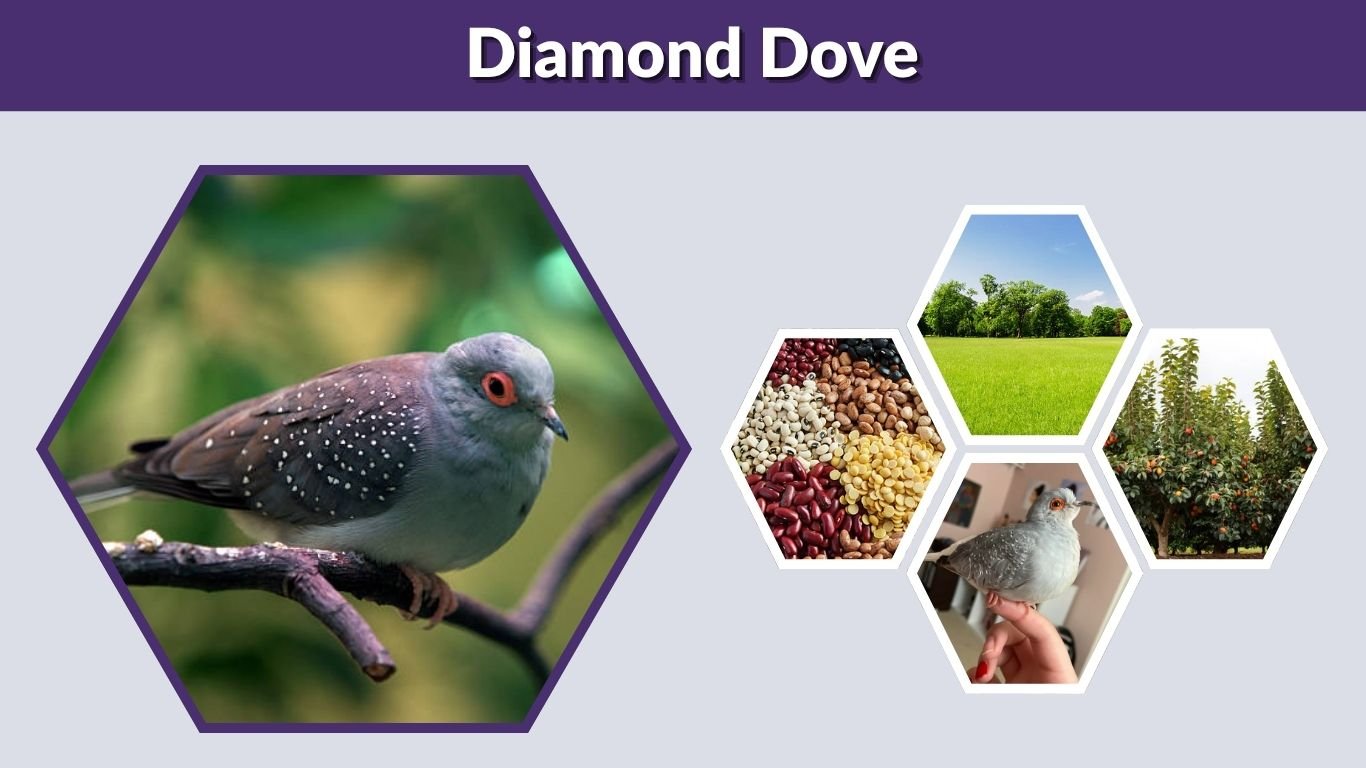
Diamond doves are among the most peaceful and attractive pet birds kept by bird enthusiasts around the world. Their small size, soft cooing sounds, and gentle personality make them a favorite choice for beginners and experienced bird keepers alike. Native to Australia, these tiny doves adapt well to captivity when provided with proper care, nutrition, and housing. Understanding their behavior, habitat, lifespan, and dietary needs helps owners create a healthy environment where these beautiful birds can thrive comfortably for many years.
Identification of the Diamond Dove
Diamond doves are small birds known for their elegant appearance and calm nature. Their unique spotted wings and bright eye rings make them easy to recognize among other dove species. These birds are delicate yet active, adding charm to any aviary or indoor cage setup.
Physical Appearance
Diamond doves usually measure around 7 to 8 inches in length, making them one of the smallest dove species in the world. Their feathers are mostly light gray or brownish-gray with tiny white spots covering the wings. These spots resemble small diamonds, which is how the bird received its common name.
The eyes are surrounded by a bright orange or red ring that becomes more visible as the bird matures. Their tails are long and narrow, helping them maintain balance during short flights. Male birds often display brighter eye rings and slightly bolder coloration compared to females.
Popular Color Mutations
Selective breeding has introduced several beautiful color variations of diamond doves. Some of the most common mutations include:
- White diamond dove
- Albino diamond dove
- Cinnamon diamond dove
- Blue-toned diamond dove
These color mutations remain popular among collectors because they add variety while maintaining the same calm personality found in standard diamond doves.
Diamond Dove Habitat and Distribution

Diamond doves naturally inhabit dry regions of Australia where open landscapes provide easy access to food and water. Their ability to survive in warm climates has helped them adapt successfully in captivity across different countries worldwide.
Native Habitat
In the wild, diamond doves are commonly found in:
- Open grasslands
- Sparse woodlands
- Dry scrublands
- Areas near water sources
They spend much of their time foraging on the ground for seeds and small food particles. Their natural environment is usually warm and dry, which explains why pet diamond doves prefer stable temperatures and low humidity.
Diamond Doves in Captivity
Because of their gentle nature, diamond doves have become highly popular as aviary and indoor birds. They require less space than many parrots and are usually quieter than larger pet birds. Many bird owners appreciate their peaceful behavior, especially in apartments or homes where loud noise may become a problem.
Diamond doves also adapt well to shared aviaries when housed with calm species such as finches. However, they should not be placed with aggressive birds that may compete for food or territory.
Diamond Dove Behavior and Personality
Diamond doves are admired for their relaxed personality and soft vocalizations. Unlike highly energetic parrots, these birds remain calm throughout most of the day and rarely show aggressive behavior. Their peaceful temperament makes them suitable for bird keepers looking for a low-maintenance companion.
Temperament
Most diamond doves are shy during the first few days in a new environment, but they gradually become comfortable around humans. They are not usually cuddly birds, though they enjoy observing their surroundings and interacting quietly with their owners.
These birds are best appreciated for their natural beauty and gentle movements rather than physical handling. Sudden movements or loud sounds can frighten them easily, so a calm environment is ideal.
Vocalizations and Sounds
Diamond doves produce soft cooing sounds that are pleasant and relaxing. Their calls are much quieter compared to parrots, making them excellent pets for smaller living spaces. Male doves usually coo more often, especially during courtship or breeding periods.
Their sounds are commonly used to communicate comfort, attract mates, or establish territory. Many owners enjoy the peaceful atmosphere created by their gentle vocalizations.
Diamond Dove Behavior and Diet
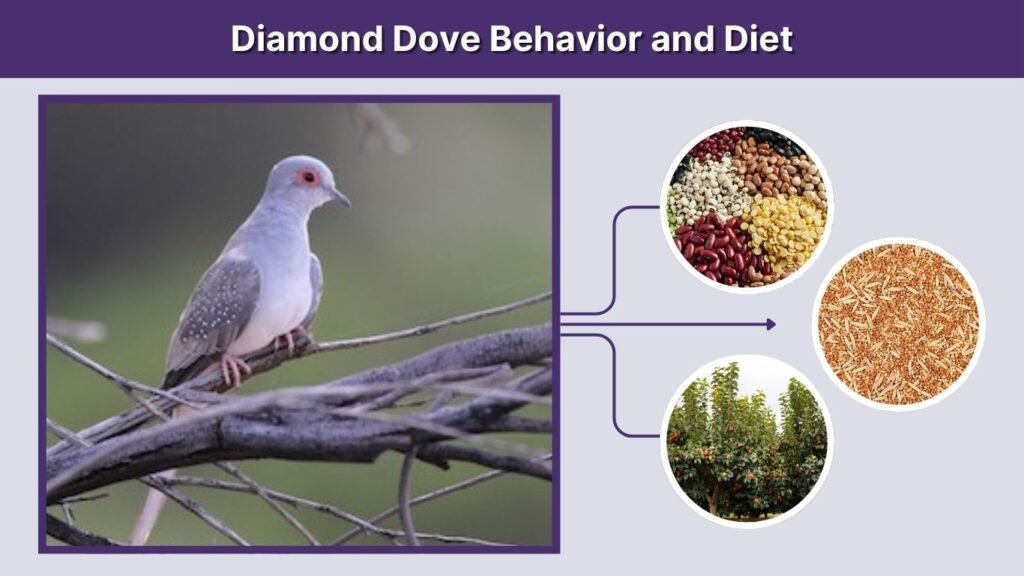
A balanced diet plays an important role in maintaining the health and lifespan of diamond doves. These birds naturally feed on seeds and require a nutritious mixture of grains, minerals, and fresh foods to remain active and healthy in captivity.
Best Foods for Diamond Doves
Healthy foods commonly offered to diamond doves include:
- High-quality dove seed mixes
- Millet and canary seed
- Fresh leafy vegetables
- Small amounts of fruit
- Calcium supplements
Fresh water should always be available because hydration supports healthy feathers, digestion, and overall health.
Foods to Avoid
Certain foods can cause digestive problems or serious illness in diamond doves. Owners should avoid feeding:
- Chocolate
- Salty snacks
- Processed sugary foods
- Avocado
- Caffeinated drinks
Providing safe and nutritious food helps prevent many common health issues while supporting healthy feather condition and energy levels.
Diamond Dove Cage Setup and Care
A proper cage setup helps diamond doves stay healthy, active, and stress-free. These birds need enough room to move comfortably and should always live in a clean and secure environment. Good housing conditions also reduce the risk of illness and behavioral problems.
Ideal Cage Size
Diamond doves prefer wider cages instead of tall cages because they fly horizontally more often than vertically. A spacious setup allows them to exercise naturally and maintain healthy wing strength.
A suitable cage should include:
- Wide flying space
- Multiple perches
- Easy access to food and water
- Safe ventilation
Bird owners who keep pairs or multiple doves should provide larger aviaries to prevent overcrowding and territorial stress.
Cage Accessories
Simple cage accessories improve comfort and encourage natural behavior. Smooth wooden perches are better than rough plastic options because they support healthy feet. Food bowls should remain clean and easily accessible throughout the day.
Diamond doves also appreciate shallow dishes for bathing since they enjoy keeping their feathers clean. Nesting baskets or platforms can provide additional comfort during breeding periods.
Cleaning and Maintenance
Regular cleaning is essential because dirty cages may cause bacterial infections and respiratory problems. Food leftovers and droppings should be removed daily to maintain hygiene.
Weekly cleaning usually includes washing food dishes, replacing cage liners, and sanitizing perches. Fresh air circulation and dry conditions also help prevent mold and parasites from developing inside the enclosure.
Diamond Dove Lifespan and Health
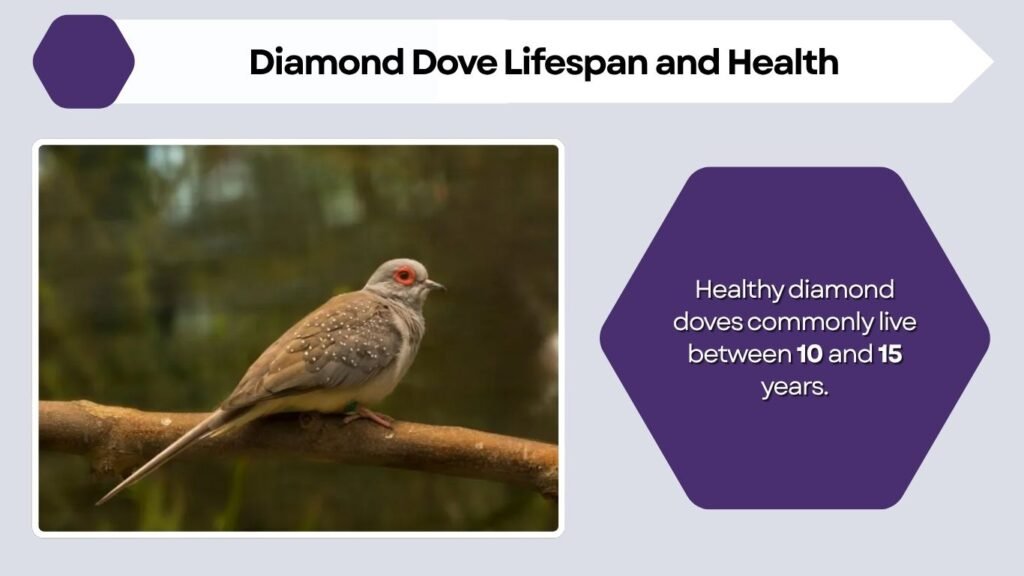
Diamond doves can live for many years when they receive proper nutrition, exercise, and medical care. Their overall health depends heavily on cage cleanliness, diet quality, and stress levels.
Average Lifespan
In captivity, healthy diamond doves commonly live between 10 and 15 years. Some birds may survive even longer when raised in ideal conditions with balanced nutrition and routine care.
Wild diamond doves generally have shorter lifespans because they face predators, food shortages, and harsh weather conditions. Captive birds benefit from stable environments and regular feeding schedules.
Common Health Problems
Although diamond doves are relatively hardy birds, they can still develop health issues if neglected. Common problems include respiratory infections, parasites, and nutritional deficiencies.
Warning signs of illness may include:
- Fluffed feathers
- Loss of appetite
- Breathing difficulty
- Low energy levels
- Weight loss
Owners should seek avian veterinary care if symptoms continue for more than a short period. Early treatment greatly improves recovery chances.
Signs of a Healthy Diamond Dove
Healthy diamond doves usually remain alert and active during the day. Their feathers should appear smooth and clean, while their eyes stay bright and clear.
A healthy bird also maintains a strong appetite and regular vocal activity. Monitoring daily behavior helps owners notice health changes before serious illness develops.
Diamond Dove Breeding Guide
Diamond doves breed relatively easily in captivity when they receive proper care and a stress-free environment. Their breeding behavior is gentle and usually begins with soft courtship displays between bonded pairs.
Breeding Behavior
Male diamond doves often perform courtship dances while softly cooing to attract females. They may bow repeatedly, puff their feathers slightly, and follow the female around the cage or aviary.
Once paired, diamond doves usually form strong bonds and spend time sitting close together. A peaceful environment encourages successful breeding and nesting behavior.
Nesting and Egg Laying
Females commonly lay two eggs per clutch in small nests made from twigs or dry grass. The incubation period usually lasts about two weeks, with both parents helping care for the eggs.
Providing nesting materials improves comfort and supports natural breeding instincts. Breeding birds also require additional calcium and protein during this stage.
Caring for Chicks
Newly hatched chicks depend entirely on their parents for warmth and feeding. Parent birds produce crop milk, which provides important nutrients during early growth stages.
Young diamond doves grow quickly and begin developing feathers within the first few weeks. They usually leave the nest after becoming strong enough to move independently.
Are Diamond Doves Good Pets?
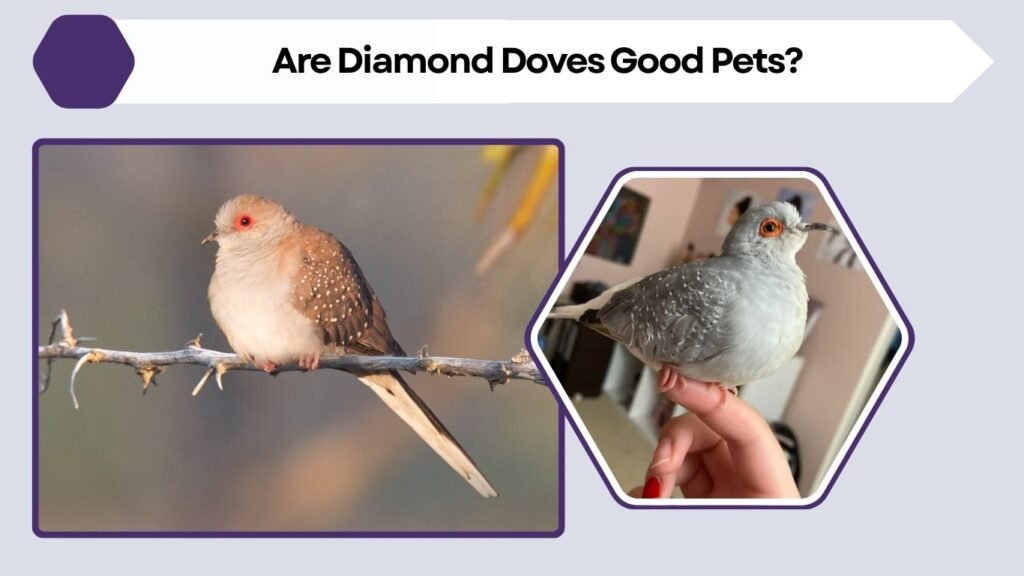
Diamond doves are considered excellent pets for people who prefer quiet and low-maintenance birds. Their peaceful nature and manageable care requirements make them suitable for beginners and apartment living.
Advantages of Keeping Diamond Doves
Many bird enthusiasts choose diamond doves because they are calm, attractive, and easy to care for. Some key benefits include:
- Quiet vocalizations
- Small space requirements
- Gentle personality
- Simple feeding needs
Their relaxed behavior creates a peaceful atmosphere that many owners find enjoyable.
Challenges of Ownership
Despite their many positive qualities, diamond doves are not highly interactive pets like parrots. They usually prefer observing rather than frequent handling.
These birds may also become stressed in loud or chaotic environments. Owners should provide stability, companionship, and proper daily care to keep them comfortable and healthy.
FAQs
Are diamond doves easy to care for?
Yes, diamond doves are considered low-maintenance birds compared to many parrots and larger pet birds. They require a clean cage, nutritious food, fresh water, and a calm environment to stay healthy and comfortable in captivity.
Can diamond doves live with other birds?
Diamond doves can usually live peacefully with calm bird species such as finches. However, they should not share cages with aggressive or territorial birds because stress and competition may lead to injuries or feeding problems.
What is the best cage size for diamond doves?
Diamond doves need a wide cage that allows short flights and movement throughout the day. A horizontal cage with multiple perches, food dishes, and enough space for exercise helps maintain good physical and mental health.
Do diamond doves make a lot of noise?
No, diamond doves are quiet birds known for their soft and relaxing cooing sounds. Their vocalizations are much gentler than parrots, making them suitable pets for apartments, small homes, and peaceful indoor environments.
How often should diamond dove cages be cleaned?
Basic cleaning should be done daily by removing leftover food and droppings. A deeper cleaning involving cage accessories, perches, and dishes should usually be completed once every week to maintain proper hygiene and prevent illness
