
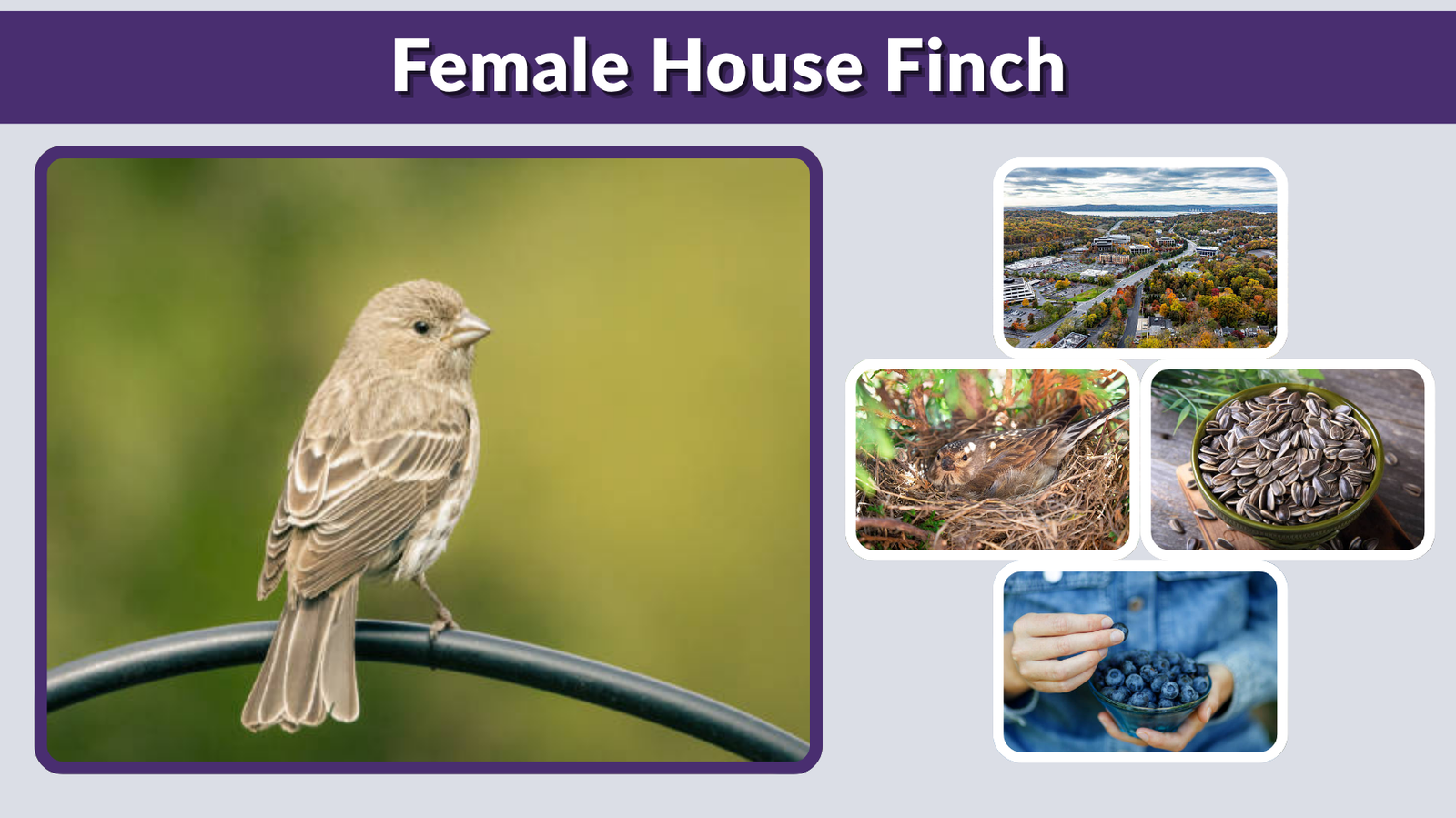
Female house finches are small, social songbirds commonly seen across North America. Unlike the bright red or orange males, females have subtle brown-streaked plumage that blends with their surroundings. Their adaptive nature allows them to thrive in urban and suburban areas, often visiting backyard feeders. Female house finches play an essential role in nesting, feeding, and raising young, making them an intriguing subject for birdwatchers and nature enthusiasts alike.
These finches are often confused with other small brown birds, such as house sparrows or female purple finches, but careful observation of plumage, size, and behavior can help distinguish them.
Physical Appearance of Female House Finch
Female house finches have a delicate, streaked appearance that makes them identifiable even without the bright colors of males. Observers often note their small size, rounded body, and subtle markings that vary slightly with age and season.
Size and Shape
- Length: 5–6 inches (13–15 cm)
- Wingspan: 8–10 inches (20–25 cm)
- Slim, rounded body with short tail
Plumage and Coloration
- Brown-streaked back and breast
- Subtle olive or yellow highlights on wings and rump
- Juveniles lighter and less defined in streaking
Facial Features
- Small conical beak, perfect for seed eating
- Dark eyes with soft cheek markings
- Occasionally, cheeks appear puffed when alert
Seasonal Changes
- Winter: slightly duller tones, denser feathers
- Summer: plumage appears cleaner with subtle contrasts
Male vs Female House Finch
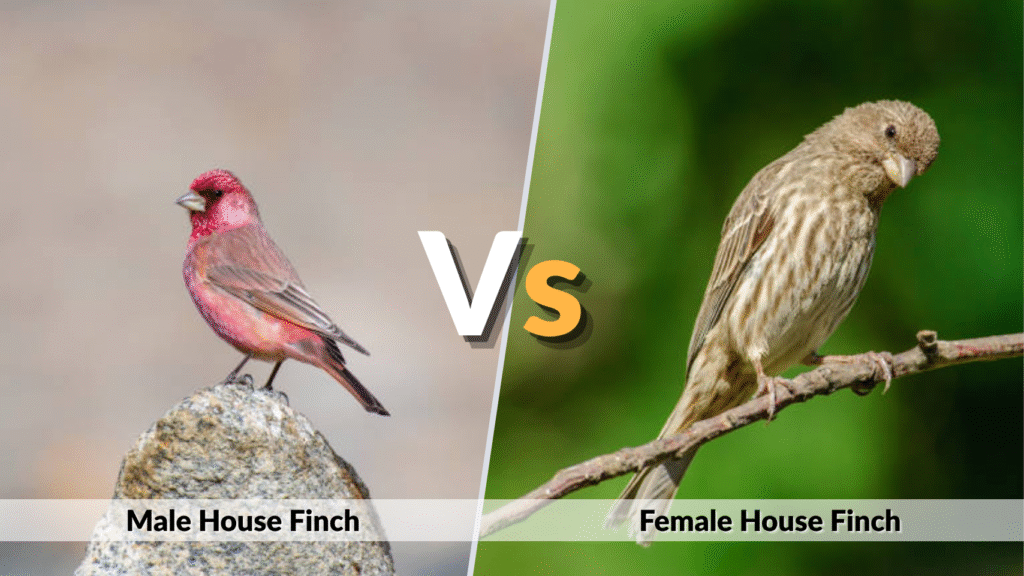
Male and female house finches differ significantly in both appearance and behavior. While males are more colorful to attract mates, females rely on camouflage to protect nests and chicks. Understanding these differences helps birdwatchers correctly identify each sex.
Color and Plumage Differences
- Males: bright red, orange, or yellow highlights on head and chest
- Females: brown streaks, less vibrant overall
Behavioral Differences
- Males display courtship behaviors such as singing and wing fluttering
- Females focus on nesting, incubation, and chick feeding
Vocalizations
- Male: melodic, variable song used to attract females and defend territory
- Female: short calls and soft chirps, rarely singing
Breeding Roles
- Females build the nest, lay eggs, and incubate for 12–14 days
- Males help feed chicks once hatched
Female House Finch vs Similar Birds
Female house finches are often mistaken for other small brown birds. Accurate identification requires attention to size, streaking patterns, and behavior.
Female House Finch vs Female House Sparrow
- Finch: smaller, more slender body, streaked breast
- Sparrow: chunkier, uniform brown with a plain gray face
Female House Finch vs Purple Finch
- Finch: fine streaking, smaller head, more delicate appearance
- Purple Finch: broader head, raspberry wash on breast, more robust body
Female House Finch vs Song Sparrow
- Finch: shorter tail, subtle streaks, smaller beak
- Song Sparrow: longer tail, heavier streaking, more prominent head markings
Female House Finch vs Pine Siskin
- Finch: conical beak, streaked brown plumage
- Siskin: thinner, pointed wings, yellow edging on wings and tail
Female House Finch Behavior and Vocalization
Female house finches are social and adaptable, often seen in flocks. They are highly observant and cautious, particularly near feeders or potential predators. Their vocalizations are less frequent and less complex than males, but they use soft chirps to communicate within flocks or with their mate.
Females are key participants in nesting and chick-rearing. They select nesting sites in trees, shrubs, or even man-made structures, using twigs, grasses, and feathers to construct secure nests. During breeding season, they maintain close contact with males, who assist in feeding hatchlings.
Female House Finch Nesting and Breeding
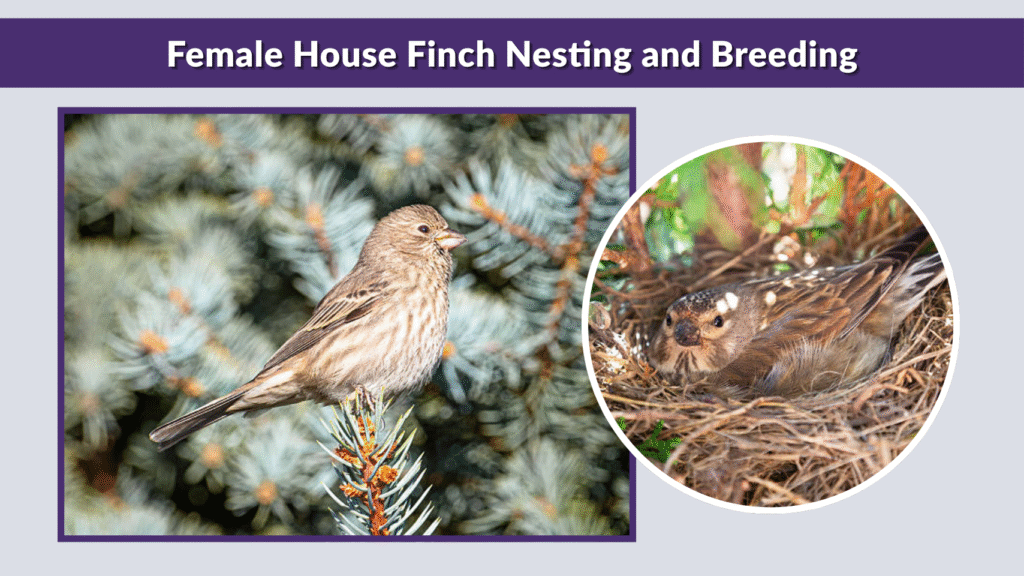
Female house finches are highly involved in the reproductive process. Their role in nest building and chick-rearing ensures the survival of their young. Observing their nesting behavior offers insight into their daily routines and interaction with mates.
Nest Building
- Choose trees, shrubs, or ledges on buildings
- Construct nests with twigs, grasses, feathers, and other soft materials
- Prefer sites that are concealed from predators
Eggs and Incubation
- Typically 2–6 small, pale blue or greenish eggs with speckles
- Incubation lasts about 12–14 days, handled primarily by the female
- Eggs are carefully turned and kept warm throughout
Raising Young
- Chicks hatch altricial (helpless and blind)
- Females feed the young initially; males assist as they grow
- Young fledge after 12–19 days but may remain nearby for a short period
Female House Finch Habitat and Distribution
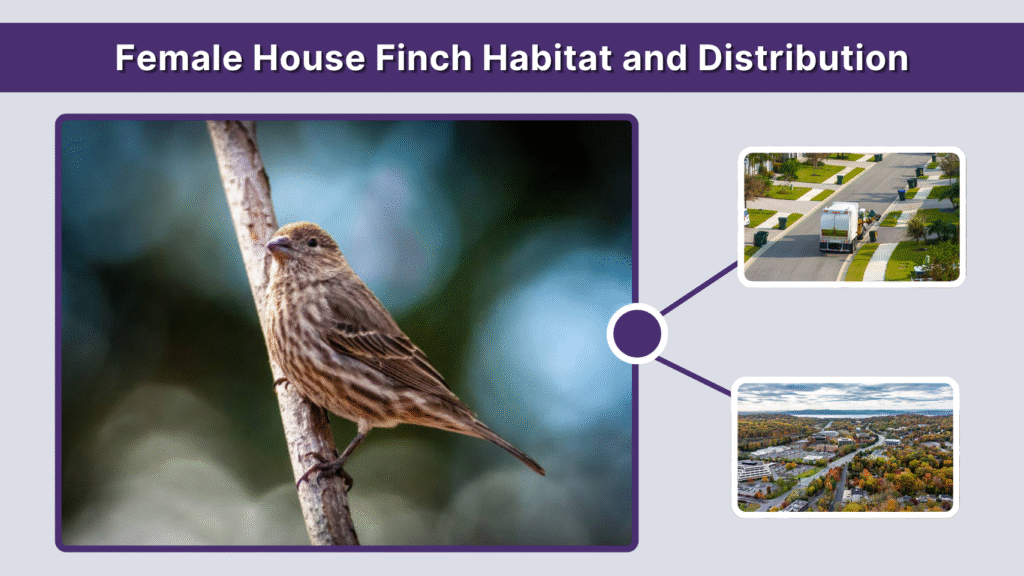
Female house finches are adaptable birds found in a variety of environments. They thrive in areas ranging from rural landscapes to urban neighborhoods, taking advantage of feeders and nesting opportunities provided by humans.
- Prefer urban and suburban areas with trees or shrubs
- Found throughout North America, from southern Canada to Mexico
- Adapt well to backyard feeders, fruiting trees, and ornamental shrubs
- Can nest in man-made structures like window ledges, hanging planters, and eaves
Female House Finch Diet and Feeding Behavior
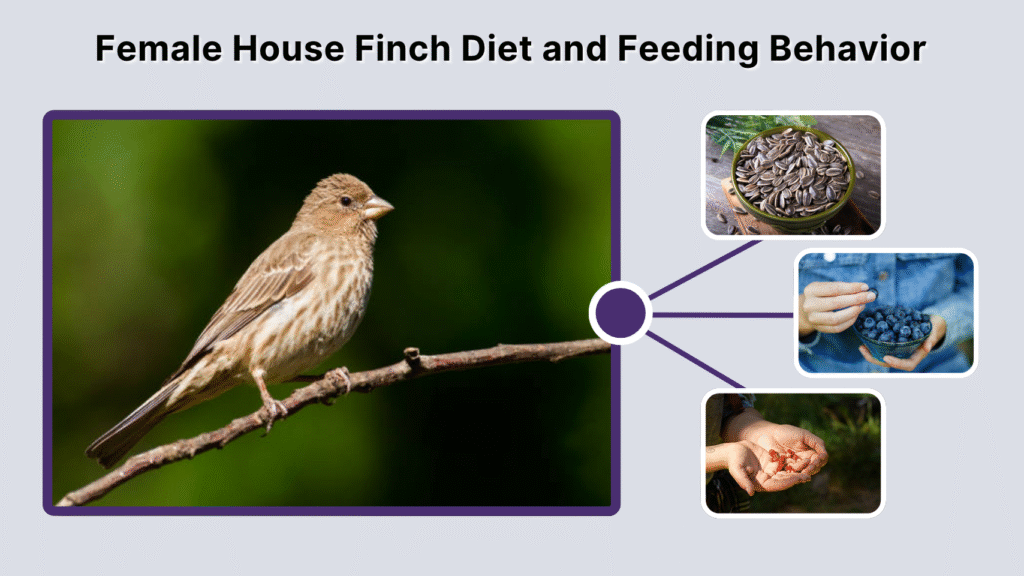
Female house finches have a primarily herbivorous diet, focusing on seeds and plant material, though they occasionally consume small insects. Their feeding habits help maintain local seed dispersal and contribute to ecosystem health.
- Eat a wide variety of seeds including sunflower, dandelion, and millet
- Consume berries and small fruits when available
- Feed from both natural sources and backyard feeders
- Often forage in flocks, mixing with males and other small birds
Social Behavior and Communication
Female house finches are gregarious, often seen in flocks outside of the breeding season. They maintain social bonds with mates and other flock members through subtle vocalizations and body language.
- Use soft chirps for communication within flocks
- Participate in alerting mates to danger
- Flocking helps with food location and predator avoidance
- Maintain pair bonds with mates throughout breeding season
FAQs
What does a female house finch look like?
Female house finches are small, brown-streaked birds with subtle olive or yellow highlights. They have a slender, rounded body, dark eyes, and a conical beak ideal for seed-eating. Juveniles appear lighter with less-defined streaking.
How can you tell a male and female house finch apart?
Males are brightly colored with red, orange, or yellow highlights, whereas females are mostly brown-streaked. Behaviorally, males sing to attract mates and defend territory, while females focus on nesting and feeding chicks.
Do female house finches sing?
Females rarely sing, but they do use short chirps and soft calls to communicate with mates and other flock members. Their vocalizations are simpler than male songs.
How are female house finches different from female sparrows or purple finches?
Compared to sparrows, female house finches are smaller, with more delicate streaking and a slimmer body. Purple finches have broader heads, more robust bodies, and subtle raspberry tints on the breast, unlike the uniformly brown-streaked house finch.
Do male and female house finches stay together after mating?
They typically form a pair bond during the breeding season. Males assist with feeding the young, and pairs may stay in close proximity throughout the season, though they are not strictly monogamous year-round.