
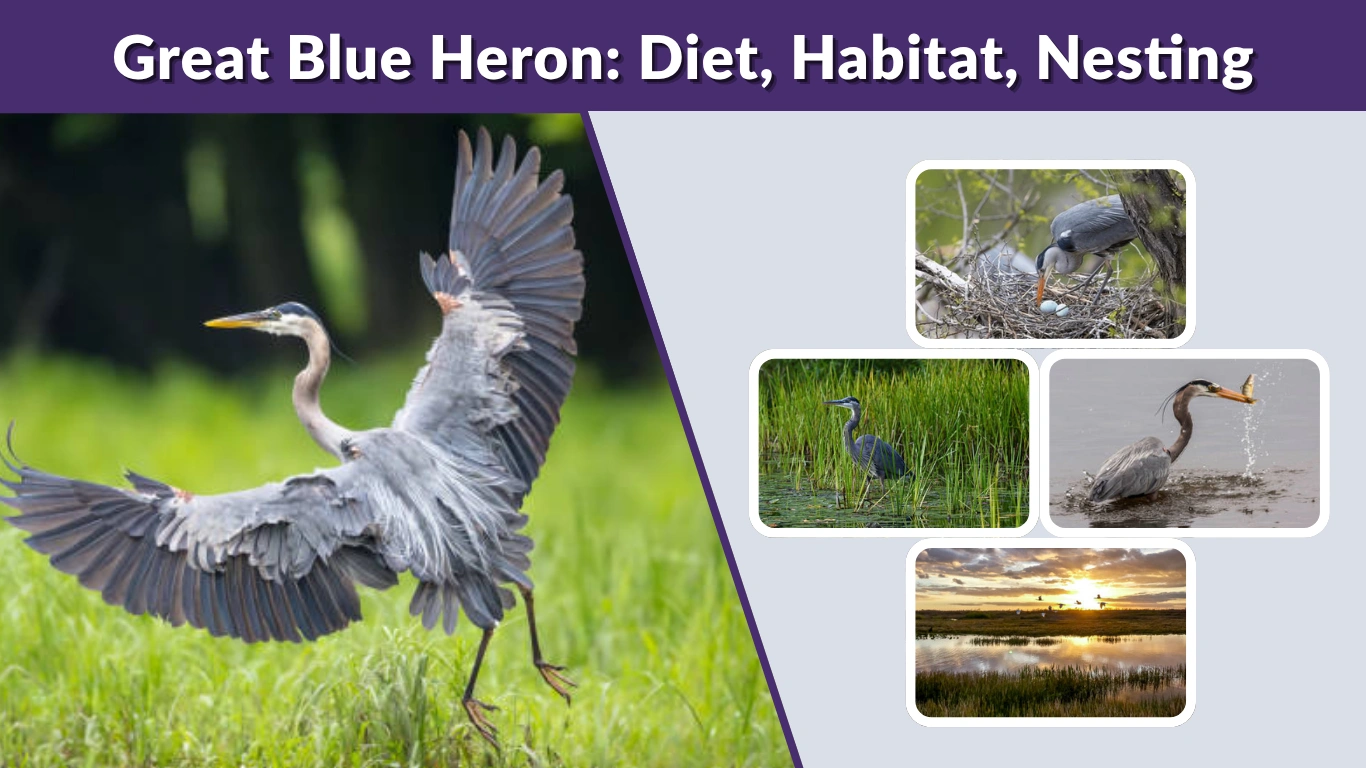
The great blue heron is one of the most impressive wading birds in North America, known for its tall stature, slow movements, and striking blue-gray feathers. Often seen standing motionless in shallow water, this bird is a skilled hunter and an iconic symbol of wetlands and coastal environments. In this guide, you’ll learn everything about the great blue heron, including its habitat, diet, nesting habits, and unique flying behavior.
What is a Great Blue Heron?
The great blue heron (Ardea herodias) is the largest heron species in North America. It is widely distributed across the continent, from Canada to Central America, and can be found in a variety of wetland habitats.
This bird is easily recognized by its long legs, elongated neck, and sharp, dagger-like bill. Its body is mostly blue-gray, with a white face and a distinctive black stripe that extends into long plumes behind the head.
Great blue herons are solitary hunters but often nest in groups called colonies or rookeries. They are patient and deliberate, capable of standing still for long periods while waiting for prey.
Great Blue Heron Identification
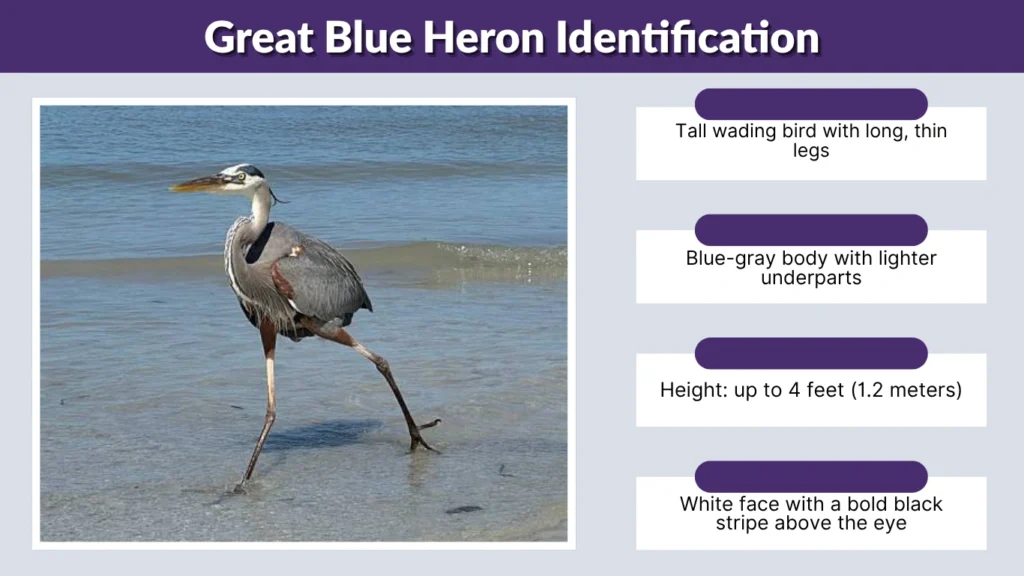
The great blue heron has several distinctive features that make it easy to identify in the wild.
Physical Characteristics
- Tall wading bird with long, thin legs
- Long neck that forms an “S” shape when at rest
- Sharp, pointed bill used for catching prey
- Large wings adapted for slow, powerful flight
Color & Markings
- Blue-gray body with lighter underparts
- White face with a bold black stripe above the eye
- Long black plumes extending from the head
- Yellowish bill and pale legs
Size & Wingspan
Great blue herons are among the largest flying birds in North America:
- Height: up to 4 feet (1.2 meters)
- Wingspan: around 6–7 feet (1.8–2.1 meters)
Their large size and slow movements make them easy to spot, especially near water.
Great Blue Heron Habitat
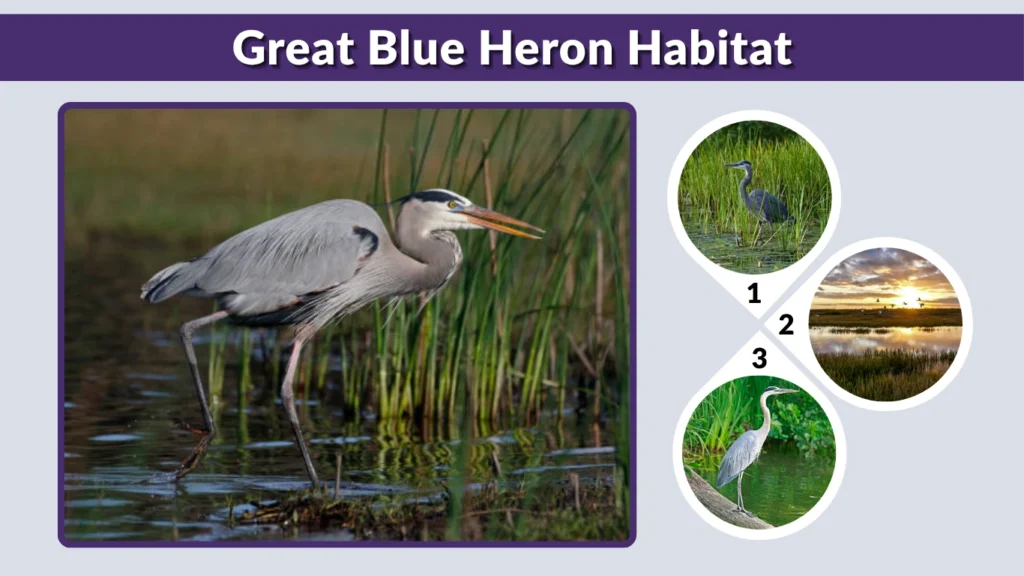
Great blue herons are closely tied to water and are found in a wide range of wetland environments.
Preferred Habitats
They commonly live in:
- Marshes and swamps
- Lakes and ponds
- Rivers and streams
- Coastal shorelines and estuaries
These areas provide abundant food and suitable nesting sites.
Geographic Range
The great blue heron is widespread across North America. It breeds throughout much of the United States and Canada, and some populations migrate south during winter, while others remain year-round in warmer regions.
Habitat Adaptations
Great blue herons are well adapted to life in shallow water. Their long legs allow them to wade while hunting, and their keen eyesight helps them detect prey beneath the surface.
They prefer quiet, undisturbed areas where they can hunt efficiently and avoid predators.
Great Blue Heron Diet
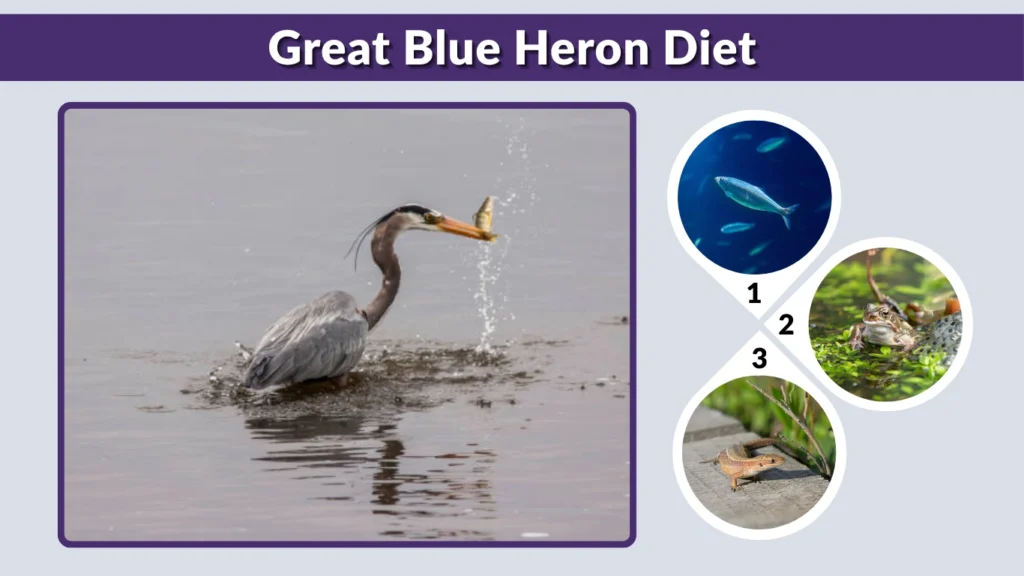
The diet of the great blue heron is diverse, but it mainly consists of aquatic animals.
What Do Great Blue Herons Eat?
Their primary food sources include:
- Fish (most common prey)
- Frogs and other amphibians
- Small reptiles
- Birds and small mammals
- Insects and crustaceans
This varied diet makes them highly adaptable to different environments.
Hunting Techniques
Great blue herons are expert hunters. They use a slow and patient approach:
- Standing still or moving slowly through water
- Watching carefully for movement
- Striking quickly with their sharp bill
Their lightning-fast strike allows them to catch prey with precision.
Feeding Behavior
These birds usually hunt alone, reducing competition for food. However, they may gather in areas where food is abundant.
They are opportunistic feeders and will eat whatever prey is available, making them highly adaptable.
Great Blue Heron Flying
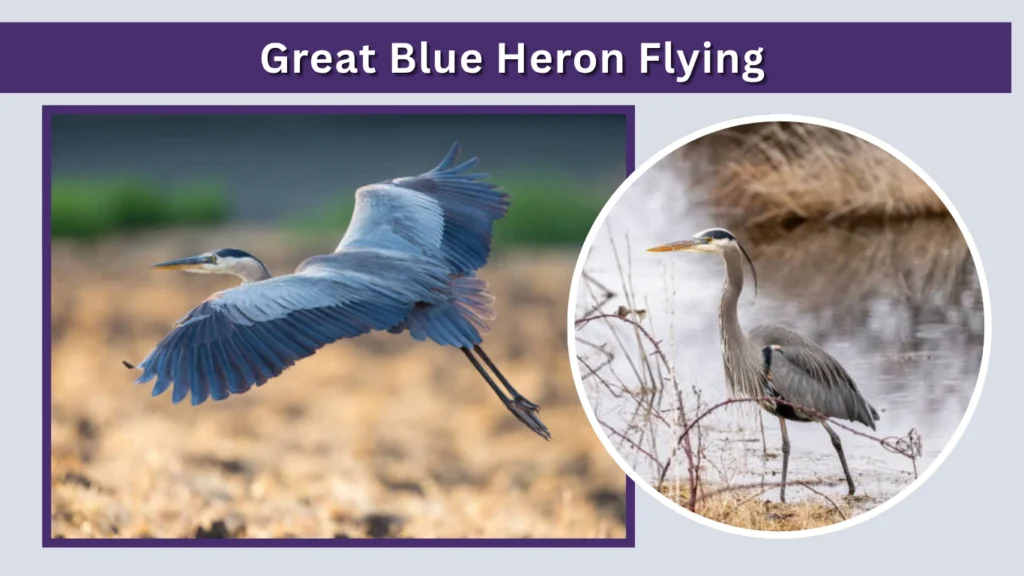
Despite their large size, great blue herons are strong and graceful fliers.
How Great Blue Herons Fly
Unlike many birds, great blue herons fly with their neck folded into an “S” shape rather than stretched out. This is a key identification feature in flight.
Their wings move in slow, deep beats, giving them a steady and powerful flight pattern.
Flight Characteristics
- Long legs trailing straight behind
- Broad wings for gliding
- Slow, deliberate wingbeats
When seen in the sky, their silhouette is unmistakable.
Migration Patterns
Some great blue herons migrate, especially those living in colder regions. They travel to warmer areas during winter where water remains unfrozen and food is available.
Others, particularly in milder climates, stay in the same area year-round.
Great Blue Heron Nest
Great blue herons build large and noticeable nests, often located high above the ground near water.
Nest Location
These birds usually nest in:
- Tall trees near lakes, rivers, or wetlands
- Groups called colonies or rookeries
- Occasionally on cliffs or man-made structures
Nesting in colonies helps provide safety in numbers and increases protection from predators.
Nest Structure
The nest is large and made primarily of sticks:
- Platform-style structure
- Built high in trees for safety
- Lined with softer materials like twigs and leaves
Many nests are reused each year and expanded over time, becoming quite large.
Nesting Behavior
Great blue herons are colonial nesters, meaning many pairs build nests close together. During breeding season:
- Males gather materials and present them to females
- Pairs form strong bonds for the nesting period
- Both parents help maintain the nest
Great Blue Heron Eggs
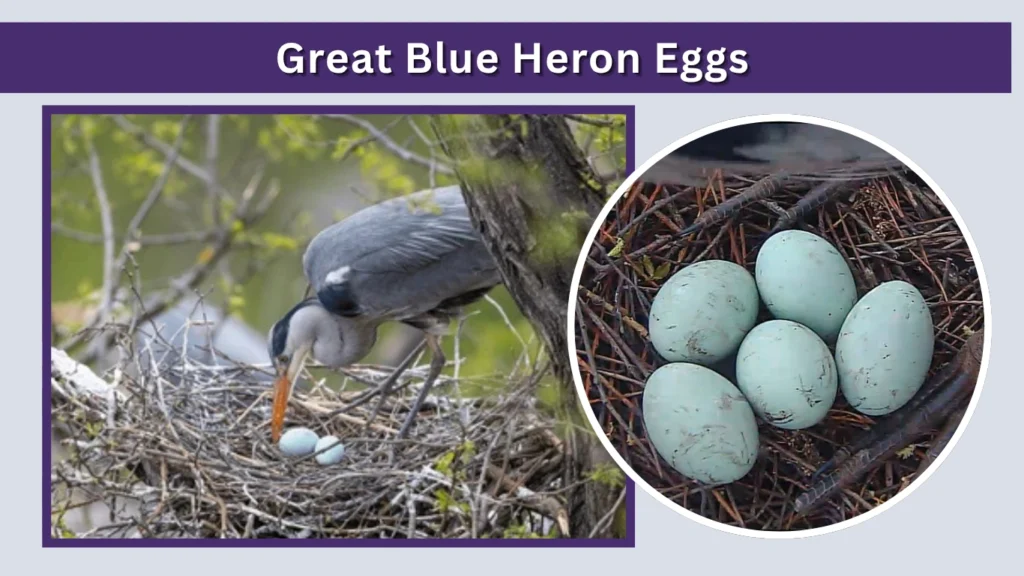
The eggs of the great blue heron are an important part of its life cycle.
Egg Appearance
- Pale blue or bluish-green color
- Smooth surface
- Medium-sized compared to the bird’s body
Clutch Size
A typical clutch includes:
- 2 to 6 eggs per breeding season
The number of eggs can vary depending on environmental conditions and food availability.
Incubation
Both parents share incubation duties:
- Incubation period: about 25–30 days
- Parents take turns keeping eggs warm
- Eggs hatch at slightly different times
After hatching, chicks remain in the nest and depend on their parents for food.
Great Blue Heron Lifespan
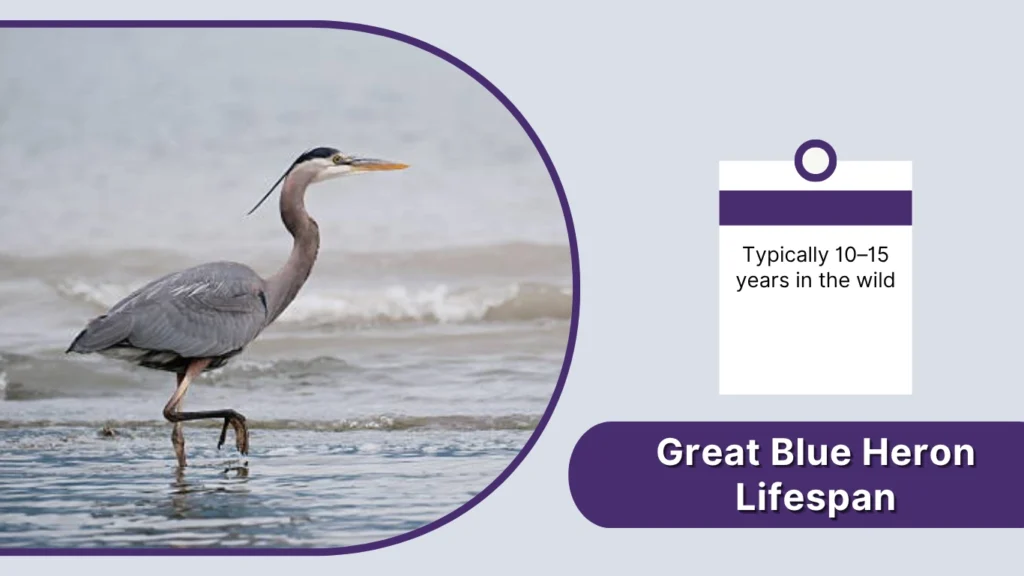
Great blue herons can live for many years, though survival depends on several factors.
Average Lifespan
- Typically 10–15 years in the wild
- Some individuals can live over 20 years
Their lifespan varies depending on habitat conditions and threats.
Survival Challenges
Great blue herons face several dangers:
- Predators such as eagles, raccoons, and foxes
- Harsh weather conditions
- Human-related threats like habitat destruction
Young birds are especially vulnerable during their early stages.
Longevity Factors
Their lifespan is influenced by:
- Availability of food
- Quality of habitat
- Protection from predators
Healthy environments help increase survival rates.
Great Blue Heron Facts
The great blue heron is full of fascinating traits and behaviors.
Interesting Facts
- It is the largest heron species in North America
- Can stand completely still for long periods while hunting
- Has excellent vision for spotting prey underwater
Behavior & Adaptations
Great blue herons are known for their patience and precision. They rely on stealth rather than speed, making them highly effective predators.
Their long neck acts like a spring, allowing them to strike quickly at prey.
Role in Ecosystem
These birds play an important role as predators in aquatic ecosystems. They help control fish and amphibian populations, maintaining ecological balance.
Great Blue Heron Behavior
Great blue herons are mostly solitary when feeding but become social during nesting.
They are territorial birds and may defend feeding areas from others. Despite their size, they are generally quiet but can produce harsh calls, especially during breeding season.
Their calm and deliberate movements are a key part of their hunting strategy.
How to Spot a Great Blue Heron
If you want to observe a great blue heron in the wild, here are some helpful tips:
- Look near calm water bodies like lakes, rivers, and marshes
- Visit early morning or late afternoon for best chances
- Watch for still, statuesque birds near the shoreline
- Listen for sudden movement or splashing when they strike prey
Their size and slow movements make them easier to spot than many other birds.
FAQs
What do great blue herons eat?
They mainly eat fish but also consume frogs, reptiles, and small mammals.
How long do great blue herons live?
They typically live 10–15 years in the wild.
Where do they build nests?
They build large stick nests high in trees, often in colonies.
Do great blue herons migrate?
Some migrate to warmer areas in winter, while others stay year-round.
Conclusion
The great blue heron is a remarkable bird known for its size, patience, and hunting skill. From its powerful flight to its carefully built nests, every aspect of its life is adapted to wetland environments. By understanding its diet, habitat, and behavior, we gain a deeper appreciation for this iconic species and the ecosystems it helps sustain.