
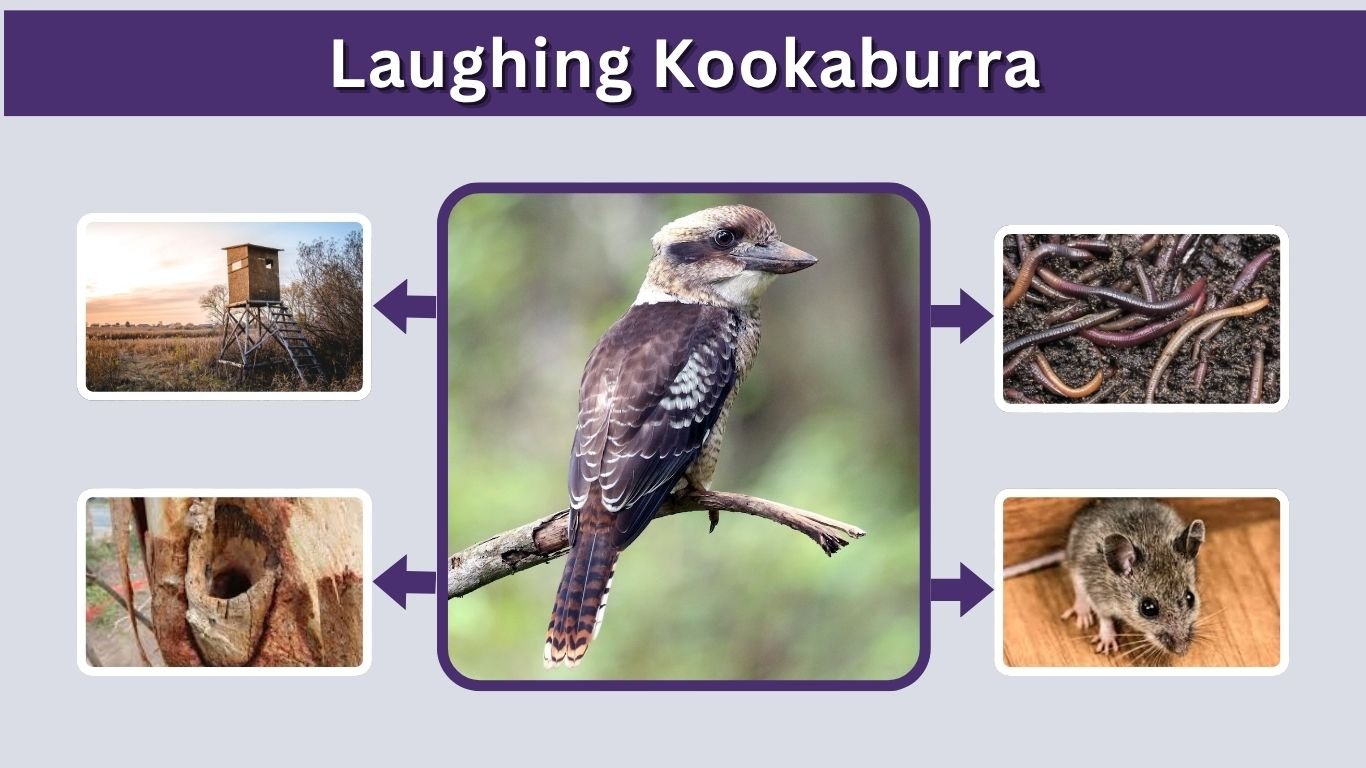
The laughing kookaburra is one of Australia’s most famous birds, known for its loud call that sounds like human laughter. This bold kingfisher has a strong beak, chunky body, and confident personality. Although it is often heard before it is seen, the laughing kookaburra plays an important role in its habitat by hunting insects, reptiles, and small animals.
What Is a Laughing Kookaburra?
The laughing kookaburra is a large bird in the kingfisher family. Unlike many kingfishers that mainly catch fish, this species spends most of its time hunting on land. It waits patiently on branches, fences, or posts before swooping down to catch prey.
Laughing Kookaburra Scientific Name
The scientific name of the laughing kookaburra is Dacelo novaeguineae. It belongs to the family Alcedinidae, which includes kingfishers. Even though it is a kingfisher, it does not depend heavily on water for food.
The bird is best known for its loud, rolling call. This call is often heard at dawn and dusk, which is why some people call kookaburras “bush alarm clocks.”
Laughing Kookaburra Appearance
The laughing kookaburra has a large head, thick neck, strong body, and long pointed beak. Its feathers are mostly brown, white, and cream, with darker markings on the wings and head. Its eyes are dark and alert, giving it a watchful expression.
| Feature | Laughing Kookaburra Description |
|---|---|
| Scientific name | Dacelo novaeguineae |
| Bird family | Kingfisher family |
| Main color | Brown, white, and cream |
| Famous trait | Loud laughing call |
| Diet | Insects, reptiles, small mammals, birds |
| Habitat | Woodlands, forests, parks, gardens |
| Native range | Australia and nearby regions |
| Activity | Mostly daytime hunter |
Laughing Kookaburra Sound
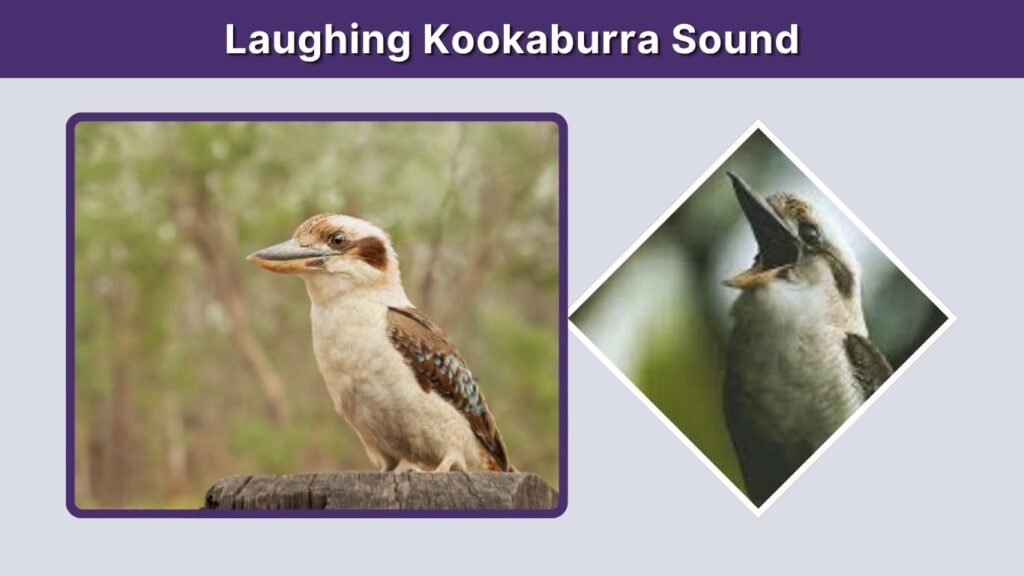
The laughing kookaburra sound is its most famous feature. Its call starts with a low chuckle and builds into loud, rolling laughter. A group of kookaburras calling together can sound like a crowd laughing in the trees.
Why Does the Laughing Kookaburra Laugh?
The laughing sound is not actually laughter. It is a territorial call. Kookaburras use it to warn other birds that an area is already occupied. Family groups often call together to make the sound louder and more powerful.
Their call helps them:
- Defend their territory
- Communicate with family members
- Signal their presence
- Warn rival kookaburras away
- Strengthen group bonds
This call is most common in the early morning and evening, although kookaburras may call at other times too.
Laughing Kookaburra Call
The laughing kookaburra call can be surprisingly loud for its size. It often begins with one bird making a soft chuckling sound. Then other members of the group join in, creating a full chorus.
In the wild, the call can travel through woodland areas and suburban neighborhoods. Many people in Australia recognize the sound instantly, even if they cannot see the bird.
Laughing Kookaburra Habitat
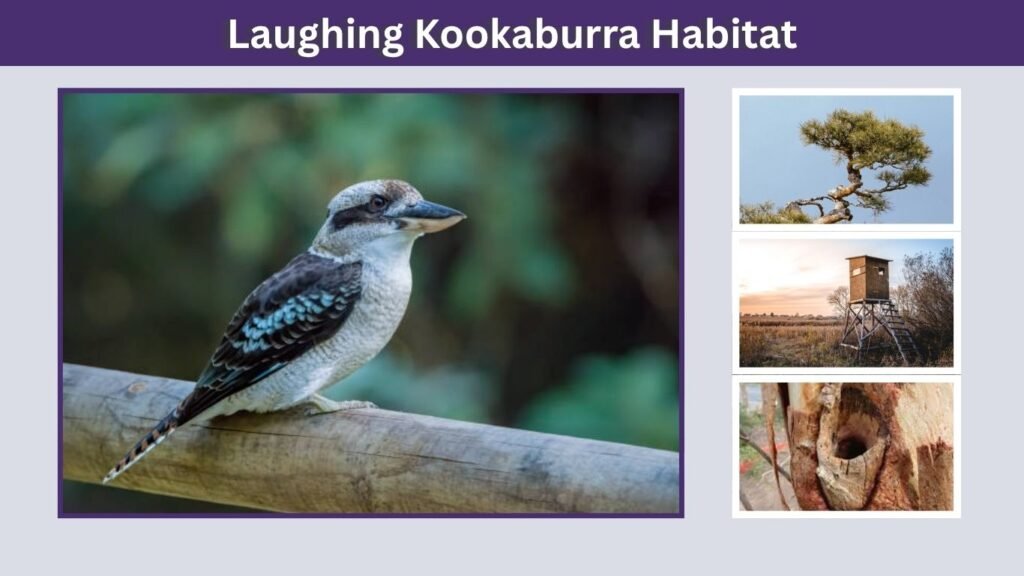
Laughing kookaburras live in a range of habitats, especially places with trees, open hunting spaces, and suitable nesting sites. They are often seen in both wild and human-influenced areas.
Where Do Laughing Kookaburras Live?
Laughing kookaburras are native to eastern Australia and have also been introduced to some other areas. They are commonly found in forests, woodlands, parks, gardens, farmlands, and suburban neighborhoods.
They prefer habitats with:
- Tall trees for perching
- Open ground for hunting
- Tree hollows for nesting
- Nearby shrubs or cover
- Good visibility for spotting prey
Because they adapt well to human environments, kookaburras may visit backyards, picnic areas, and parks.
Laughing Kookaburra in Singapore
Some people search for “laughing kookaburra Singapore” because kookaburras may be seen in zoos, bird parks, or wildlife collections outside Australia. However, Singapore is not the natural home of the laughing kookaburra. If seen there, it is usually in a managed wildlife setting rather than as a common wild bird.
Laughing Kookaburra Diet
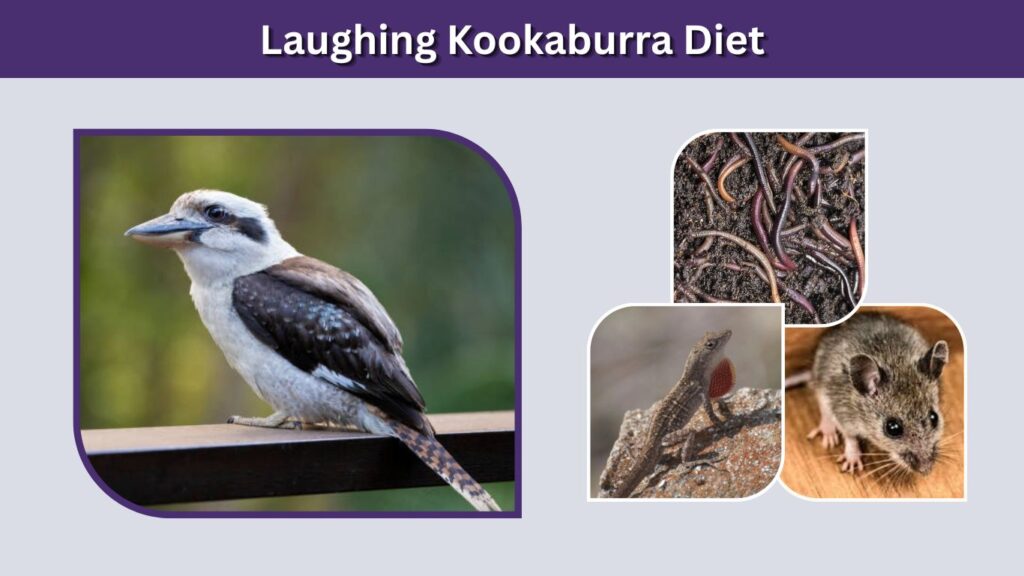
The laughing kookaburra diet is varied and mostly made up of small animals. It is a skilled hunter with sharp eyesight and a strong beak. It often waits quietly before attacking prey with a fast downward swoop.
What Do Laughing Kookaburras Eat?
Laughing kookaburras eat many types of prey, depending on what is available in their habitat. They are carnivorous birds and do not rely on seeds or fruit as a main food source.
Their diet may include:
- Insects
- Worms
- Lizards
- Snakes
- Small mammals
- Small birds
- Frogs
- Crustaceans
- Rodents
Kookaburras are especially known for eating reptiles, including small snakes. After catching larger prey, they may beat it against a branch or hard surface before swallowing it.
How Laughing Kookaburras Hunt
Laughing kookaburras use a sit-and-wait hunting style. They perch above the ground and scan the area carefully. When they spot movement, they dive down quickly and grab the prey with their beak.
This hunting method saves energy because the bird does not need to fly constantly. It can wait for the right moment and strike with accuracy.
Laughing Kookaburra Predators
Adult laughing kookaburras are strong birds, but they still face danger from predators, especially when young or nesting. Eggs and chicks are more vulnerable than adults.
What Eats a Laughing Kookaburra?
Predators may vary by location, but kookaburras can face threats from larger birds, snakes, mammals, and introduced predators. Nesting birds must protect eggs and chicks from animals that can climb into tree hollows.
Possible predators include:
- Large birds of prey
- Goannas
- Snakes
- Feral cats
- Foxes
- Other nest predators
Adult kookaburras may defend themselves with their strong beaks and loud calls. Family groups can also help protect territory and young birds.
Human-Related Threats
Although laughing kookaburras can live near people, human activity can still affect them. Loss of large old trees is a major issue because kookaburras need tree hollows for nesting.
Other risks include vehicle strikes, poisoning from pest control chemicals, pet attacks, and feeding by humans. Feeding kookaburras processed food or meat scraps can lead to poor nutrition and dependence on people.
Laughing Kookaburra Behavior
Laughing kookaburras are social birds. They often live in family groups and defend a territory together. Their bold nature makes them seem friendly, but they are still wild animals with natural hunting instincts.
Family Groups
A family group usually includes a breeding pair and related helpers. These helpers may assist with defending territory and feeding young birds. This social structure helps increase the survival of chicks.
Kookaburras often remain in the same area for long periods. Their loud calls help announce that the territory is occupied.
Daily Activity
Laughing kookaburras are mostly active during the day. They spend time perching, hunting, calling, preening, and watching their surroundings.
Common behaviors include:
- Calling at dawn and dusk
- Sitting quietly on branches
- Diving down to catch prey
- Beating prey before eating
- Defending territory
- Nesting in tree hollows
- Living in small family groups
Their calm sitting behavior can make them easy to overlook until they call or move suddenly.
Laughing Kookaburra Reproduction
Laughing kookaburras nest in tree hollows, termite nests, or suitable cavities. They do not build delicate cup-shaped nests like many small birds. Instead, they rely on natural holes that provide protection.
Nesting Habits
The breeding pair chooses a nesting cavity and lays eggs inside. The chicks hatch helpless and need care from adults. In some family groups, older young birds help feed and protect the new chicks.
Tree hollows are very important for breeding. Since hollows often form in older trees, protecting mature trees helps support kookaburra populations.
Young Kookaburras
Young kookaburras grow inside the nest before learning to fly and hunt. They may stay close to the family group after leaving the nest. Over time, they learn how to catch prey, recognize danger, and take part in group calling.
Laughing Kookaburra Fun Facts
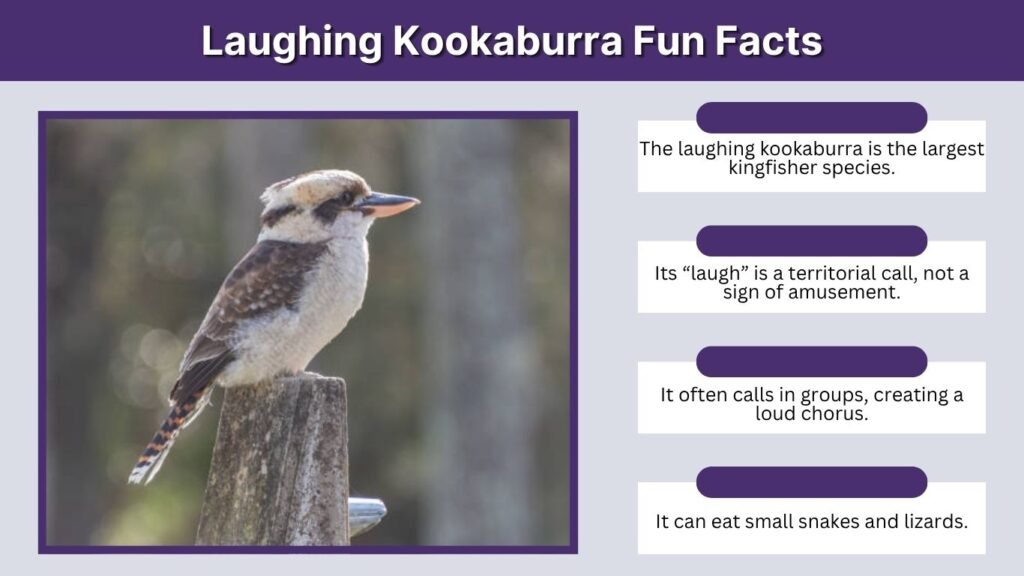
The laughing kookaburra is full of interesting traits. Its sound, hunting style, and social behavior make it one of the most memorable birds in the world.
Interesting Facts About Laughing Kookaburras
Here are some fun facts:
- The laughing kookaburra is the largest kingfisher species.
- Its “laugh” is a territorial call, not a sign of amusement.
- It often calls in groups, creating a loud chorus.
- It can eat small snakes and lizards.
- It usually hunts from a perch instead of flying continuously.
- It is often heard at sunrise and sunset.
- It can live near people in parks and gardens.
- It nests in tree hollows rather than building open nests.
Laughing Kookaburra Corner
A “laughing kookaburra corner” in a wildlife article, classroom sheet, or fact sheet usually includes quick details about the bird’s sound, diet, habitat, and appearance. These birds are popular in educational materials because they are easy to recognize and fun to learn about.
Laughing Kookaburra Fact Sheet
A simple laughing kookaburra fact sheet helps summarize the bird for students, birdwatchers, and wildlife lovers.
Quick Information
The laughing kookaburra is a large, land-hunting kingfisher from Australia. It has brown and white feathers, a strong beak, and a famous laughing call. It eats insects, reptiles, small mammals, and other small animals. It lives in forests, woodlands, parks, farms, and gardens.
It is most active during the day and often calls at dawn or dusk. Family groups defend territories together and may use the same general area for many years.
Can Laughing Kookaburras Be Kept as Pets?
Laughing kookaburras are wild birds and are not suitable as normal household pets. In many places, keeping native wildlife is illegal without special permits. They have specialized care needs, strong hunting instincts, and require proper space.
Why They Should Stay Wild
Kookaburras are best appreciated in their natural habitat or in licensed wildlife parks. Feeding or trying to tame wild kookaburras can harm them. Human food is often unhealthy for them, and dependency can make wild birds less able to survive naturally.
To help kookaburras, people can protect large trees, avoid harmful chemicals, keep cats indoors, and avoid feeding them processed foods.
FAQs
What is the laughing kookaburra sound like?
The laughing kookaburra sound is a loud rolling call that sounds like human laughter. It often starts as a low chuckle and builds into a loud chorus, especially when several birds call together. The call is used mainly to defend territory.
What is the scientific name of the laughing kookaburra?
The scientific name of the laughing kookaburra is Dacelo novaeguineae. It is part of the kingfisher family. Even though it is a kingfisher, it hunts mostly on land rather than catching fish as its main food.
What do laughing kookaburras eat?
Laughing kookaburras eat insects, worms, lizards, small snakes, frogs, rodents, small birds, and other small animals. They hunt by watching from a perch, diving down quickly, and grabbing prey with their strong beak.
Where do laughing kookaburras live?
Laughing kookaburras live mainly in Australia, especially in forests, woodlands, parks, farmlands, and gardens. They prefer areas with trees for nesting and open spaces for hunting. Outside Australia, they may be seen in zoos or wildlife parks.
What are the predators of laughing kookaburras?
Adult laughing kookaburras may be threatened by large birds of prey and introduced predators. Eggs and chicks are more vulnerable to snakes, goannas, cats, foxes, and other nest predators. Tree hollows help protect young birds during nesting.
