
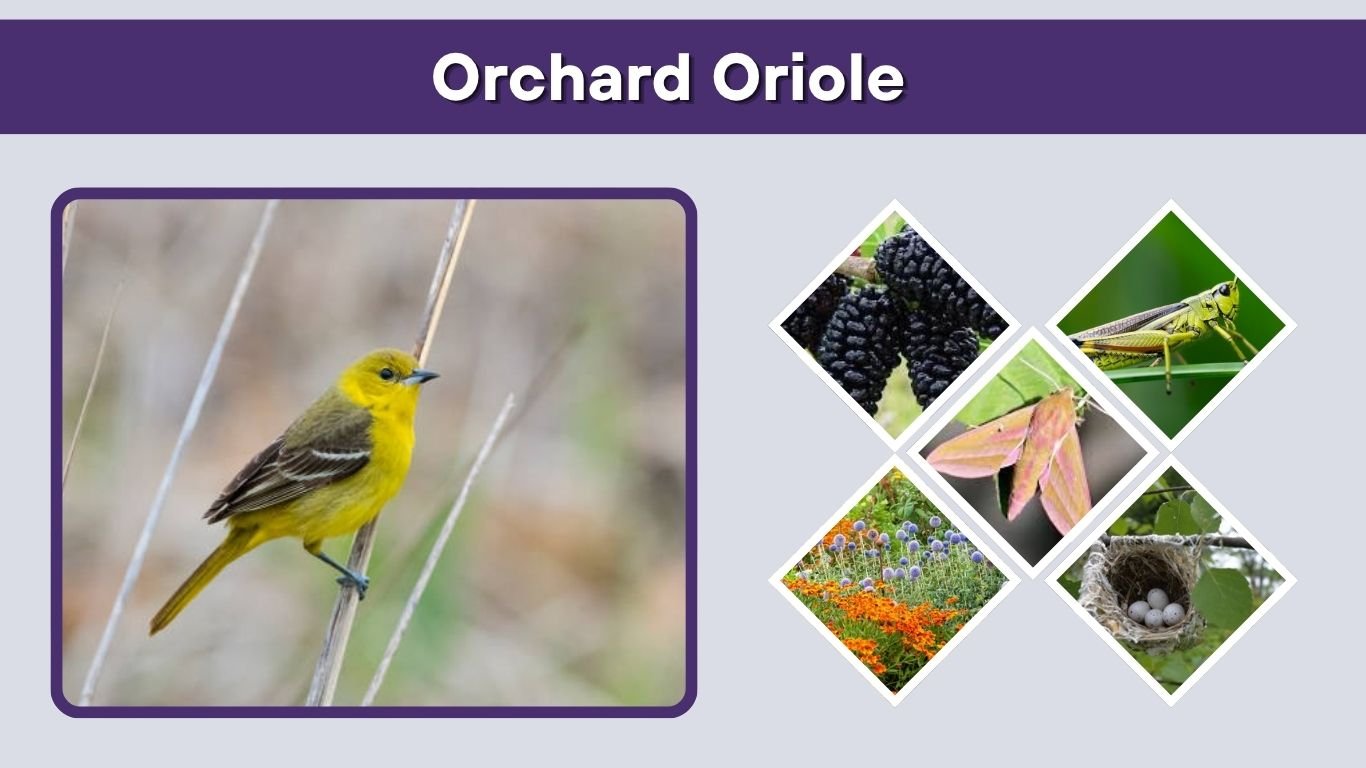
The orchard oriole is a small, colorful songbird known for its rich song, slim body, and active movement through trees and shrubs. Males have deep chestnut and black plumage, while females are bright yellow-green. These orioles are often found in orchards, open woodlands, river edges, parks, farms, and backyards. Although less famous than the Baltimore oriole, the orchard oriole is a beautiful and fascinating bird to watch.
What Is an Orchard Oriole?
The orchard oriole is the smallest oriole commonly found in North America. Its scientific name is Icterus spurius. It belongs to the blackbird family, the same broader family as meadowlarks, grackles, cowbirds, and other orioles.
This bird gets its name from its habit of using orchards, open groves, and scattered trees. It does not need deep forest. Instead, it prefers places where trees, shrubs, open ground, and insects are all nearby.
Why Orchard Orioles Stand Out
Orchard orioles are easy to appreciate once you learn their field marks. They are active, slender birds that often move quickly through leaves. Males show a striking mix of black and chestnut, while females look yellow-green and can be mistaken for warblers or tanagers.
They are also known for their quick, musical song. In spring and early summer, a singing male may be heard before he is seen.
What Does an Orchard Oriole Look Like?
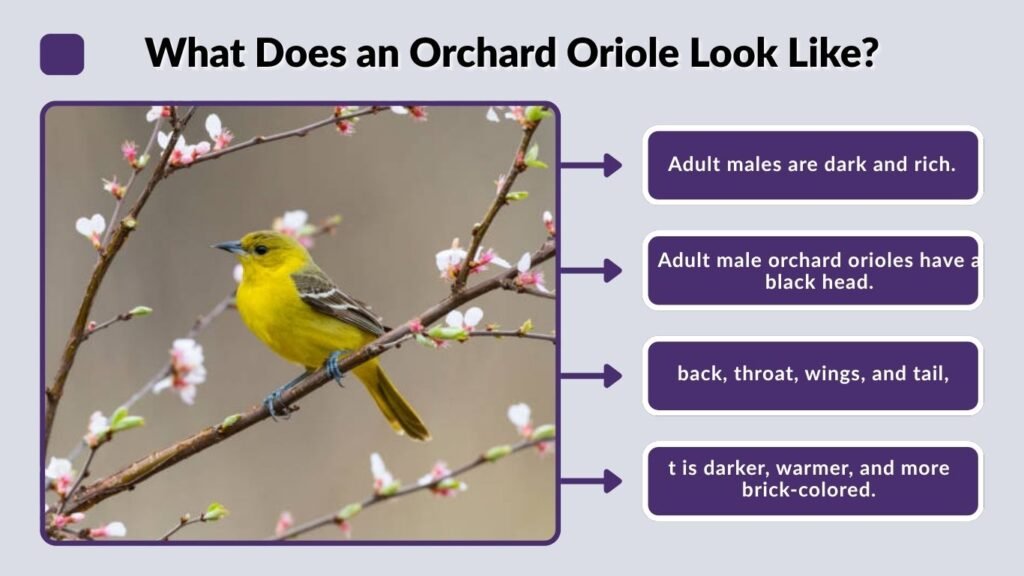
Orchard orioles look different depending on age and sex. Adult males are dark and rich-colored, while females and young birds are lighter and more yellow. This difference can make identification confusing for beginners.
Adult male orchard orioles have a black head, back, throat, wings, and tail, with deep chestnut or reddish-brown underparts. The color is not bright orange like a Baltimore oriole. It is darker, warmer, and more brick-colored.
Females are yellow-green above and yellow below. They have darker wings with pale wing bars. Juveniles and first-year males may look similar to females, though young males may show black patches as they mature.
| Feature | Orchard Oriole Description |
|---|---|
| Scientific name | Icterus spurius |
| Size | Smallest common North American oriole |
| Adult male color | Black with deep chestnut underparts |
| Female color | Yellow-green above, yellow below |
| Young male color | Female-like with developing dark patches |
| Habitat | Orchards, open woods, farms, parks, river edges |
| Diet | Insects, fruit, nectar, and some berries |
| Nest type | Woven hanging cup or pouch in tree branches |
Male Orchard Oriole
The male orchard oriole is darker than many people expect. Instead of bright orange, he has a chestnut or reddish-brown body with black on the head, throat, back, wings, and tail. This makes him look elegant and less flashy than a Baltimore oriole.
Males are usually easiest to notice when singing. They may perch in the open briefly, then move back into leaves. Their rich color can look almost black in shade, so good light helps with identification.
Male Identification Tips
Look for:
- Black head and throat
- Black back and tail
- Chestnut or reddish-brown belly
- Slim oriole shape
- Pointed bill
- Quick movement through trees
- Musical song from exposed branches
The adult male’s dark chestnut color is one of the best clues.
Female Orchard Oriole
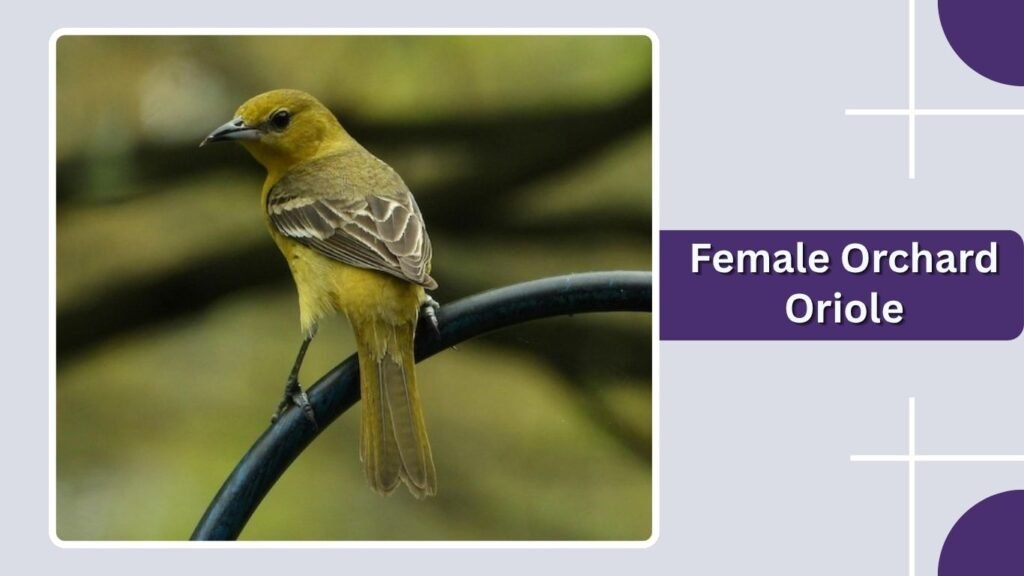
The female orchard oriole looks very different from the male. She is usually yellow to yellow-green, with olive tones above and brighter yellow below. Her wings are darker with pale wing bars.
Because of her color, she may be confused with female tanagers, warblers, or young Baltimore orioles. The key is to look at body shape. Orchard orioles have a slim body, pointed bill, and fairly long tail.
Female Identification Tips
A female orchard oriole often shows:
- Yellow-green back
- Yellow underside
- Pale wing bars
- Slim body
- Pointed bill
- Active movement in trees
- Softer appearance than the male
Females may visit feeders, flowering trees, and fruiting shrubs, but they are often more quietly colored and easier to overlook.
Juvenile and Immature Orchard Oriole
Juvenile orchard orioles usually look similar to females. They are yellowish or greenish with pale wing bars and a slim shape. Young males may take time to develop full adult plumage.
First-year males can be especially confusing because they may sing even while still looking mostly female-like. As they mature, they begin to show black areas on the throat, face, and chest.
How to Recognize Young Birds
Young orchard orioles may show:
- Yellow-green body color
- Pale wing bars
- Slim pointed bill
- Shorter or less polished song
- Patchy dark markings in young males
- Begging behavior near adults after fledging
If you see a yellow oriole-shaped bird with dark patches beginning to appear, it may be an immature male orchard oriole.
Orchard Oriole Size
The orchard oriole is smaller than many other orioles. It is a slender bird with a pointed bill and fairly long tail. Because it is small and active, it can disappear quickly into leaves.
Its size is one reason people sometimes mistake females for warblers. However, orchard orioles have a stronger bill and more oriole-like body shape than most warblers.
Shape and Structure
Important shape clues include:
- Slim body
- Medium-length tail
- Pointed bill
- Dark wings with pale bars
- Agile movement
- Upright perching posture
When color is hard to see, shape and behavior can help confirm the identification.
Orchard Oriole Range
Orchard orioles breed across much of the eastern and central United States. They are often found in the Midwest, Great Plains, Southeast, and parts of the eastern states. They may also occur in suitable habitats near rivers, farms, orchards, and open woodland edges.
They are migratory birds. After breeding, they leave North America and spend the nonbreeding season in warmer regions, including parts of Mexico, Central America, and northern South America.
Where to Find Orchard Orioles
During breeding season, look for them in:
- Orchards
- Farms with scattered trees
- Open woodlands
- Woodland edges
- River corridors
- Parks
- Large gardens
- Shelterbelts
- Brushy fields
- Suburban areas with mature trees
They are not usually deep-forest birds. Open areas with trees and shrubs are better places to search.
Orchard Oriole Habitat
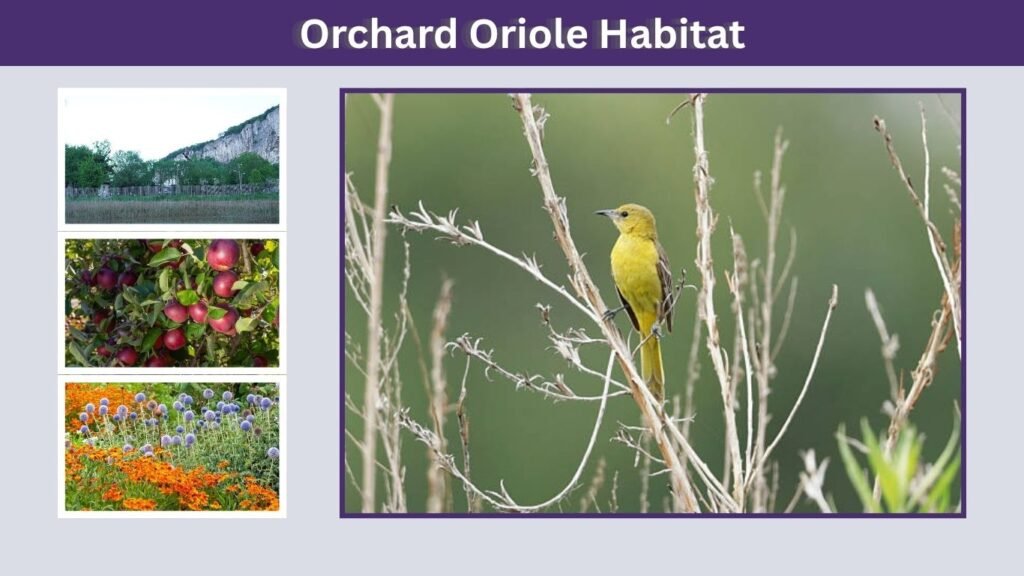
Orchard orioles prefer semi-open habitats. They like trees for nesting and singing, but they also benefit from nearby shrubs, open ground, and insect-rich vegetation. This mix of habitat gives them food, cover, and nesting sites.
They are often seen near water, especially where rivers or streams support tall trees and insects. However, they can also use dry orchards, farms, and parks if food and nesting places are available.
Habitat Features They Need
Good orchard oriole habitat often includes:
- Scattered tall trees
- Shrubs
- Flowering plants
- Insect-rich areas
- Fruit-bearing plants
- Open edges
- Safe nesting branches
A yard with native plants, fewer pesticides, and mature trees may attract them during migration or breeding season.
Orchard Oriole Song and Call
The orchard oriole song is fast, sweet, and musical. It may include whistles, warbles, and slightly harsh notes. Males sing most often in spring and early summer to attract mates and defend territory.
The song can be easy to miss because it is quick. It may sound cheerful and bubbling, but shorter than the song of some other orioles. Calls may include sharp notes, chatter, or short contact sounds.
When They Sing
Orchard orioles sing most during breeding season. Males often sing from high branches, fence lines, or exposed perches near nesting habitat. Once nesting is underway, singing may become less frequent.
Learning the song is useful because orchard orioles often stay hidden in foliage.
Orchard Oriole Nest
The orchard oriole builds a hanging nest, though it is usually not as deep and pouch-like as the Baltimore oriole’s nest. The female does most of the nest building. She weaves grasses, plant fibers, and other flexible materials into a cup-like structure attached to small branches.
The nest is often placed in trees or shrubs, sometimes near the end of a branch. It may be hidden by leaves and difficult to see.
Nesting Behavior
The female lays the eggs and incubates them. Both parents may help feed the young after hatching. Insects are especially important during this period because chicks need protein for growth.
Orchard orioles may nest in loose groups in suitable habitat, especially where food and nesting trees are plentiful.
What Do Orchard Orioles Eat?
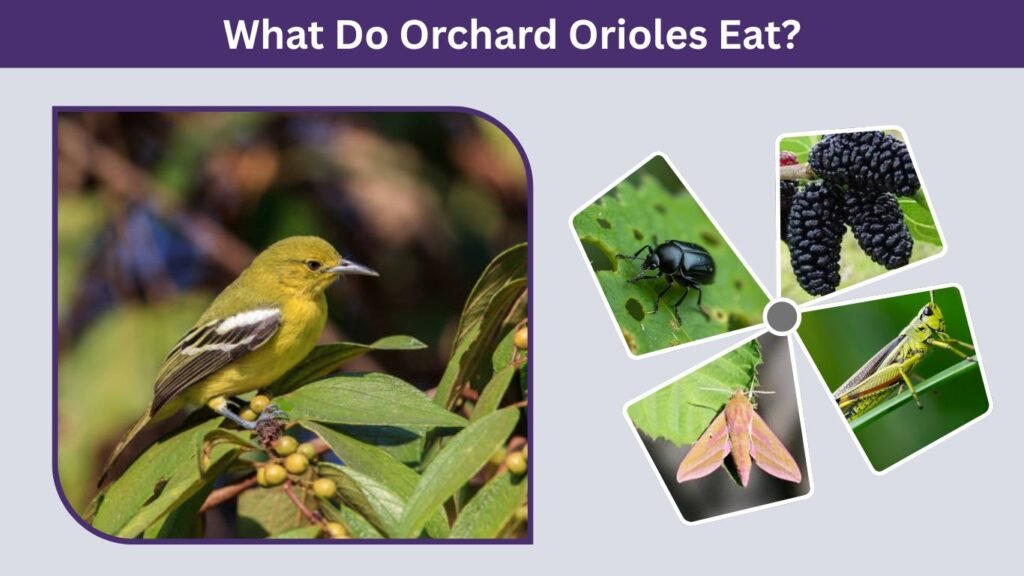
Orchard orioles eat insects, fruit, nectar, and berries. During breeding season, insects are very important. They feed on caterpillars, beetles, grasshoppers, spiders, and other small invertebrates.
They also visit flowers for nectar and may eat soft fruit when available. In backyards, they may come to orange halves, grape jelly, nectar feeders, and mealworms, though they may be less predictable at feeders than Baltimore orioles.
Common Foods
Orchard orioles may eat:
- Caterpillars
- Beetles
- Grasshoppers
- Spiders
- Moths
- Ants
- Berries
- Mulberries
- Flower nectar
- Orange pieces
- Grape jelly
- Mealworms
Offer jelly only in small amounts. Insects and natural fruit are healthier long-term foods.
How to Attract Orchard Orioles
Attracting orchard orioles starts with habitat. Feeders can help, but trees, shrubs, insects, and flowering plants are more important. These birds often prefer natural food sources and may not visit feeders as reliably as Baltimore orioles.
Backyard Attraction Tips
To attract orchard orioles:
- Plant native shrubs and trees.
- Grow berry-producing plants.
- Avoid broad insecticides.
- Offer orange halves in spring.
- Provide small amounts of grape jelly.
- Use clean nectar feeders.
- Offer mealworms during nesting season.
- Keep cats indoors.
- Provide clean water.
- Maintain some open edge habitat.
Place feeders near shrubs or trees so birds feel safe. Clean feeders often because sweet foods spoil quickly.
Orchard Oriole Migration
Orchard orioles are long-distance migrants. They arrive in breeding areas in spring and often leave earlier than many other songbirds. Some begin moving south in mid to late summer after nesting is complete.
Because of this early departure, people may see orchard orioles for only a short part of the year. Spring and early summer are usually the best times to look for them.
Migration Timing
Their yearly pattern is generally:
- Spring: arrive on breeding grounds
- Early summer: nest and raise young
- Late summer: begin moving south
- Winter: stay in warmer tropical regions
If orchard orioles disappear from your yard by late summer, they may already be starting migration.
Orchard Oriole in Backyards
Orchard orioles may visit backyards, especially if the yard has trees, shrubs, fruit, flowers, and insects. They are not always as feeder-focused as some other birds, but they may investigate oranges, nectar, and jelly.
They are more likely to stay if the surrounding habitat is suitable. A yard near open woods, farms, orchards, streams, or parks has a better chance of attracting them.
Feeder Tips
Use fresh food and avoid overfeeding sweets. Replace fruit before it spoils. Clean nectar feeders frequently. Keep jelly portions small. If ants or bees become a problem, reduce sweet foods and focus on native plants and water.
Orchard Oriole Eggs and Young
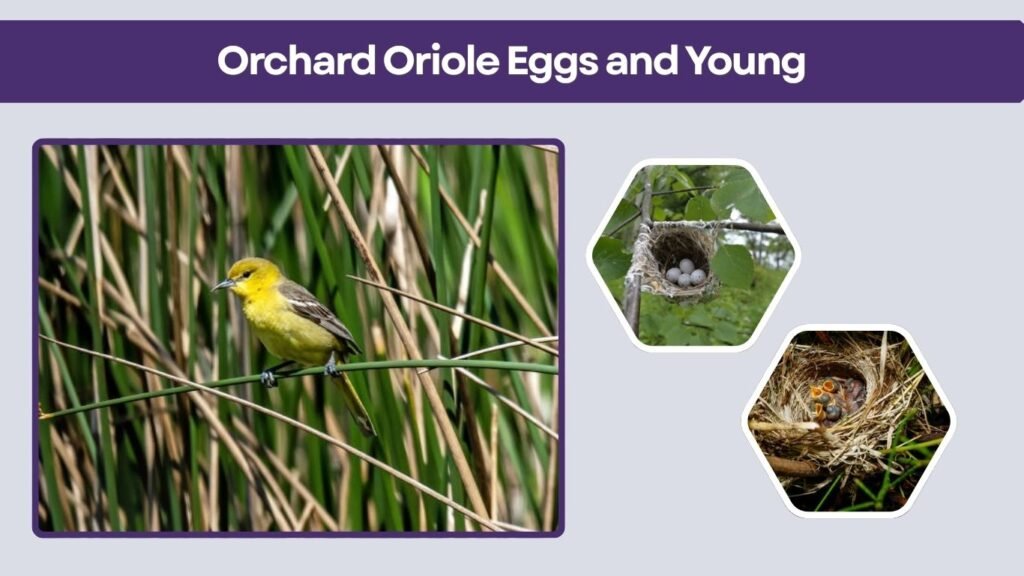
Orchard oriole eggs are usually pale with darker markings. The female incubates the eggs, while the male may guard the territory and help with feeding after hatching. Once chicks hatch, parents bring insects and other soft food.
Young birds leave the nest after they develop enough feathers and strength to move through branches. They may still follow the adults and beg for food for a short time.
Orchard Oriole Facts
The orchard oriole has several interesting traits that make it special among North American songbirds.
Quick Facts
- It is the smallest common oriole in North America.
- Adult males are chestnut and black, not bright orange.
- Females are yellow-green and much softer in color.
- They often use orchards, parks, farms, and open woods.
- They migrate earlier than many other songbirds.
- They eat many insects during nesting season.
- They build woven nests in trees or shrubs.
- They may visit oranges, jelly, nectar, and mealworms.
FAQs
What does an orchard oriole look like?
An adult male orchard oriole has a black head, throat, back, wings, and tail with deep chestnut underparts. The female is yellow-green above and yellow below with pale wing bars. Juveniles look similar to females, while young males may show patchy dark markings as they mature.
Where do orchard orioles live?
Orchard orioles breed across much of the eastern and central United States. They prefer orchards, open woodlands, farms, parks, river edges, and areas with scattered trees and shrubs. During winter, they migrate south to warmer regions, including parts of Mexico, Central America, and northern South America.
What do orchard orioles eat?
Orchard orioles eat insects, fruit, nectar, and berries. During nesting season, insects such as caterpillars, beetles, spiders, and grasshoppers are especially important. They may also visit feeders for oranges, small amounts of grape jelly, nectar, and mealworms when these foods are fresh.
How do you attract orchard orioles?
To attract orchard orioles, create a yard with native trees, shrubs, flowers, insects, and fruiting plants. You can also offer orange halves, clean nectar feeders, mealworms, and small portions of grape jelly. Avoid heavy pesticide use because orioles need insects, especially when feeding young.
Do orchard orioles sing?
Yes, male orchard orioles sing a quick, sweet, musical song with whistles and warbled notes. They sing most often in spring and early summer to attract mates and defend territory. Their calls may include sharp notes and chatter, especially when communicating near nesting areas.