
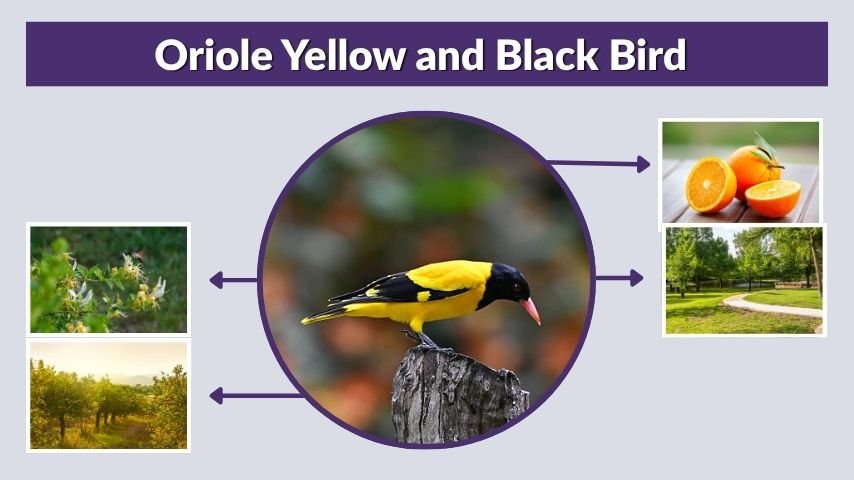
An oriole yellow and black bird is usually one of the most eye-catching birds you can spot in a yard, woodland edge, park, or garden. Many orioles have bright yellow, orange, and black feathers, which makes them easy to notice but sometimes hard to identify correctly. Depending on where you live, the bird may be a Baltimore Oriole, Hooded Oriole, Black-hooded Oriole, or another similar species.
What Is an Oriole Yellow and Black Bird?
An oriole yellow and black bird usually refers to a member of the oriole family with bold yellow or orange body feathers and contrasting black markings. In North America, people often use this phrase when describing male orioles, because males are usually much brighter than females.
The exact bird depends heavily on location. In the eastern United States, a bright orange-yellow and black oriole is often a Baltimore Oriole. In the southwestern United States and California, a yellow and black bird may be a Hooded Oriole. In parts of Asia, especially India and nearby regions, a yellow bird with a black head may be a Black-hooded Oriole or Black-naped Oriole.
Orioles are slim songbirds with pointed bills, long tails, and active feeding behavior. They often stay high in trees, searching for insects, fruit, and nectar. Baltimore Orioles are known for feeding on fruit, nectar, and insects, and they can be attracted to backyard feeders with oranges, nectar, or similar foods.
Common Types of Yellow and Black Orioles
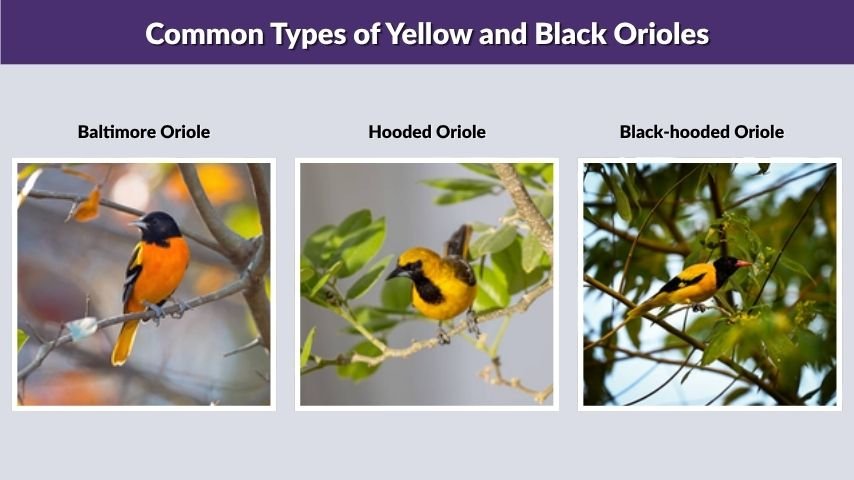
Several orioles match the description of a yellow and black bird. Some are mostly orange and black, while others are truly yellow and black. Looking at color alone is not enough. You should also consider location, bill shape, wing pattern, and habitat.
| Oriole Type | Main Colors | Common Region | Quick ID Tip |
|---|---|---|---|
| Baltimore Oriole | Orange-yellow and black | Eastern North America | Bright orange male with black head and wings |
| Hooded Oriole | Yellow-orange and black | Southwestern U.S., California, Mexico | Yellow-orange body, black throat, slender curved bill |
| Black-hooded Oriole | Yellow and black | South and Southeast Asia | Bright yellow body with black hood |
| Black-naped Oriole | Yellow and black | Parts of Asia | Yellow body with black eye line and nape |
| Orchard Oriole | Chestnut/black male, yellow-green female | Eastern and central North America | Smaller, slimmer, less bright orange |
Baltimore Oriole Yellow and Black Bird
The Baltimore Oriole is one of the best-known orange and black orioles in North America. Adult males are bright orange with a black head, black wings, and white wing bars. From a distance, the orange may look yellow, especially in sunlight or shade, which is why many people search for a Baltimore oriole yellow and black bird.
Baltimore Orioles are widespread in the eastern United States during breeding season. Audubon describes them as brilliantly colored songbirds of the East, with flaming orange and black plumage.
How to Identify a Baltimore Oriole
A Baltimore Oriole usually has:
- Bright orange or yellow-orange body
- Black head and upper back on adult males
- Black wings with white markings
- Slim body and pointed bill
- Rich, whistling song from treetops
- Habit of visiting oranges, jelly, and nectar feeders
Female Baltimore Orioles are not as bold as males. They are usually yellow-orange below and brownish or olive above. Young males may also look duller before developing full adult color.
Hooded Oriole Yellow and Black Bird
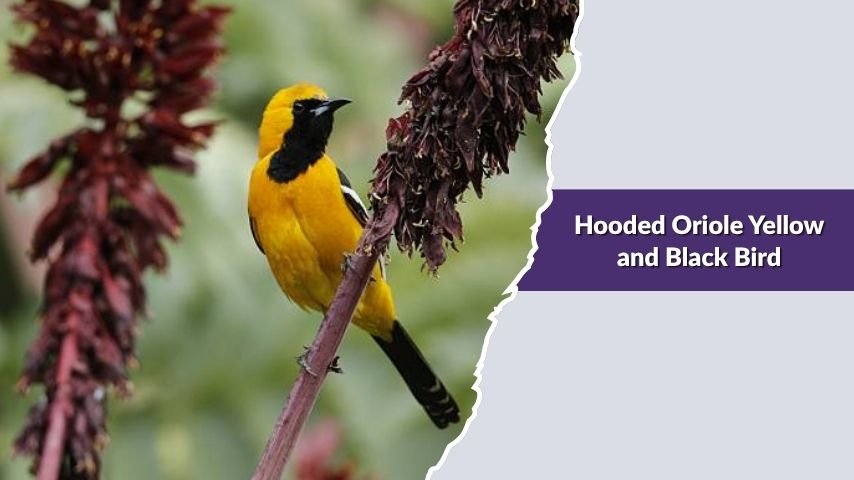
The Hooded Oriole is another strong match for “oriole yellow and black bird,” especially in California and the southwestern United States. Male Hooded Orioles can be brilliant yellow-orange with a black throat, black wings, and black tail. Their color may vary from yellow to orange depending on region and individual bird.
Cornell describes male Hooded Orioles as black and brilliant yellow-orange birds of open woodlands and yards in the southwestern United States. Females are paler yellow and less strongly marked.
Hooded Oriole in California
If you see an oriole yellow and black bird in California, the Hooded Oriole is a strong possibility. These birds are often linked with palm trees and suburban areas. They are sometimes called “palm-leaf orioles” because they often attach hanging nests to palm fronds.
A Hooded Oriole may also visit hummingbird feeders. Its bill is thinner and slightly curved, which can help separate it from some other orioles. Audubon notes that the female Hooded Oriole has an overall yellow-green look and a thin, slightly curved bill.
Black-Hooded Oriole Bird
The Black-hooded Oriole is a bright yellow and black bird found in parts of Asia, including India and nearby regions. This bird has a golden-yellow body with a black head or hood. Because of its clear yellow-and-black pattern, it fits the phrase “black hooded oriole bird” very well.
This bird is different from the North American Hooded Oriole. The names sound similar, but they refer to different species in different parts of the world. If you are in India or South Asia and see a yellow bird with a black head, Black-hooded Oriole may be a better match than Baltimore Oriole or Hooded Oriole.
Black-Headed Oriole Bird
The phrase “black-headed oriole bird” can describe several birds depending on region. In casual searches, people may use it for any oriole with a black head and yellow or orange body. In North America, that description often points to a male Baltimore Oriole or sometimes a Hooded Oriole. In Asia, it may point to Black-hooded Oriole or Black-naped Oriole.
When identifying a black-headed oriole, ask three questions:
- Where was the bird seen?
- Was the body yellow, orange, or yellow-green?
- Did the bird have a full black hood, black throat, or only a black eye/nape line?
These clues are more useful than the phrase “black-headed” alone.
Orange and Black Oriole Bird
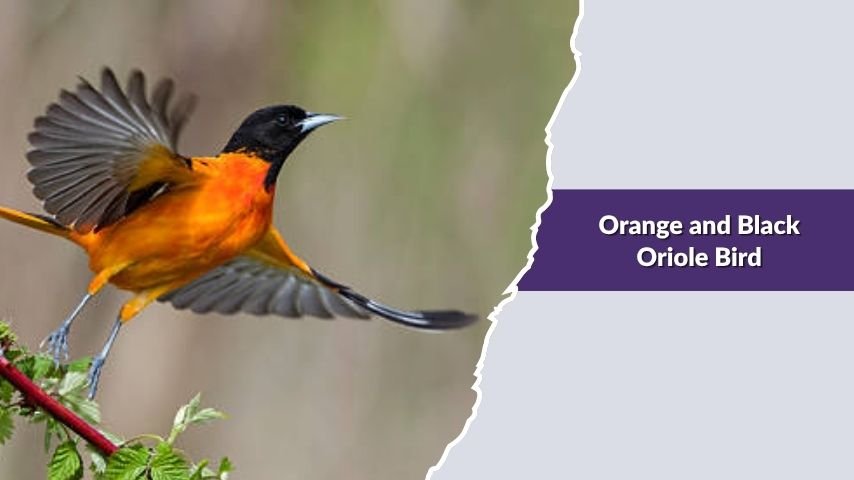
Many people describe orioles as orange and black rather than yellow and black. This is especially true for male Baltimore Orioles. They have some of the most vivid orange plumage among North American songbirds.
A male Baltimore Oriole may appear orange, golden, or yellow-orange depending on light. The black head and wings create a strong contrast. This makes it one of the easiest orioles to recognize when fully adult.
Hooded Orioles can also look orange and black, but many are more yellow-orange than deep orange. Their black markings are usually concentrated around the throat, face, wings, and tail rather than forming the full black head pattern seen on Baltimore Orioles.
Black Oriole Bird: Is There an All-Black Oriole?
People sometimes search for “black oriole bird” or “all black oriole bird,” but most orioles are not entirely black. Many male orioles have black heads, wings, backs, or throats, mixed with orange, yellow, or chestnut. A bird that looks mostly black may be a blackbird, grackle, cowbird, or another species rather than an oriole.
Orioles belong to the same broader family group as blackbirds, meadowlarks, and cowbirds, so confusion is common. A Red-winged Blackbird, for example, may be mistaken for a dark oriole by someone who only catches a quick glimpse. However, Red-winged Blackbirds have a different shape, behavior, and shoulder patch.
Blackbird vs Oriole Differences
Orioles are usually slimmer and more tree-loving, while many blackbirds are stockier and often gather in open fields, marshes, lawns, or large flocks.
Look for these differences:
- Orioles usually have brighter yellow, orange, or chestnut body color.
- Orioles often feed high in trees or visit fruit and nectar feeders.
- Orioles have a pointed, sometimes slightly curved bill.
- Blackbirds often look heavier and may feed on the ground.
- Red-winged Blackbirds have red and yellow shoulder patches, not a full orange body.
Bird That Looks Like an Oriole but Black and White
A black and white bird that looks like an oriole may not be an oriole at all. Depending on where you live, it could be a Black-and-white Warbler, a grosbeak, a woodpecker, or another songbird with bold markings.
Some orioles have white wing bars, but they are rarely only black and white. If the bird has no yellow, orange, or chestnut color, it may be a lookalike rather than a true oriole. Check the bill, body shape, feeding style, and location.
A bird with strong black-and-white markings and a heavy bill may be a grosbeak. A bird creeping along tree trunks may be a Black-and-white Warbler or woodpecker. A true oriole usually has a slim body, pointed bill, and at least some yellow, orange, or warm color.
What Do Yellow and Black Orioles Eat?
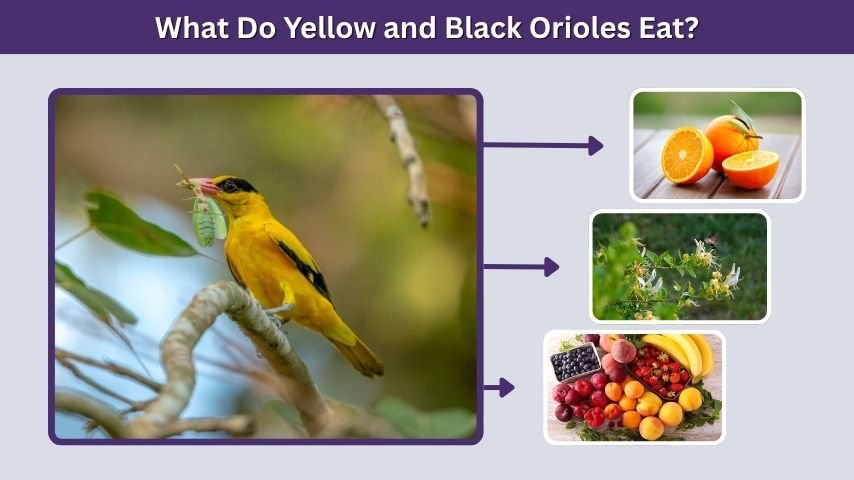
Yellow and black orioles usually eat insects, fruit, and nectar. During breeding season, insects are especially important because young birds need protein. Orioles may eat caterpillars, beetles, spiders, and other small invertebrates.
They also enjoy sweet foods, which is why many backyard birders attract them with orange halves, nectar feeders, or small amounts of jelly. Hooded Orioles may use hummingbird feeders and sometimes hang awkwardly while feeding.
Foods That Attract Orioles
You can attract orioles with:
- Orange halves
- Nectar feeders
- Fresh fruit
- Small amounts of grape jelly
- Native flowering plants
- Berry-producing shrubs
- Insect-friendly garden areas
Keep feeders clean and replace sweet foods often. Spoiled jelly or dirty nectar can harm birds.
Where to Find Yellow and Black Orioles
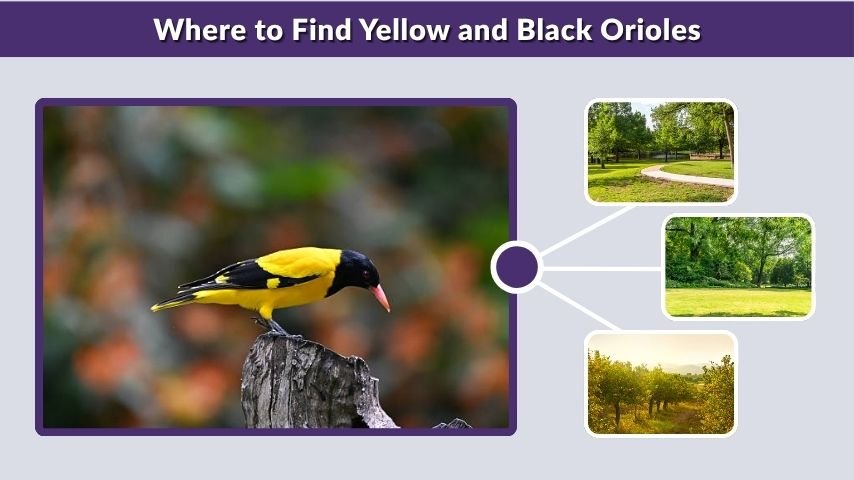
The best place to find orioles depends on the species. Baltimore Orioles are often seen in open woods, parks, groves, shade trees, and yards in eastern North America. Cornell notes that people should look high in the trees for Baltimore Orioles because males often sing from treetops.
Hooded Orioles are more common in the Southwest, including parts of California, Arizona, Texas, and Mexico. They often appear in open woodlands, neighborhoods, desert-edge habitats, and areas with palms.
Black-hooded and Black-naped Orioles are found outside North America, mostly in Asia. If your location is India, Singapore, or nearby regions, those species may be more relevant than Baltimore or Hooded Oriole.
How to Identify an Oriole Yellow and Black Bird Quickly
When you see a yellow and black bird and think it may be an oriole, do not rely only on color. Use a quick checklist to narrow the identification.
Check the location first. A yellow and black oriole in California may be Hooded Oriole. A bright orange and black bird in the eastern United States may be Baltimore Oriole. A golden-yellow bird with a black head in India may be Black-hooded Oriole.
Then check the pattern. Is the whole head black, or just the throat? Are the wings black with white bars? Is the bill pointed or curved? Is the bird feeding in trees, at fruit, or at a nectar feeder?
Finally, listen. Orioles often have clear whistles, chatter, and musical songs. Their sounds can help confirm the identification when the bird stays hidden in leaves.
FAQs
What is an oriole yellow and black bird?
An oriole yellow and black bird is usually a bright male oriole with yellow or orange body feathers and black markings. In North America, it may be a Baltimore Oriole or Hooded Oriole. In Asia, it may be a Black-hooded Oriole or Black-naped Oriole.
Is a Baltimore Oriole yellow and black?
A male Baltimore Oriole is more often described as orange and black, but it can look yellow-orange in some light. It has a black head, black wings, white wing bars, and a vivid orange body, making it one of the most recognizable orioles in eastern North America.
What yellow and black oriole lives in California?
In California, a yellow and black oriole is often a Hooded Oriole. Males are yellow-orange with black markings on the face, throat, wings, and tail. They are common around palms, open woodlands, and some suburban areas, and they may visit nectar feeders.
Is there a black oriole bird?
Most orioles are not completely black. Many have black heads, throats, backs, wings, or tails mixed with yellow, orange, or chestnut. If a bird looks almost all black, it may be a blackbird, grackle, cowbird, or another similar species rather than an oriole.
What bird looks like an oriole but is black and white?
A bird that looks like an oriole but is black and white may be a grosbeak, warbler, woodpecker, or another songbird. Most orioles have some yellow, orange, or chestnut color. Check the bill shape, feeding behavior, location, and wing pattern before identifying it as an oriole.
