
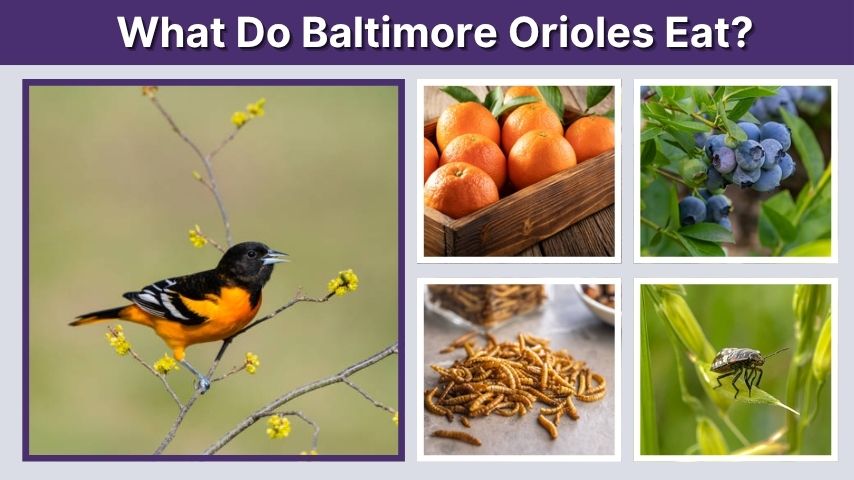
Baltimore orioles eat insects, fruit, and nectar, making them one of the easiest colorful songbirds to attract during spring and summer. In the wild, they feed heavily on caterpillars, beetles, berries, and flower nectar. At backyard feeders, they often enjoy orange halves, grape jelly, nectar, and mealworms. Their diet changes through the season, especially when they are nesting or migrating.
What Do Baltimore Orioles Eat in the Wild?
Baltimore orioles have a varied natural diet. During the breeding season, insects are especially important because they provide protein for adults and growing chicks. Orioles search through tree leaves, branches, flowers, and bark to find caterpillars, beetles, moths, spiders, and other small invertebrates.
They also eat fruit and nectar when available. Wild berries, mulberries, cherries, grapes, and other soft fruits can attract orioles. Nectar from flowers provides quick energy, especially during migration when birds need fuel.
Natural Foods They Prefer
In the wild, Baltimore orioles commonly eat:
- Caterpillars
- Beetles
- Moths
- Grasshoppers
- Spiders
- Ants and other small insects
- Wild berries
- Mulberries
- Grapes
- Cherries
- Flower nectar
Insects are most important when orioles are raising young. Fruit and nectar become especially useful during migration and late summer.
What Do Baltimore Orioles Eat at Feeders?
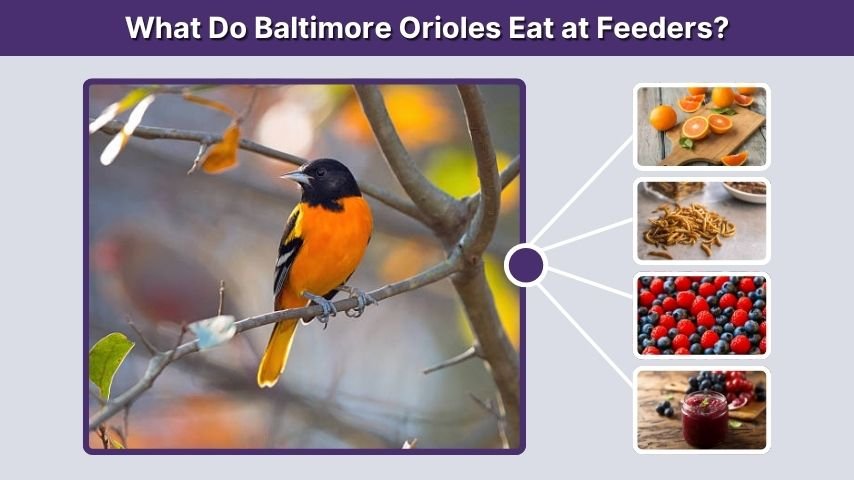
At backyard feeders, Baltimore orioles are best known for eating oranges, grape jelly, nectar, and mealworms. These foods are easy to offer and can help bring orioles into view, especially during spring migration.
Orioles are often high in tree canopies, so feeders give birdwatchers a better chance to see them closely. However, feeder foods should support their natural diet, not replace it completely.
| Food | Good for Orioles? | Best Use |
|---|---|---|
| Orange halves | Yes | Spring and migration feeding |
| Grape jelly | Yes, in small amounts | Occasional energy treat |
| Nectar | Yes | Clean oriole feeder only |
| Mealworms | Yes | Protein support during nesting |
| Bird seed | Usually no | Not a main oriole food |
| Suet | Sometimes | Occasional cold-weather food |
| Apples and berries | Yes | Small fresh pieces |
| Hummingbird nectar | Sometimes | Use proper feeder and keep clean |
Do Baltimore Orioles Eat Oranges?
Yes, Baltimore orioles love oranges. Orange halves are one of the most popular foods for attracting them. The bright color may help catch their attention, and the soft juicy flesh provides sugar and moisture.
Cut an orange in half and place it on an oriole feeder, platform, branch spike, or shallow dish. Orioles may peck at the pulp and drink the juice. Fresh oranges work better than dried or old fruit.
How to Offer Oranges Safely
Replace orange halves when they dry out, spoil, or attract too many insects. In hot weather, fruit can ferment quickly. Clean the feeder often to prevent mold and bacteria.
Oranges are best used as a seasonal food, especially in spring when orioles first arrive. Once nesting begins, insects become very important.
Do Baltimore Orioles Eat Grape Jelly?
Baltimore orioles are famous for eating grape jelly. Many backyard bird lovers use grape jelly to attract them in spring. It gives quick energy and can be very effective when orioles are migrating or just returning to breeding areas.
However, jelly should be offered carefully. Too much jelly is not healthy, and it can attract bees, wasps, ants, raccoons, and other wildlife. It can also spoil in warm weather.
Best Jelly Feeding Tips
Use a small spoonful at a time. Place it in a shallow dish or jelly feeder. Replace it daily, especially in heat. Avoid large open bowls of jelly because birds can get sticky, and spoiled jelly can become unsafe.
Grape jelly is the most common choice, but some orioles may also try strawberry jelly or other fruit jellies. Plain grape jelly is usually preferred.
Do Baltimore Orioles Eat Mealworms?
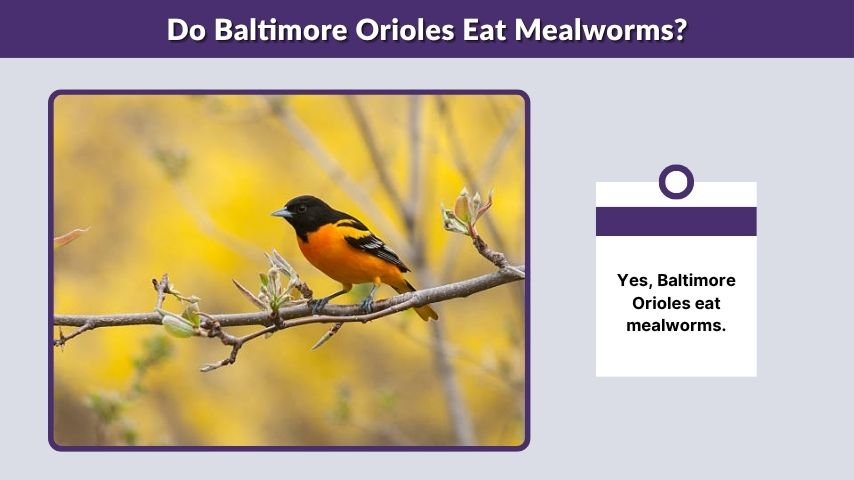
Yes, Baltimore Orioles eat mealworms. Mealworms are useful because they provide protein, which is especially important during nesting season. Adult orioles feed insects to their chicks, so mealworms may help attract orioles when they are raising young.
Live mealworms are often more attractive than dried mealworms, but some orioles will eat dried mealworms if they are softened or mixed with other foods. If using dried mealworms, soaking them briefly in warm water can make them easier to eat.
When Mealworms Help Most
Mealworms are most useful in late spring and summer when orioles need protein. They can also help reduce dependence on jelly. A feeder setup with oranges, a small amount of jelly, and mealworms gives orioles more variety.
Do Baltimore Orioles Eat Seeds?
Baltimore orioles do not usually eat bird seed as a main food. They are not seed-cracking birds like cardinals, finches, or sparrows. Their bills are better suited for insects, fruit, and nectar.
They may occasionally investigate seed feeders, but sunflower seeds, safflower seeds, millet, and mixed birdseed are not the best way to attract orioles. If orioles are your goal, use fruit, nectar, and insects instead.
Better Alternatives to Seed
Instead of seed, offer:
- Orange halves
- Grape jelly in small portions
- Oriole nectar
- Mealworms
- Fresh berries
- Native fruiting shrubs
Planting native trees and shrubs is also helpful because it supports the insects and fruit orioles naturally eat.
Do Baltimore Orioles Eat Suet?
Baltimore orioles may eat suet occasionally, especially during cool weather or migration, but suet is not their main food. Some orioles may try fruit-flavored suet, peanut suet, or insect-based suet, but many prefer oranges, jelly, nectar, and mealworms.
If you offer suet, choose a simple, high-quality product and avoid letting it melt or spoil in warm weather. Suet can become messy in summer heat, so it is usually not the first choice for oriole feeding.
Do Baltimore Orioles Drink Nectar?
Yes, Baltimore orioles drink nectar from flowers and feeders. Oriole nectar is usually made from sugar and water, similar to hummingbird nectar. Orioles may also visit hummingbird feeders if the ports are large enough, but many hummingbird feeders are too small for them.
An oriole feeder is usually better because it has larger perches and feeding openings. Some feeders also include places for oranges and jelly.
Nectar Feeding Tips
Use plain white sugar and water. Do not add red dye, honey, artificial sweeteners, or fruit juice. Keep the feeder clean and replace nectar often, especially during hot weather.
A common nectar ratio is similar to hummingbird nectar, but always keep it fresh. Spoiled nectar can harm birds.
What Fruits Do Baltimore Orioles Eat?
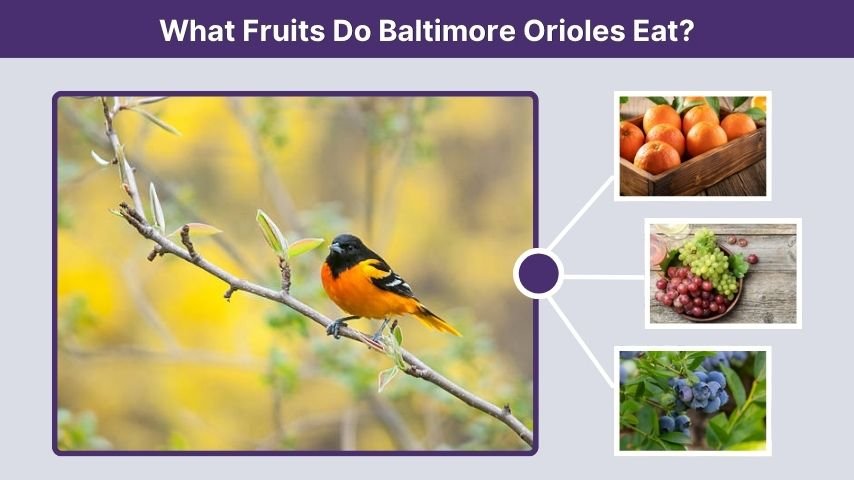
Baltimore orioles enjoy many soft fruits. In the wild, they eat berries and ripe fruit when available. At feeders, they are most famous for oranges, but they may also sample apples, grapes, berries, bananas, clementines, and grapefruit.
Not every oriole will eat every fruit. Some are picky, and food preferences may change by season. Fresh, juicy fruit usually works better than dry or hard pieces.
Fruits You Can Try
Safe fruit options include:
- Oranges
- Clementines
- Grapes
- Apples
- Blueberries
- Mulberries
- Cherries
- Strawberries
- Grapefruit in small amounts
- Banana in small amounts
Remove old fruit quickly. Fermented fruit can be unsafe, and rotting fruit may attract pests.
What Do Baltimore Orioles Eat in Summer?
In summer, Baltimore orioles eat more insects, especially when they are feeding chicks. Caterpillars and other soft-bodied insects are excellent food for young birds because they are rich in protein and easier to digest.
Backyard feeders may still attract orioles in summer, but some birds visit less often once natural insects become abundant. This is normal. A yard with native plants may support orioles better than feeders alone.
Summer Feeding Strategy
During summer, offer mealworms, oranges, and small amounts of jelly. Avoid overfeeding jelly because chicks need protein-rich insects. Do not use broad insecticides in the yard if you want to support orioles naturally.
What Do Baltimore Orioles Eat in Winter?
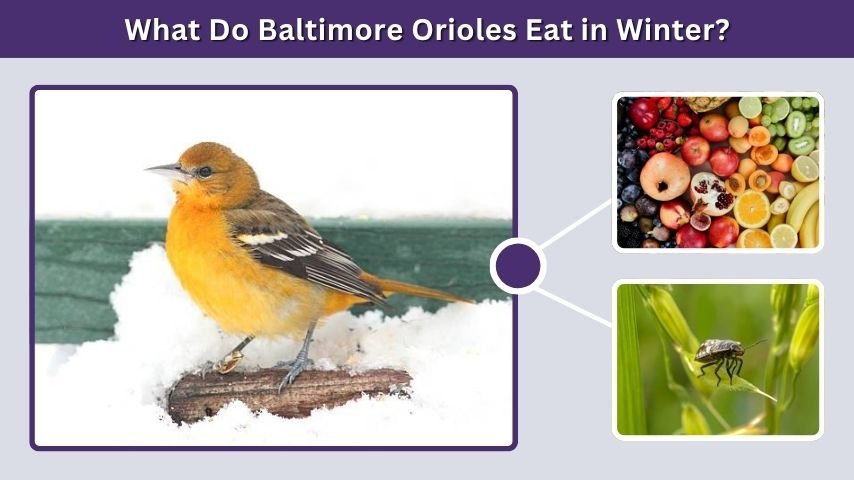
Most Baltimore orioles migrate south for winter. In wintering areas, they eat fruit, nectar, and insects. They may visit flowering trees, fruiting plants, gardens, and feeders in warmer regions.
A few orioles may remain farther north in winter, especially where feeders and mild conditions are available. These birds may use suet, fruit, jelly, mealworms, or nectar, depending on weather and food access.
When Do Baltimore Orioles Stop Eating Jelly?
Baltimore orioles may reduce jelly feeding after spring migration and early nesting. Once insects become abundant, they often focus more on natural protein sources. Some may continue visiting jelly feeders through summer, but activity can decline.
If orioles stop eating jelly, it does not always mean they left. They may be busy nesting, feeding chicks, or foraging in trees. Keep feeders clean and offer mealworms or oranges for variety.
How to Feed Baltimore Orioles Safely
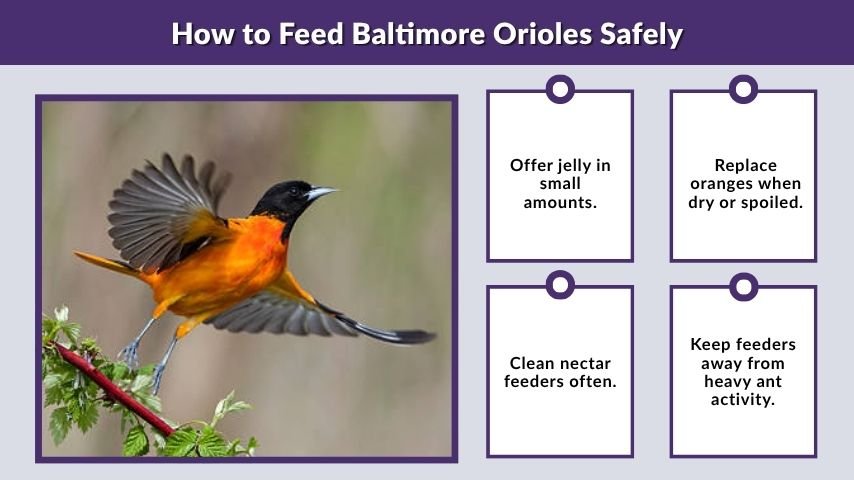
Feeding orioles is simple, but cleanliness matters. Sweet foods spoil quickly and can attract insects or mold. Feeders should be cleaned regularly, especially in warm weather.
Safe Feeding Rules
Follow these tips:
- Offer jelly in small amounts.
- Replace oranges when dry or spoiled.
- Clean nectar feeders often.
- Avoid red dye.
- Keep feeders away from heavy ant activity.
- Use fresh food only.
- Do not offer moldy fruit.
- Provide mealworms for protein.
- Place feeders near trees or shrubs.
- Stop feeding if food is attracting too many pests.
A clean feeder is better than a full feeder. Spoiled food can harm birds.
Best Plants for Natural Oriole Food
Feeders can attract orioles, but plants support them year after year. Native trees and shrubs provide insects, fruit, nectar, and nesting habitat. Since orioles often stay high in tree canopies, mature trees are especially valuable.
Good habitat choices include fruiting shrubs, flowering trees, and native plants that support caterpillars. Avoid heavy pesticide use because it reduces the insects orioles need for their young.
FAQs
What is the best food for Baltimore orioles?
The best feeder foods for Baltimore orioles are orange halves, small amounts of grape jelly, nectar, and mealworms. In the wild, insects are extremely important, especially during nesting season. A good backyard plan includes clean feeders, native plants, fruiting shrubs, and fewer pesticides to support natural food.
Do Baltimore orioles eat dried mealworms?
Baltimore orioles may eat dried mealworms, but many prefer live mealworms. If using dried mealworms, soak them in warm water first to soften them. Mealworms are helpful during nesting season because they provide protein, which adults need when feeding growing chicks.
Do Baltimore orioles eat bird seed?
Baltimore orioles usually do not eat bird seed. They are not seed-cracking birds like finches, cardinals, or sparrows. Their diet is based more on insects, fruit, and nectar. To attract them, offer oranges, grape jelly, nectar, mealworms, berries, and natural insect-rich habitat.
Can Baltimore orioles eat from hummingbird feeders?
Baltimore orioles may try hummingbird feeders, but many hummingbird feeders have ports that are too small. Orioles are larger birds and need bigger perches and openings. An oriole feeder is usually better. Use plain sugar-water nectar and keep the feeder clean to prevent spoilage.
Is grape jelly safe for Baltimore orioles?
Grape jelly can be safe in small amounts, but it should not be overfed. Offer only a small spoonful at a time and replace it daily in warm weather. Too much jelly can spoil, attract pests, and reduce interest in healthier foods like insects and mealworms.
