
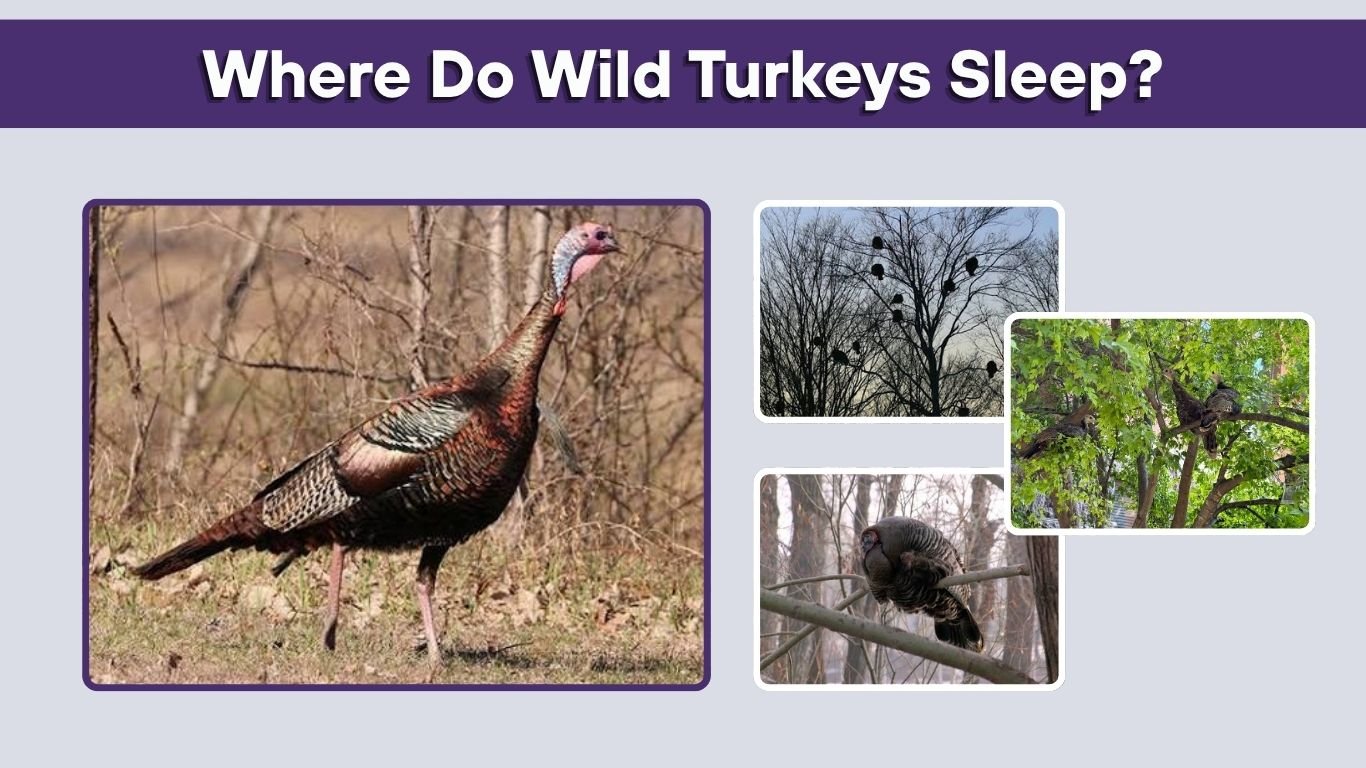
Wild turkeys usually sleep on sturdy branches high in mature trees. This nighttime resting place is called a roost. Although turkeys spend most daylight hours walking and feeding on the ground, they fly into trees near sunset to escape coyotes, foxes, bobcats, and other ground predators. They may sleep alone, in family groups, or in larger seasonal flocks. Nesting hens and newly hatched poults are the main exceptions: they sleep on the ground until the young birds become strong enough to fly into trees.
Where Do Wild Turkeys Sleep at Night?
Most adult wild turkeys sleep in mature trees with strong, horizontal branches. They usually fly onto a lower limb at dusk and then move upward from branch to branch until they reach a safe roosting position.
Roosting above the ground reduces the danger from many nighttime predators. It also provides a better view of the surrounding area when the birds wake in the morning.
Common Wild Turkey Sleeping Places
Wild turkeys may roost in:
- Mature oak trees
- Pine and other conifer trees
- Sycamores
- Cottonwoods
- Maples
- Large cypress trees
- Trees beside streams or rivers
- Wooded hillsides and ridges
- Sheltered forest valleys
- Large trees near clearings
The exact tree species is less important than its size, branch structure, location, and protection from wind and predators. Turkeys are generally selective about roosting in larger trees capable of supporting their heavy bodies.
What Is a Turkey Roost?
A roost is a place where a turkey rests or sleeps. It is different from a nest.
Wild turkeys use trees for nighttime roosting but build their nests on the ground. A hen lays and incubates her eggs inside a shallow depression hidden beneath grass, shrubs, fallen branches, or other vegetation.
| Feature | Turkey roost | Turkey nest |
| Main purpose | Sleeping and nighttime safety | Laying and incubating eggs |
| Usual location | Tree branches | Ground |
| Used by | Males, females, and older poults | Nesting hens |
| Time of use | Night | Breeding and incubation season |
| Construction | No structure is built | Shallow scrape lined with vegetation |
A turkey seen in a tree at night is roosting, not nesting.
Why Do Wild Turkeys Sleep in Trees?
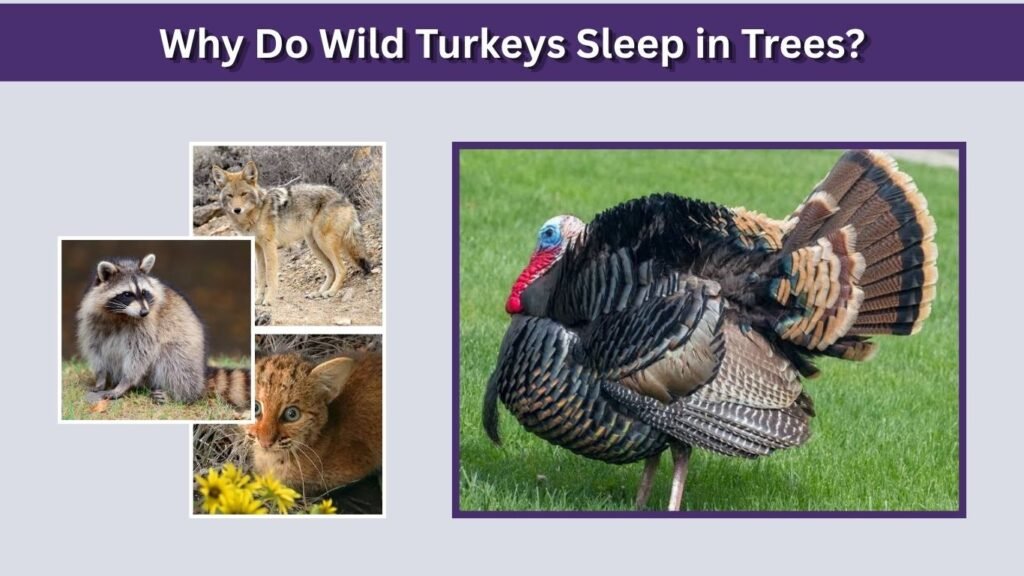
Wild turkeys are large birds, but they remain vulnerable while sleeping. Elevated branches provide several important benefits.
Protection From Ground Predators
Coyotes, foxes, bobcats, raccoons, and free-roaming dogs may hunt turkeys. Sleeping high in a tree makes it harder for these animals to reach them.
Tree roosts do not eliminate all danger. Large owls and other aerial predators may still threaten roosting birds, but an elevated perch is usually safer than sleeping in an exposed location on the ground.
Shelter From Weather
Large trees can provide protection from wind, snow, and heavy rain. During cold or windy conditions, turkeys may select trees in sheltered valleys, on the protected side of a ridge, or inside dense forest.
Evergreen trees become especially useful during winter because their needles provide cover after deciduous trees lose their leaves.
A Clear Escape Route
Turkeys prefer roosts that allow them to fly into and out of the tree safely. Trees beside clearings, fields, open woodland, streams, and slopes can provide enough space for their large wings.
Dense undergrowth surrounding the entire tree may make takeoff and landing more difficult. Open areas near roost trees allow the birds to detect danger and fly down more easily.
How High Do Wild Turkeys Sleep?
The height varies according to the available trees and local habitat. A turkey may roost relatively low in a short woodland tree or much higher in a mature pine, oak, cottonwood, or cypress.
Rather than flying directly to the highest branch, a turkey often lands on a lower limb and hops or flies upward to its preferred position. At sunrise, it may move toward an outer branch before flying down.
A suitable branch must be thick and stable enough to support the bird. Adult gobblers can weigh more than 20 pounds, so thin branches are unsuitable.
What Time Do Wild Turkeys Go to Sleep?
Wild turkeys normally approach their roosting area during the late afternoon or early evening. They fly into trees around sunset, although weather, disturbance, season, and local light levels can influence the exact time.
Before flying up, turkeys may feed near the roosting area. Once darkness arrives, they usually remain quiet and relatively still until morning.
Around sunrise, the flock becomes more active. Birds may call from the branches before flying down to feed. Male turkeys often gobble from treetop roosts during the spring because the elevated position helps their calls travel farther.
Do Wild Turkeys Sleep in the Same Tree Every Night?
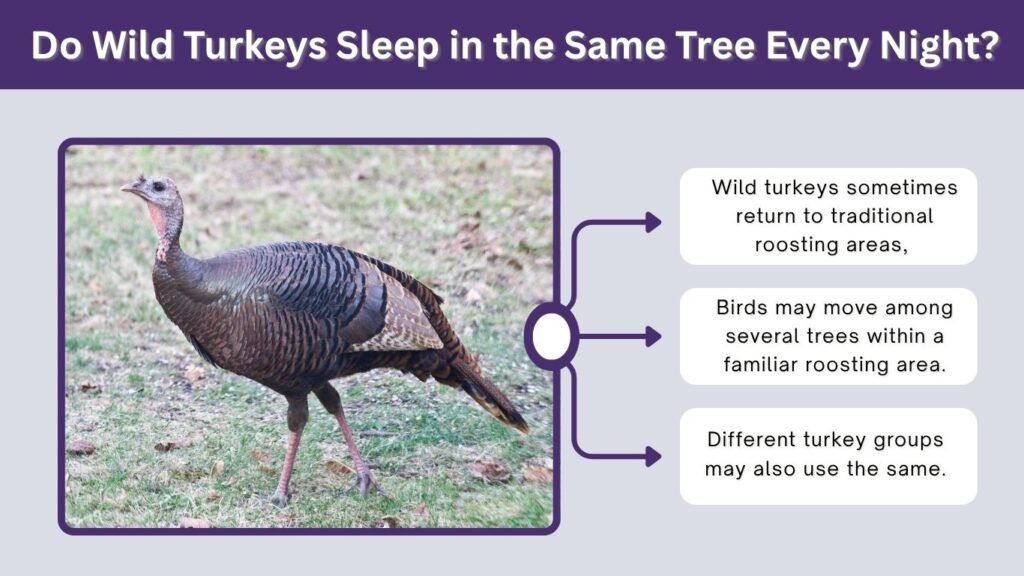
Wild turkeys sometimes return to traditional roosting areas, particularly when those areas provide mature trees, water, open flight paths, and protection from bad weather.
However, an individual turkey does not necessarily use the exact same tree every night. Birds may move among several trees within a familiar roosting area. Different turkey groups may also use the same general location on different nights.
Their choice may change because of:
- Wind direction
- Rain or snow
- Predator activity
- Human disturbance
- Food availability
- Seasonal flock movement
- Changes in foliage
- Damage to a preferred tree
A frequently used roosting area may have feathers and accumulated droppings beneath several large trees.
Where Do Baby Wild Turkeys Sleep?
Newly hatched wild turkeys, called poults, cannot immediately fly into trees. During their first days, they sleep on the ground beneath or beside their mother.
The hen uses her body and wings to keep the poults warm and hidden. This is a dangerous period because the family remains vulnerable to predators, cold temperatures, and heavy rain.
Poults generally begin making short flights at around two weeks of age. Once their wing feathers and muscles are sufficiently developed, they follow the hen into low tree branches and gradually use higher roosts.
Where Does a Nesting Hen Sleep?
A hen actively incubating eggs sleeps on her ground nest. She remains there throughout the night to keep the eggs warm and protected.
This behavior is an exception to normal adult roosting. Before she begins continuous incubation, the hen may lay an egg and then leave the nest to roost in a tree elsewhere.
After the clutch is complete, she spends most of each day and night sitting on the eggs. She leaves briefly to eat, drink, and relieve herself before returning.
When the poults hatch, the family leaves the nest. They initially continue sleeping on the ground until the young can fly.
Where Do Wild Turkeys Sleep in Winter?
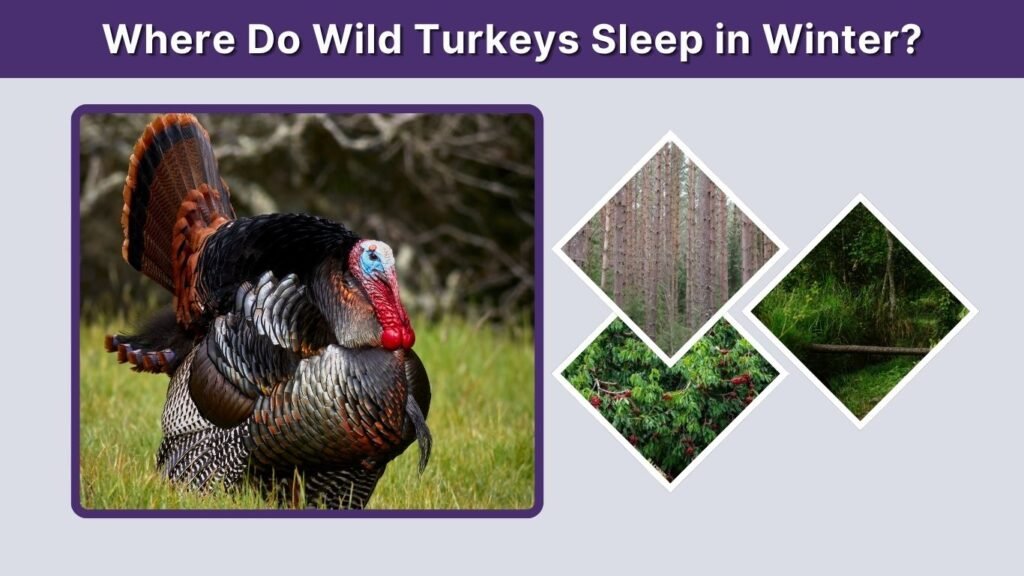
Wild turkeys continue sleeping in trees throughout winter. They often form larger flocks and may choose mature trees in protected forest stands.
Useful winter roosts may include:
- Dense stands of pine or other conifers
- Sheltered valleys
- South-facing slopes
- Trees protected from prevailing winds
- Streamside forests
- Mature trees close to winter feeding areas
Forested cover becomes particularly important during fall and winter because it protects the birds from severe weather. Conifers provide additional shelter when hardwood trees are bare.
On extremely cold nights, several turkeys may roost in the same tree or in neighboring trees. Their feathers provide insulation, but they still choose locations that reduce exposure to wind and precipitation.
Do Wild Turkeys Sleep on the Ground?
Healthy adult wild turkeys normally sleep in trees when suitable roosting habitat is available. Ground sleeping is mainly associated with:
- Hens incubating eggs
- Hens caring for flightless poults
- Young birds unable to fly
- Injured or weakened turkeys
- Places lacking appropriate trees
- Temporary emergencies or disturbances
Ground sleeping exposes a turkey to more predators. This is why poults become safer once they can reach tree branches.
Do Turkeys Sleep in Groups?
Wild turkeys often roost in groups. A flock may occupy one large tree or spread across several nearby trees.
During fall and winter, hens and juveniles frequently form flocks, while adult males may gather in separate male groups. During spring, flock structure changes as breeding activity increases.
Group roosting may help turkeys detect approaching danger because several birds can listen and watch from different positions. However, each bird usually maintains enough space to balance and settle comfortably on its branch.
How Do Wild Turkeys Stay on a Branch While Sleeping?
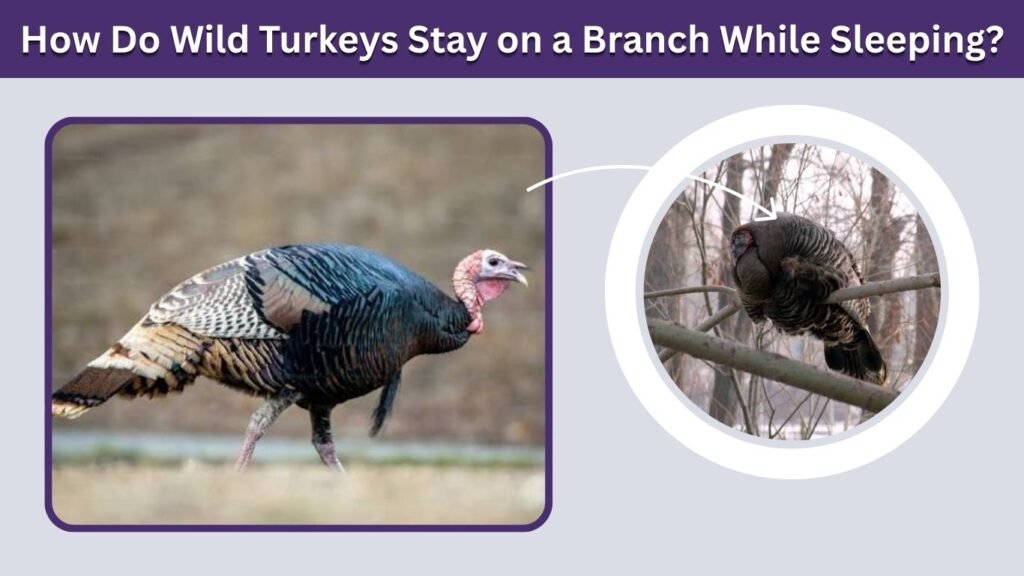
Wild turkeys have strong feet and toes that grip branches. When they settle on a perch, their feet hold the limb securely while their body weight remains centered over it.
They may lower their bodies over their feet and fluff their feathers for warmth. Their head may be drawn close to the body, particularly in cold conditions.
Turkeys do not normally fall from healthy roosting branches. However, severe storms, weak limbs, predator attacks, or sudden disturbances can force them to leave unexpectedly.
Can Wild Turkeys Sleep on Roofs or Fences?
In suburban or urban areas, wild turkeys may occasionally rest on roofs, fences, decks, sheds, or other elevated structures. These objects can resemble natural roosts, particularly where mature trees are limited.
A turkey may also land on a roof temporarily before moving into a nearby tree. Repeated feeding can encourage flocks to remain around homes, increasing the likelihood of roosting on buildings or vehicles.
Avoid feeding wild turkeys. Remove accessible food, cover reflective surfaces, and allow the birds a clear route to leave. Never corner or chase a turkey from a high structure, as it may become injured or act defensively.
How to Recognize a Turkey Roosting Area
Signs beneath a regularly used roost may include:
- Large turkey droppings
- Scattered body or wing feathers
- Scratch marks around the tree
- Tracks in mud or snow
- Multiple large trees with horizontal branches
- Turkeys gathering nearby before sunset
- Gobbling or calling shortly before sunrise
A single feather does not prove that a tree is a regular roost. Repeated observations and concentrated droppings provide stronger evidence.
Avoid approaching a roost closely after dark. Sudden disturbance may cause birds to fly through branches in poor visibility, wasting energy and increasing their risk of injury.
FAQs
Do wild turkeys sleep in trees every night?
Most healthy adult wild turkeys sleep in trees every night. Nesting hens and hens caring for flightless poults sleep on the ground temporarily.
What trees do wild turkeys prefer for sleeping?
They prefer large, mature trees with sturdy horizontal branches and open flight paths. Oaks, pines, cottonwoods, sycamores, cypress trees, and other locally available species may be used.
Where do wild turkeys sleep during rain?
They often select sheltered trees in dense forest, valleys, conifer stands, or on the protected side of a ridge. Their feathers provide insulation, but heavy wind may influence the exact roost location.
Do wild turkeys sleep in their nests?
Only an incubating hen sleeps on a nest. Other adults sleep in trees. After the poults hatch, the family leaves the nest and does not return to sleep there.
When do baby turkeys start sleeping in trees?
Poults usually begin making short flights and using low tree branches at approximately two weeks old. Their exact development depends on health, weather, and available habitat.