
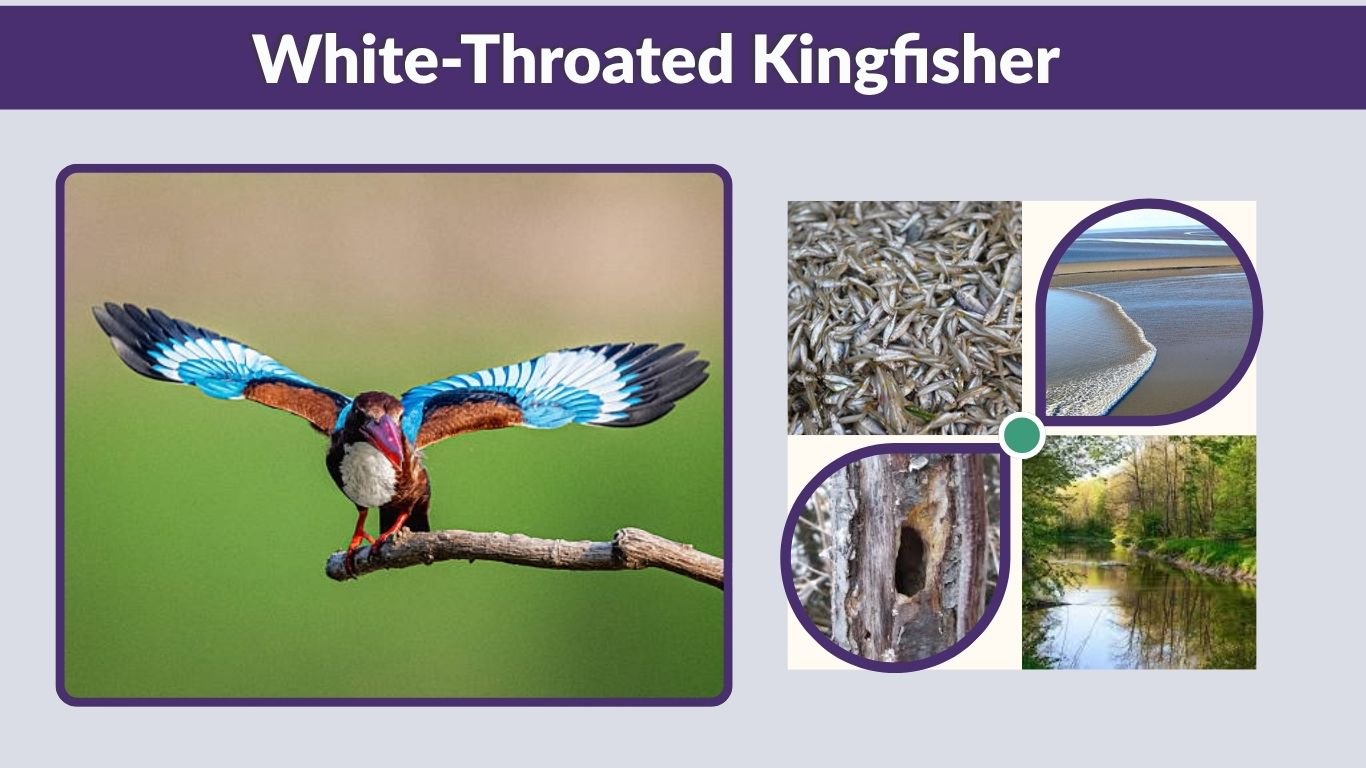
The white-throated kingfisher is one of the most colorful and recognizable kingfisher birds in Asia. Also called the white-breasted kingfisher, it has a bright blue back, chestnut-brown body, white throat and breast, and a strong red bill. Unlike many kingfishers, it is not always found near water. This bold bird can live around wetlands, fields, gardens, forests, villages, and cities.
What Is a White-Throated Kingfisher?
The white-throated kingfisher is a medium-to-large tree kingfisher known for its striking colors and loud call. Its scientific name is Halcyon smyrnensis. Many people search for it as the white-breasted kingfisher because of the large white patch on its throat and chest.
This bird is common in many parts of South Asia and Southeast Asia. It is often seen sitting on wires, poles, branches, fences, and rooftops while watching for prey. Although it belongs to the kingfisher family, it does not depend only on fish. It eats many types of animals, including insects, frogs, lizards, small snakes, crabs, and sometimes small birds or rodents.
Quick Facts About the White-Throated Kingfisher
| Feature | Details |
|---|---|
| Common names | White-throated kingfisher, white-breasted kingfisher |
| Scientific name | Halcyon smyrnensis |
| Bird family | Kingfishers |
| Main colors | Blue, chestnut brown, white, red bill |
| Habitat | Wetlands, farmland, gardens, woodlands, towns, river edges |
| Diet | Insects, fish, frogs, lizards, crabs, small reptiles, small animals |
| Nest type | Burrow in earth banks, mud walls, or similar sites |
| Conservation status | Generally considered common across much of its range |
White-Throated Kingfisher Appearance
The white-throated kingfisher is easy to identify because of its bold color combination. The back, wings, and tail are bright blue. The head, shoulders, belly, and sides are chestnut brown. The throat and upper breast are clean white, which gives the bird its name. Its bill is long, thick, and red, making it look powerful even when perched quietly.
In flight, the bird often shows bright blue wings with pale or white wing patches. Its flight is direct and fast, with quick wingbeats. Both male and female birds look very similar, so it is difficult to tell them apart just by color.
White-Throated Kingfisher Juvenile
A juvenile white-throated kingfisher looks like a duller version of the adult. The colors may appear less bright, and the chestnut areas may look slightly muted. Young birds may also have less clean markings around the throat and breast. As they mature, the blue wings, red bill, and white throat become more noticeable.
Where Does the White-Throated Kingfisher Live?
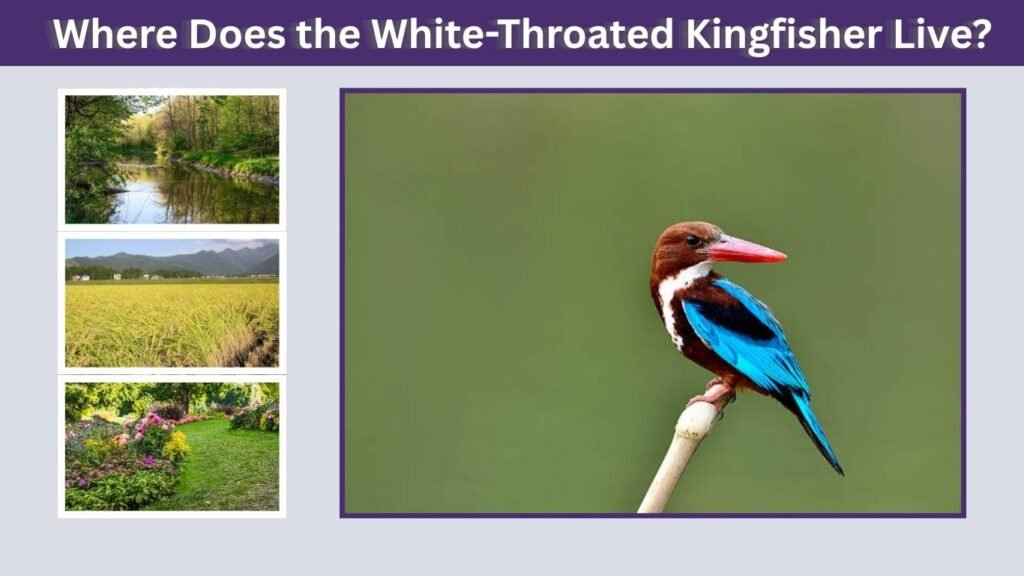
The white-throated kingfisher lives across a wide range in Asia and nearby regions. It is found in the Indian subcontinent, parts of the Middle East, Sri Lanka, Bangladesh, Nepal, Myanmar, Thailand, Malaysia, Singapore, southern China, and parts of Indonesia.
One reason this bird is so successful is its ability to use different habitats. It does not need a perfect river or forest to survive. It can live in natural, rural, and urban environments as long as there is food and a safe place to nest.
Common Habitats
White-throated kingfishers can live in:
- Wetlands, ponds, canals, and river edges
- Agricultural fields and rice paddies
- Open woodland and forest edges
- Mangroves and coastal areas
- Parks, gardens, and village areas
- Roadside trees, wires, and urban rooftops
White-Throated Kingfisher Habitat
The typical white-throated kingfisher habitat is open land with perches and plenty of prey. Unlike fish-only kingfishers, this bird often hunts away from water. It may sit on a wire above a road, a tree branch near a field, or a post beside a pond. From there, it watches the ground or water before diving down to catch food.
This species is especially common in areas where open spaces meet trees or water. Farmland, village ponds, drainage canals, gardens, and wooded wetlands can all support the bird. In cities, it may use parks, lakes, telephone wires, and building tops as hunting points.
Why It Can Live Away From Water
Many people think all kingfishers live only beside rivers. The white-throated kingfisher is different because it eats a very wide range of prey. It can catch insects in fields, lizards on the ground, frogs near drains, and small fish in ponds. This flexible diet allows it to survive in places where other fishing kingfishers may not live.
White-Throated Kingfisher Diet
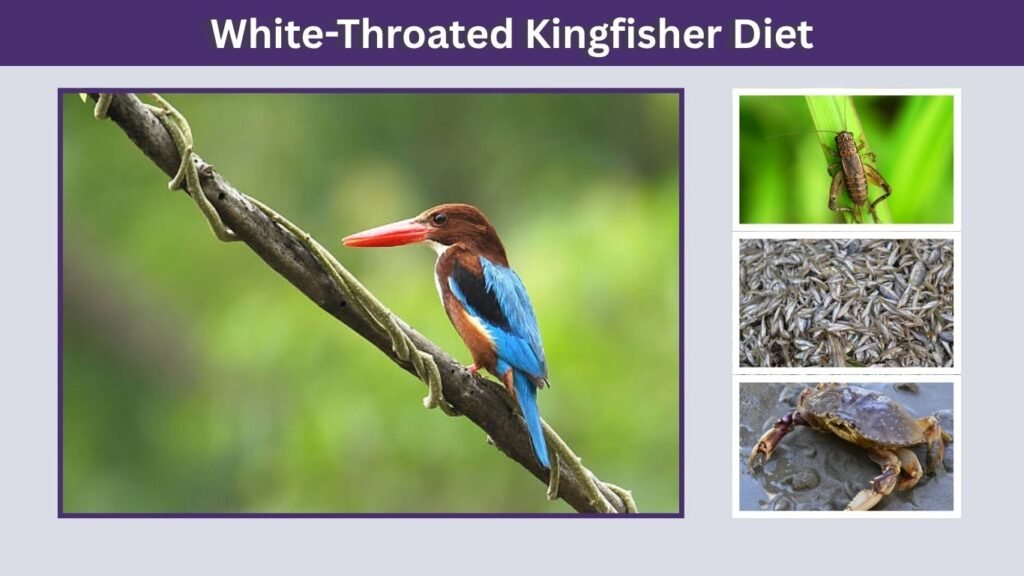
The white-throated kingfisher diet is one of the most interesting things about this bird. Although it can catch fish, it is not limited to fish. It is an opportunistic hunter, which means it eats whatever suitable prey is available in its habitat.
Its food may include insects, grasshoppers, beetles, crickets, frogs, toads, small fish, crabs, lizards, small snakes, earthworms, small rodents, and sometimes small birds. It usually hunts from a perch, then drops quickly to the ground or water to grab prey with its strong bill.
How It Hunts
The bird often hunts in a simple but effective way:
- It sits quietly on a high perch.
- It watches the ground or water carefully.
- It dives or swoops down when prey appears.
- It catches prey with its bill.
- It returns to a perch to swallow or beat the prey before eating.
This hunting style makes the bird easy to notice. If you see a bright blue and brown bird sitting still on a wire near a field or pond, it may be watching for its next meal.
White-Throated Kingfisher Call and Sound
The white-throated kingfisher call is loud, sharp, and repeated. It is often described as a ringing, laughing, or harsh call. The bird may call from a high perch, especially in the morning or during the breeding season.
Its sound helps it mark territory and communicate with other birds. In many areas, people hear the call before they see the bird. The call can carry well across open fields, wetlands, gardens, and village areas.
When Does It Call Most?
The white-throated kingfisher may call during:
- Early morning
- Breeding season
- Territorial displays
- Pair communication
- Flight between perches
- Disturbance or alarm situations
White-Throated Kingfisher Nest
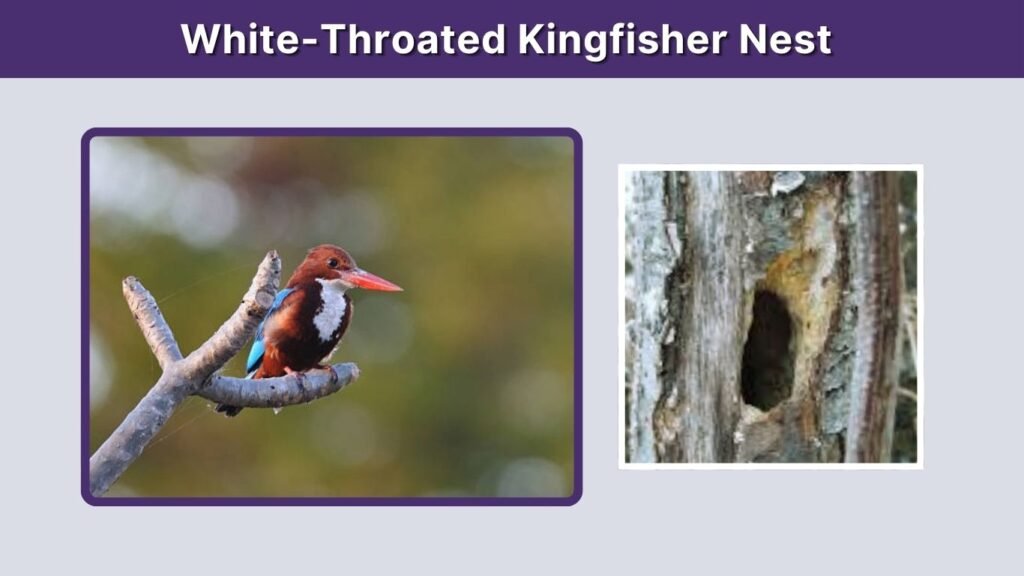
The white-throated kingfisher usually nests in a tunnel or burrow. It may dig into earth banks, mud walls, riverbanks, roadside cuttings, termite mounds, or similar soft surfaces. The nesting tunnel leads to a chamber where the eggs are laid.
This nesting style helps protect eggs and chicks from many predators. However, the nest still depends on suitable soil or banks. If natural banks are destroyed or disturbed, nesting can become harder.
Nesting Sites May Include
White-throated kingfishers may use:
- Muddy banks
- Earthen walls
- River or pond edges
- Roadside cuttings
- Soft soil slopes
- Termite mounds in some areas
The breeding season can vary by region, depending on climate and rainfall. In many parts of South Asia, breeding activity is more noticeable during warmer months.
White-Throated Kingfisher in India
The white-throated kingfisher is one of the most familiar kingfisher birds in India. It is found in many states and can be seen in both rural and urban places. In India, it commonly lives around ponds, farms, wetlands, gardens, electric wires, and village roads.
It is not rare to see this bird sitting on a power line in a busy area. Its bright colors make it stand out, and its loud call often draws attention. Because it can live near people, many birdwatchers see it as one of the easiest kingfishers to spot.
White-Throated Kingfisher in Singapore
The white-throated kingfisher can also be seen in Singapore, especially around parks, gardens, wetlands, coastal areas, and open green spaces. Singapore’s mix of urban greenery, waterways, and managed parks can provide suitable feeding and perching areas.
In Singapore, people may confuse it with other kingfishers, especially the collared kingfisher. The white-throated kingfisher has a chestnut-brown head and body, bright blue wings, and a white throat. The collared kingfisher usually looks more blue-green and white, with a white collar and darker bill.
White-Breasted Kingfisher vs White-Throated Kingfisher
White-breasted kingfisher and white-throated kingfisher usually refer to the same bird, Halcyon smyrnensis. The two names are used because the bird has a clear white area on both the throat and upper breast.
“White-throated kingfisher” is commonly used in modern bird references, while “white-breasted kingfisher” is still widely used by birdwatchers, local guides, and older sources. So, if you see either name, it is usually talking about the same colorful kingfisher species.
Black and White Kingfisher: Is It the Same Bird?
A black and white kingfisher is usually not the white-throated kingfisher. People searching this term may be looking for a pied kingfisher, which has bold black-and-white plumage and is often seen hovering over water before diving for fish.
Some people may also use “black and white kingfisher” to describe kingfishers with white collars, black eye stripes, or pale underparts. The white-throated kingfisher, however, is mostly blue, chestnut, and white, with a red bill. It is not mainly black and white.
Common Confusions
People may confuse these birds:
- White-throated kingfisher: Blue wings, chestnut body, white throat, red bill.
- Pied kingfisher: Black-and-white body, often hovers over water.
- Collared kingfisher: Blue-green and white bird with a white collar.
- Blue and white kingfisher: A general description that may refer to several species.
White Collared Kingfisher vs White-Throated Kingfisher
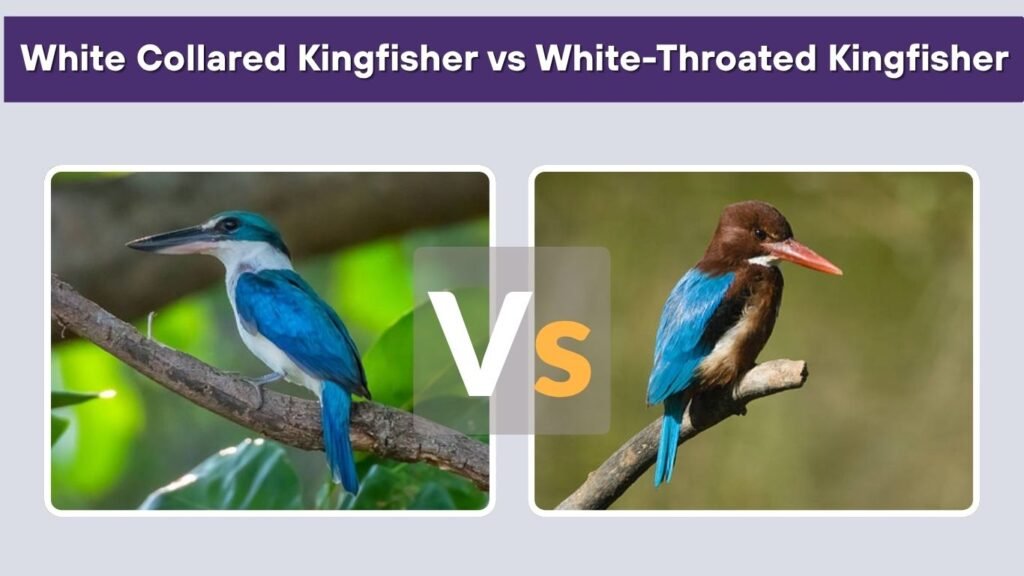
The white-collared kingfisher, also called the collared kingfisher, is a different species. It is often found in coastal areas, mangroves, islands, and some inland habitats. It has blue-green upperparts, pale underparts, a white collar, and usually a darker bill.
The white-throated kingfisher has a red bill, chestnut-brown head and body, blue wings, and a white throat and breast. The two birds may live in some overlapping regions, but they are visually different when seen clearly.
Is the White-Throated Kingfisher Rare?
The white-throated kingfisher is not considered rare across much of its range. In many areas, it is common and easy to spot. Its flexible diet and ability to live near human settlements help it remain widespread.
However, local populations can still be affected by habitat loss, pollution, pesticide use, wetland damage, and destruction of nesting banks. Even common birds need healthy habitats to survive long-term.
Why the White-Throated Kingfisher Matters
The white-throated kingfisher is more than just a beautiful bird. It plays a role in local ecosystems by controlling insects, small reptiles, amphibians, and other prey animals. Its presence also adds color and sound to wetlands, farms, gardens, and cities.
For birdwatchers, it is an excellent species to observe because it is colorful, active, and often visible in open places. For nature lovers, it is a reminder that wildlife can survive near people when green spaces, wetlands, trees, and nesting sites are protected.
FAQs
What is a white-throated kingfisher?
The white-throated kingfisher is a colorful kingfisher bird with bright blue wings, a chestnut-brown body, a white throat and breast, and a red bill. It is also called the white-breasted kingfisher and is found across many parts of Asia.
Is the white-breasted kingfisher the same as the white-throated kingfisher?
Yes, white-breasted kingfisher and white-throated kingfisher usually refer to the same bird, Halcyon smyrnensis. The name varies because the bird has a noticeable white patch covering the throat and upper breast.
What does the white-throated kingfisher eat?
The white-throated kingfisher eats insects, fish, frogs, lizards, crabs, small snakes, worms, and sometimes small birds or rodents. It hunts from a perch and catches prey on the ground, in shallow water, or near wetland edges.
Where does the white-throated kingfisher live?
The white-throated kingfisher lives in South Asia, Southeast Asia, parts of the Middle East, and nearby regions. It uses wetlands, ponds, canals, farmland, gardens, woodland edges, villages, and urban areas with suitable perches and prey.
Is a black and white kingfisher a white-throated kingfisher?
Usually, no. A black and white kingfisher often refers to the pied kingfisher, which has black-and-white plumage and hunts near water. The white-throated kingfisher is mainly blue, chestnut brown, white, and red-billed.