
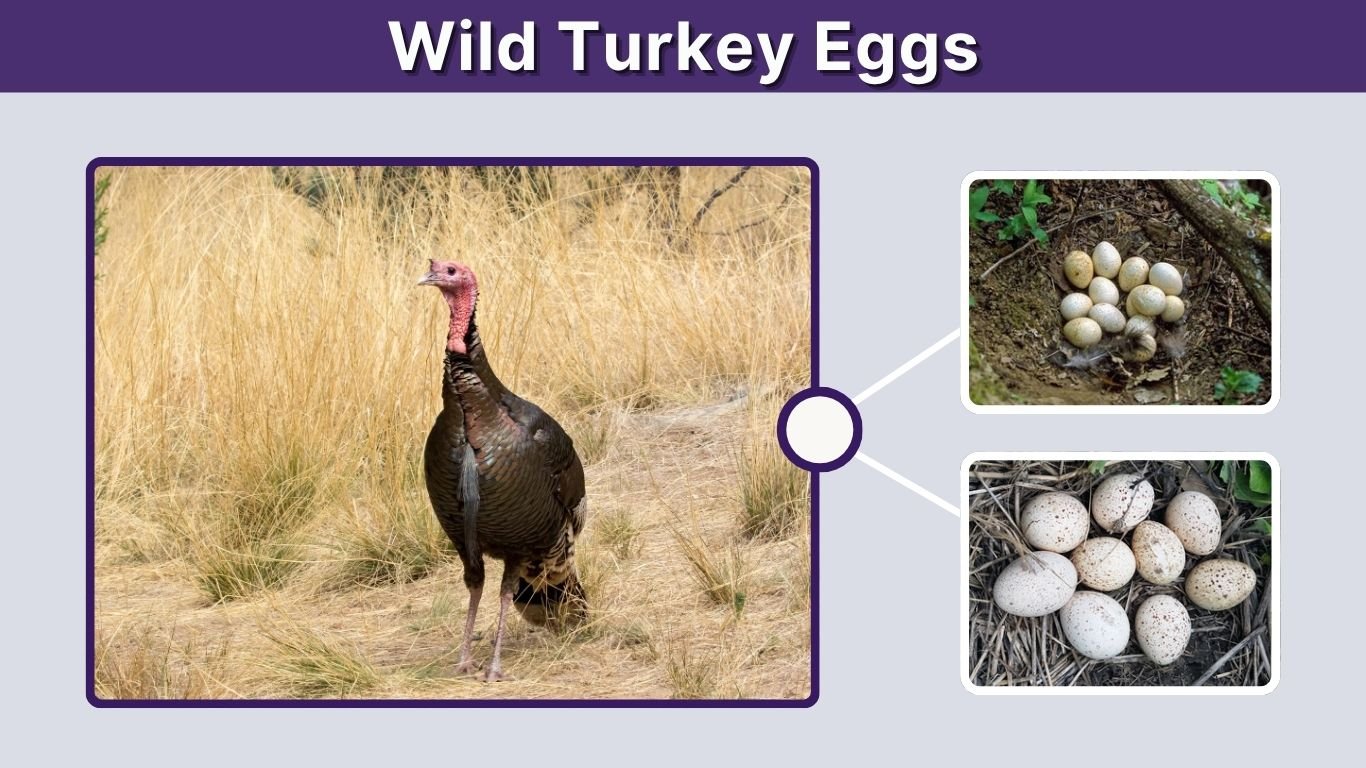
Wild turkey eggs are large, oval, cream-colored eggs covered with fine reddish-brown or pinkish spots. Female wild turkeys, known as hens, place their eggs in shallow nests hidden on the ground. A typical hen lays approximately one egg per day until her clutch is complete, then incubates the eggs for about four weeks. Because nests are well camouflaged, people often discover them accidentally while hiking, mowing, gardening, or clearing brush.
Wild Turkey Egg Facts at a Glance
Wild turkey eggs are larger than chicken eggs and are designed to blend into dry leaves, soil, and grass. The hen handles all nesting, incubation, and care of the young.
| Feature | Wild Turkey Egg |
| Color | Pale tan, cream, or yellowish |
| Markings | Reddish-brown or pinkish speckles |
| Length | Approximately 1.9–2.7 inches |
| Width | Approximately 1.6–1.9 inches |
| Typical clutch | About 10–12 eggs |
| Laying rate | Usually one egg per day |
| Incubation | Approximately 26–28 days |
| Nest location | On the ground |
| Number of broods | Usually one successful brood annually |
Clutch sizes vary considerably. Some nests contain only four eggs, while large clutches can contain 17. However, approximately 10–12 eggs is normal for a completed wild turkey nest.
What Do Wild Turkey Eggs Look Like?
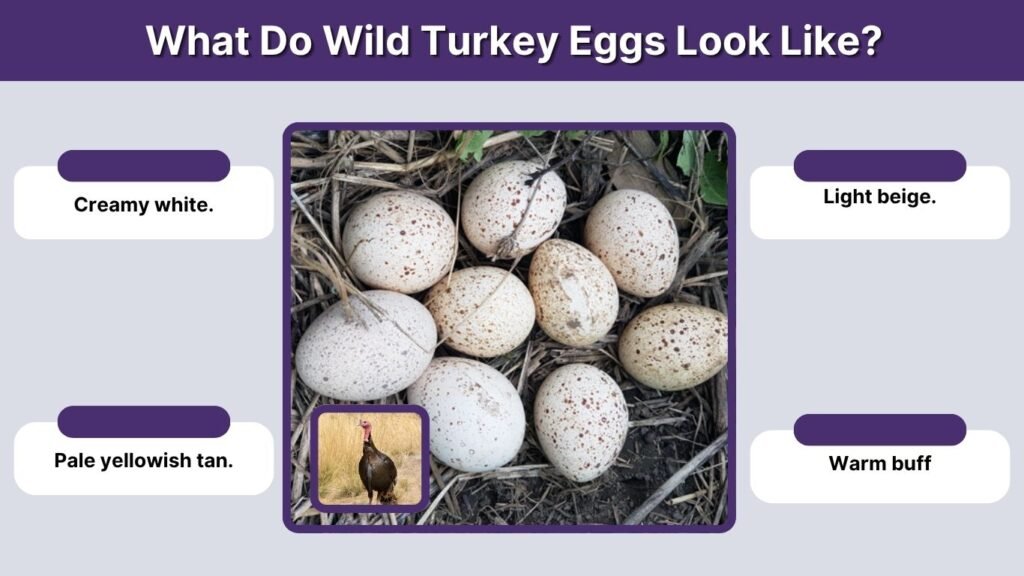
Wild turkey eggs have a pale background covered with small spots that help conceal them from predators. Their appearance can vary slightly among individual hens.
Color and Markings
The base color may be:
- Creamy white
- Pale yellowish tan
- Light beige
- Warm buff
Most eggs are evenly marked with reddish-brown, pinkish, or light brown dots. Some have many small speckles, while others have fewer but darker spots. The markings can make the eggs difficult to see among dead leaves and dry vegetation.
Size and Shape
Wild turkey eggs are usually oval with one end slightly wider than the other. They measure approximately 1.9–2.7 inches long and 1.6–1.9 inches wide.
Their exact size depends on factors such as the hen’s age, health, genetics, and physical condition. Although larger than average chicken eggs, they are much smaller than an adult turkey’s body might suggest.
Eastern Wild Turkey Eggs
Eastern wild turkey eggs do not look significantly different from those of other wild turkey subspecies. They generally have the same cream or light tan background with brownish or pinkish speckling.
Differences among individual hens are usually more noticeable than differences between wild turkey subspecies.
Where Do Wild Turkeys Lay Their Eggs?
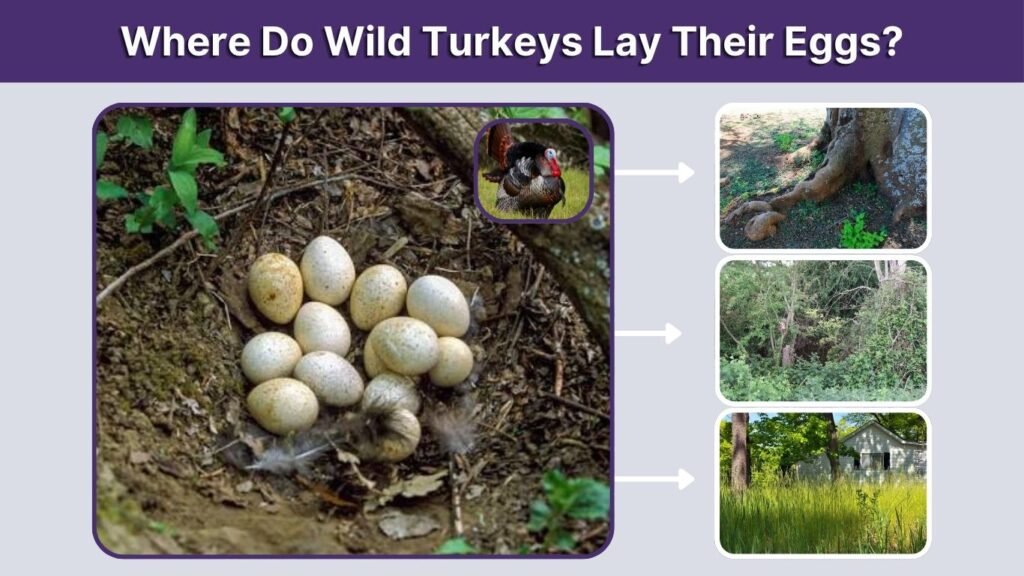
Wild turkeys lay their eggs directly on the ground rather than building nests in trees. The hen selects a concealed location that offers protection while still allowing her to watch for danger.
Common Nesting Locations
A wild turkey may place her nest:
- At the base of a tree
- Under shrubs or thick brush
- Beside a fallen log
- In tall grass or weeds
- Beneath a brush pile
- Along a woodland edge
- In an open hayfield with suitable cover
The nest is generally a shallow depression scratched into the soil or existing leaf litter. The hen does not construct an elaborate structure. She mainly uses dead leaves and plant material already present at the location.
Do Wild Turkeys Bury Their Eggs?
Wild turkeys do not bury their eggs underground. However, a hen may lightly cover the eggs with leaves when she leaves during the laying stage.
This helps conceal the incomplete clutch while she feeds and roosts elsewhere. Once continuous incubation begins, she normally stays on the nest and does not regularly cover the eggs before taking short breaks.
When Do Wild Turkeys Lay Eggs?
Wild turkeys normally reproduce during spring, although the exact timing differs by location, weather, habitat, and the hen’s physical condition.
In warmer southern areas, laying may begin around March or early April. Farther north, hens commonly start later in April or May. Late nests may occur when an earlier clutch has been destroyed and the hen attempts to nest again.
Wild turkeys do not normally lay eggs throughout the year. Their reproductive cycle is connected to seasonal daylight, mating behavior, weather, food availability, and suitable conditions for raising poults.
How Often Does a Wild Turkey Lay an Egg?
A hen generally lays approximately one egg each day. She visits the nest briefly, deposits the egg, and then leaves to feed and roost.
Producing a complete clutch usually takes around two weeks. During this period, the eggs do not receive continuous incubation, so development does not fully begin at different times for every egg.
How Many Eggs Does a Wild Turkey Lay?
A typical completed clutch contains 10–12 eggs, although the possible range is approximately 4–17.
Older, healthy hens may produce larger clutches than young or poorly conditioned birds. Replacement nests created after a failed first attempt often contain fewer eggs.
Wild Turkey Egg Incubation
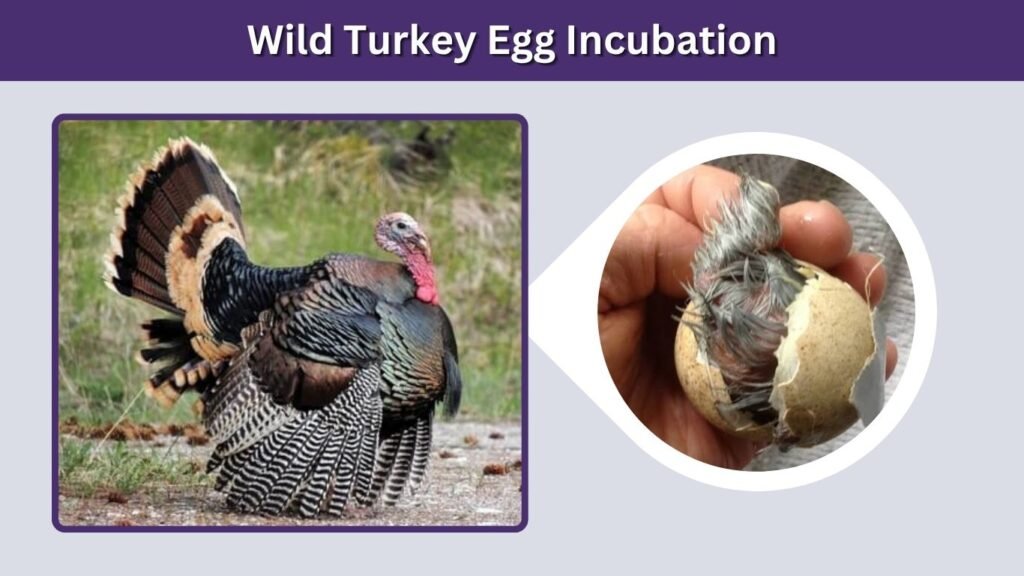
Continuous incubation usually begins after the hen lays her final egg. This delayed start allows the embryos to develop at approximately the same rate.
How Long Do Wild Turkey Eggs Take to Hatch?
Wild turkey eggs generally hatch after about 26–28 days of regular incubation. A broader natural range of approximately 25–31 days is possible.
The hen spends almost all day and night on the nest. She leaves only briefly to eat, drink, defecate, and sometimes dust-bathe. She also turns and repositions the eggs, helping them warm evenly.
Do Hens Sit on Their Eggs at Night?
Yes. Once full incubation has started, the hen remains on the ground nest at night instead of roosting safely in a tree.
This is one of the most dangerous periods of her life because she and her eggs are vulnerable to predators. Her brown plumage and motionless posture help her blend into the surrounding vegetation.
How Do Wild Turkey Eggs Hatch?
A developing poult uses a temporary egg tooth to break through the shell. This process is called pipping.
The poult gradually chips around the wider end of the egg until it can push the shell apart. Because full incubation begins near the completion of the clutch, the poults hatch close together rather than over the entire two-week laying period.
The newly hatched poults are covered in down, can see, and are capable of walking. They usually leave the nest with their mother within approximately one day.
What Should You Do If You Find Wild Turkey Eggs?
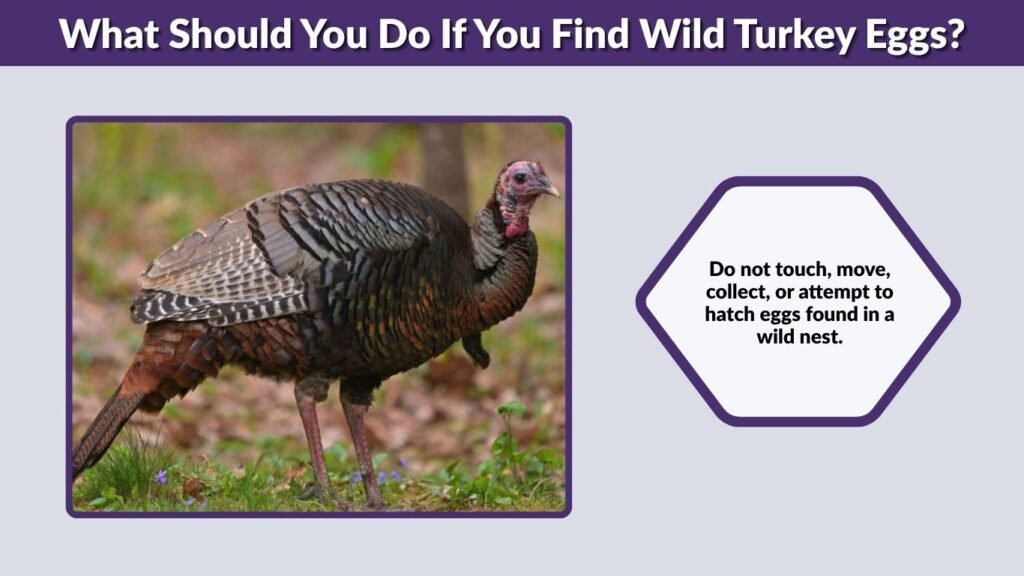
Do not touch, move, collect, or attempt to hatch eggs found in a wild nest. Leave the area quietly and keep children and pets away.
A nest that appears abandoned may still be active. During the laying period, the hen visits only briefly each day. During incubation, she may leave temporarily to feed and drink. Human activity near the nest can frighten her or attract predators to its location.
Collecting or possessing wild turkey eggs may also violate state wildlife laws. Regulations differ by jurisdiction, so contact the appropriate wildlife agency or a licensed wildlife rehabilitator when eggs are clearly damaged, exposed, or associated with an injured or dead hen.
Can You Eat Wild Turkey Eggs?
Wild turkey eggs are physically edible, like the eggs of domestic turkeys. However, taking eggs from a wild nest can destroy an entire reproductive attempt and may be prohibited by local law.
Wild nests can also contain contaminated, partially developed, or spoiled eggs. For ethical, conservation, health, and legal reasons, wild turkey eggs should be left undisturbed.
FAQs
Do wild turkeys lay eggs every day?
A hen typically lays approximately one egg per day until her clutch is complete. She may require around two weeks to produce 10–12 eggs. Full-time incubation usually begins only after the final egg has been deposited.
How long does a wild turkey sit on her eggs?
A wild turkey hen normally incubates her completed clutch for approximately 26–28 days. She remains on the nest during both day and night, leaving only for short feeding, drinking, and maintenance breaks.
Can a wild turkey move her eggs?
A hen can reposition and turn eggs inside the nest, but she cannot normally transport an entire clutch to a new location. When a nest becomes unsafe or is destroyed, she generally abandons it and may attempt to nest again elsewhere.
How can you tell whether turkey eggs are abandoned?
It is difficult to determine by looking briefly because hens routinely leave nests. Observe only from a considerable distance and avoid repeatedly checking the site. Contact a wildlife professional when the hen is known to be dead or the eggs face immediate danger.
When do wild turkey eggs hatch?
Most wild turkey eggs hatch during late spring or early summer. The exact month depends on when nesting begins in the region. Hatching normally occurs about four weeks after the hen starts continuous incubation.