
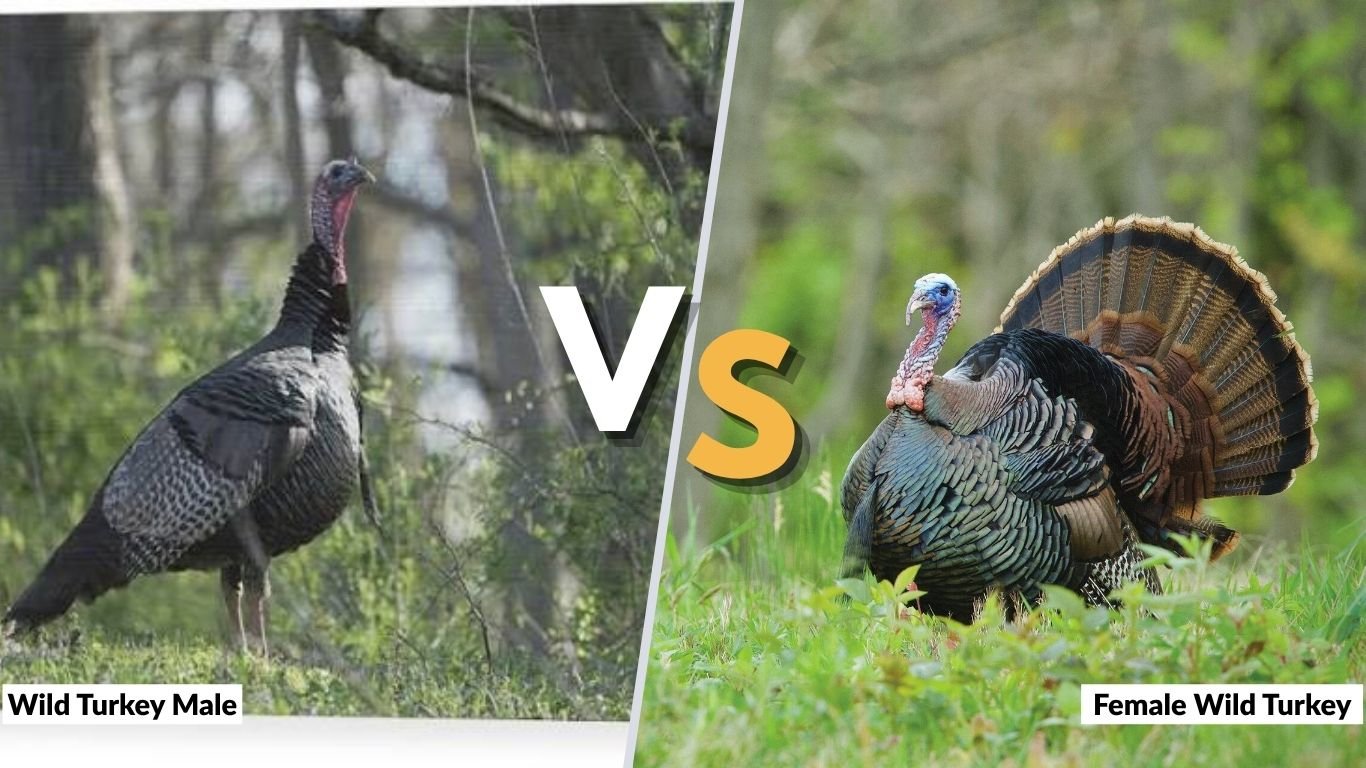
Male and female wild turkeys differ noticeably in size, plumage, head color, behavior, and body structures. Adult males, called toms or gobblers, are larger and more colorful, with prominent beards, leg spurs, and iridescent feathers. Females, called hens, are smaller and covered in subdued brown plumage that provides camouflage while nesting. However, beard presence alone is not always reliable because some hens also develop beards. Examining several features together—including breast-feather tips, head shape, body size, spurs, vocalizations, and behavior—is the best way to identify a wild turkey’s sex accurately.
Male vs. Female Wild Turkey at a Glance
Wild turkeys show clear sexual dimorphism, meaning males and females have different physical appearances. The differences become particularly obvious when adult birds stand together.
| Feature | Male wild turkey | Female wild turkey |
| Common name | Tom or gobbler | Hen |
| Typical weight | 18–30 pounds | 8–12 pounds |
| Plumage | Dark and strongly iridescent | Duller brown or gray-brown |
| Head | Mostly bare and brightly colored | Smaller and less colorful |
| Beard | Usually present | Occasionally present |
| Spurs | Usually prominent | Usually absent or tiny |
| Breast-feather tips | Black | Buff or brown |
| Main call | Gobble | Yelp, cluck, purr and other calls |
| Courtship behavior | Struts and fans tail | Observes and selects males |
| Parental care | None | Builds nest and raises poults |
Adult males commonly weigh 18–30 pounds, whereas hens generally weigh 8–12 pounds. Exact weight varies among subspecies, regions, ages and seasonal conditions.
Names for Male and Female Wild Turkeys
An adult male wild turkey is called a tom or gobbler. A juvenile male approximately one year old is called a jake.
An adult female is called a hen, while a young female may be called a jenny. Newly hatched turkeys of either sex are known as poults.
Jakes already resemble adult males, but they are smaller and usually have shorter beards, short rounded spurs and uneven tail fans. Young hens resemble adult hens but are generally smaller and may have less developed plumage.
Differences in Body Size
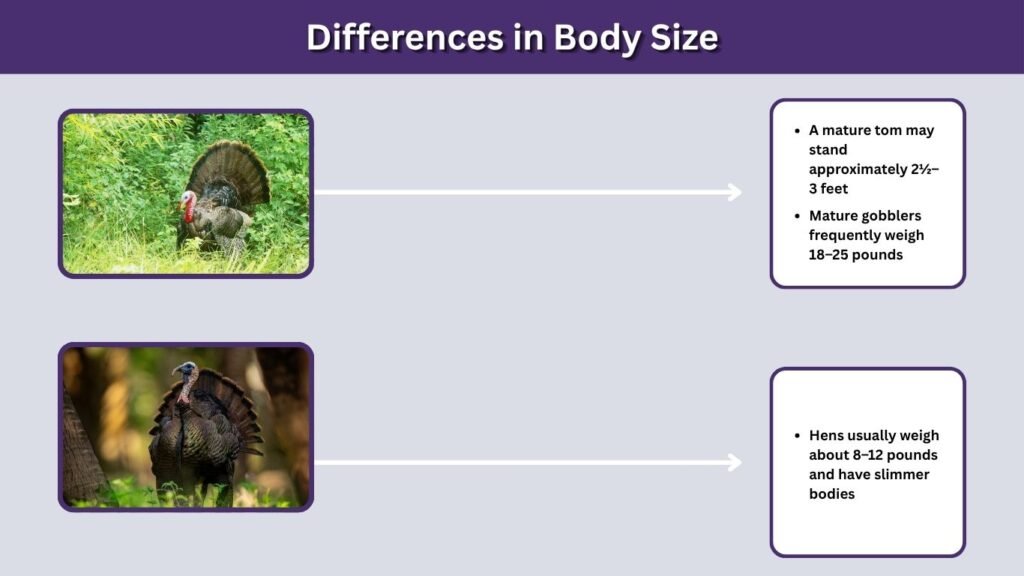
Body size is one of the easiest features to compare when multiple turkeys are visible. Males are taller, heavier and more heavily built than females.
Male Wild Turkey Size
A mature tom may stand approximately 2½–3 feet tall in a normal posture. His broad chest, thick neck and heavy body become even more noticeable when he raises his feathers and enters a full strut.
Mature gobblers frequently weigh 18–25 pounds, though some may approach 30 pounds. Their larger bodies help them compete with other males and make their courtship displays more impressive.
Female Wild Turkey Size
Hens usually weigh about 8–12 pounds and have slimmer bodies, narrower chests and thinner necks. Their smaller size is often obvious when they forage beside mature gobblers.
Size alone may not separate a large adult hen from a young jake. Plumage, breast-feather tips, head coloring and beard appearance should also be examined.
Plumage and Color Differences
Male and female wild turkeys may appear dark brown from a distance, but their feathers differ considerably under good lighting.
Male Plumage
Male turkeys have strongly iridescent feathers that reflect bronze, copper, green, blue, purple and reddish tones. These glossy colors become particularly noticeable when a tom faces sunlight during courtship.
Males use their iridescent plumage, raised body feathers and expanded tail fans to attract hens and appear larger to competing males.
Female Plumage
Hens have duller gray-brown or dark-brown feathers with less intense iridescence. Their subdued coloring helps them blend into leaves, grass and low vegetation while incubating eggs on the ground.
Female plumage may still show bronze or copper tones, especially around the rump and tail, but it is generally less glossy than a male’s coat.
Breast-Feather Tips
Breast feathers provide one of the most dependable identification clues when a turkey is close enough to inspect.
Adult males generally have black-tipped breast feathers. These dark tips give the breast a nearly solid black appearance from a distance.
Females normally have buff, tan or light-brown tips on their breast feathers. The pale edging produces a more patterned and camouflaged appearance.
This feature is especially useful when a hen has a beard or when a young male’s head colors and spurs are not yet fully developed.
Head and Neck Differences
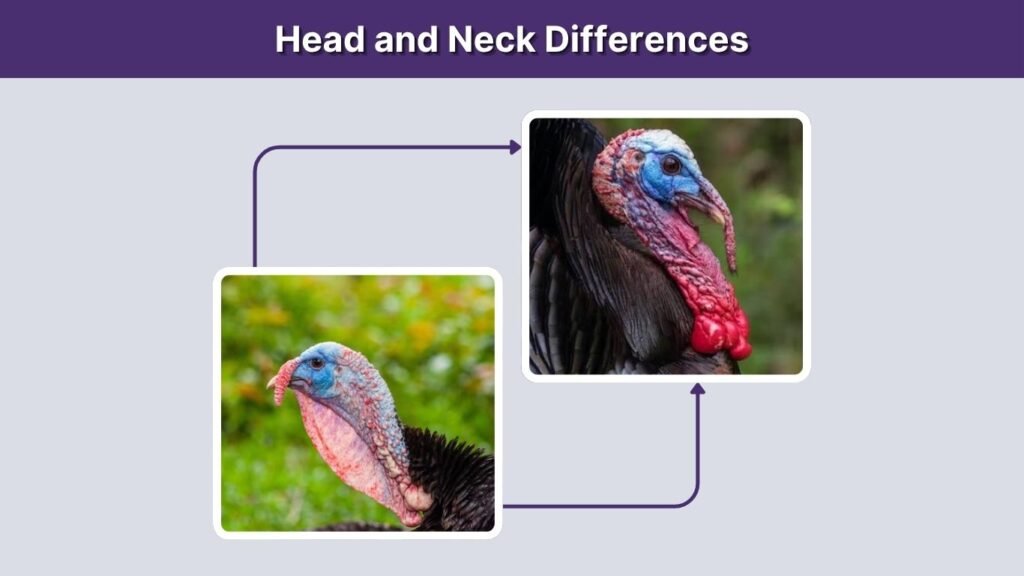
Both sexes have relatively small heads and exposed skin, but males have more dramatic head ornamentation.
Male Head
A gobbler’s head and upper neck are mostly featherless and covered with fleshy structures, including the snood, wattles and caruncles. During courtship or agitation, the skin may become vivid red, white or blue.
The snood—the fleshy projection above the beak—becomes longer and more prominent when a male is excited. Male head coloration can change with mood, social status and breeding activity.
Female Head
A hen has a smaller, more lightly ornamented head. Her head and neck are usually blue-gray, pinkish or dull red rather than intensely red, white and blue.
Female heads may also have more fine feathers extending upward from the neck. Their snoods and wattles are much smaller and less noticeable than those of mature males.
Beard Differences
A wild turkey’s beard is a bundle of coarse, hair-like modified feathers growing from the center of the breast.
Male Beard
Most adult males have visible beards. Mature toms may develop beards approximately 8–12 inches long, while jakes commonly have shorter beards measuring around 2–6 inches.
A beard may become worn, broken or covered by breast feathers, so its apparent length does not always reveal the bird’s exact age. Some males also develop more than one beard.
Can Female Turkeys Have Beards?
Yes. A small proportion of hens grow visible beards. Therefore, identifying a turkey as male solely because it has a beard can produce a mistake.
A bearded hen will still usually have a smaller body, dull plumage, buff-tipped breast feathers, minimal spurs and a less colorful head. The beard should always be considered alongside these other features.
Spurs on the Legs
Spurs are hard, pointed growths located on the backs of a turkey’s lower legs.
Male turkeys use their spurs while fighting other gobblers and establishing dominance. Jakes have short, rounded bumps, while mature toms generally develop longer, sharper spurs.
Hens normally lack noticeable spurs, although rare females may possess small or developed spurs. As with beards, spur presence is highly useful but not completely reliable by itself.
Tail Fan Differences
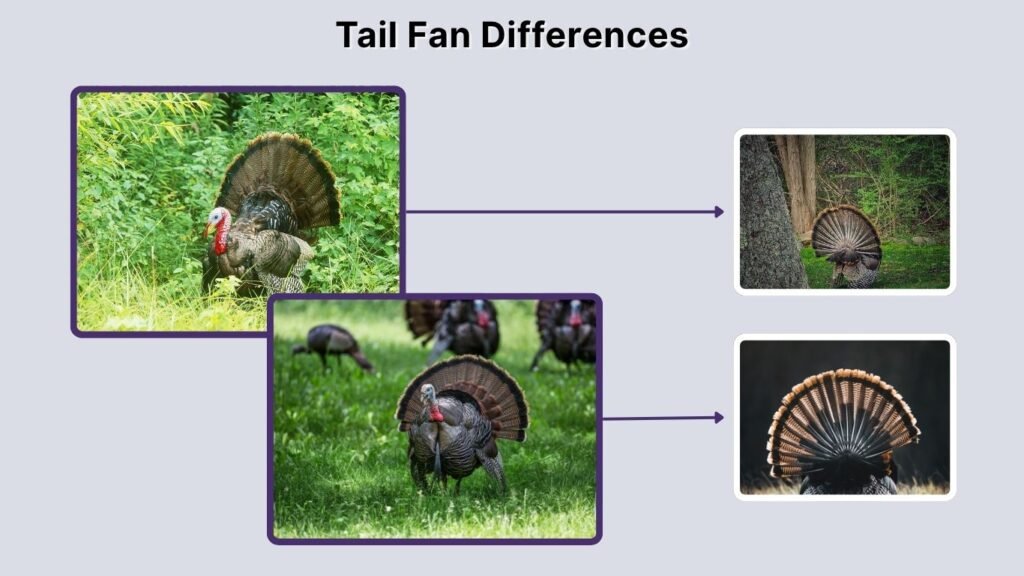
Both male and female turkeys can spread their tails, but full fanning is most strongly associated with male courtship.
Male Tail Fan
A mature tom has a broad, rounded fan with feathers that appear nearly even in length. During a strut, he raises the fan vertically, puffs out his body feathers and lowers his wings.
A jake’s fan often looks uneven because the central tail feathers are longer than the outer feathers. This provides a helpful way to separate a juvenile male from an adult gobbler.
Female Tail Fan
Hens can fan their tails when threatened, excited or establishing dominance. However, they do not regularly perform the prolonged, elaborate strutting display typical of males.
Their fans may appear smaller because of their reduced body size, but tail-tip color is influenced more by subspecies than sex.
Behavior and Vocalizations
Behavior can quickly reveal a wild turkey’s sex, particularly during the spring breeding season.
Male Behavior
Male turkeys form courtship displays by puffing their feathers, spreading their tails, dragging their wings and moving slowly around females. They may also fight rival males using their wings, beaks and spurs.
Gobbling is the male’s best-known vocalization. It announces his presence to hens and may challenge competing gobblers. Males can also yelp, cluck, purr and make other turkey sounds.
Female Behavior
Hens produce yelps, clucks, purrs, cutts and alarm calls. During breeding, they may approach displaying males and select a mate.
The hen alone chooses a nest site, incubates the eggs and cares for the poults. Male wild turkeys do not participate in incubation or raising young.
Male vs. Female Juvenile Wild Turkeys
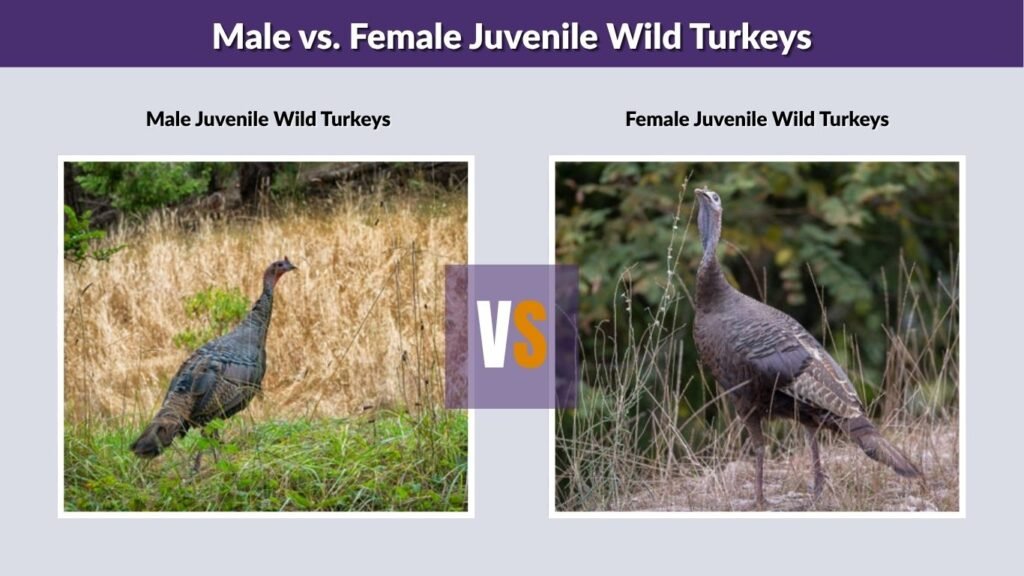
Separating young males from young females can be challenging during their first months because both are smaller and less colorful than adults.
By late summer or fall, young males begin showing thicker legs, larger bodies and more noticeable head ornamentation. They may also develop short beards and small spur bumps.
Young females remain more lightly built and develop the subdued plumage of adult hens. Looking at several birds in the same brood makes size and posture differences easier to recognize.
Tracks and Droppings
Tracks can provide clues, but they are less reliable than seeing the bird. Male tracks are usually larger and broader because males have heavier bodies and larger feet. Hen tracks tend to be smaller and narrower.
Turkey droppings are sometimes described as J-shaped in males and spiral or rounded in females. However, shape can vary with diet, moisture and movement, so droppings should not be used as the only method of determining sex.
FAQs
What is the easiest way to identify a male wild turkey?
Look for a large body, glossy iridescent plumage, a colorful bare head, black-tipped breast feathers, leg spurs and a visible beard. A male strutting with a fanned tail and producing gobbles is usually unmistakable.
Are female wild turkeys smaller than males?
Yes. Hens generally weigh 8–12 pounds, while adult males commonly weigh 18–30 pounds. A female also has a slimmer neck, smaller head and less heavily built body.
Do female wild turkeys gobble?
Hens mainly communicate through yelps, clucks, purrs and other calls. Gobbling is strongly associated with males, although individual turkey vocalizations can vary and unusual sounds may occasionally be heard.
Can a hen have a beard and spurs?
Some hens develop beards, and rare females may also have leg spurs. Breast-feather tips, body size, plumage, head coloring and behavior should therefore be checked before determining the bird’s sex.
How can you tell a jake from a hen?
A jake generally has a larger body, brighter head, black-tipped breast feathers, a short beard and small spur bumps. His tail fan may have longer central feathers. A hen is smaller, duller and usually has buff-tipped breast feathers.
