
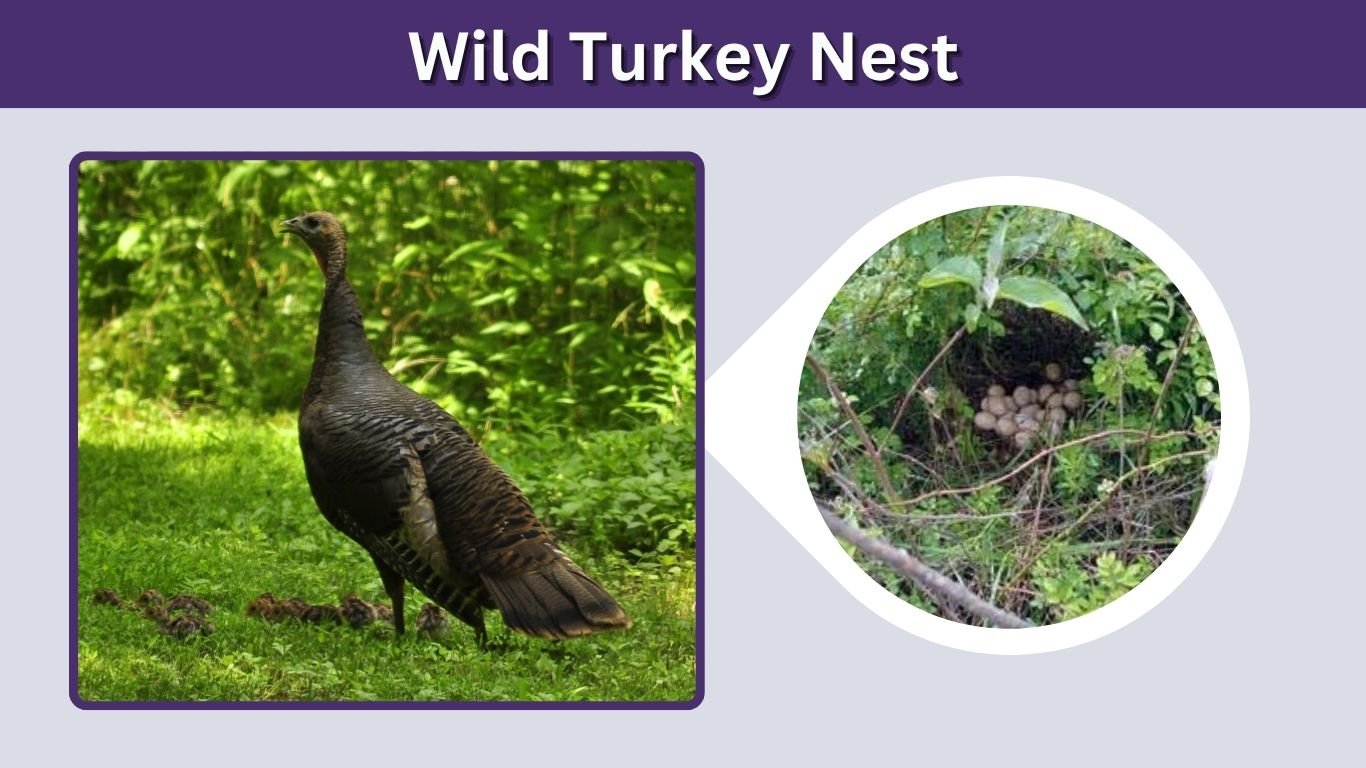
A wild turkey nest is a shallow depression hidden on the ground beneath grass, shrubs, fallen branches, or other vegetation. Unlike many large birds, wild turkeys do not construct nests in trees. A female turkey, called a hen, selects the site, lays the eggs, incubates them, and raises the young without help from the male. The average nest contains about 10–12 cream-colored eggs marked with reddish-brown speckles. After approximately 28 days of incubation, the poults hatch and leave the nest within about 24 hours. Understanding these nesting habits can help landowners avoid accidentally disturbing hens during spring.
What Does a Wild Turkey Nest Look Like?
A wild turkey nest is simple and easy to overlook. The hen scratches a shallow bowl into the soil and uses dead leaves, dry grass, pine needles, and other plant material already present at the site. She does not carry large amounts of material or build an elaborate structure.
The nest may measure roughly 8–12 inches across, although its dimensions depend on the terrain, clutch size, and available cover. Once the hen settles over the eggs, her brown plumage blends with the surrounding vegetation.
Wild Turkey Nest Identification
A typical wild turkey nest has:
- A shallow depression on the ground
- Dry leaves, grass, or pine needles inside
- Approximately 8–16 eggs
- Creamy white, tan, or pale buff eggs
- Fine reddish, brown, or purplish speckles
- Dense vegetation or debris around the nest
- Few signs of an elaborate constructed structure
- A location offering visibility and nearby escape routes
Turkey eggs are noticeably larger than chicken eggs and commonly measure about 1.9–2.7 inches long.
Where Do Wild Turkeys Nest?
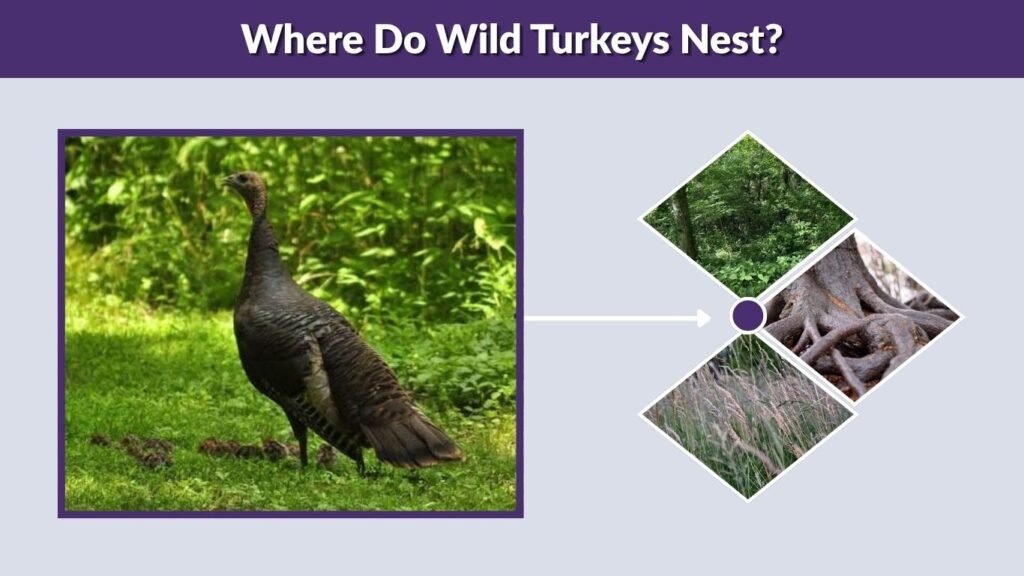
Wild turkeys nest on the ground in places that conceal the hen from predators without trapping her inside dense vegetation. She needs enough cover to remain hidden but also requires a clear route for escaping if danger approaches.
Common Nesting Locations
Wild turkey hens may place their nests:
- Beneath shrubs or brush
- At the base of a tree
- Beside fallen logs
- Under low-hanging branches
- Inside tall grass
- In hayfields or pastures
- Along woodland edges
- Beneath slash or brush piles
- Within young forest growth
- Near roadsides, trails, or utility openings
Most nests occur in dense, early-stage vegetation near more open brood habitat. After the eggs hatch, the hen needs nearby grassy or herbaceous areas where poults can walk easily and find insects.
A hen may choose a site surprisingly close to a road, house, farm building, or frequently used trail when suitable cover is available.
Do Wild Turkeys Nest in Trees?
Wild turkeys do not normally build their nests in trees. They lay and incubate their eggs on the ground.
The confusion comes from their nighttime behavior. Adult turkeys usually fly into trees to roost and sleep. A roost is a resting site, not a place where eggs are laid.
A nesting hen spends the night sitting over her eggs on the ground. After the poults hatch, the family initially sleeps on the ground because the young cannot fly. The poults generally begin making short flights after about two weeks and can then follow the hen into low trees.
When Is Wild Turkey Nesting Season?
Wild turkey nesting generally occurs during spring and early summer. Exact timing varies with latitude, elevation, subspecies, climate, and the hen’s physical condition.
Breeding and egg laying may begin during February or March in warm southern regions. Across much of the United States, nesting activity is most noticeable from March through June. Northern or high-elevation populations may begin later.
Warm weather alone does not determine the start of nesting. Increasing daylight, food availability, habitat quality, and the hen’s physical condition also influence reproduction.
Nesting Timeline
| Nesting event | Approximate timing |
| Mating | Late winter through spring |
| Egg laying | One egg nearly every day |
| Full clutch completion | About 10–14 days |
| Incubation | Approximately 25–31 days |
| Typical incubation average | About 28 days |
| Poults leave nest | Within roughly 24 hours |
Local timing can differ considerably, particularly between Florida, northern states, and western mountain habitats.
How Do Wild Turkeys Build Their Nests?
The hen explores potential locations before selecting a concealed spot. She then scratches the soil and plant litter with her feet to create a shallow bowl.
Very little actual construction is involved. Leaves and other materials already present may be pulled beneath her body, but the completed nest remains a relatively simple ground scrape.
The female performs all nest-building duties. Male turkeys, called toms or gobblers, do not help select the site, incubate eggs, defend the nest, or raise the poults.
Wild Turkey Eggs and Clutch Size
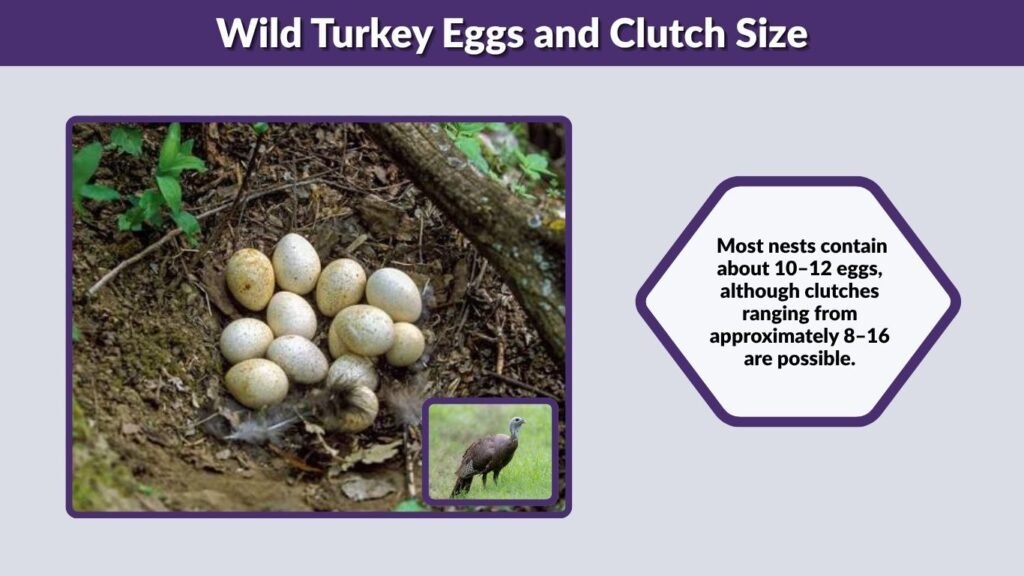
A wild turkey hen generally lays one egg each day until her clutch is complete. Most nests contain about 10–12 eggs, although clutches ranging from approximately 8–16 are possible.
The eggs are usually creamy white, pale tan, or buff with small brown or reddish spots. Their markings help them blend into leaves and dry vegetation.
Does the Hen Sit on the First Egg?
During the laying period, the hen visits the nest long enough to deposit an egg and then leaves to feed and roost elsewhere. She does not begin continuous incubation with the first egg.
Full-time incubation normally starts after the last egg is laid. This allows the embryos to develop at approximately the same rate and causes most poults to hatch within a relatively short period.
How Long Does a Wild Turkey Sit on Her Nest?
A hen incubates her eggs for approximately 28 days, although recorded periods range from about 25–31 days. She remains in the nest during both day and night, leaving only for brief periods to feed, drink, defecate, and occasionally dust-bathe.
As hatching approaches, the hen becomes increasingly committed to the nest and may take fewer or shorter breaks. Her body heat keeps the eggs at the temperature needed for development. She also turns or adjusts them to promote even incubation.
Do Wild Turkeys Defend Their Nests?
A hen relies mainly on camouflage and remaining motionless. She may flatten herself against the ground and allow a potential threat to approach surprisingly close before leaving.
When discovered, she may run or fly away suddenly to distract attention from the eggs. Some hens may hiss, peck, flap their wings, or perform defensive displays, but most prefer escape over direct confrontation with a large predator or person.
The hen may return after the danger passes. However, repeated disturbance can cause her to abandon the nest, particularly early in incubation.
What Happens When the Eggs Hatch?
Turkey poults are precocial, meaning they hatch covered in down, with open eyes and enough strength to walk soon afterward.
Hatching may take many hours as each poult breaks through its shell using a temporary egg tooth. Once the brood is dry and ready, the hen leads it away from the nest, usually within about 24 hours.
The family does not continue living inside the nest. The poults follow their mother through grassy openings and low vegetation, feeding heavily on insects that provide protein for rapid growth.
Wild Turkey Nest Predators
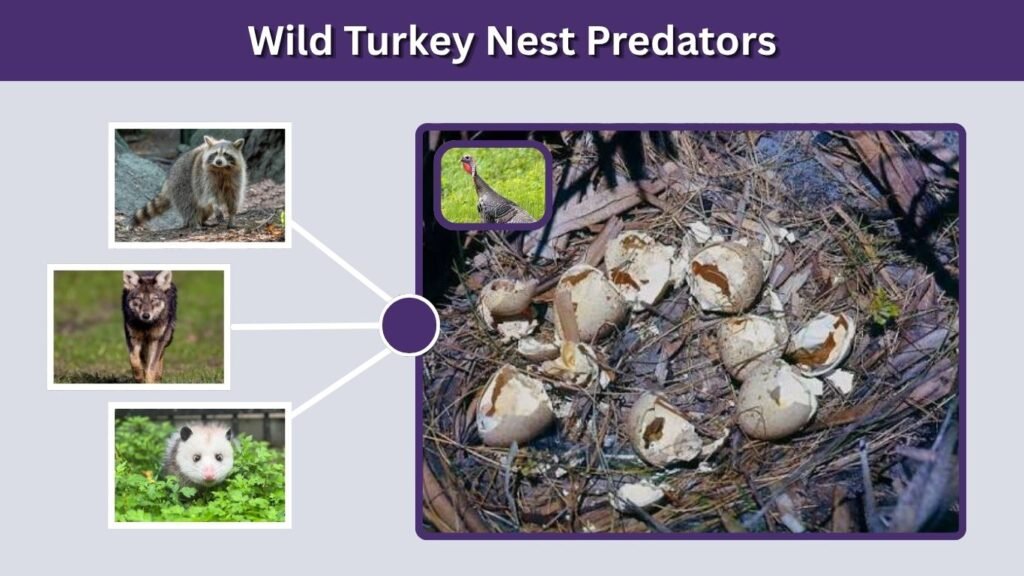
Ground nesting exposes eggs and hens to numerous predators. Common nest predators include:
- Raccoons
- Opossums
- Skunks
- Snakes
- Foxes
- Coyotes
- Bobcats
- Crows
- Ravens
- Feral hogs
- Free-roaming dogs
Predators may consume individual eggs, destroy the entire clutch, or attack the incubating hen. Flooding, farm machinery, mowing, fire, severe weather, and accidental human disturbance can also cause nest failure.
Will a Hen Nest Again?
A hen may attempt to build another nest when her first clutch is destroyed early enough in the season. A replacement nest, called a renest, often contains fewer eggs than the first attempt.
Renesting can still contribute significantly to annual poult production. However, a hen usually does not begin another nest after successfully hatching a brood.
Do Wild Turkeys Use Nesting Boxes?
Wild turkeys do not normally use nesting boxes. They are large ground-nesting birds that select natural vegetation rather than enclosed wooden structures.
Installing a turkey nest box is therefore unnecessary. Landowners can provide better nesting conditions by maintaining:
- Clumps of native warm-season grass
- Brushy woodland edges
- Shrubs and low vegetation
- Fallen woody material
- Young forest growth
- Openings with abundant insects
- Areas protected from mowing during spring
A diverse landscape containing mature roost trees, nesting cover, and nearby brood habitat is more beneficial than a manufactured box.
What to Do If You Find a Wild Turkey Nest
Leave the nest and surrounding vegetation undisturbed. Do not touch, move, rotate, collect, or attempt to incubate the eggs.
Walk away along the same route used to approach so additional vegetation is not flattened. Keep pets, children, lawn equipment, and vehicles away from the area.
Do not remain nearby waiting for the hen to return. Watching from a distance allows her to approach once she feels safe. Avoid marking the exact nest with a bright object that could attract people or predators.
When mowing or conducting land work, create a generous no-disturbance zone around the nest until the poults hatch and leave.
FAQs
Do wild turkeys sleep in their nests at night?
A hen remains on her ground nest at night while incubating eggs. Outside the nesting period, wild turkeys normally sleep in trees. Hens with newly hatched poults temporarily sleep on the ground until the young can fly.
How many eggs are in a wild turkey nest?
Most nests contain approximately 10–12 eggs, although a clutch may range from about 8–16. The number depends on the hen’s age, health, food supply, timing, and whether it is her first or replacement nest.
How long do baby turkeys stay in the nest?
Poults generally leave within about 24 hours of hatching. They follow the hen and do not return to live in the nest. She continues protecting and guiding them for several months.
Will a turkey return to a disturbed nest?
A hen may return after a brief, accidental disturbance, especially later in incubation. Repeated visits, touching the eggs, clearing vegetation, or allowing pets nearby increases the risk of abandonment.
Where do wild turkeys nest during winter?
Wild turkeys generally do not nest during winter. They form flocks, feed during the day, and roost in trees at night. Nesting begins during the breeding season, usually in spring.
