
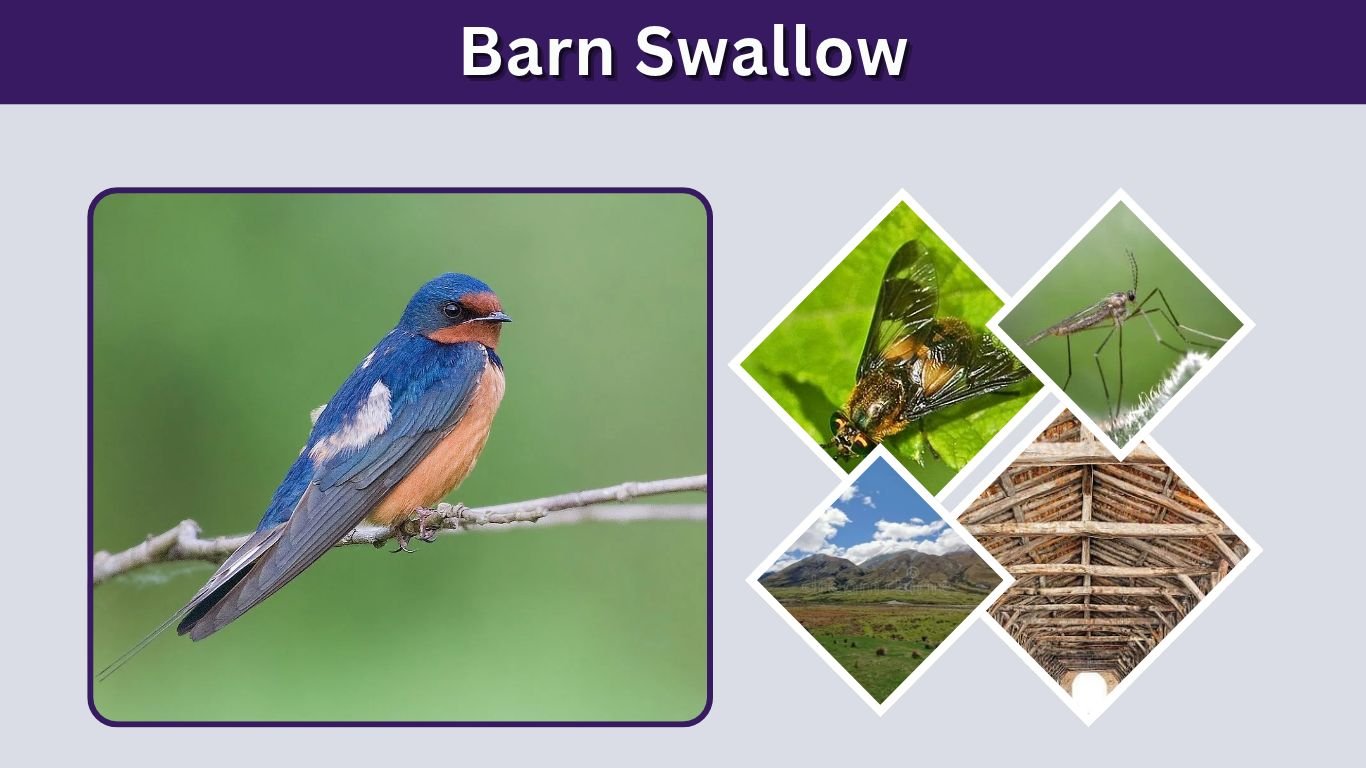
The barn swallow (Hirundo rustica) is a small, graceful bird known for its glossy blue feathers, reddish throat, and deeply forked tail. Commonly seen flying over open fields, farms, and ponds, barn swallows are skilled insect hunters that spend much of their time in the air. These birds are also famous for building mud nests beneath roofs, bridges, and barn ceilings. Understanding barn swallow identification, nesting habits, diet, migration, and behavior can help birdwatchers recognize this fascinating species and appreciate its important role in controlling flying insects.
Barn Swallow Identification: What Does It Look Like?
Barn swallows are easily recognized by their streamlined bodies, pointed wings, and long forked tails. Their colorful feathers and fast, agile flight distinguish them from many other small birds. Adults typically measure 5.9–7.5 inches long, with a wingspan of approximately 11–13 inches.
Key Identification Features
- Head: Glossy blue crown with a reddish-orange forehead.
- Back: Metallic blue or blue-black feathers.
- Throat: Distinctive rusty-red or chestnut coloring.
- Underparts: Cream, buff, or cinnamon-colored feathers.
- Tail: Long, deeply forked, with narrow outer feathers.
- Wings: Slender, pointed wings adapted for rapid flight.
Male vs. Female Barn Swallow
Male and female barn swallows look remarkably similar. However, males generally have longer outer tail feathers and richer coloring. Females often display slightly shorter tails and lighter underparts.
Young barn swallows have duller feathers and noticeably shorter tails, making them easier to distinguish from adults.
Barn Swallow Habitat: Where Do They Live?
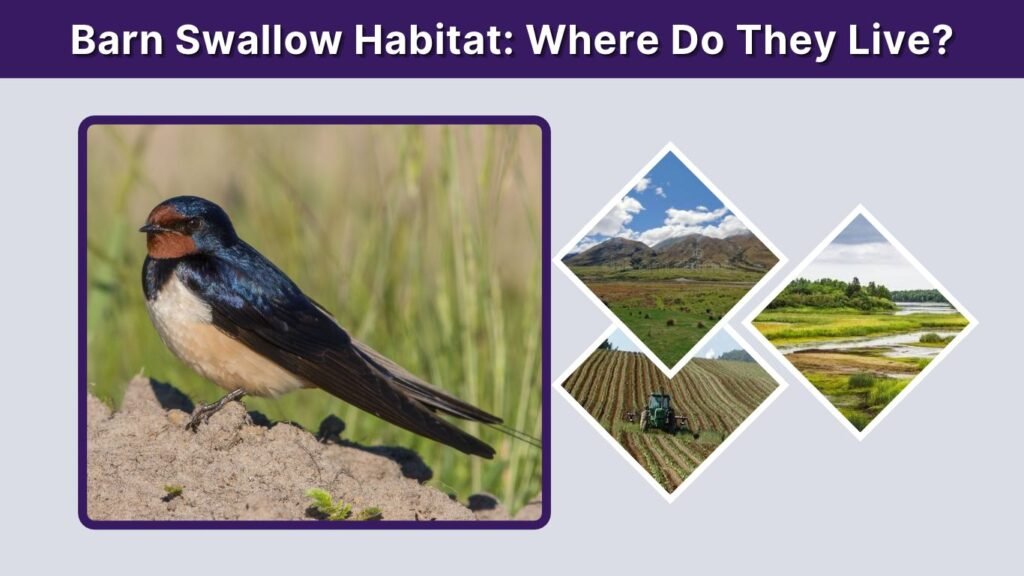
Barn swallows inhabit open landscapes where flying insects are abundant. They are commonly associated with farms, grasslands, wetlands, and agricultural areas. Unlike woodland birds, they generally avoid dense forests because open spaces provide better hunting opportunities.
Where Are Barn Swallows Found?
Barn swallows occur across North America, Europe, Asia, Africa, and other regions. American barn swallows breed throughout much of the United States and Canada.
Barn swallows in Texas and other southern states are especially noticeable during the warmer months. They frequently gather near fields, ponds, barns, and bridges before beginning their seasonal migrations.
Barn Swallow Nest: Location and Construction
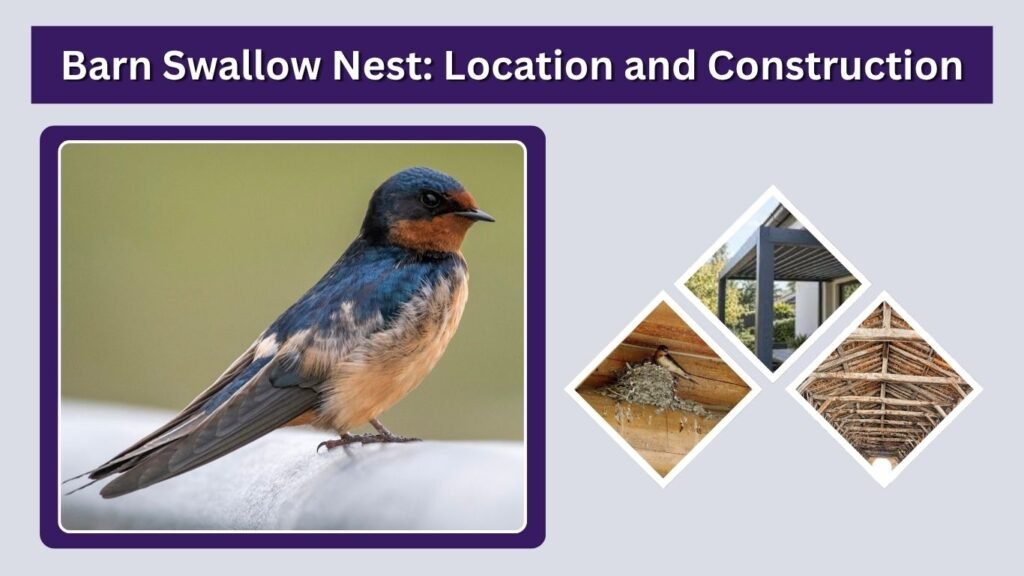
A barn swallow nest is a distinctive cup-shaped structure made primarily from mud, grass, and other plant materials. These birds prefer sheltered locations that protect their eggs and chicks from direct rainfall and harsh weather.
Barn swallow nesting often occurs close to human activity because buildings provide suitable surfaces for attaching nests.
Common Barn Swallow Nesting Locations
- Under barn roofs and wooden rafters.
- Beneath house eaves and porch ceilings.
- Under bridges and highway overpasses.
- Inside open sheds, garages, and stables.
- Beneath docks and other sheltered structures.
How Do Barn Swallows Build Their Nests?
Both parents collect small pellets of wet mud and combine them with grass to construct a sturdy nest. They gradually build the walls into an open cup and line the interior with soft grass and feathers.
Nest construction may take several days or longer, depending on weather and available materials.
Barn swallows sometimes return to old nesting locations and repair nests from previous breeding seasons.
Barn Swallow Eggs and Nesting Season
Barn swallow nesting season generally occurs during spring and summer across much of North America. Breeding dates vary according to local temperatures, food availability, and geographic location.
Pairs may successfully raise one or two broods during a breeding season.
What Do Barn Swallow Eggs Look Like?
Female barn swallows typically lay three to seven eggs, although four or five are common. Their eggs are creamy white or pale pinkish-white with small brown, gray, or lavender spots.
Incubation usually lasts approximately 12–17 days. Both parents may participate, but females generally perform most incubation duties.
Baby Barn Swallow and Nestling Development
Newly hatched barn swallow babies are nearly featherless, with closed eyes. Both parents feed the nestlings insects throughout the day.
Young birds generally remain inside the nest for approximately 15–27 days before fledging. After leaving, fledgling barn swallows may continue receiving food from their parents while developing stronger flying skills.
What Do Barn Swallows Eat?
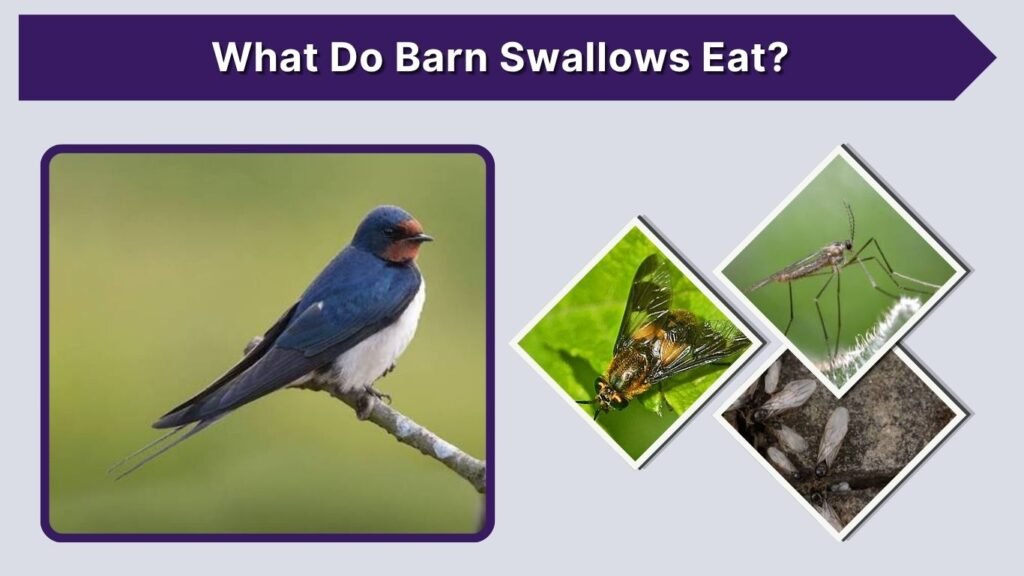
Barn swallows are primarily insectivorous birds that catch prey while flying. Their diet consists mainly of small airborne insects found around fields, water bodies, and agricultural landscapes.
Their remarkable flight control allows them to capture moving insects without landing.
Common Foods in a Barn Swallow Diet
- Flies, including houseflies and horseflies.
- Mosquitoes and other small flying insects.
- Flying beetles and winged ants.
- Moths and small butterflies.
- Wasps, bees, and other airborne insects.
- Damselflies and various aquatic insects.
Do Barn Swallows Eat Mosquitoes?
Yes, barn swallows eat mosquitoes when they encounter them. However, mosquitoes represent only part of their varied insect diet.
These birds help reduce populations of some flying insects naturally. Their feeding activity makes them useful wildlife neighbors around farms, gardens, and open landscapes.
Barn Swallow Migration and Lifespan
Barn swallows are long-distance migratory birds that travel between breeding and wintering regions. Their movements depend heavily on seasonal insect availability and changing weather conditions.
When Do Barn Swallows Migrate?
North American barn swallows generally migrate south during late summer and autumn, with many spending winter in Central and South America.
Spring migration brings them north again as temperatures rise and flying insects become more abundant.
Barn swallows often migrate in groups and may gather in large numbers before departure.
How Long Do Barn Swallows Live?
Many barn swallows survive only a few years in the wild because they face predators, migration hazards, and difficult weather.
However, some individuals live considerably longer. The oldest documented barn swallow in North America reached at least ten years of age.
Barn Swallow vs. Other Similar Birds
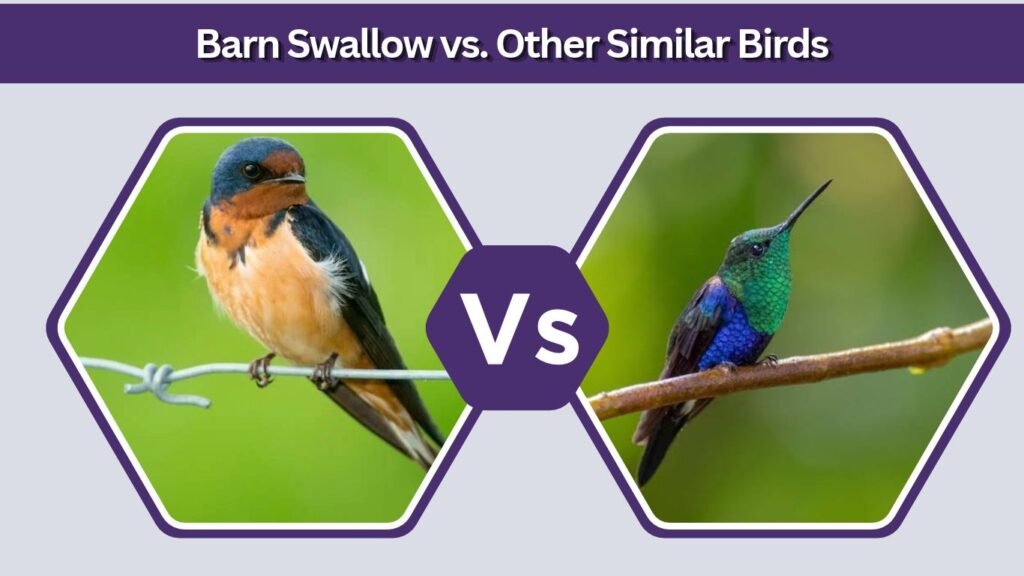
Barn swallows can resemble other members of the swallow family, particularly when viewed flying overhead. Tail shape, body coloring, and nesting behavior provide the most useful identification clues.
Key Differences Between Similar Species
- Barn Swallow vs. Tree Swallow: Tree swallows have cleaner white underparts and shorter, less deeply forked tails.
- Barn Swallow vs. Purple Martin: Purple martins are larger, with broader bodies and less dramatically forked tails.
- Barn Swallow vs. Cliff Swallow: Cliff swallows have shorter, squarer tails and frequently build enclosed mud nests with tubular entrances.
The barn swallow’s long tail streamers and reddish throat are particularly helpful field marks.
How to Attract Barn Swallows or Keep Them Away
Barn swallows can be welcome visitors because of their insect-catching abilities. However, nesting around doorways and heavily used buildings sometimes creates problems involving droppings and maintenance.
How to Attract Barn Swallows
Providing access to open grassy areas, shallow water, and suitable sheltered nesting surfaces can encourage barn swallows to visit.
Unlike many cavity-nesting birds, barn swallows generally do not use traditional enclosed birdhouses. Open nesting shelves or artificial nest cups may provide better alternatives.
Avoiding unnecessary insecticide applications can also help preserve their natural food supply.
How to Deter Barn Swallows Safely
Homeowners can discourage nesting in unsuitable locations by installing physical barriers before birds begin breeding.
Bird netting must be installed securely to prevent entanglement. Alternative nesting locations may help reduce conflicts.
In the United States, barn swallows are protected under the Migratory Bird Treaty Act. Active nests containing eggs or chicks must not be disturbed or destroyed without appropriate authorization.
FAQs
1. Are Barn Swallows Aggressive?
Barn swallows are generally peaceful birds, but they may become defensive around their nests. Adults sometimes swoop near people or animals approaching their chicks. This behavior is usually a protective response rather than an attempt to cause injury.
2. Do Barn Swallows Mate for Life?
Barn swallows commonly form breeding pairs during the nesting season. Some pairs reunite in subsequent years, particularly when both birds return to the same location. However, they do not always maintain lifelong partnerships, and mates can change between breeding seasons.
3. What Does a Barn Swallow Sound Like?
Barn swallows produce cheerful twittering songs, rapid chirps, and chattering calls. Their vocalizations are often heard around nesting areas and during flight. They also use sharper alarm calls when predators or other potential threats approach their nests.
4. Are Barn Swallows Protected Birds?
Yes. Barn swallows are protected by federal migratory bird laws in the United States. These protections restrict harming birds and disturbing active nests. Anyone considering nest removal should consult applicable federal and state regulations before taking action.
5. Do Barn Swallows Return to the Same Nest Every Year?
Barn swallows often return to familiar breeding locations after migration. Some reuse previous nests, repairing damaged sections with fresh mud and grass. Others construct new nests nearby, especially when existing structures are damaged or heavily infested with parasites.