
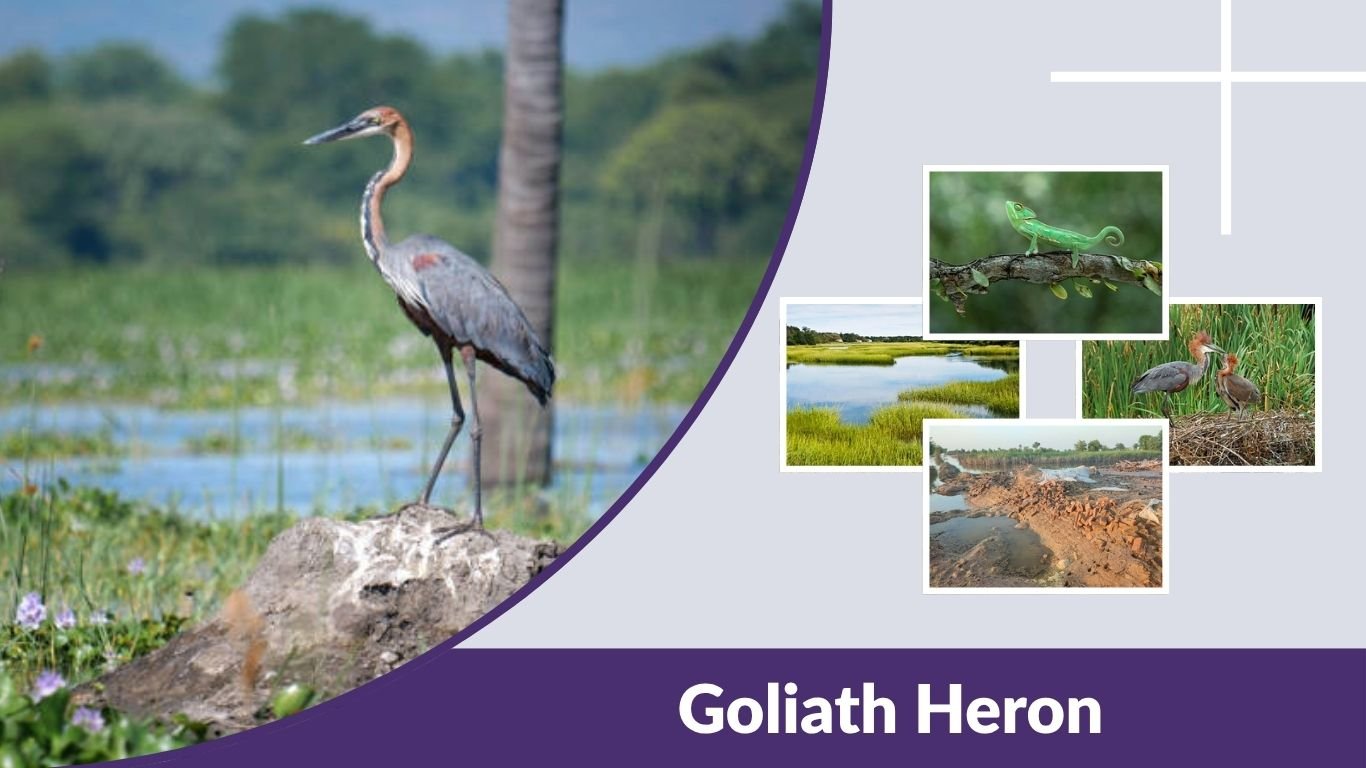
The Goliath heron (Ardea goliath) is the largest heron species in the world, known for its massive size and powerful hunting ability. Found mainly across Africa’s wetlands and river systems, this bird stands out with its chestnut plumage and long, dagger-like bill. It often sparks curiosity due to its impressive height and wingspan, especially when compared to humans or other herons. Despite its size, it is a patient and quiet predator, playing a vital role in aquatic ecosystems.
What Is a Goliath Heron?
The Goliath heron is a giant wading bird belonging to the heron family. It is widely recognized for its size and strength, making it a dominant predator in wetland environments. Unlike smaller herons, it prefers deeper waters and hunts larger prey with slow, deliberate movements.
Scientific Classification
- Scientific name: Ardea goliath
- Family: Ardeidae
- Type: Large wading bird
Key Characteristics
- Largest heron species globally
- Strong, heavy bill adapted for large prey
- Mostly solitary and territorial
Goliath Heron Physical Characteristics and Size
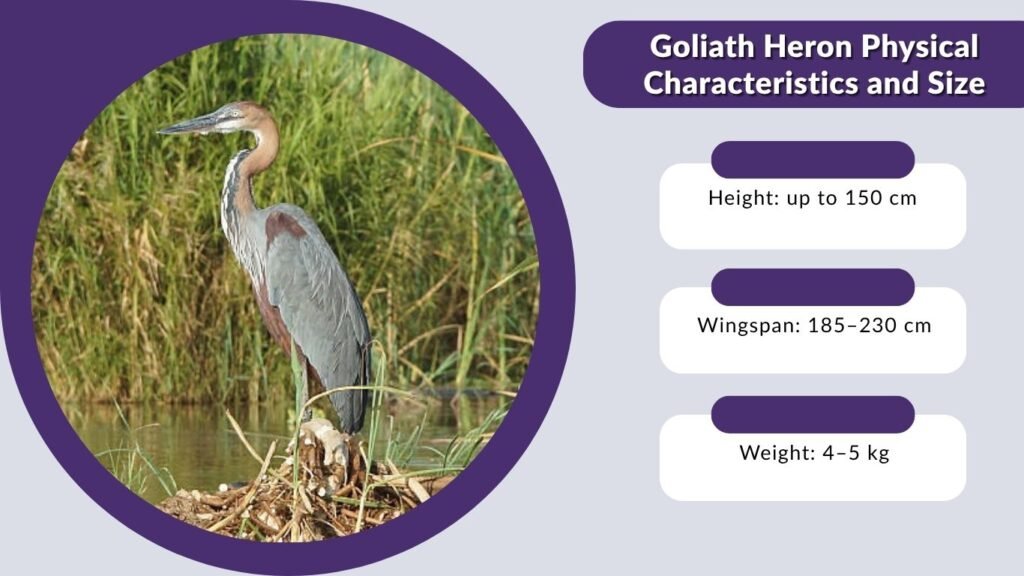
The Goliath heron has a striking appearance that reflects both power and elegance. Its body is built for strength, allowing it to handle large fish and survive in challenging wetland habitats. Its coloration and structure also make it one of the most visually distinctive herons.
Height, Weight, and Wingspan
- Height: up to 150 cm (around 5 feet)
- Wingspan: 185–230 cm
- Weight: 4–5 kg
Appearance
The bird features a chestnut-brown body with grey wings and a pale face. Its long legs allow it to wade in deeper water than most herons, while its thick, pointed beak is designed for catching large prey efficiently.
Goliath Heron Size Comparison
The enormous size of the Goliath heron is one of its most fascinating features. Many people search for comparisons to better understand just how large this bird really is compared to humans and other birds.
Goliath Heron vs Human
- Can reach waist height on an adult human
- Wingspan may exceed a person’s arm span
- Appears especially large when standing upright
Goliath Heron vs Great Blue Heron
- Noticeably taller and heavier
- More powerful beak and body
- Slower but stronger overall build
Goliath Heron Habitat and Distribution
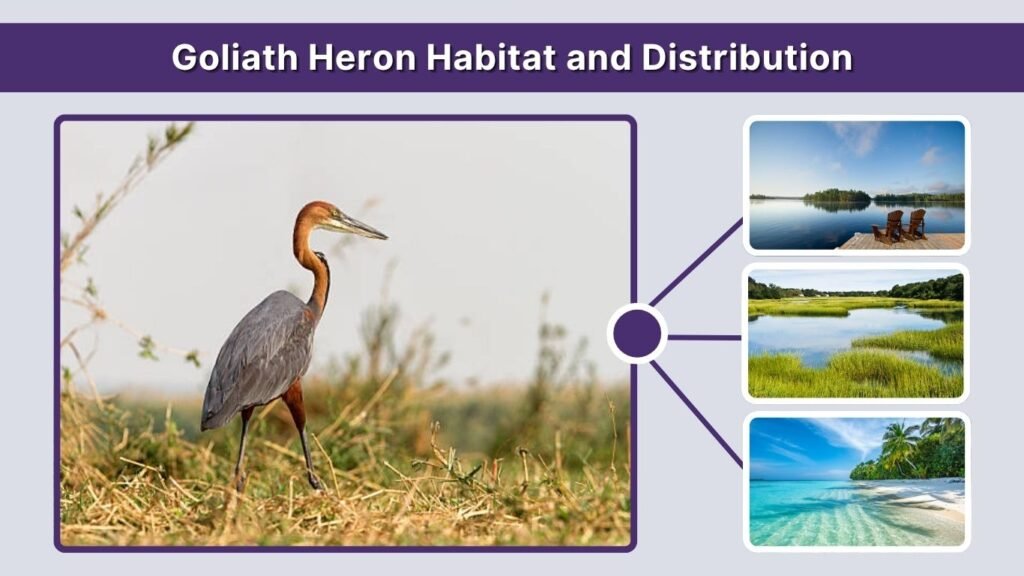
The Goliath heron is widely distributed across Africa, especially in regions with large bodies of water. It prefers quiet, undisturbed habitats where it can hunt effectively. These birds are commonly found along rivers, lakes, marshes, and coastal lagoons. They are also present in areas such as the Nile River and parts of southern Africa, including South Africa. Occasionally, small populations appear in the Middle East or South Asia, but Africa remains their primary range.
Goliath Heron Diet and Hunting Behavior
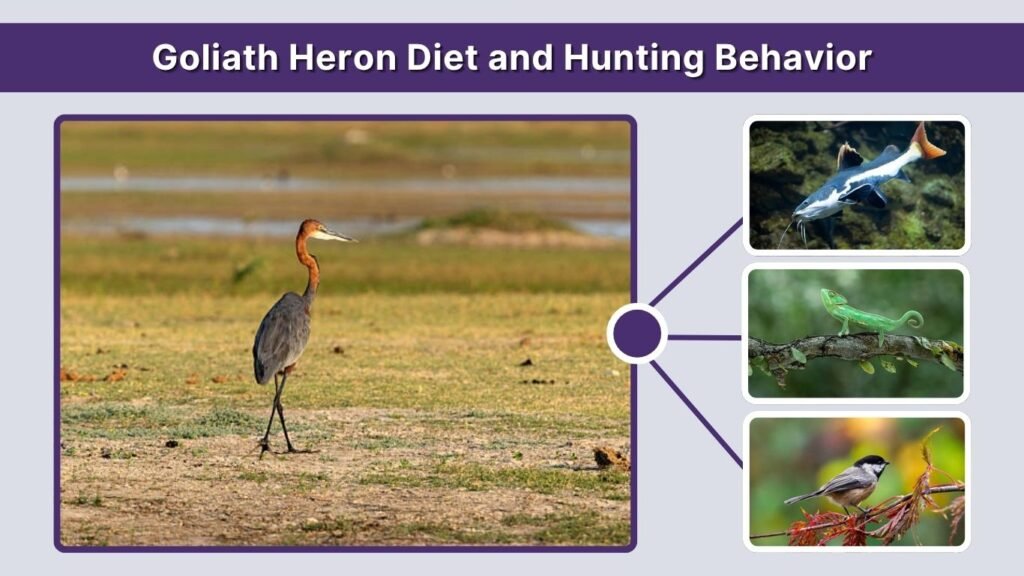
The Goliath heron is a highly skilled predator that relies on patience and precision rather than speed. Its diet mainly consists of large aquatic animals, making it unique among herons. Its hunting style is slow but extremely effective, often resulting in successful captures.
What Does a Goliath Heron Eat?
- Large fish, especially catfish
- Amphibians and reptiles
- Occasionally small birds
Hunting Technique
- Stands motionless in deep water
- Uses a powerful thrust to spear prey
- Often swallows large fish whole
Goliath Heron Behavior and Lifestyle
The Goliath heron is known for its solitary and territorial nature. It prefers to hunt alone and often keeps a distance from others of its kind. This behavior reduces competition and allows it to control a specific feeding area effectively.
Social Behavior
- Mostly solitary outside breeding season
- Defends feeding territory
- Rarely seen in large groups
Nesting and Lifespan
- Builds large nests near water
- Lays a small number of eggs per breeding cycle
- Average lifespan ranges from 10 to 15 years in the wild
Goliath Heron in Flight
The flight of the Goliath heron is powerful but appears heavy due to its large body size. Like other herons, it flies with its neck folded back, creating a distinctive silhouette in the sky. Its slow wingbeats and steady motion make it easy to identify from a distance.
Goliath Heron Sounds and Calls
The Goliath heron is not a very vocal bird, but it produces deep and noticeable calls in certain situations. These sounds are usually heard near nesting areas or when the bird feels disturbed. Its voice is harsher and deeper than smaller herons, matching its large size and presence.
Call Description
- Deep, hoarse croaking sound
- Loud and resonant tone
- Often heard during flight or near nests
Goliath Heron vs Other Birds
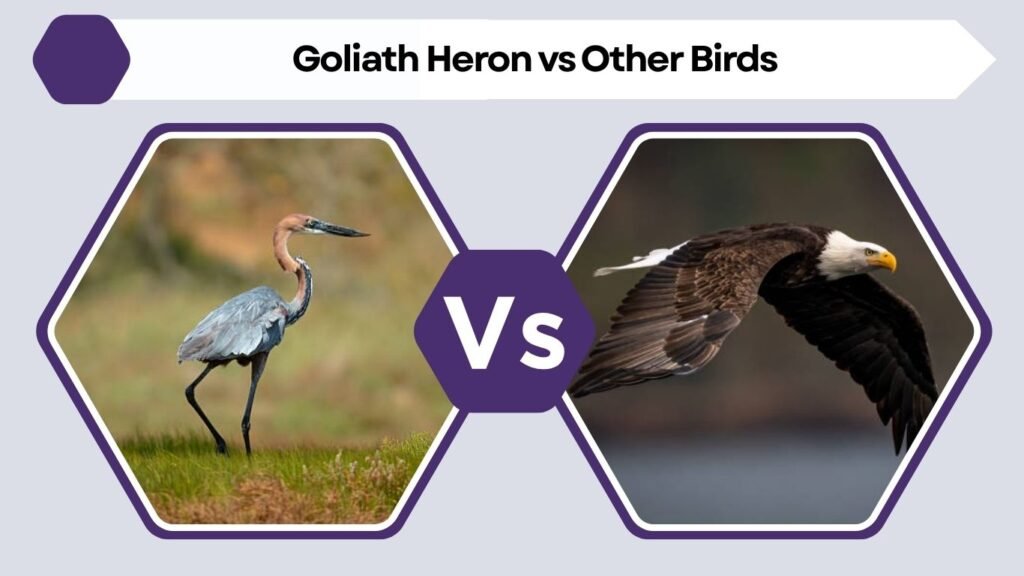
The Goliath heron is often compared with other large birds due to its impressive size. While it shares similarities with other herons, it stands out because of its strength and ability to handle larger prey.
Goliath Heron vs Eagle
- Goliath heron is larger in body size
- Eagle is faster and more agile
- Heron hunts in water; eagle hunts from the air
Goliath Heron vs Purple Heron
- Goliath heron is significantly larger
- Purple heron has a slimmer body
- Different habitats and hunting styles
Goliath Heron Range and Distribution
The Goliath heron is widely spread across sub-Saharan Africa, particularly in areas with abundant water. It thrives in large wetlands, riverbanks, and coastal lagoons where food sources are plentiful. Countries such as South Africa, Gambia, and regions along the Nile River are well-known habitats. While small populations may exist outside Africa, they are rare and not widely established.
Conservation and Protection
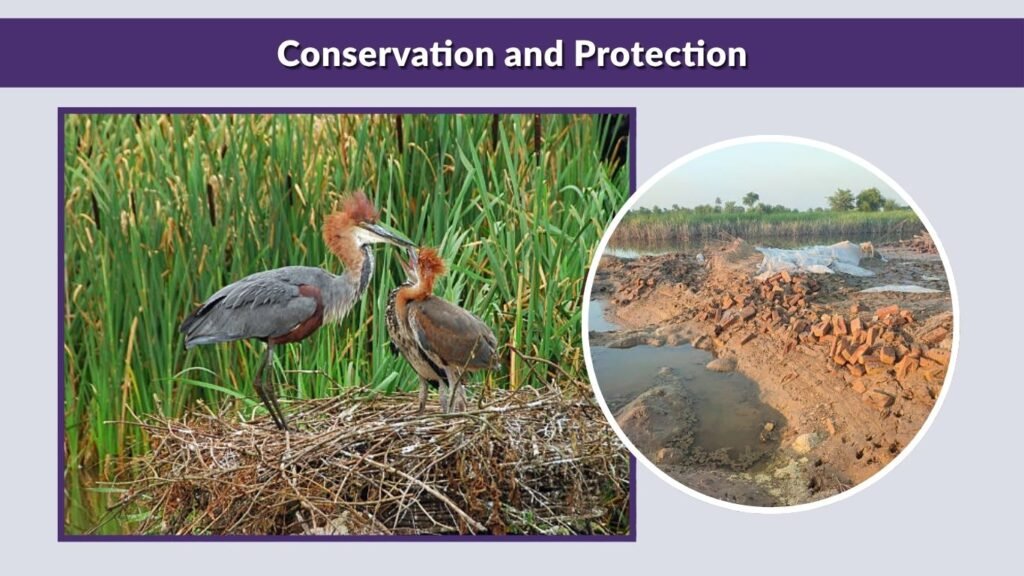
The Goliath heron is currently not considered endangered, but its survival depends heavily on the availability of healthy wetland ecosystems. Habitat destruction and water pollution can negatively impact its population over time.
Protection Status
- Not globally endangered
- Protected in several regions
- Affected by wetland loss and human activity
Importance to the Ecosystem
The Goliath heron plays a crucial role in maintaining ecological balance within wetland environments. As a top predator in its habitat, it helps regulate fish populations and supports biodiversity. Its presence often indicates a healthy aquatic ecosystem, making it an important species for environmental monitoring and conservation efforts.
Goliath Heron Facts
- Largest heron species in the world
- Can catch and swallow very large fish
- Prefers solitary and quiet environments
- Known for slow but precise hunting style
Cultural Meaning and Symbolism
The Goliath heron is often associated with strength, patience, and independence. Its calm and focused hunting style symbolizes control and determination. In some African traditions, it represents resilience and the ability to thrive in challenging environments, making it a powerful symbol in wildlife culture.
FAQs
How big is a Goliath heron?
The Goliath heron is the largest heron species, reaching up to 150 cm in height with a wingspan that can exceed 2 meters, making it significantly larger than most other herons.
What does a Goliath heron eat?
It mainly feeds on large fish, especially catfish, but also eats amphibians, reptiles, and occasionally small birds, depending on availability.
Where is the Goliath heron found?
It is primarily found across sub-Saharan Africa, especially near rivers, lakes, and wetlands, including regions like the Nile and South Africa.
Is the Goliath heron endangered?
No, it is not currently endangered, but habitat loss and environmental changes can affect its population.
Are Goliath herons found in Florida?
No, Goliath herons are not native to Florida. They are sometimes confused with the great blue heron, which is common in North America.
