
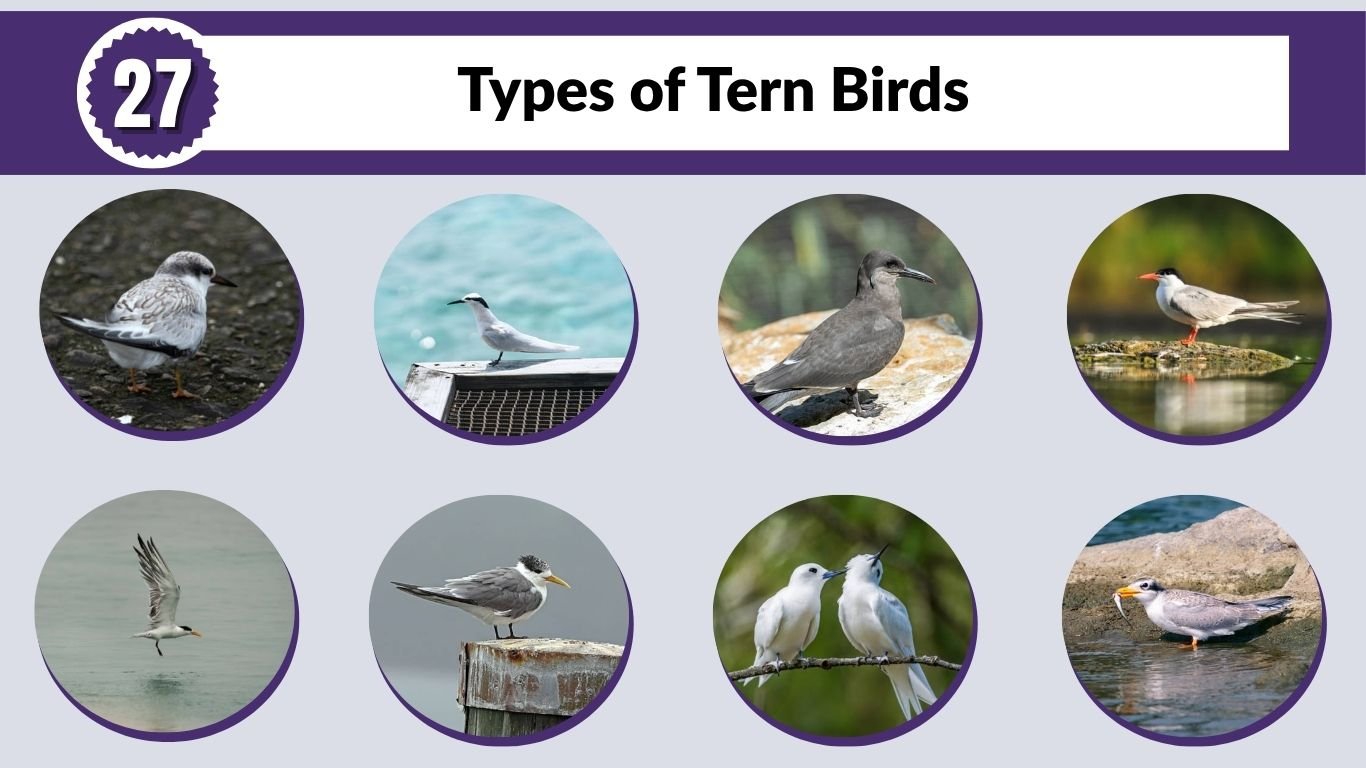
Terns are elegant, slender seabirds known for their graceful flight, sharp diving skills, and strong connection to water. Found across oceans, coastlines, rivers, and wetlands, these birds display remarkable diversity in size, behavior, and habitat. From the long-distance migrating Arctic Tern to the coastal-dwelling Fairy Tern, each species has unique traits that make it special.
This guide covers 27 types of tern birds, helping you identify each one through key features, habitat preferences, behavior, and diet. Whether you are a birdwatcher or simply curious, this collection provides a clear and easy way to understand and recognize different tern species around the world.
1. Arctic Tern
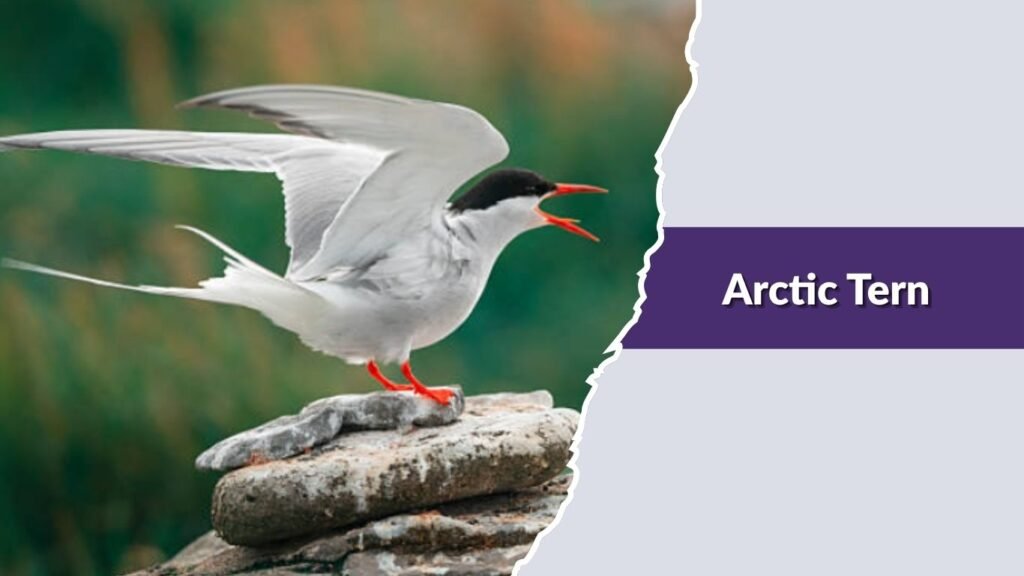
The Arctic Tern is a remarkable seabird famous for having the longest migration of any bird in the world. It travels annually between the Arctic and Antarctic, experiencing more daylight than any other species. Its graceful flight and global range make it one of the most fascinating terns.
Identification
- Medium-sized tern with a wingspan of about 75–85 cm
- Pale gray body with white underparts
- Black cap on the head during breeding season
- Bright red bill and red legs
- Deeply forked tail with long streamers
- Slender wings and elegant flight
Habitat
Arctic Terns breed in Arctic and sub-Arctic regions, often nesting on coastal tundra, islands, and rocky shorelines. During migration, they travel across oceans and spend much of their time over open water. In winter, they are found near Antarctic seas.
Behavior
This species is highly migratory, traveling thousands of kilometers each year. Arctic Terns are agile fliers and are known for their hovering and diving abilities. They are social birds, often nesting in colonies, and can be very defensive when protecting their nests.
Diet
Arctic Terns primarily feed on small fish and marine invertebrates. They hunt by hovering above water and diving to catch prey. Their diet may also include crustaceans and insects, especially during breeding season.
2. Common Tern
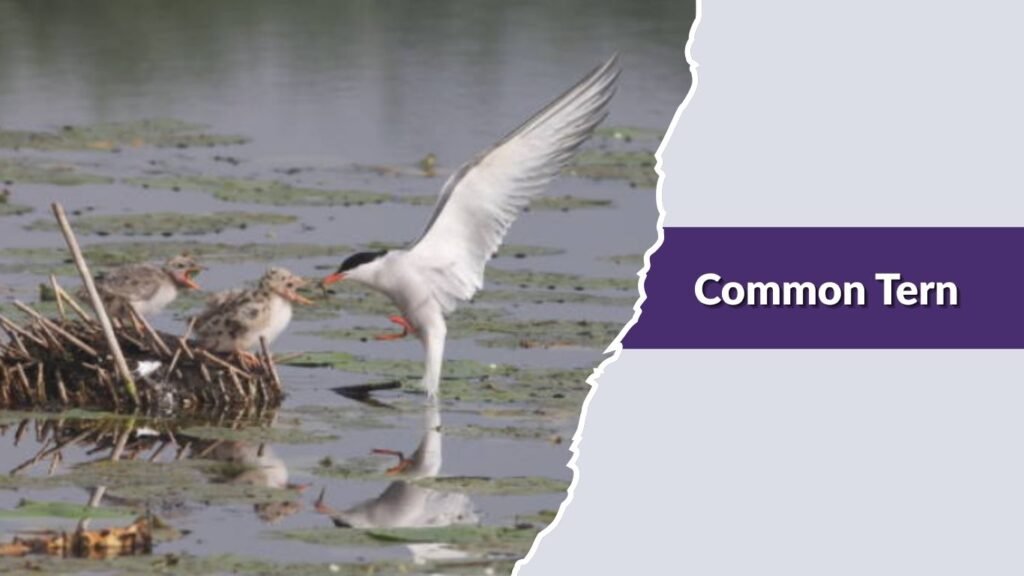
The Common Tern is a graceful and widespread seabird often referred to as the “sea swallow” because of its elegant flight and streamlined shape. It is found across Europe, Asia, and North America, and is a familiar sight along coastlines, lakes, and rivers. This species is admired for its agility in the air and its precise fishing skills.
Identification
- Medium-sized tern with a wingspan of about 75–95 cm
- Light gray body with white underparts
- Black cap on the head during breeding season
- Bright red bill with a dark tip
- Red legs
- Deeply forked tail with long outer feathers
Habitat
Common Terns are highly versatile in habitat choice. They breed in coastal areas such as beaches, dunes, and rocky islands, as well as inland near lakes and rivers. During migration and winter, they are often found along coastlines, estuaries, and open seas. They prefer open areas near water where they can easily spot prey.
Behavior
These terns are highly social and often nest in colonies, sometimes alongside other seabirds. They are known for their agile flight, frequently hovering above water before diving to catch fish. Common Terns are also quite vocal, using sharp calls to communicate with each other. During breeding season, they can be very protective and may dive at intruders near their nests.
Diet
Their diet mainly consists of small fish, which they catch by plunge-diving into the water. They also feed on insects and small aquatic invertebrates, especially when fish are less available. Their hunting style is efficient and precise, making them skilled predators in their environment.
3. Forster’s Tern
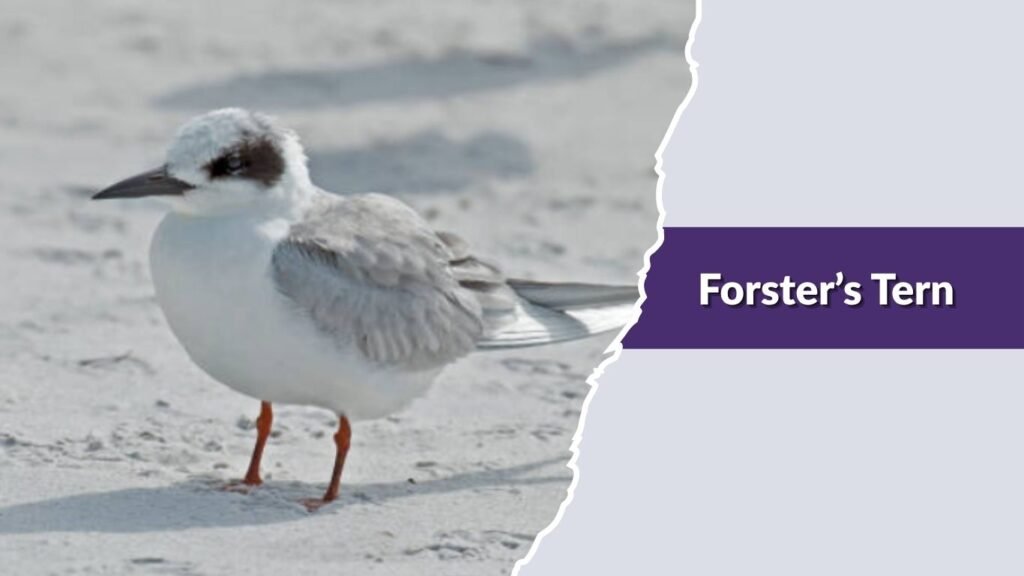
Forster’s Tern is a slender and elegant tern commonly found in North America. It is especially associated with freshwater habitats during the breeding season, making it somewhat unique among terns that often prefer coastal environments. Its light appearance and buoyant flight make it easy to recognize in wetlands.
Identification
- Medium-sized tern with a wingspan of about 75–85 cm
- Pale gray upperparts with white underparts
- Black cap during breeding season, fading to a white head with a dark eye patch in winter
- Orange bill with a dark tip
- Orange legs
- Long, forked tail with pointed wings
Habitat
Forster’s Terns are strongly tied to freshwater wetlands during breeding, including marshes, lakes, and ponds with dense vegetation. They often nest in colonies on floating vegetation or small islands. Outside the breeding season, they move to coastal areas such as bays, estuaries, and lagoons.
Behavior
These birds are agile and active, often seen hovering over water before diving to catch prey. They are social and usually nest in colonies, sometimes with other waterbirds. Forster’s Terns are also known for their sharp, clear calls. During nesting, they can be defensive and will actively protect their territory from threats.
Diet
Forster’s Terns primarily feed on small fish, which they catch by diving into shallow water. They also consume insects, crustaceans, and other small aquatic organisms. In freshwater habitats, insects can form a significant portion of their diet, especially during the breeding season.
4. Royal Tern
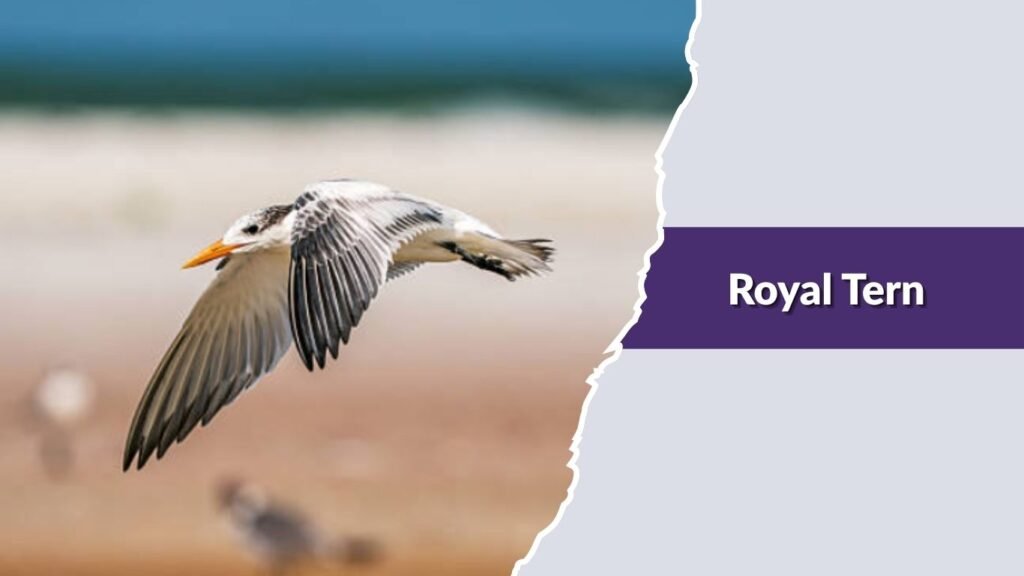
The Royal Tern is a large and striking seabird commonly found along warm coastal regions of the Americas, Africa, and parts of Asia. It is known for its bold appearance, loud calls, and strong association with sandy beaches and coastal islands.
Identification
- Large tern with a wingspan of about 120–135 cm
- Pale gray upperparts with white underparts
- Black, shaggy crest on the head
- Bright orange, thick bill
- Black legs
- Long, pointed wings with a slightly forked tail
Habitat
Royal Terns are primarily coastal birds, inhabiting sandy beaches, barrier islands, estuaries, and lagoons. They breed in large colonies on open ground near water. Outside the breeding season, they remain close to coastal waters and are rarely found inland.
Behavior
These terns are highly social and often form large, noisy colonies. They are strong fliers and can be seen gliding or flying in groups along shorelines. Royal Terns are less likely to hover compared to smaller terns and instead plunge-dive directly for prey. They are also known for resting in large flocks on beaches.
Diet
Their diet mainly consists of fish, especially small schooling species. They catch prey by diving into the water from flight. Occasionally, they may eat crustaceans or other marine organisms, but fish make up the majority of their diet.
5. Caspian Tern
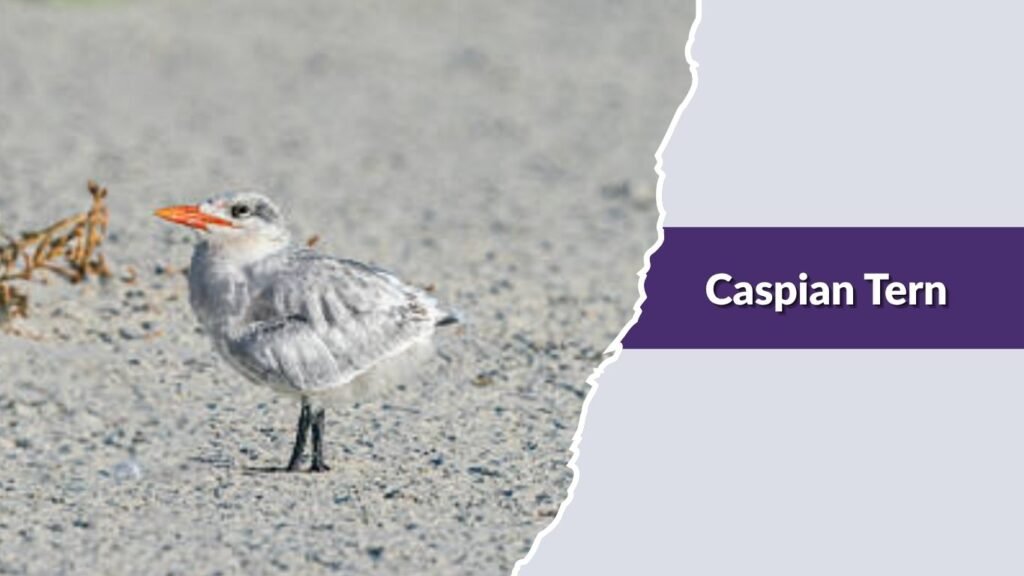
The Caspian Tern is the largest tern species in the world, recognized for its powerful build and distinctive red bill. It has a wide global distribution and can be found on every continent except Antarctica.
Identification
- Very large tern with a wingspan of about 130–160 cm
- Light gray upperparts with white underparts
- Black cap on the head, often slightly streaked in non-breeding season
- Thick, bright red bill
- Black legs
- Strong body with broad wings
Habitat
Caspian Terns inhabit a wide range of environments, including coastal regions, estuaries, lakes, and large rivers. They prefer open areas with access to water and often nest on sandy or gravelly islands. During migration and winter, they are commonly seen along coastlines.
Behavior
These terns are powerful fliers and often travel long distances in search of food. They are less social than smaller terns but may still form colonies during breeding. Caspian Terns are known for their loud, harsh calls and strong territorial behavior around nesting sites.
Diet
Their diet mainly consists of fish, which they catch by plunge-diving into the water. Due to their large size, they can capture bigger fish than most other terns. They may also occasionally feed on amphibians, crustaceans, and small aquatic animals.
6. Sandwich Tern
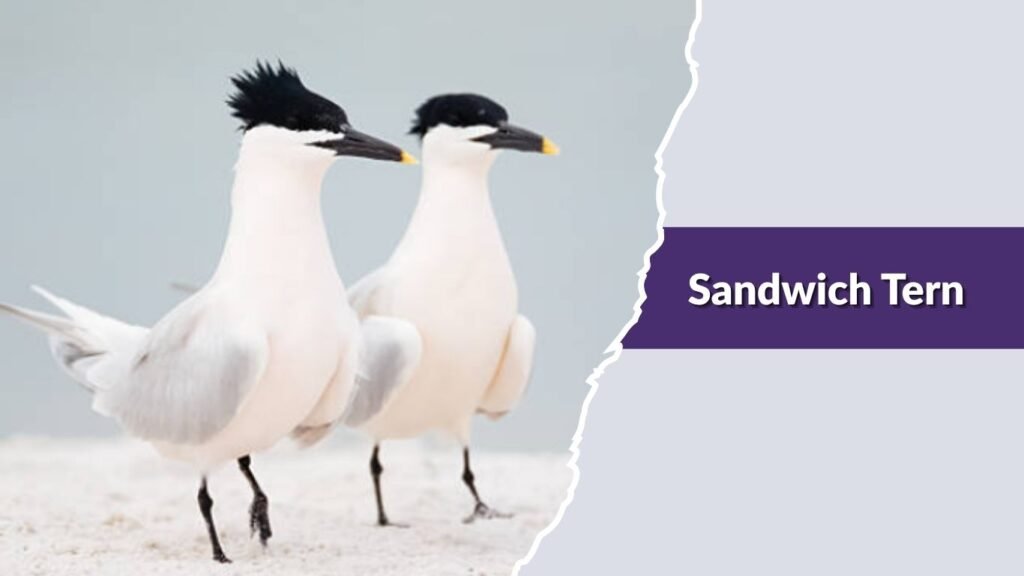
The Sandwich Tern is a medium-sized coastal bird known for its sleek appearance and distinctive bill pattern. It is widely distributed across Europe, Africa, and the Americas, often seen along sandy shores and estuaries. Its elegant flight and social nature make it a common sight in coastal regions.
Identification
- Medium-sized tern with a wingspan of about 85–110 cm
- Pale gray upperparts with white underparts
- Black cap with a slightly shaggy crest
- Black bill with a yellow tip
- Black legs
- Long, pointed wings and a slightly forked tail
Habitat
Sandwich Terns are primarily coastal birds, found along beaches, estuaries, lagoons, and offshore islands. They prefer sandy or flat areas for nesting, usually in large colonies. Outside the breeding season, they remain near warm coastal waters.
Behavior
These terns are highly social and breed in dense colonies. They are strong fliers and often travel in groups along coastlines. Sandwich Terns usually dive directly for fish rather than hovering for long periods. They are also known for their harsh, rasping calls.
Diet
Their diet mainly consists of small fish, which they catch by plunge-diving into the water. They may also eat crustaceans and other small marine organisms. Their feeding often takes place in shallow coastal waters.
7. Least Tern
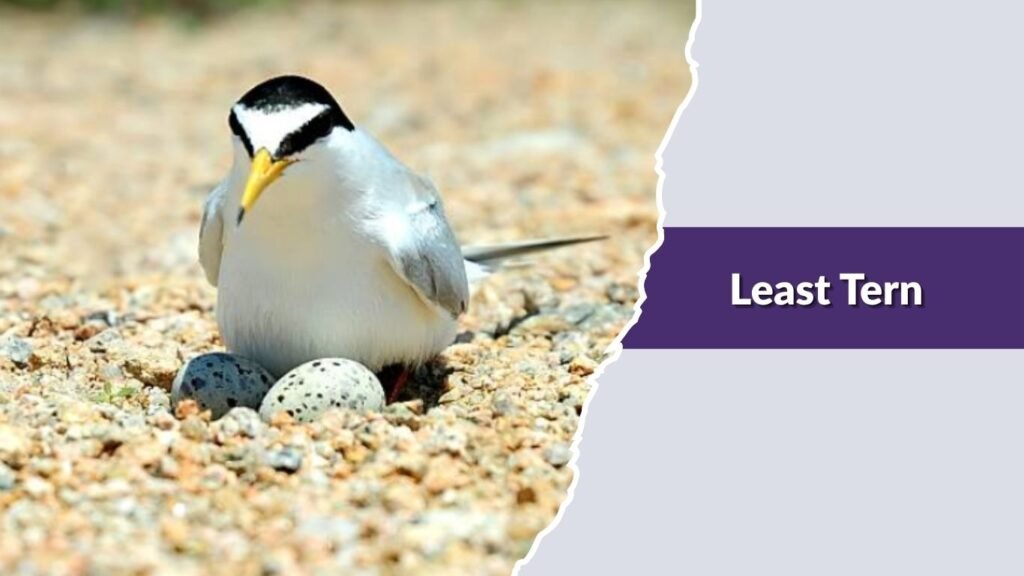
The Least Tern is the smallest tern species in North America, recognized for its tiny size and energetic behavior. Despite its small stature, it is a skilled hunter and a determined bird, often nesting in open sandy areas.
Identification
- Very small tern with a wingspan of about 50–60 cm
- Pale gray back with white underparts
- Black cap with a white forehead (distinctive feature)
- Yellow bill with a black tip
- Yellow legs
- Short, forked tail and narrow wings
Habitat
Least Terns are commonly found along coastlines, sandy beaches, riverbanks, and inland waterways. They prefer open, flat areas with little vegetation for nesting. During the non-breeding season, they migrate to coastal regions in Central and South America.
Behavior
These terns are active and agile, often seen hovering above water before diving for prey. They are highly social and nest in colonies, where they can be very protective of their nesting sites. Their flight is quick and fluttering, making them appear lively and energetic.
Diet
Least Terns primarily feed on small fish, which they catch by diving into shallow water. They also consume insects and small crustaceans. Their small size limits prey size, but they are efficient hunters in their environment.
8. Gull-billed Tern
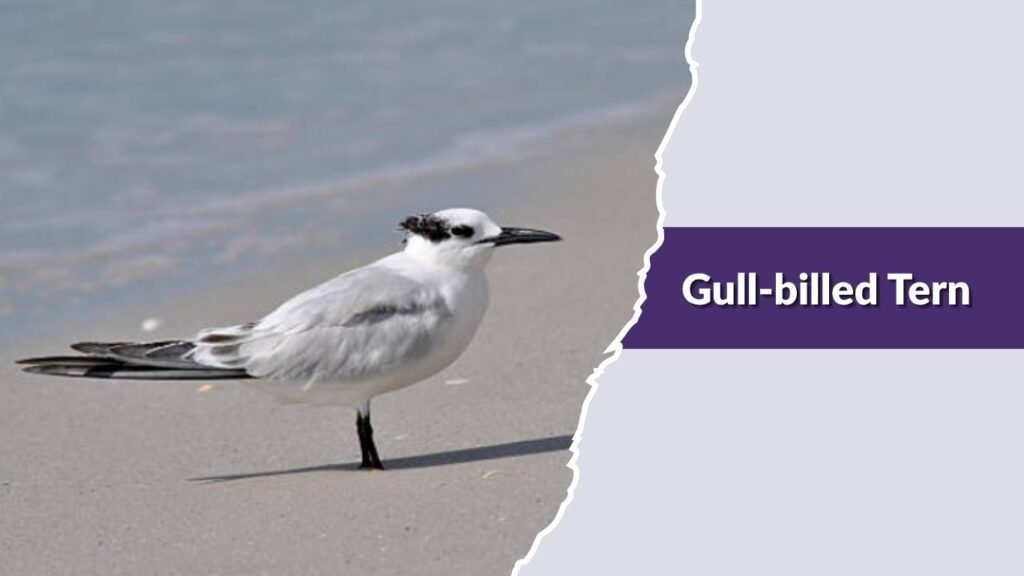
The Gull-billed Tern is a unique tern species that differs from most others due to its feeding habits and stronger, gull-like bill. It is widely distributed across multiple continents and is often found in both coastal and inland environments.
Identification
- Medium-sized tern with a wingspan of about 100–115 cm
- Pale gray upperparts with white underparts
- Black cap during breeding season
- Thick, black bill (stronger than most terns)
- Black legs
- Broad wings and slightly forked tail
Habitat
Gull-billed Terns inhabit a wide range of environments, including coastal lagoons, estuaries, marshes, and inland wetlands. They prefer open areas with shallow water or grasslands. During breeding, they nest on sandy or grassy ground near water.
Behavior
Unlike most terns, Gull-billed Terns often feed over land as well as water. They have a slower, more deliberate flight and rarely plunge-dive. They are social birds, usually nesting in colonies, but can also be seen alone while foraging.
Diet
Their diet is varied and includes insects, small fish, amphibians, and even small reptiles. They often catch prey from the ground or just above the surface, rather than diving into water like other terns.
9. Black Tern
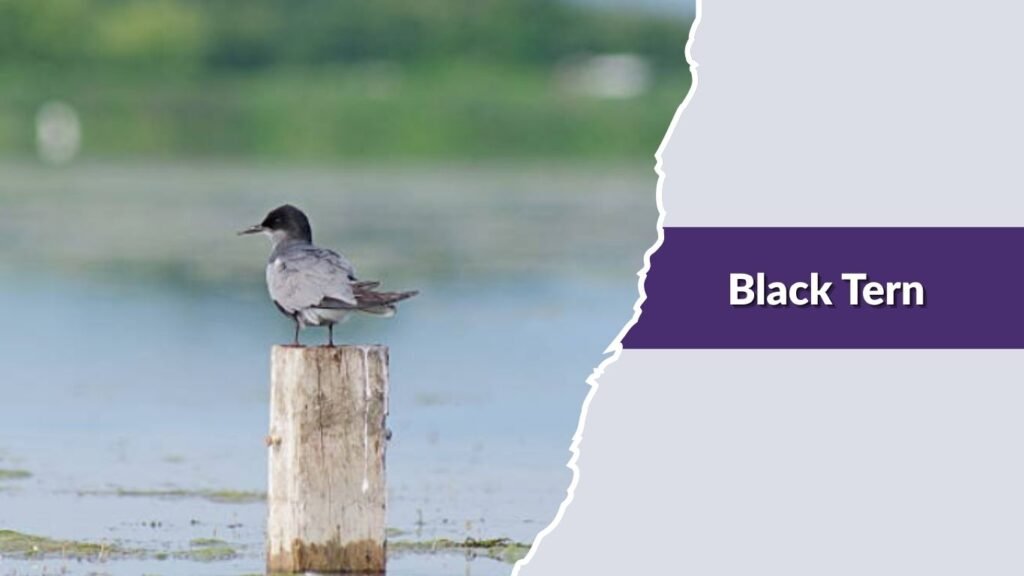
The Black Tern is a small and striking species known for its dark breeding plumage and strong association with freshwater wetlands. It is commonly found across North America and parts of Europe and Asia.
Identification
- Small tern with a wingspan of about 65–75 cm
- Dark gray to black body during breeding season
- Pale gray wings with darker edges
- Black head and underparts in breeding plumage
- Short black bill
- Dark legs and a slightly forked tail
Habitat
Black Terns prefer freshwater habitats such as marshes, lakes, and wetlands with dense vegetation. They nest on floating vegetation or small patches of land in shallow water. During migration and winter, they move to coastal areas and open seas.
Behavior
These terns are agile and active, often seen flying low over water while catching prey. They rarely dive deeply and instead pick food from the surface or in mid-air. Black Terns are social and often form loose colonies during breeding.
Diet
Their diet mainly consists of insects, especially during the breeding season. They also eat small fish and aquatic invertebrates. Their feeding style involves skimming or dipping to collect prey rather than plunge-diving.
10. White-winged Tern
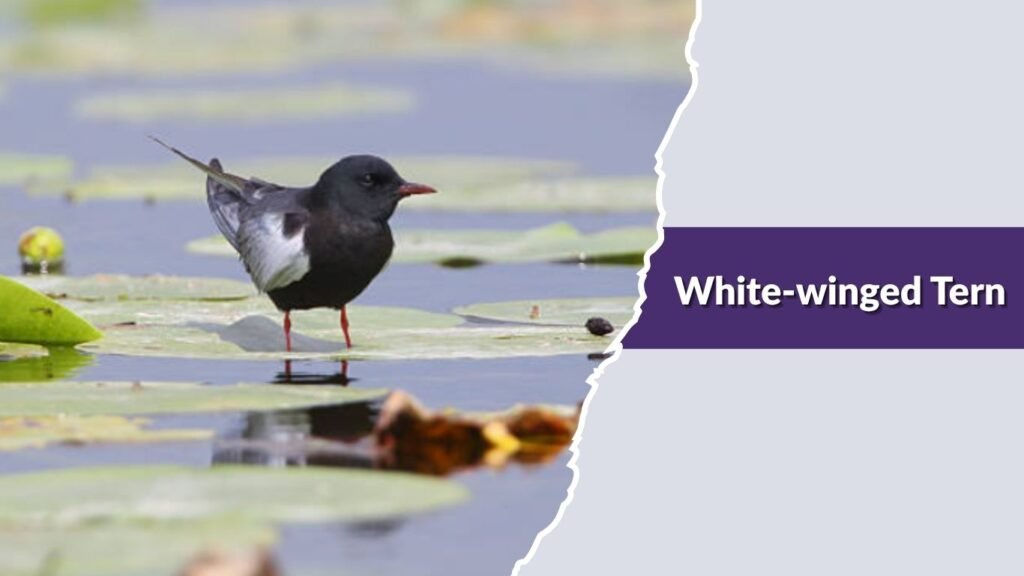
The White-winged Tern is a small and elegant tern known for its striking contrast in breeding plumage. It is widely distributed across Europe, Asia, and Africa, especially in wetlands and freshwater habitats. Its seasonal color change makes it particularly interesting to observe.
Identification
- Small tern with a wingspan of about 65–75 cm
- Black body during breeding season with white wings
- Pale gray and white in non-breeding season
- Short black bill
- Dark legs
- Light, buoyant flight with narrow wings
Habitat
White-winged Terns prefer freshwater wetlands such as marshes, lakes, and flooded fields. They breed in shallow water areas with floating vegetation. During migration and winter, they may also be found in coastal regions and estuaries.
Behavior
These terns are highly agile and often fly low over water while feeding. They rarely dive deeply and instead pick food from the surface. They are social birds, often forming flocks, especially outside the breeding season.
Diet
Their diet mainly consists of insects, which they catch in flight or from the water surface. They also feed on small fish and aquatic invertebrates, depending on availability.
11. Whiskered Tern
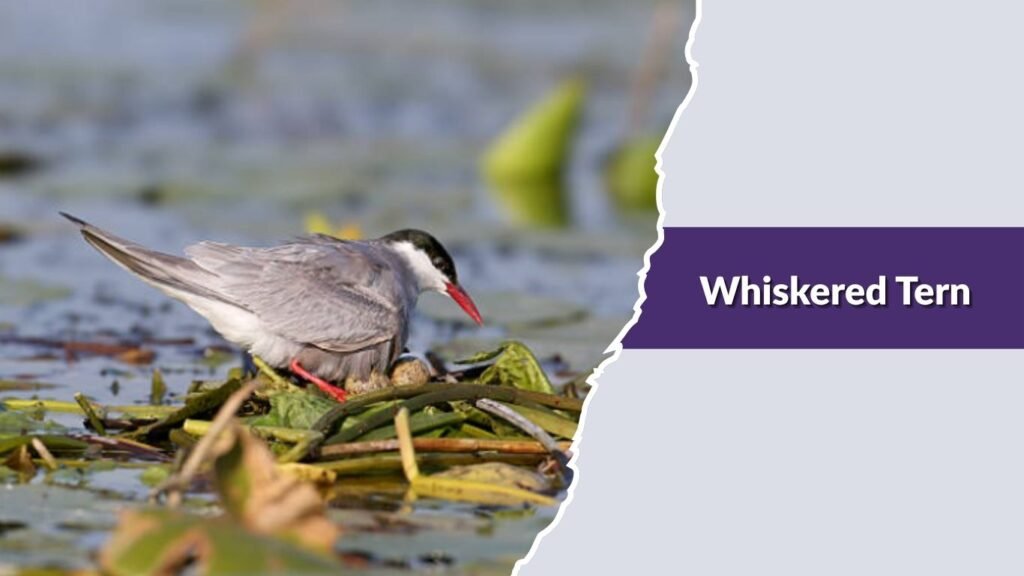
The Whiskered Tern is a small, active tern commonly found across Europe, Asia, Africa, and Australia. It is closely associated with freshwater habitats and is known for its graceful flight and distinctive breeding plumage.
Identification
- Small tern with a wingspan of about 70–85 cm
- Dark gray body with black head during breeding season
- White cheeks (whisker-like markings)
- Red bill
- Red legs
- Light gray wings and slightly forked tail
Habitat
Whiskered Terns inhabit freshwater environments such as lakes, marshes, and wetlands. They prefer areas with dense vegetation for nesting. During non-breeding seasons, they may move to coastal regions and open water.
Behavior
These birds are agile fliers and are often seen gliding or hovering over water. They feed by picking prey from the surface rather than diving deeply. Whiskered Terns are social and often gather in flocks.
Diet
Their diet mainly includes insects, small fish, and aquatic invertebrates. They are especially active feeders in wetlands, where insect populations are high.
12. Roseate Tern
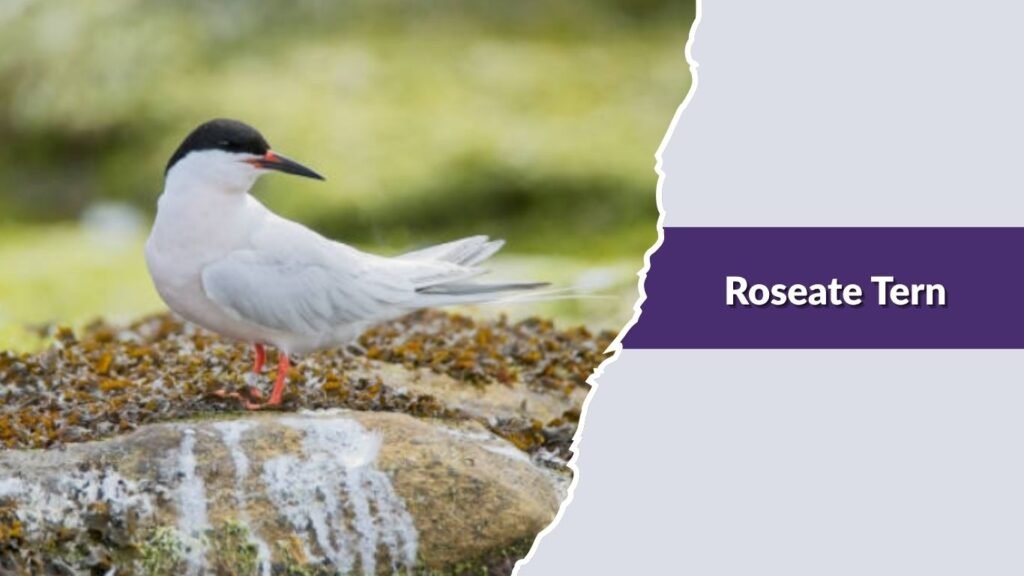
The Roseate Tern is a graceful and elegant seabird known for its pale plumage and soft, rosy tint on the breast during the breeding season. It is considered one of the more delicate-looking terns and is often found in coastal regions across the Atlantic and parts of the Indian Ocean. Despite its beauty, it is less common than many other tern species and is closely monitored in several regions due to conservation concerns.
Identification
- Medium-sized tern with a wingspan of about 75–85 cm
- Very pale gray upperparts with white underparts
- Subtle pinkish (rosy) wash on the chest during breeding season
- Black cap on the head
- Long, deeply forked tail with extended streamers
- Slender black bill, sometimes with a reddish base
Habitat
Roseate Terns are primarily coastal birds, favoring sandy or rocky islands, beaches, and coral reefs. They usually nest in sheltered areas with minimal disturbance, often choosing sites with some vegetation or rocky cover. During the non-breeding season, they spend much of their time over open oceans, typically in tropical and subtropical waters.
Behavior
These terns are highly social and usually breed in colonies, often alongside other tern species. They are known for their gentle and less aggressive nature compared to larger terns. Roseate Terns are excellent fliers, capable of long-distance travel during migration. They often rely on nearby feeding grounds and return regularly to nesting colonies to feed their young.
Diet
Their diet mainly consists of small fish, which they catch by plunge-diving into the water. Unlike some terns, they often rely on specific feeding areas and may follow schools of fish. They occasionally consume small marine invertebrates, but fish remain their primary food source.
13. Sooty Tern
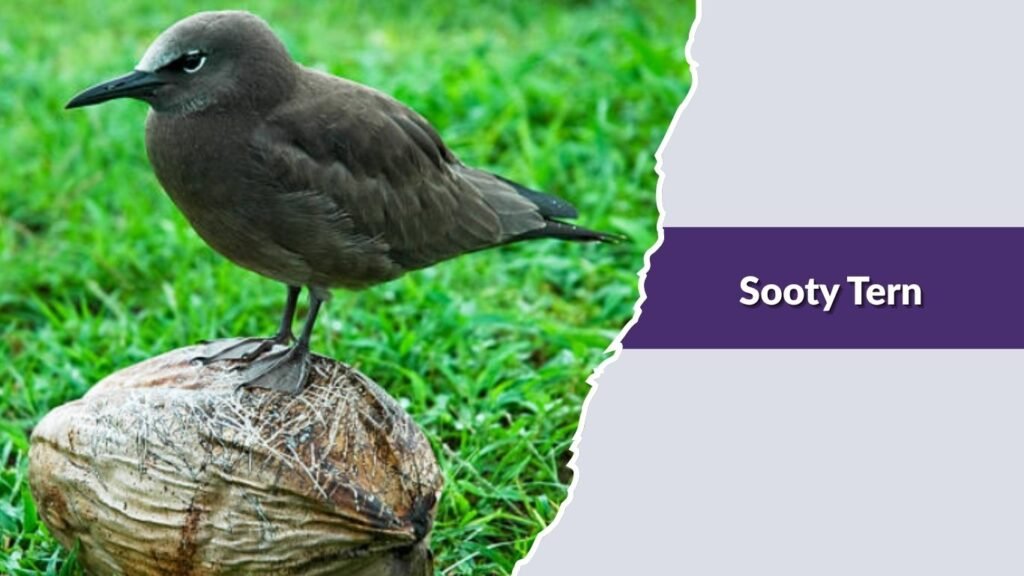
The Sooty Tern is a tropical seabird famous for its incredible endurance and long periods spent at sea. It is one of the most abundant seabirds in the world and is rarely seen resting on water, spending most of its life flying over tropical oceans. This species is especially known for forming massive breeding colonies on remote islands.
Identification
- Medium-sized tern with a wingspan of about 85–95 cm
- Dark black upperparts contrasting with white underparts
- Black cap extending to the eyes
- White forehead and a distinctive white stripe above the eye
- Black bill and legs
- Long, deeply forked tail
Habitat
Sooty Terns are primarily found in tropical and subtropical oceans worldwide. They breed on remote oceanic islands, often on open sandy or rocky ground. Outside the breeding season, they remain far offshore, rarely approaching land except to nest.
Behavior
This species is highly adapted to life at sea. Sooty Terns can stay airborne for extended periods, even sleeping while flying. They are extremely social during breeding, forming huge colonies that can number in the thousands or even millions. Their calls are loud and constant, especially in nesting areas.
Diet
Sooty Terns feed mainly on small fish and squid, which they catch near the ocean surface. They often hunt in association with predatory fish that drive prey upward. Unlike some terns, they do not dive deeply but instead snatch prey from the surface while in flight.
14. Bridled Tern
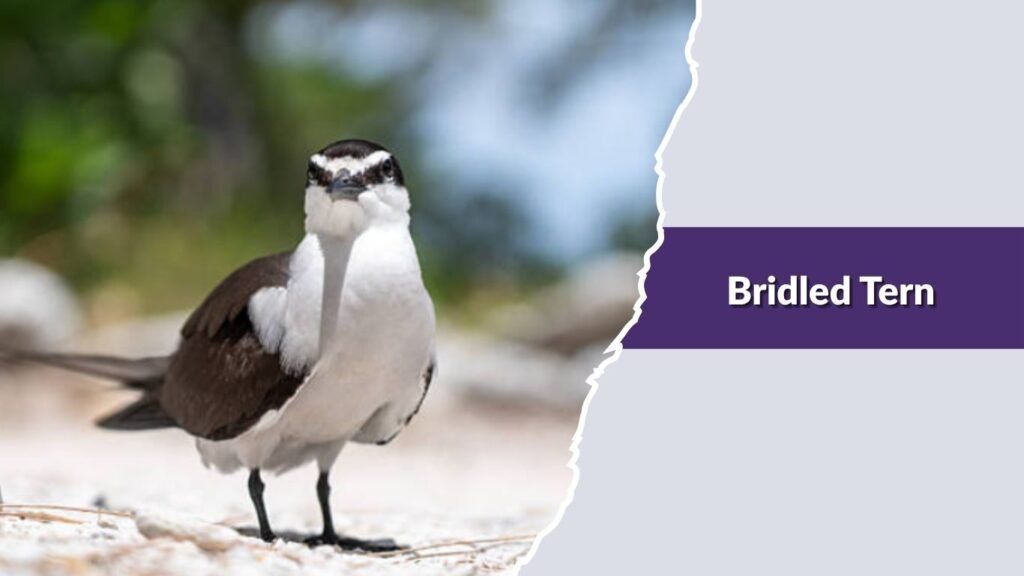
The Bridled Tern is a slender and elegant seabird found in tropical and subtropical oceans around the world. It is named for the distinctive white stripe above its eye, giving it a “bridled” appearance. This species is less commonly seen than some other terns because it often stays far offshore.
Identification
- Medium-sized tern with a wingspan of about 85–95 cm
- Dark brown to black upperparts with white underparts
- White forehead and a bold white stripe above the eye
- Black cap extending through the eye
- Black bill and legs
- Long, deeply forked tail
Habitat
Bridled Terns are mainly oceanic birds, found over warm tropical seas. They breed on remote islands, cliffs, and rocky coastlines, often choosing shaded nesting sites under vegetation or rocks. Outside the breeding season, they spend most of their time far from land.
Behavior
These terns are agile fliers and are usually seen gliding over open water. They are less likely to form massive colonies compared to some tropical terns but still nest in groups. Bridled Terns are relatively quiet at sea but can be vocal in breeding areas.
Diet
Their diet mainly consists of small fish and squid. They feed by picking prey from the surface rather than diving deeply. They often forage in association with other seabirds or predatory fish.
15. Brown Noddy
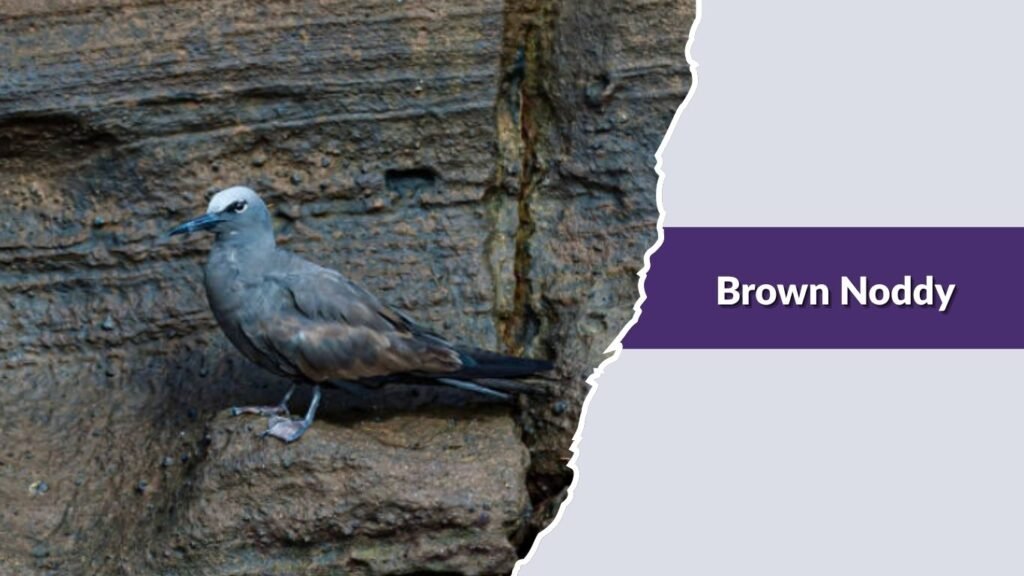
The Brown Noddy is a tropical seabird closely related to terns, recognized for its calm behavior and uniform dark coloring. It is widely distributed across tropical oceans and is often seen around islands and coastal waters.
Identification
- Medium-sized seabird with a wingspan of about 85–100 cm
- Dark brown body with a slightly lighter grayish crown
- Black bill
- Dark legs and feet
- Rounded head with a gentle expression
- Less deeply forked tail compared to typical terns
Habitat
Brown Noddies are found in tropical and subtropical oceans worldwide. They breed on rocky cliffs, islands, and coral reefs. Unlike many terns, they may nest on ledges, trees, or even man-made structures near the sea.
Behavior
These birds are known for their calm and steady flight. They are social and often seen in groups, especially around nesting colonies. Brown Noddies are less aggressive than many other seabirds and are relatively tolerant of close neighbors.
Diet
Their diet mainly includes small fish and squid. They often catch prey by picking it from the water surface while flying. They may also feed on plankton and small marine organisms, depending on availability.
16. Black Noddy
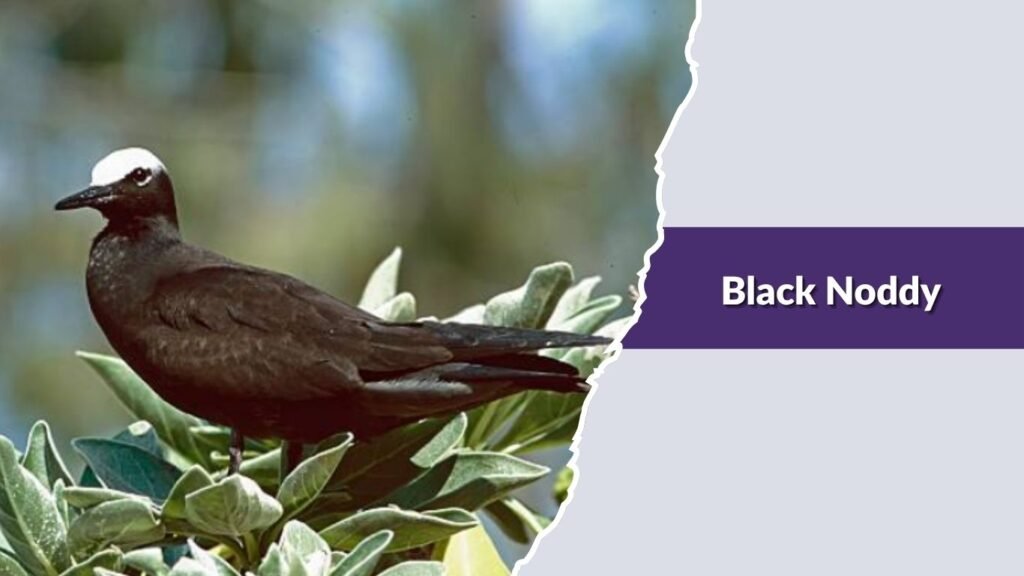
The Black Noddy is a tropical seabird closely related to terns, known for its dark plumage and calm, steady behavior. It is widely distributed across warm oceanic regions and is often seen near islands and coral reefs. Compared to many terns, it appears more relaxed and less aggressive, giving it a distinctive presence among seabirds.
Identification
- Medium-sized seabird with a wingspan of about 85–95 cm
- Dark brown to black body
- Pale gray to whitish crown on the head
- Black bill
- Dark legs and feet
- Rounded head and slightly less forked tail than typical terns
Habitat
Black Noddies are mainly found in tropical and subtropical oceans. They prefer coastal islands, coral reefs, and rocky shorelines for nesting. Unlike many terns that nest on the ground, they often build nests in trees, shrubs, or on ledges. Outside the breeding season, they remain close to warm ocean waters.
Behavior
These birds are social and usually seen in groups, especially around nesting colonies. Their flight is smooth and direct, lacking the frequent hovering seen in many terns. Black Noddies are relatively tolerant of other birds and often nest close together. They are generally quieter than more vocal tern species.
Diet
Their diet mainly consists of small fish and squid. They typically feed by picking prey from the water surface while flying. They may also consume small marine organisms such as plankton when available.
17. White Tern
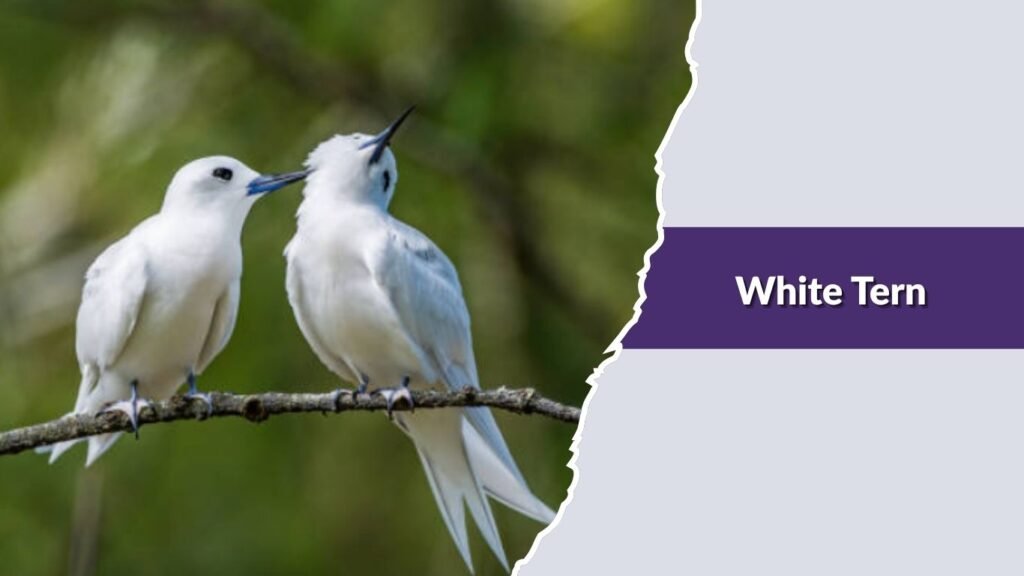
The White Tern, often called the “Fairy Tern” in some regions, is a striking tropical seabird known for its pure white plumage and delicate appearance. It is commonly found across tropical oceans and is especially notable for its unusual nesting behavior.
Identification
- Small to medium tern with a wingspan of about 75–85 cm
- Completely white body and wings
- Black eyes with a dark eye ring
- Slender black bill
- Short legs
- Long, narrow wings and a slightly forked tail
Habitat
White Terns are found in tropical and subtropical regions, particularly around oceanic islands and coastal forests. They prefer areas with trees for nesting, often near lagoons, reefs, and open ocean waters. They rarely stray far from warm marine environments.
Behavior
This species has a unique nesting habit—it does not build a traditional nest. Instead, it lays a single egg directly on a tree branch or ledge. White Terns are graceful fliers, often gliding effortlessly over the ocean. They are usually seen alone or in small groups rather than large flocks.
Diet
White Terns mainly feed on small fish and squid. They catch prey by picking it from the water surface or making shallow dives. Their feeding is typically gentle and precise, matching their delicate flight style.
18. Greater Crested Tern
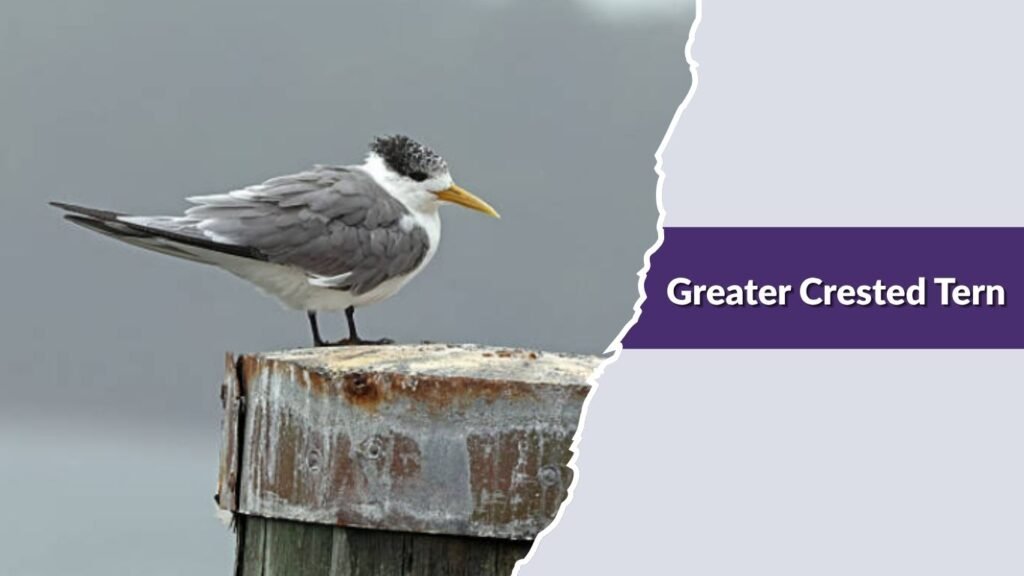
The Greater Crested Tern is a large and striking seabird commonly found along tropical and subtropical coastlines across the Indian and Pacific Oceans. Known for its shaggy black crest and bright bill, this species is often seen gliding gracefully over coastal waters or resting in groups on sandy shores. It is one of the most recognizable large terns in its range.
Identification
- Large tern with a wingspan of about 115–130 cm
- Pale gray upperparts with white underparts
- Black shaggy crest on the head
- Long, pointed yellow to orange bill
- Black legs
- Long, narrow wings with a slightly forked tail
Habitat
Greater Crested Terns are primarily coastal birds, inhabiting beaches, estuaries, lagoons, and offshore islands. They prefer warm marine environments and are rarely found far inland. During breeding, they form colonies on sandy or rocky islands, often in areas with minimal vegetation. Outside the breeding season, they remain close to coastal waters where food is abundant.
Behavior
These terns are highly social and are often seen in groups, either flying together or resting on beaches. They are strong, steady fliers and typically hunt by flying low over the water before diving for prey. Unlike some smaller terns, they do not hover as much and instead rely on direct plunge-diving. During breeding, they can be quite vocal, producing loud, sharp calls. They also show cooperative behavior in colonies, where many individuals nest close together for protection.
Diet
Their diet mainly consists of small fish, which they catch by diving into the water. They may also consume squid and small crustaceans. Greater Crested Terns often forage in shallow coastal waters and may follow schools of fish or fishing activity to find food. Their feeding style is efficient and direct, allowing them to capture prey quickly while in flight.
19. Lesser Crested Tern
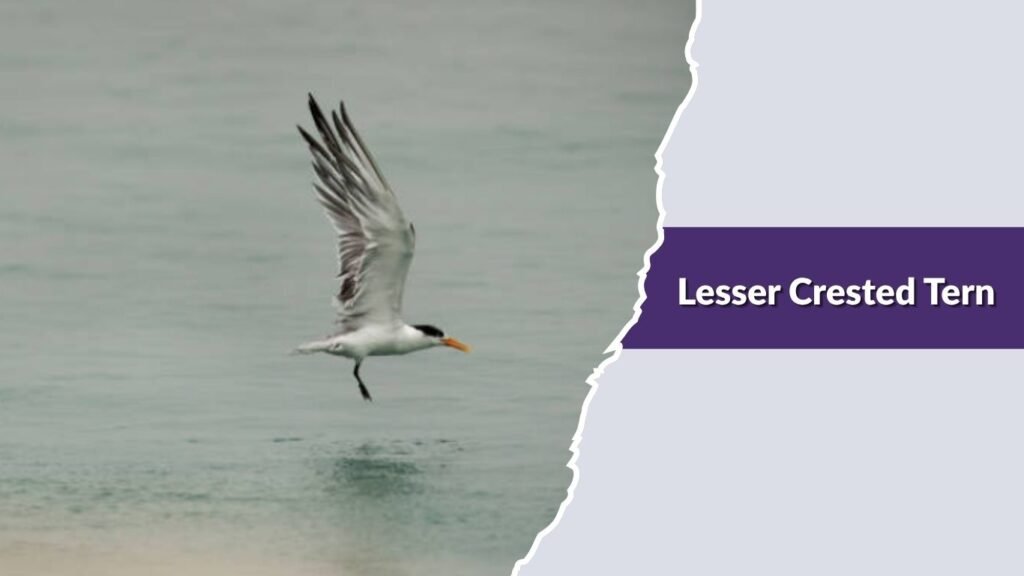
The Lesser Crested Tern is a medium to large tern closely related to the Greater Crested Tern but slightly smaller and more slender. It is widely distributed across coastal regions of the Indian Ocean and western Pacific, where it thrives in warm marine environments. Its bright bill and elegant form make it a distinctive coastal bird.
Identification
- Medium to large tern with a wingspan of about 105–120 cm
- Pale gray upperparts with white underparts
- Black cap with a slight crest
- Bright orange to yellow bill
- Black legs
- Slimmer body and more delicate appearance than larger crested terns
Habitat
Lesser Crested Terns are mainly found along tropical and subtropical coastlines, including beaches, lagoons, estuaries, and offshore islands. They prefer sandy or open areas for nesting and often breed in colonies on small islands. Outside the breeding season, they remain close to coastal waters and are rarely seen inland.
Behavior
These birds are social and usually found in flocks, especially near feeding areas. They are agile fliers and often travel along coastlines in search of food. Lesser Crested Terns use plunge-diving to catch prey, sometimes hovering briefly before diving. During breeding, they nest in dense colonies and can be quite vocal, communicating through sharp calls.
Diet
Their diet primarily consists of small fish, which they catch by diving into shallow water. They may also feed on squid and other small marine organisms. Like other coastal terns, they often forage in areas where fish are abundant, including near reefs and shallow seas.
20. Elegant Tern
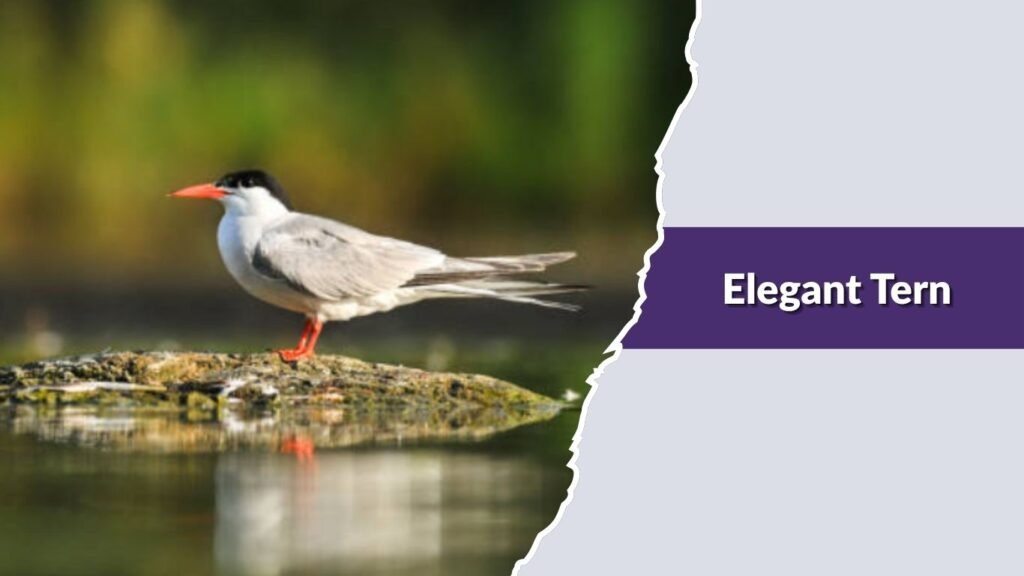
The Elegant Tern is a slender and graceful seabird found mainly along the Pacific coast of the Americas. It is known for its sleek appearance, long bill, and distinctive crest. This species is often seen in coastal waters, especially near sandy beaches and estuaries.
Identification
- Medium to large tern with a wingspan of about 90–105 cm
- Pale gray upperparts with white underparts
- Black shaggy crest on the head
- Long, slender orange bill
- Black legs
- Slim body with long, narrow wings and a forked tail
Habitat
Elegant Terns are primarily coastal birds, found along beaches, estuaries, and offshore islands. They breed in colonies on sandy islands, especially in Mexico and California. Outside the breeding season, they move along coastlines but remain close to marine environments.
Behavior
These terns are highly social and often form large flocks. They are strong fliers and can be seen gliding smoothly over water. Elegant Terns usually hunt by flying low and diving directly for prey rather than hovering for long periods. They are also quite vocal, especially in breeding colonies.
Diet
Their diet mainly consists of small fish, which they catch by plunge-diving into the water. They may also consume squid and small marine organisms. Their feeding is usually concentrated in shallow coastal waters.
21. Inca Tern
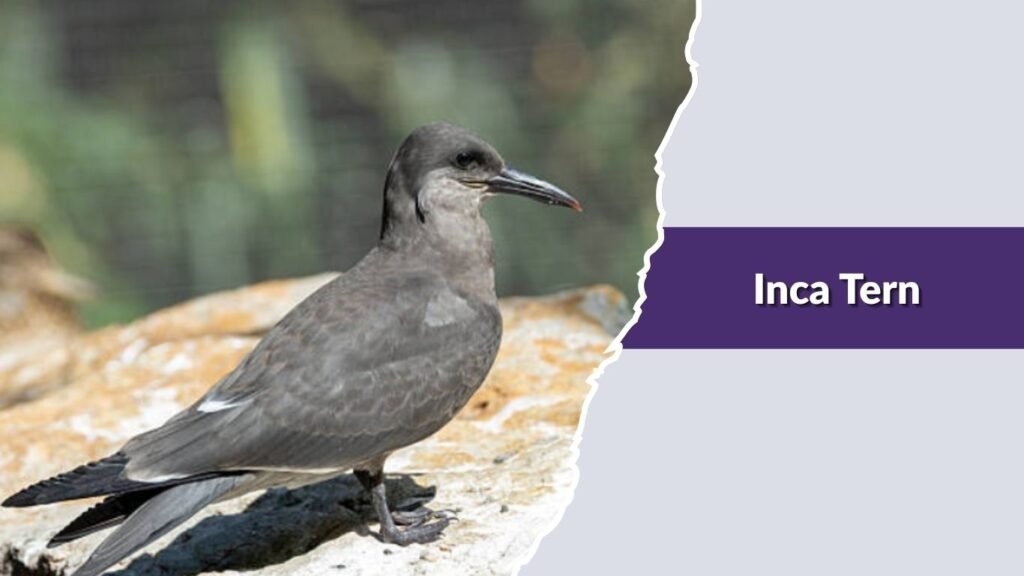
The Inca Tern is one of the most unique and visually striking tern species, easily recognized by its distinctive white facial markings. It is native to the western coast of South America, particularly Peru and Chile, where it thrives in cold, nutrient-rich waters.
Identification
- Medium-sized tern with a wingspan of about 85–95 cm
- Dark gray body with lighter underparts
- Bright red bill and red legs
- Distinct white “moustache” feathers on the face
- Yellow markings near the base of the bill
- Long wings and a slightly forked tail
Habitat
Inca Terns are found along rocky coastlines, cliffs, and islands of the Pacific coast in South America. They prefer areas influenced by cold ocean currents, which support abundant marine life. They often nest in crevices, caves, or burrows along cliffs.
Behavior
These terns are social and often seen in groups near nesting sites. They are agile fliers and spend much of their time over coastal waters. Inca Terns are known for their loud, cat-like calls and active communication within colonies.
Diet
Their diet mainly includes small fish and marine invertebrates. They catch prey by diving into the water or picking it from the surface. They often feed in productive coastal waters where food is plentiful.
22. Yellow-billed Tern
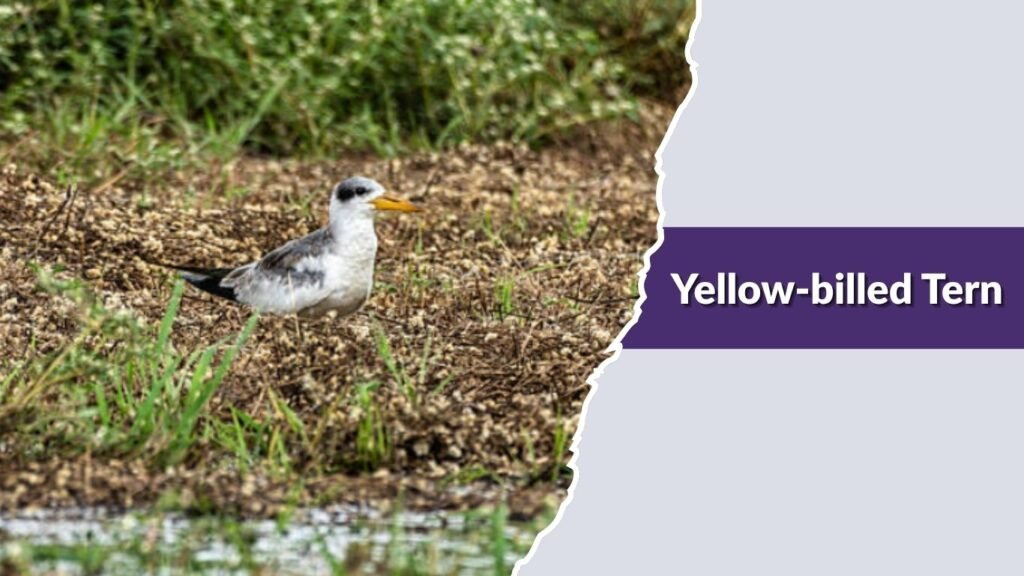
The Yellow-billed Tern is a medium-sized freshwater tern found mainly in South America, especially along large river systems like the Amazon. It is known for its bright bill and strong association with inland waterways rather than coastal environments, which makes it quite unique among terns.
Identification
- Medium-sized tern with a wingspan of about 85–100 cm
- Pale gray upperparts with white underparts
- Black cap on the head
- Bright yellow bill
- Yellow legs
- Slender body with long wings and a forked tail
Habitat
Yellow-billed Terns are primarily found along large rivers, sandbars, and freshwater lakes. They prefer open sandy areas near water for nesting. Unlike many terns, they are rarely seen in marine environments and are strongly tied to inland waterways.
Behavior
These birds are active and agile fliers, often seen hovering above rivers before diving for prey. They are social and may form small colonies during breeding. Their movements are often linked to water levels and seasonal flooding.
Diet
Their diet mainly consists of small fish, which they catch by plunge-diving into shallow water. They may also feed on aquatic insects and other small organisms found in river systems.
23. River Tern
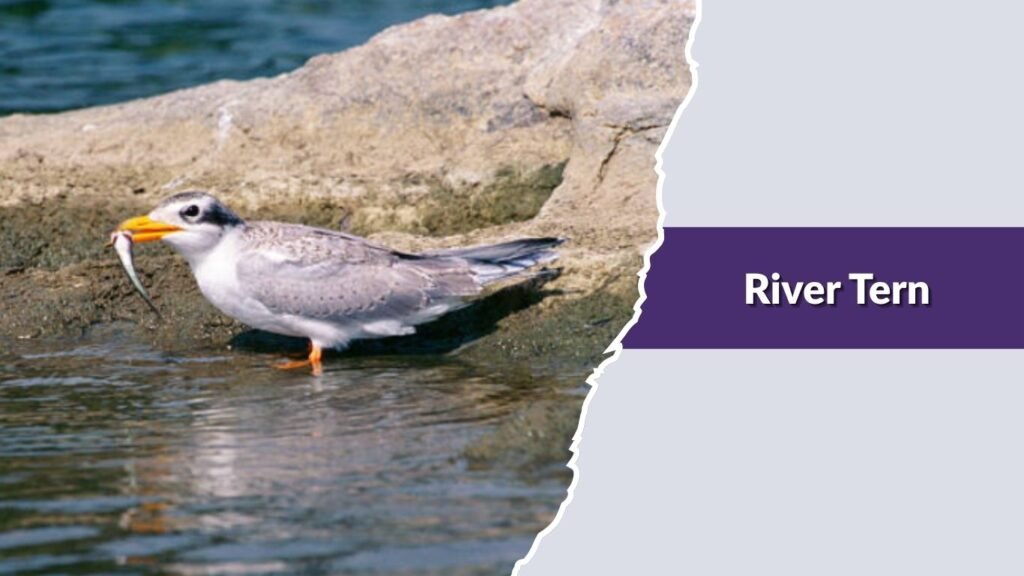
The River Tern is a medium-sized tern commonly found across South and Southeast Asia. It is closely associated with rivers and inland water bodies, making it one of the most familiar terns in freshwater habitats within its range.
Identification
- Medium-sized tern with a wingspan of about 85–105 cm
- Pale gray upperparts with white underparts
- Black cap on the head
- Bright yellow bill
- Yellow legs
- Slightly forked tail and pointed wings
Habitat
River Terns inhabit freshwater environments such as rivers, lakes, reservoirs, and wetlands. They prefer sandy banks and islands for nesting. During non-breeding periods, they may move locally depending on water availability.
Behavior
These terns are often seen flying low over water, scanning for prey. They are agile and may hover briefly before diving. River Terns are social and may form small colonies, especially during breeding season. Their calls are sharp and distinctive.
Diet
Their diet mainly includes small fish, which they catch by diving into water. They also feed on insects and aquatic invertebrates. Their feeding is closely tied to river ecosystems where fish are abundant.
24. Fairy Tern

The Fairy Tern is a small and delicate seabird found in coastal regions of Australia, New Zealand, and nearby areas. It is known for its light build, graceful flight, and preference for quiet, sandy shorelines. This species is often considered vulnerable due to habitat disturbance.
Identification
- Small tern with a wingspan of about 60–70 cm
- Pale gray upperparts with white underparts
- Black cap on the head
- Thin yellow bill with a black tip
- Orange-yellow legs
- Slender body with a deeply forked tail
Habitat
Fairy Terns are mainly found along coastal beaches, estuaries, and lagoons. They prefer sandy, open areas for nesting, often close to shallow water. They are rarely found far inland and depend on undisturbed coastal habitats.
Behavior
These birds are shy and less aggressive compared to many other terns. They are often seen alone or in small groups rather than large flocks. Fairy Terns are agile fliers, frequently hovering before diving to catch prey. During breeding, they nest in small, scattered colonies.
Diet
Their diet mainly consists of small fish, which they catch by plunge-diving into shallow water. They may also feed on small crustaceans and marine invertebrates. Their feeding behavior is quick and precise.
25. Little Tern

The Little Tern is one of the smallest tern species, widely distributed across Europe, Asia, Africa, and Australia. Despite its tiny size, it is an energetic and skilled hunter, commonly seen darting over water surfaces.
Identification
- Very small tern with a wingspan of about 50–60 cm
- Pale gray back with white underparts
- Black cap with a white forehead
- Yellow bill with a black tip
- Yellow legs
- Short, forked tail and narrow wings
Habitat
Little Terns inhabit both coastal and inland water bodies, including beaches, riverbanks, lakes, and lagoons. They prefer open sandy or gravelly areas for nesting. During migration, they move between breeding and wintering grounds across continents.
Behavior
These terns are active and agile, often hovering over water before diving. They are social and usually nest in colonies, though colonies may be small. Little Terns are also known for their sharp, high-pitched calls.
Diet
Their diet mainly includes small fish, which they catch in shallow water. They also feed on insects and tiny aquatic organisms. Their small size limits prey size, but they are efficient and fast hunters.
26. Saunders’s Tern
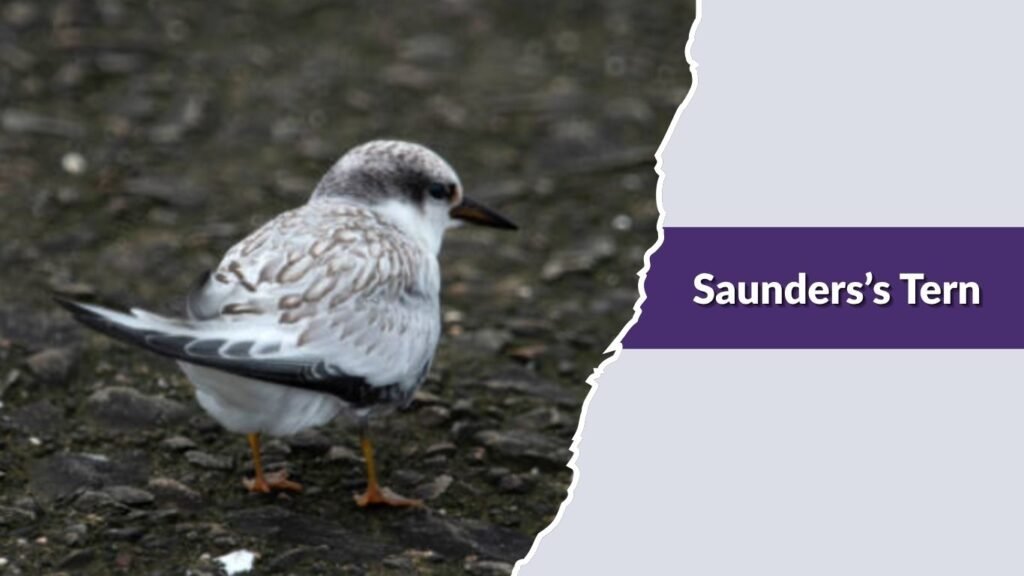
Saunders’s Tern is a small coastal tern found mainly around the Indian Ocean and parts of the Middle East and South Asia. It closely resembles the Little Tern but is generally paler and more adapted to hot, arid coastal environments.
Identification
- Very small tern with a wingspan of about 50–60 cm
- Pale gray upperparts with white underparts
- Black cap with a white forehead
- Yellow bill, often paler than similar species
- Yellow legs
- Short, forked tail and narrow wings
Habitat
Saunders’s Terns are primarily found along sandy coastlines, lagoons, and tidal flats. They prefer dry, open coastal areas with minimal vegetation. Unlike some other terns, they are strongly tied to warm, arid regions and rarely move far inland.
Behavior
These birds are active and agile, often seen hovering briefly before diving for prey. They are generally found in small groups rather than large colonies. During breeding, they nest on open sand, relying on camouflage to protect their eggs.
Diet
Their diet mainly consists of small fish, which they catch in shallow coastal waters. They may also feed on crustaceans and small marine invertebrates. Their feeding style is quick and precise.
27. Peruvian Tern
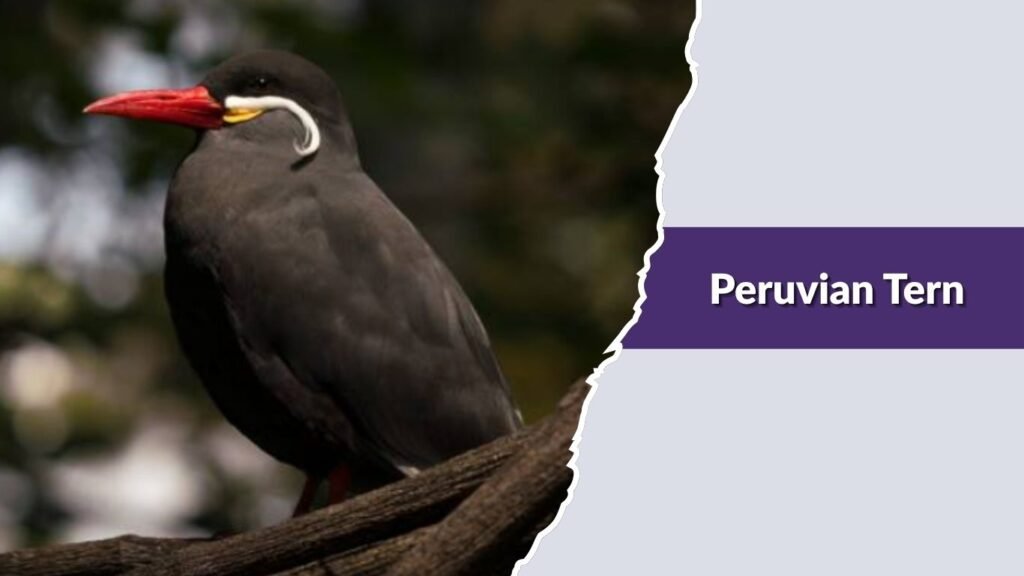
The Peruvian Tern is a rare and localized species found along the Pacific coast of South America. It is less commonly seen than many other terns and is closely associated with coastal deserts and cold ocean currents.
Identification
- Small to medium tern with a wingspan of about 70–85 cm
- Pale gray upperparts with white underparts
- Black cap with a white forehead
- Yellow bill
- Yellow legs
- Slender body with pointed wings and a forked tail
Habitat
Peruvian Terns inhabit coastal deserts, sandy beaches, and rocky shorelines along Peru and northern Chile. They prefer areas influenced by cold ocean currents, which support rich marine life. They are rarely found inland.
Behavior
These terns are relatively quiet and often seen alone or in small groups. They are agile fliers and usually stay close to the coastline. Their nesting sites are simple scrapes on open ground, often in remote and undisturbed areas.
Diet
Their diet mainly includes small fish, which they catch by diving into shallow coastal waters. They may also consume small marine organisms. Their feeding habits are closely linked to productive coastal ecosystems.
